Few plants have shaped human culture as profoundly as Camellia sinensis, the shrub behind green tea. Originating in the Yunnan province of China over 4,000 years ago, green tea was first consumed as a medicinal broth before evolving into a refined ceremonial drink. Tang Dynasty scholars praised it as a tool for mental clarity, while Japanese Zen monks adopted it as a meditation aid, giving rise to the elaborate practice of chado, the Way of Tea. Today, green tea is the second most consumed beverage on earth, and its reputation for promoting calm, focused energy has only grown stronger as modern science begins to validate what ancient cultures already knew.
What sets green tea apart from its black and oolong cousins is how it is processed. Immediately after harvest, the leaves are heated through pan-firing or steaming to halt oxidation, preserving their vivid green color and locking in a rich array of polyphenols, amino acids, and caffeine. This minimal processing means the leaf retains its full biochemical complexity, giving each cup a layered flavor profile and a potent concentration of bioactive compounds. Chinese green teas tend toward a toasty, vegetal sweetness from pan-firing, while Japanese varieties like matcha and gyokuro carry a deeper umami note from steaming and shade-growing techniques.
Whether you are sipping a delicate Dragonwell (Longjing) in the early morning or brewing a robust Sencha mid-afternoon, green tea offers something rare in the world of caffeinated drinks: stimulation paired with serenity. That paradox is not accidental. It is baked into the chemistry of the leaf itself, and it is why green tea has remained at the center of wellness traditions across Asia and, increasingly, the world. This guide will walk you through the best ways to brew it, the science behind its benefits, and practical tips for getting the most from every cup.
2
cups
Ingredients
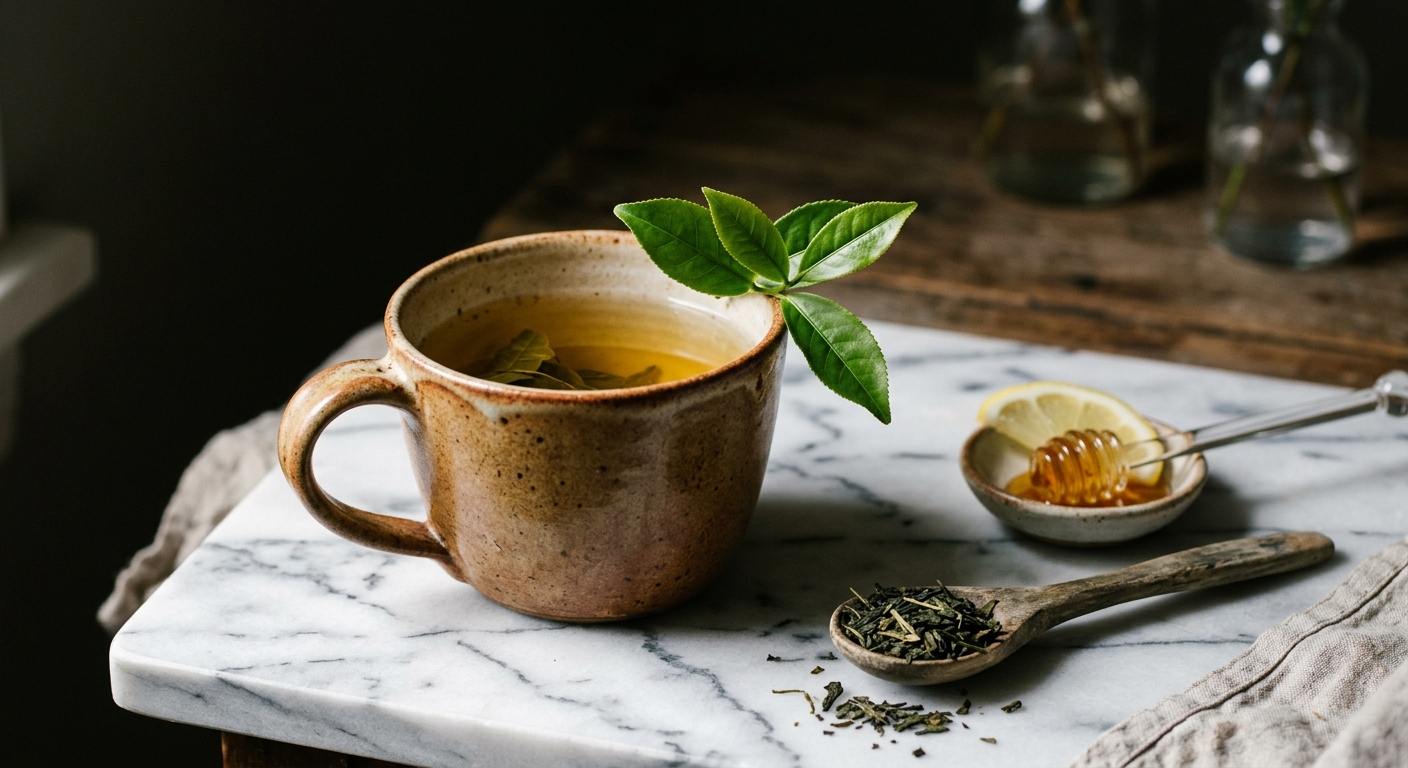
- 2 tsploose-leaf green tea (e.g. Sencha, Dragonwell, or Gunpowder)
- 480 mlwater (75 to 80°C / 167 to 176°F)
- —raw honey or a thin slice of fresh lemon (optional)
How to Brew
Click on an item below to shop for the recommended items for this recipe on Amazon.
As an Amazon Associate, we earn from qualifying purchases.
- Heat filtered water to 75 to 80°C (167 to 176°F). If you do not have a temperature-controlled kettle, bring water to a boil and let it rest uncovered for 4 to 5 minutes before using.
- Warm your teapot or mug by swirling a small splash of hot water inside, then discard it. This stabilizes the brewing temperature and prevents a cold vessel from dropping the water below the target range.
- Add 1 teaspoon of loose-leaf green tea per 240 ml (8 oz) of water into your infuser or teapot. For a more delicate cup, reduce to 3/4 teaspoon.
- Pour the water gently over the leaves and steep for 1 to 3 minutes. Begin tasting at the 1-minute mark. Light, sweet, and floral notes emerge early; grassy depth develops closer to 3 minutes.
- Remove the infuser or strain the leaves promptly to prevent over-steeping. Most quality green teas can be re-steeped 2 to 3 times, with each successive steep adding 30 seconds to the steeping time.
- Measure 2 teaspoons of loose-leaf green tea per 480 ml (16 oz) of cold, filtered water. Cold brewing requires a slightly higher leaf-to-water ratio than hot brewing to compensate for slower extraction.
- Combine the leaves and cold water in a clean glass jar or pitcher. Do not use hot water at any stage. Stir gently to ensure all the leaves are fully submerged.
- Seal the jar and place it directly in the refrigerator. Steep for 6 to 8 hours, or overnight. Avoid steeping beyond 10 hours, as even cold water will eventually over-extract and introduce bitterness.
- Strain the leaves through a fine mesh strainer or cheesecloth into a serving vessel. The cold brew will keep refrigerated for up to 48 hours.
- Serve over ice in a tall glass. The natural sweetness of cold-brewed green tea means it rarely needs any sweetener, but a thin slice of cucumber or a sprig of fresh mint makes an elegant addition.
- Heat water to 78 to 82°C (172 to 180°F). Use a small clay Yixing teapot or a glass gaiwan (lidded bowl) with a capacity of 100 to 150 ml (3 to 5 oz).
- Add a generous amount of leaf, roughly 4 to 5 grams (about 2 tablespoons) per 100 ml of vessel capacity. Rinse the leaves with a quick 5-second pour of hot water, then immediately discard that rinse water. This awakens the leaves and removes any dust without extracting significant flavor.
- Pour your heated water over the rinsed leaves and steep for just 20 to 30 seconds for the first infusion. Pour the entire contents into a sharing pitcher (fairness cup) and serve immediately into small tasting cups.
- For each subsequent infusion, increase the steep time by 10 to 15 seconds. A good-quality green tea will yield 5 to 8 rewarding infusions, with flavors shifting from bright and sweet in early steeps to deeper, richer, and more mineral in later rounds.
- Taste and compare each infusion side by side. Note how the aroma, sweetness, and body transform across the session. This mindful, sequential approach is one of the oldest and most immersive ways to experience the full range of what a green tea leaf holds.
Health Benefits
The combination of caffeine and L-theanine is green tea’s defining feature. Multiple clinical studies have shown that this pairing improves attention, reaction time, and working memory more effectively than caffeine alone, without the anxiety or energy crashes associated with coffee.
Green tea contains among the highest concentrations of catechin antioxidants of any beverage. EGCG in particular has been shown in laboratory and human studies to neutralize free radicals, protect DNA from oxidative damage, and reduce systemic inflammation markers such as C-reactive protein.
Regular green tea consumption has been associated in large epidemiological studies, particularly from Japan, with reduced risk of cardiovascular disease. Catechins appear to lower LDL cholesterol oxidation, improve endothelial function, and modestly reduce blood pressure over time.
EGCG combined with caffeine has been shown in several randomized controlled trials to modestly increase fat oxidation and thermogenesis, particularly during moderate exercise. Green tea extract is one of the most consistently studied natural compounds for metabolic support.
Observational studies from Japan have associated habitual green tea drinking with a reduced risk of cognitive decline and Alzheimer’s disease. Preclinical research suggests EGCG may inhibit the formation of amyloid plaques and protect neurons from oxidative damage, though large-scale human trials are ongoing.
🧪 Key Bioactive Compounds
The Science Behind Green Tea
The defining biochemistry of green tea centers on the interplay between two compounds that appear to work in genuine synergy: caffeine and L-theanine. Caffeine is a well-established adenosine receptor antagonist, meaning it temporarily blocks the neurochemical signal that makes you feel tired. L-theanine, a non-protein amino acid found almost exclusively in Camellia sinensis, promotes the production of alpha brain waves, the same brain state associated with relaxed, wakeful concentration during meditation. A landmark 2008 randomized controlled trial by Owen et al. published in Nutritional Neuroscience demonstrated that the combination of these two compounds produced significantly better attention and alertness outcomes than either compound alone, helping to explain the distinctively clean mental lift that longtime green tea drinkers consistently describe.
EGCG (epigallocatechin-3-gallate) is the most extensively researched catechin in green tea and one of the most potent naturally occurring antioxidants identified in plant foods. Its molecular structure allows it to donate hydrogen atoms to free radicals, neutralizing them before they can damage cell membranes, proteins, or DNA. Beyond direct antioxidant action, EGCG also modulates multiple cellular signaling pathways including NF-kB (a key regulator of inflammatory response) and AMPK (a central enzyme in energy metabolism). In vitro and animal studies have demonstrated that EGCG can inhibit the formation of amyloid-beta plaques associated with Alzheimer’s disease, though it is important to note that direct translation to human clinical outcomes requires further controlled trial evidence. Green tea brewed from whole loose leaves at the correct temperature retains significantly higher EGCG concentrations than bagged tea or tea brewed with boiling water, which can degrade these sensitive polyphenols.
The cardiovascular benefits of green tea are among the most robustly documented in population-level research. A landmark 2006 prospective cohort study from the Ohsaki National Health Insurance Cohort in Japan, following over 40,000 adults, found that drinking five or more cups of green tea per day was associated with a 26 percent lower risk of cardiovascular mortality in women and a 12 percent lower risk in men. Catechins, particularly ECG and EGCG, appear to support vascular health through multiple mechanisms: reducing LDL oxidation, improving nitric oxide bioavailability in arterial walls (which supports healthy blood pressure), and mildly inhibiting platelet aggregation. While dietary patterns in Japan differ from those in Western countries and confounding variables are always a consideration in observational research, these findings are consistent across multiple large-scale studies from China, Europe, and North America, giving researchers considerable confidence in green tea’s role in a heart-healthy lifestyle.
Brewing Tips
- Always use filtered or spring water when brewing green tea. Chlorinated tap water contains compounds that react with delicate catechins and flatten the flavor, stripping away the natural sweetness and floral complexity that distinguish a high-quality leaf.
- Store loose-leaf green tea in an airtight, opaque container away from heat, light, and moisture. Green tea is particularly susceptible to oxidation after opening, and exposure to air will noticeably dull its flavor and reduce its catechin content within a few weeks.
- If your green tea tastes bitter, the cause is almost always water that is too hot or a steep time that is too long. Try dropping your water temperature by 5°C and shaving 30 seconds off your steep time. The improvement will be immediate and dramatic.