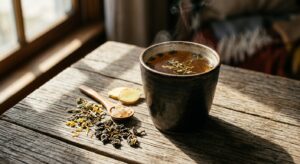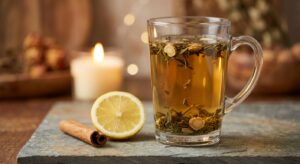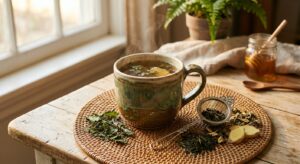
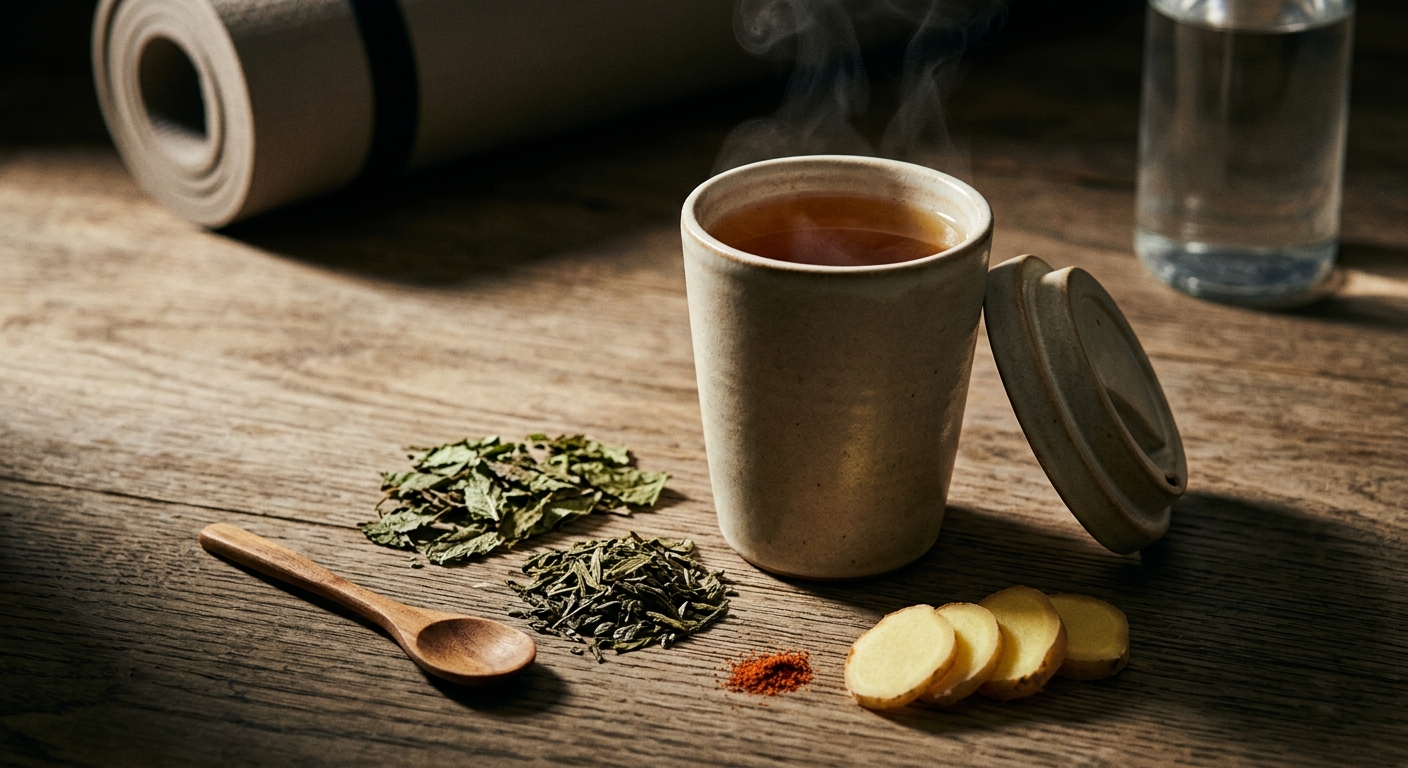
Before synthetic pre-workout powders lined supplement shelves, athletes and warriors turned to nature for their edge. Ancient Chinese soldiers sipped green tea before battle for mental clarity. Ayurvedic practitioners prescribed ginger and tulsi blends to build stamina and reduce fatigue. Peppermint was used by Greek and Roman athletes to cool the body and invigorate the senses before competition. These traditions were not mere ritual. They were informed observations about how specific plants could prime the body and mind for peak performance.
This pre-workout herbal tea combines three botanicals with complementary and synergistic effects: green tea (Camellia sinensis) provides a measured caffeine lift paired with L-theanine for calm, focused alertness; ginger (Zingiber officinale) increases circulation and reduces exercise-induced inflammation; and peppermint (Mentha piperita) opens the airways, sharpens mental arousal, and has been shown to influence perceived exertion during training. Together they create a complete performance blend that works with your body rather than overwhelming it.
What sets this blend apart from commercial pre-workouts is its gentleness on the adrenal system and digestive tract. There are no megadoses of synthetic caffeine, no artificial sweeteners, and no ingredient lists that read like a chemistry textbook. You get real, traceable plant compounds doing exactly what centuries of use and modern research confirm they do well: wake you up, clear your head, warm your muscles, and get you moving.
2
cups
Ingredients
- 2 tsploose-leaf green tea (sencha or gunpowder)
- 1 tspdried peppermint leaf
- 4 slicesfresh ginger root (peeled, about 3mm thick)
- 500 mlwater (80°C / 176°F)
- —1/4 tsp raw honey or maple syrup (optional)
- —a pinch of cayenne pepper (optional, for extra circulation boost)
How to Brew
Click on an item below to shop for the recommended items for this recipe on Amazon.
As an Amazon Associate, we earn from qualifying purchases.
- Bring fresh filtered water to 80°C (176°F). If you do not have a temperature-controlled kettle, boil water and let it rest uncovered for 4 minutes before pouring.
- Warm your teapot or mug by rinsing it with a small splash of hot water, then discard. This prevents the brew temperature from dropping sharply when you add the herbs.
- Add the green tea, dried peppermint leaf, and fresh ginger slices directly to a tea infuser or teapot. If using a teapot, allow the leaves to float freely for better extraction.
- Pour the 80°C water over the herbs and steep for exactly 3 to 4 minutes. Set a timer. Green tea becomes astringent quickly, so do not steep longer than 4 minutes.
- Remove the infuser or strain the blend into your mug. Add a small amount of raw honey or maple syrup if desired. Drink 20 to 30 minutes before your workout.
- Add the green tea, dried peppermint leaf, and fresh ginger slices to a clean glass jar or pitcher. No need to warm the vessel.
- Pour 500 ml of cold, filtered water (room temperature is fine) directly over the herbs. The slow, cold extraction will not scorch the green tea or release harsh tannins.
- Stir gently to ensure all herbs are submerged, then seal the jar with a lid or cover the pitcher with plastic wrap.
- Place the jar in the refrigerator and allow it to steep for 6 to 8 hours or overnight. The longer end of that range produces a more robust flavor and higher catechin concentration.
- When ready, strain the herbs out through a fine mesh strainer or cheesecloth into a bottle or glass. The cold brew keeps refrigerated for up to 24 hours. Drink chilled or pour over ice 20 minutes before your session.
- Double the herb quantities: use 4 tsp green tea, 2 tsp dried peppermint leaf, and 8 slices of fresh ginger. Keep the water volume at 500 ml at 80°C (176°F).
- Steep the double-strength blend for exactly 4 minutes in a teapot or heatproof pitcher with an infuser. Use a timer and remove the herbs promptly to avoid bitterness.
- Strain the concentrate into a clean glass bottle or jar and allow it to cool to room temperature, then refrigerate. The concentrate keeps well for up to 3 days.
- When ready to use, pour 125 ml of concentrate into a glass or shaker bottle and dilute with 125 ml of cold water or sparkling water. Stir well, add ice if desired, and consume 20 to 30 minutes before training.
- For added performance support, stir in a small amount of raw honey before diluting for a natural carbohydrate source alongside the herbal compounds.
Health Benefits
The combination of caffeine and L-theanine in green tea produces a uniquely focused cognitive state that outperforms caffeine alone in multiple randomized controlled trials. This pairing improves reaction time, working memory, and sustained attention, all of which are critical for skill-based or technical training sessions.
Caffeine is one of the most rigorously researched ergogenic aids in sports science, consistently shown to improve endurance performance by 2 to 5 percent in trained athletes. Green tea’s EGCG also supports fat oxidation during aerobic exercise, helping to spare glycogen stores and extend stamina.
Peppermint has been specifically studied in exercise contexts, with a 2014 study published in the Journal of the International Society of Sports Nutrition finding that peppermint supplementation improved grip strength, respiratory function, and time to exhaustion while reducing perceived exertion scores in healthy male athletes.
Ginger stimulates thermogenesis and peripheral circulation by activating TRPV1 receptors and promoting vasodilation, effectively increasing blood flow to skeletal muscles. Drinking ginger tea before exercise may support the warmup process and prime muscles for contraction more efficiently.
Both ginger and peppermint contain potent anti-inflammatory compounds that inhibit COX-2 enzymes, similar in mechanism to non-steroidal anti-inflammatory drugs but without gastrointestinal side effects at culinary doses. Regular consumption may reduce post-exercise soreness and support faster recovery.
🧪 Key Bioactive Compounds
The Science Behind Green Tea
The science behind this pre-workout blend is rooted in complementary mechanisms that address the multiple physiological demands of exercise preparation. Green tea’s most celebrated compound, L-theanine, modulates alpha-wave electrical activity in the brain, producing a state of calm focus rather than the edgy stimulation of caffeine alone. When combined, as they naturally are in Camellia sinensis leaf, caffeine and L-theanine create a synergistic cognitive effect that has been confirmed in multiple double-blind placebo-controlled human trials. The ratio found in a properly brewed cup, roughly 2:1 caffeine to L-theanine, appears to be the sweet spot for performance enhancement without overstimulation. EGCG, the dominant catechin in green tea, additionally supports mitochondrial biogenesis and has been shown to enhance fat oxidation at moderate exercise intensities, making this blend useful for both endurance and body composition goals.
Ginger’s primary bioactive compound in fresh root, 6-gingerol, converts to 6-shogaol during drying, and both forms act as potent COX-2 inhibitors and TRPV1 agonists. The TRPV1 activation generates a thermogenic response, increasing core temperature and peripheral blood flow, which functionally mimics aspects of an active warmup at the cellular level. Several randomized trials have also examined ginger’s effects on delayed-onset muscle soreness, with meta-analyses suggesting that 2 grams of ginger daily, consumed around training, significantly reduces muscle pain 24 to 48 hours post-exercise. While a single cup delivers a smaller dose than study protocols, habitual pre-workout use accumulates meaningfully.
Peppermint’s performance effects are surprisingly well-documented for an herb often dismissed as a flavoring agent. The menthol in peppermint activates TRPM8 cold receptors in the mouth and airways, signaling the brain to reduce its perception of heat stress and physical effort. A key mechanistic pathway involves the modulation of the reticular activating system, the brain region governing alertness and arousal, which explains the almost immediate sensory sharpening that occurs upon inhaling or consuming peppermint. The rosmarinic acid in peppermint leaf adds antioxidant and anti-inflammatory activity that complements EGCG from green tea, creating a dual-source oxidative defense system that supports muscle cell integrity during and after intensive training.
Brewing Tips
- Brew this tea 20 to 30 minutes before your workout, not immediately beforehand. This gives the caffeine time to cross the blood-brain barrier fully and allows ginger to begin increasing circulation before you start training.
- For morning workouts, prepare the cold brew the night before and store it in your gym bag in an insulated bottle. Cold-brewed green tea is smoother, less acidic, and just as effective as hot brew for pre-workout purposes.
- Use gunpowder green tea for a more robust, slightly smoky flavor and a marginally higher caffeine content than standard sencha. For a lighter, more floral option with comparable catechin levels, try Dragon Well (Longjing).
- Avoid adding milk or cream to this blend. Casein proteins in dairy bind to catechins and reduce their bioavailability significantly, diminishing the antioxidant and performance benefits of the green tea.
- If you train in the evening, swap the green tea base for rooibos, which provides rosmarinic acid and antioxidants without caffeine, and retain the ginger and peppermint for their non-stimulant performance benefits.