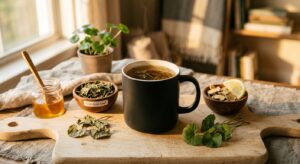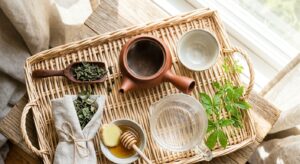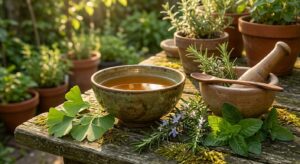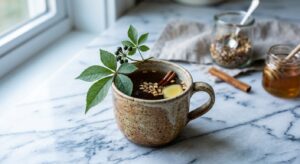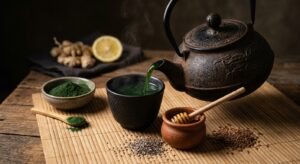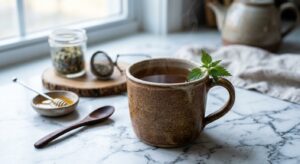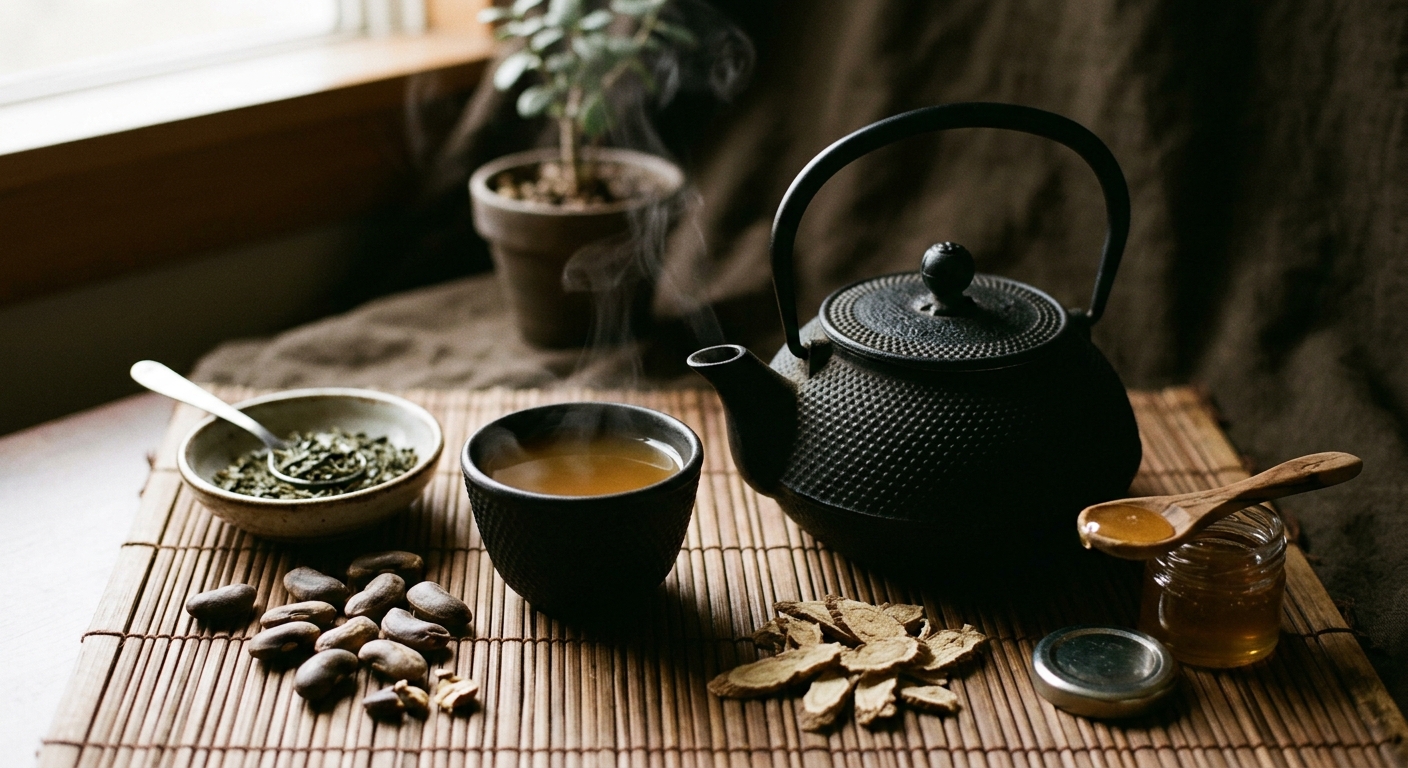
Long before neuroscience gave us the word dopamine, traditional herbalists across India, China, and Scandinavia were reaching for the same plants to lift mood, sharpen focus, and restore a sense of purposeful energy. Mucuna pruriens, known in Ayurvedic medicine as Kapikacchu, has been used for over 4,000 years as a rejuvenating tonic, prized for its ability to calm the nervous system and kindle mental vitality. Rhodiola rosea, the golden root of Siberian shamans and Viking warriors, was carried on long expeditions to sustain courage and stamina. Green tea, revered in East Asian traditions, provided a calm alertness that Buddhist monks valued for meditation sessions lasting hours.
What unites these botanicals is their demonstrated influence on dopaminergic activity in the brain. Dopamine is far more than the so-called pleasure chemical. It governs motivation, sustained attention, the desire to pursue goals, and the satisfying feeling of completing a task. When dopamine signaling falters, the result is often brain fog, procrastination, emotional flatness, and the inability to find joy in ordinary activities. Modern stressors, poor sleep, and nutritional gaps can all quietly erode dopamine function, and this tea blend offers a gentle, evidence-informed way to support its restoration.
This blend is designed as a purposeful morning or early afternoon ritual, not a shortcut or a stimulant spike. The L-DOPA precursor in mucuna, the adaptogenic rosavins in rhodiola, and the L-theanine and EGCG in green tea work synergistically to support neurotransmitter balance, adrenal health, and focused calm. Brewed correctly, the result is a tea that tastes earthy, gently vegetal, and faintly floral, with a warm complexity that rewards slow sipping and intentional preparation.
2
cups
Ingredients
- 1 tspmucuna pruriens powder or broken seed pieces
- 1 tspdried rhodiola rosea root, finely sliced
- 1 tsploose-leaf green tea (sencha or dragon well)
- 0.5 tspdried holy basil (tulsi) leaves
- 480 mlwater (80°C / 176°F for hot brew)
- —raw honey or maple syrup to taste (optional)
- —a thin slice of fresh ginger (optional, for warmth)
How to Brew
Click on an item below to shop for the recommended items for this recipe on Amazon.
As an Amazon Associate, we earn from qualifying purchases.
- Begin by lightly dry-toasting the sliced rhodiola root in a small dry saucepan over low heat for 60 to 90 seconds, until it releases a faint earthy, rose-like aroma. This step opens up the root’s cell structure and improves extraction without requiring a full decoction.
- Heat your water to 80 to 85°C (176 to 185°F). If you do not have a temperature-controlled kettle, bring water to a full boil, then pour it into your mug and allow it to cool for 3 to 4 minutes before proceeding.
- Add the toasted rhodiola slices, mucuna powder, tulsi leaves, and loose-leaf green tea to a fine-mesh tea infuser or a small teapot strainer. Combine all four herbs in the infuser together so the flavors meld from the start.
- Place the infuser in your mug or teapot. Pour the 80 to 85°C water gently over the herbs, filling the vessel. Place a small saucer or lid over the top to trap the volatile aromatic compounds and prevent heat loss.
- Steep for exactly 5 to 7 minutes. At 5 minutes the tea is brighter and lighter with more prominent green tea character. At 7 minutes it deepens to a more earthy, full-bodied cup with more rhodiola presence. Avoid exceeding 8 minutes, as bitterness from the mucuna and green tea tannins intensifies sharply.
- Remove the infuser and stir gently. Add honey or maple syrup if desired. Sip slowly and ideally pair this with a light morning meal or a handful of nuts to support amino acid absorption alongside the L-DOPA precursors in mucuna.
- Use a 1.5x increase in herb quantity compared to hot brewing, as cold water extracts compounds more slowly and less completely. Combine 1.5 tsp mucuna powder, 1.5 tsp sliced rhodiola root, 1.5 tsp loose-leaf green tea, and 0.75 tsp tulsi leaves directly in a glass jar.
- Pour 480 ml of filtered room-temperature water (around 20 to 22°C / 68 to 72°F) directly over the herbs. Do not use hot water at any point, as heat would activate tannin extraction and eliminate the signature smoothness of the cold brew method.
- Stir gently with a long spoon to ensure all the mucuna powder is fully submerged and not clumping on the surface. Place a loose lid or cheesecloth over the jar.
- Transfer the jar immediately to the refrigerator. Allow it to steep undisturbed for 10 to 14 hours. Ten hours yields a lighter, crisper result. Fourteen hours produces a fuller body with more rhodiola depth. Do not exceed 16 hours, as rhodiola can develop an overly resinous, medicinal sharpness.
- Strain the blend through a fine-mesh sieve lined with cheesecloth or a paper coffee filter to catch the mucuna particles and any fine root fragments. Pour over a glass of ice and add a squeeze of citrus or a few fresh mint leaves to brighten the flavor if desired.
- In a small saucepan, combine 1 tsp sliced rhodiola root and 1 tsp mucuna powder with 240 ml of water. Bring to just below a simmer, targeting 90°C (194°F). Do not allow the liquid to reach a rolling boil, which can break down rosavins and degrade mucuna’s L-DOPA content.
- Maintain a gentle low simmer for 12 to 15 minutes, stirring occasionally. The liquid will reduce slightly and deepen to a warm amber-brown. Remove from heat and allow to cool for 2 minutes.
- While the concentrate rests, brew a fresh, separate cup of green tea and tulsi at 80°C (176°F) for 3 minutes in a tea infuser, using 1 tsp green tea and 0.5 tsp tulsi per cup. This short steep captures L-theanine and EGCG without bitterness.
- Strain the adaptogen concentrate through a fine-mesh sieve into a mug, pressing the solids gently with a spoon to extract the last of the liquid. Discard the spent root material.
- Pour the freshly brewed green tea and tulsi infusion directly into the mug with the strained concentrate. Stir to combine. Taste before adding any sweetener, as the concentrate carries a rich, complex earthiness that many drinkers find satisfying on its own. Add honey only if needed.
Health Benefits
Mucuna pruriens contains measurable concentrations of naturally occurring L-DOPA, the direct metabolic precursor to dopamine. Clinical studies, including a landmark trial published in the Journal of Alternative and Complementary Medicine, have confirmed that mucuna seed powder elevates dopamine and related catecholamines in the brain, supporting mood, motivation, and reward-processing without the side-effect profile associated with synthetic pharmaceutical L-DOPA.
Rhodiola rosea has been evaluated in multiple double-blind, placebo-controlled human trials and consistently reduces symptoms of mental fatigue, poor concentration, and cognitive decline under stress. A 2009 study in Planta Medica found significant improvements in attention and speed of cognitive tasks in fatigued subjects after just 14 days of rhodiola supplementation.
The combination of L-theanine and a moderate amount of caffeine in green tea is one of the most well-documented cognitive-enhancing pairings in nutritional science. Together they produce a state of relaxed alertness, improving reaction time, working memory, and task accuracy, with the L-theanine dampening the anxiety and blood pressure elevation that caffeine alone can cause.
Both EGCG from green tea and salidroside from rhodiola have demonstrated neuroprotective properties in research settings, helping to defend dopaminergic neurons from oxidative damage. This is particularly relevant given that oxidative stress is implicated in the gradual decline of dopamine-producing neurons associated with aging and chronic stress.
Rhodiola and tulsi both act as true adaptogens, meaning they modulate the body’s stress-response systems rather than simply stimulating or suppressing them. By normalizing cortisol rhythms and protecting adrenal function, they help prevent the chronic cortisol elevation that gradually depletes dopamine signaling, making this blend particularly useful during periods of high workload or emotional strain.
🧪 Key Bioactive Compounds
The Science Behind Mucuna Pruriens (Kapikacchu)
The scientific case for this blend centers on the concept of supporting the dopamine synthesis pathway at multiple points simultaneously. Dopamine is synthesized from the amino acid tyrosine, which is first converted to L-DOPA by the enzyme tyrosine hydroxylase, and then to dopamine itself by DOPA decarboxylase. Mucuna pruriens bypasses the first enzymatic step entirely by delivering preformed L-DOPA directly, a mechanism so clinically significant that mucuna has been evaluated in formal Parkinson’s disease trials as a botanical alternative to pharmaceutical levodopa preparations. A 2004 pilot study published in the Journal of Alternative and Complementary Medicine found that 30 grams of mucuna seed powder produced a faster onset of motor benefit and a lower peak-dose dyskinesia rate compared to standard levodopa-carbidopa in Parkinson’s patients, suggesting that cofactors naturally present in the whole seed may modulate how L-DOPA is absorbed and utilized.
Rhodiola rosea contributes through a different mechanism, acting primarily on dopamine’s degradation and stress-driven depletion rather than its synthesis. Its two signature compounds, salidroside and rosavin, have been shown in multiple studies to inhibit monoamine oxidase (MAO), the enzyme responsible for breaking down dopamine, norepinephrine, and serotonin in the brain. By slowing this breakdown, rhodiola effectively extends the functional lifespan of available dopamine without directly flooding the system with precursors. Additionally, its well-documented effects on the hypothalamic-pituitary-adrenal (HPA) axis mean it reduces the cortisol spikes that chronically suppress dopamine receptor sensitivity, addressing one of the most common modern causes of low dopamine tone: ongoing stress.
Green tea’s contribution is perhaps the most nuanced. EGCG has been shown in in vitro and animal models to inhibit COMT, an enzyme that degrades catecholamines including dopamine in the synaptic cleft, potentially prolonging dopaminergic signaling in a targeted, tissue-specific way. Meanwhile, L-theanine independently modulates glutamate receptors and influences dopamine release in specific brain regions associated with attention and reward, including the nucleus accumbens and the prefrontal cortex. Human EEG studies have confirmed that L-theanine increases alpha-wave activity within 40 minutes of ingestion, a brainwave pattern associated with creative, focused calm. When combined with the modest caffeine in green tea, the net effect is a form of alert attentiveness that is qualitatively different from caffeine alone, smoother in onset and more cognitively specific rather than broadly stimulating.
Brewing Tips
- Mucuna powder can settle quickly in hot water. Stir the tea gently just before each sip to keep the powder in suspension and ensure you receive a consistent dose of L-DOPA throughout the cup.
- Drink this tea in the morning or early afternoon only. Rhodiola is mildly stimulating and can interfere with sleep quality if consumed within six hours of bedtime. Reserve evening herbal rituals for calming herbs like chamomile or passionflower.
- Source your mucuna from a reputable supplier that provides standardized L-DOPA content on the label, ideally 15% or lower for a tea-appropriate dose. Highly concentrated extracts (40% or above) are intended for capsule supplementation and are far too potent for a daily tea preparation.