Long before modern nootropics crowded supplement shelves, scholars in ancient Greece wore garlands of rosemary around their heads while studying, believing the herb could strengthen memory and sharpen the mind. That tradition was not mere superstition. Rosemary (Salvia rosmarinus, formerly Rosmarinus officinalis) has been used across Greek, Roman, Egyptian, and European herbal traditions as a tonic for the brain, a stimulant for the nervous system, and a fragrant companion to rituals of remembrance and celebration. Its very name is thought to derive from the Latin ros maris, meaning “dew of the sea,” a nod to its native coastal Mediterranean habitat where it thrives in salt air and rocky soil.
In medieval European herbalism, rosemary was prescribed to lift melancholy, improve circulation to the head, and fortify the mind against fatigue. The sixteenth-century herbalist John Gerard wrote that rosemary “comforteth the brain” and recommended it as a daily remedy for those engaged in intense mental labor. Ayurvedic and Unani traditions similarly recognized rosemary as a warming, stimulating herb suited to conditions of mental fog, sluggishness, and poor concentration. It was also widely used to ease tension headaches, support digestion, and promote healthy circulation, making it a genuinely multi-purpose plant ally.
What makes rosemary particularly compelling as a focus tea is the combination of volatile aromatic compounds and potent antioxidant polyphenols that work through complementary pathways in the body. A warm cup of rosemary tea delivers a sharp, invigorating aroma that alone has been shown to influence cognitive performance, while the bioactive compounds absorbed through the gut support neurochemistry, reduce oxidative stress, and promote blood flow to the brain. It is one of the few herbal teas where simply inhaling the steam as you brew may be as beneficial as drinking it.
2
cups
Ingredients
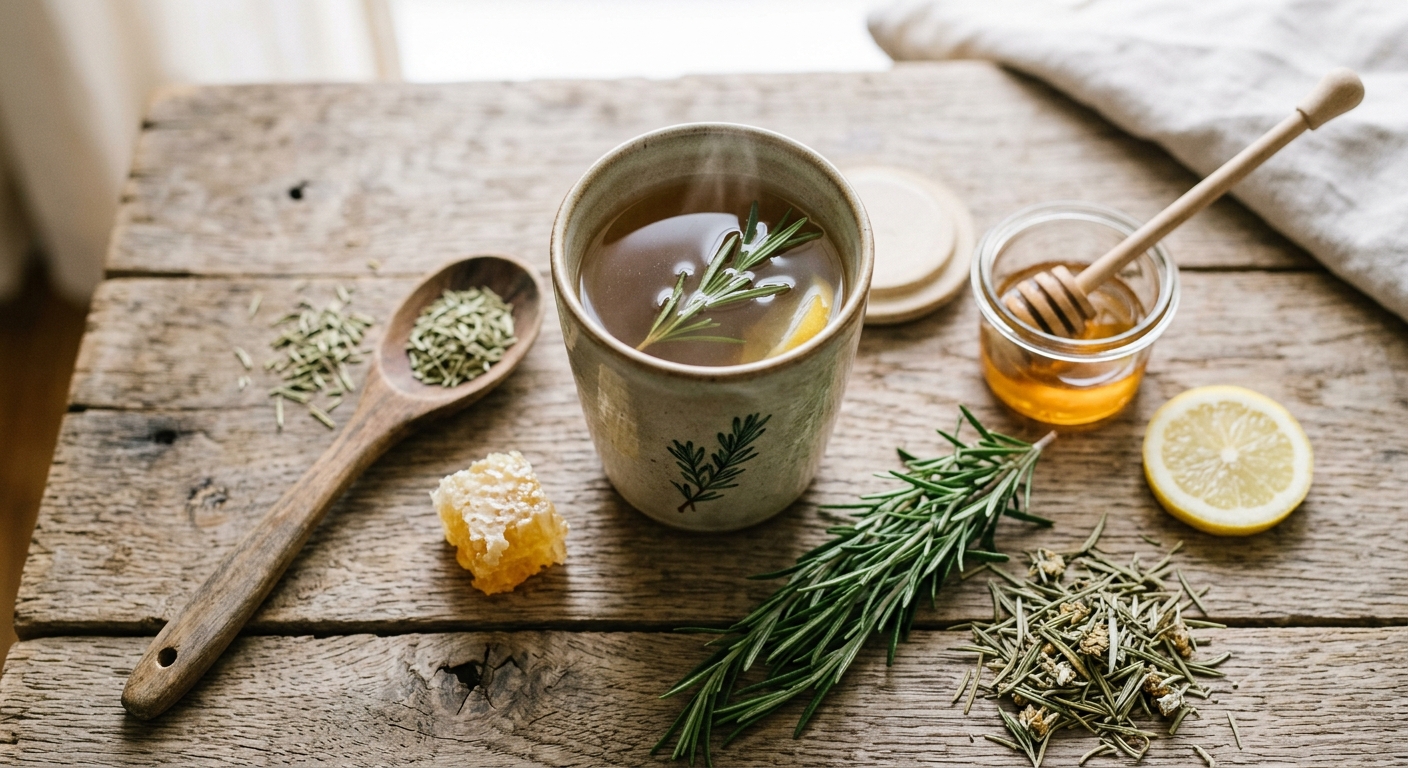
- 2 tspfresh rosemary sprigs (or 1 tsp dried rosemary leaves)
- 480 mlwater (90 to 95°C / 194 to 203°F)
- —raw honey or lemon slice to taste (optional)
How to Brew
Click on an item below to shop for the recommended items for this recipe on Amazon.
As an Amazon Associate, we earn from qualifying purchases.
- Heat fresh filtered water to 90 to 95°C (194 to 203°F). If you do not have a temperature-controlled kettle, bring water to a full boil and let it rest for 2 minutes before pouring.
- Place 1 teaspoon of fresh rosemary sprigs (or half a teaspoon of dried rosemary) per 240 ml cup into a tea infuser or directly into your mug. For fresh rosemary, gently bruise the sprig between your fingers to release the volatile oils before adding it to the infuser.
- Pour the hot water slowly over the rosemary, filling the mug. As you pour, lean in and inhale the rising steam intentionally. The aromatic compounds 1,8-cineole and camphor are released immediately upon contact with hot water, and even brief inhalation can begin to sharpen alertness.
- Cover the mug with a small saucer or lid to trap the volatile oils inside the cup and steep for 5 to 7 minutes. Steeping uncovered allows the most potent aromatic compounds to escape into the air rather than remaining in your brew.
- Remove the infuser or strain the tea. Taste before adding any sweetener. If the brew is too resinous or bitter, reduce steep time by 1 to 2 minutes next time. Add a thin slice of lemon or a small amount of raw honey if desired, both of which complement rosemary’s piney character beautifully.
- Use a ratio of 2 teaspoons of fresh rosemary sprigs (or 1 teaspoon dried) per 240 ml of cold, filtered water. Because cold water extracts compounds more slowly and selectively, you can use a slightly higher herb ratio than for hot brewing without producing an unpleasantly bitter result.
- Lightly bruise fresh rosemary sprigs by pressing them firmly against a cutting board with the flat of a knife or rolling them between your palms for a few seconds. This breaks the surface of the leaves just enough to accelerate oil release during the slow cold extraction.
- Add the bruised rosemary to a glass jar or pitcher. Pour cold filtered water over the herb, making sure all the rosemary is fully submerged. You can use a small spoon to press the sprigs beneath the waterline. Seal the jar with a lid.
- Allow the jar to sit at room temperature for 1 hour, then transfer it to the refrigerator. Let it steep for a total of 8 to 12 hours (overnight works perfectly). Cold brewing at a lower temperature slows extraction and yields a tea that emphasizes rosemary’s lighter floral and green notes while minimizing its more aggressive camphorous bitterness.
- Strain the tea through a fine mesh strainer into a glass filled with ice. Taste before sweetening. A squeeze of fresh lemon juice brightens the flavor considerably and pairs naturally with rosemary’s herbal sharpness.
- Select a clear glass jar or pitcher so sunlight can pass directly through the water and gently warm the brew. Wash the vessel thoroughly before use.
- Add 3 to 4 fresh rosemary sprigs (or 1.5 teaspoons of dried rosemary) per 480 ml of cold filtered water. For added complexity and a bright citrus note that complements rosemary’s piney character, add two or three thin slices of fresh lemon directly to the jar.
- Seal the jar and place it in a sunny outdoor spot or on a sun-facing windowsill for 3 to 4 hours. The gentle, consistent warmth of the sun slowly coaxes the aromatic oils and polyphenols from the rosemary without ever reaching temperatures that would volatilize and destroy the most delicate fragrant compounds.
- After steeping, bring the jar indoors and refrigerate it immediately for at least 30 minutes before serving. This step is important for both flavor and food safety, as sun-brewed teas should be consumed the same day and kept chilled once removed from the sun.
- Strain into tall glasses filled with ice. Taste and adjust with a small amount of honey or a few extra drops of lemon juice. Sun tea rosemary brew has a gentler, more honeyed quality than hot-brewed rosemary and is a deeply pleasant way to enjoy the herb in warm weather.
Health Benefits
Multiple compounds in rosemary, particularly 1,8-cineole and alpha-pinene, inhibit the enzyme acetylcholinesterase, which breaks down acetylcholine, a neurotransmitter central to memory formation and learning. A 2012 study published in Therapeutic Advances in Psychopharmacology found that blood serum levels of 1,8-cineole directly correlated with improved speed and accuracy on cognitive tasks in healthy adults.
Rosemary’s stimulating volatile compounds, including camphor and 1,8-cineole, activate the central nervous system and promote cerebral circulation, delivering more oxygenated blood to the brain. Research has demonstrated that even aromatherapeutic exposure to rosemary’s volatiles improves alertness and reduces the subjective experience of mental fatigue.
Rosmarinic acid and carnosic acid are among the most bioavailable antioxidants in the herbal world. Carnosic acid activates the Nrf2 signaling pathway, which stimulates the brain’s own production of antioxidant enzymes, offering a self-reinforcing layer of protection against oxidative neuronal damage linked to age-related cognitive decline.
Rosemary’s vasodilatory and circulatory-stimulating properties, attributed largely to its volatile terpene content and rosmarinic acid, have been used traditionally to relieve tension headaches associated with poor circulation or mental overwork. Improved blood flow to the scalp and brain may reduce the frequency and intensity of stress-related head tension.
Rosemary has long been used as a carminative herb that eases bloating, gas, and digestive sluggishness, particularly the kind associated with stress-related nervous system dysregulation. Its anti-spasmodic properties help relax smooth muscle in the gastrointestinal tract, making it a useful companion herb for those who experience gut discomfort alongside mental fatigue or anxiety.
🧪 Key Bioactive Compounds
The Science Behind Rosemary
The cognitive-enhancing reputation of rosemary is backed by a compelling and growing body of scientific evidence. The primary mechanism centers on acetylcholine, a neurotransmitter that plays a central role in attention, working memory, and learning. The enzyme acetylcholinesterase normally degrades acetylcholine after it has been used in synaptic signaling. Two of rosemary’s most abundant volatile compounds, 1,8-cineole (also known as eucalyptol) and alpha-pinene, have been identified as acetylcholinesterase inhibitors, meaning they slow this breakdown process and allow acetylcholine to remain active in synaptic gaps for longer. This is the same basic mechanism used by several pharmaceutical drugs prescribed for Alzheimer’s disease, which places rosemary in a genuinely significant pharmacological category, albeit working through gentler, reversible inhibition at the concentrations found in a cup of tea.
Beyond acetylcholine preservation, rosemary’s polyphenolic compounds offer a second, complementary layer of neuroprotection through antioxidant and anti-inflammatory pathways. Rosmarinic acid is one of the most bioavailable plant polyphenols known, easily absorbed through the gut and capable of crossing the blood-brain barrier. Once inside the central nervous system, it neutralizes reactive oxygen species (free radicals) that can damage neurons and impair synaptic function over time. Carnosic acid works differently: rather than acting as a direct antioxidant, it activates the Nrf2 transcription factor, which acts as a master switch for the cell’s own antioxidant defense program. This means carnosic acid essentially teaches neurons to better protect themselves, a more durable form of neuroprotection than simple free radical scavenging.
Perhaps the most fascinating aspect of rosemary’s science is the evidence that its benefits are not limited to oral consumption. A landmark 2012 study by Moss and colleagues, published in Therapeutic Advances in Psychopharmacology, measured blood concentrations of 1,8-cineole in participants who had been in a rosemary-scented room and found a direct dose-response correlation between cineole serum levels and performance on validated cognitive tests assessing speed and accuracy. This demonstrates that the volatile compounds in rosemary are readily absorbed through the olfactory mucosa and lungs and reach meaningful circulating concentrations simply through inhalation. For tea drinkers, this means that the ritual of steeping and inhaling the steam before the first sip is not merely pleasant ceremony, it is genuinely pharmacologically active.
Brewing Tips
- Always cover your mug while steeping rosemary tea. The most potent cognitive compounds, including 1,8-cineole and camphor, are highly volatile and will escape into the air if the cup is left open, reducing both the aroma and the therapeutic potency of the finished brew.
- Fresh rosemary produces a noticeably brighter, more aromatic tea than dried. If you have access to a living rosemary plant or fresh sprigs from a market, use them. Rinse the sprigs, gently bruise them to release the oils, and use roughly twice the volume compared to dried herb.
- Time your rosemary focus tea intentionally. Because it contains stimulating compounds that promote circulation and alertness, it is best enjoyed in the morning or early afternoon. Drinking rosemary tea in the evening may interfere with sleep, particularly for those sensitive to stimulants.