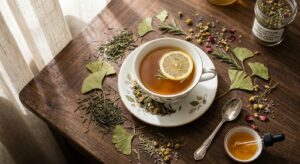
Brain fog is one of the most frustrating experiences of modern life: that heavy, cotton-wool sensation that makes it hard to think clearly, recall words, or concentrate on even simple tasks. While it can stem from many causes, including poor sleep, stress, dehydration, or nutritional gaps, herbalists across centuries have reached for a remarkably consistent toolkit of plants to clear the mind. Rosemary, ginkgo biloba, and peppermint form one of the most time-honored and scientifically supported combinations for cognitive support in the herbal tradition.
Rosemary has been associated with memory since antiquity. Ancient Greek scholars wore garlands of it during examinations, and Shakespeare famously wrote in Hamlet, ‘There’s rosemary, that’s for remembrance.’ Modern researchers have validated this folk wisdom, identifying rosemary’s aromatic compounds as inhibitors of acetylcholinesterase, the enzyme that breaks down the neurotransmitter acetylcholine, which is central to learning and memory. Ginkgo biloba, one of Earth’s oldest living tree species, has been used in Traditional Chinese Medicine for over a thousand years and remains one of the most studied botanicals for cerebral blood flow and cognitive function. Peppermint brings a bright, cooling energy that has been shown to heighten alertness and working memory through inhalation alone, making it both an aromatic and medicinal partner in this blend.
Together, these three herbs create a tea that is brisk and invigorating on the palate, with the piney warmth of rosemary, the cool menthol lift of peppermint, and the subtle earthiness of ginkgo leaf. It is a tea designed not for quiet winding down, but for those mornings or afternoons when you need your mind to show up fully. Brew it hot for an immediate sensory jolt, steep it cold overnight for a smoother sipping experience, or make a concentrated syrup to blend into your daily routine with ease.
2
cups
Ingredients
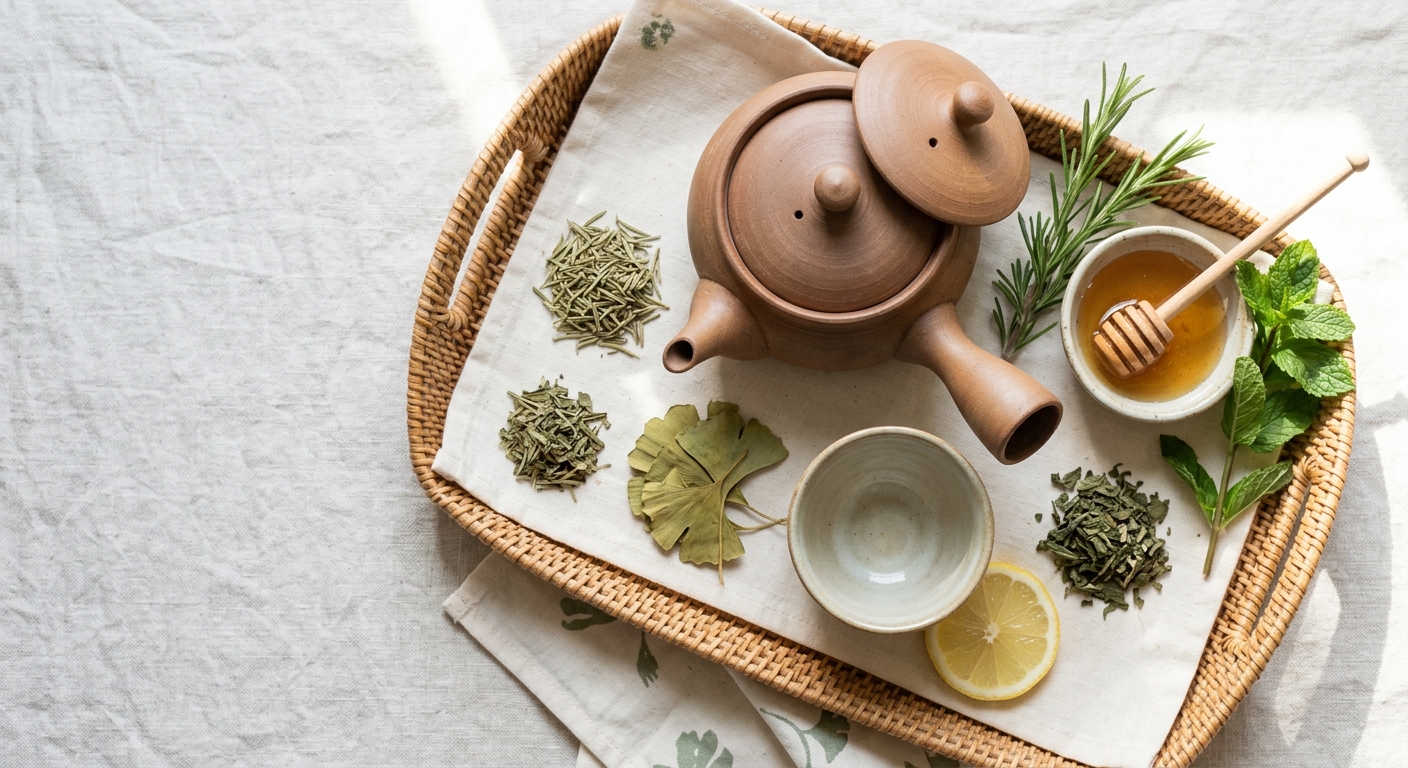
- 2 tspfresh or dried rosemary leaves
- 1 tspdried ginkgo biloba leaf
- 1 tspdried peppermint leaf
- 480 mlwater (90°C / 194°F)
- —raw honey or lemon slice to taste (optional)
How to Brew
Click on an item below to shop for the recommended items for this recipe on Amazon.
As an Amazon Associate, we earn from qualifying purchases.
- Heat filtered water to 90 to 95°C (194 to 203°F) using an electric kettle with temperature control, or bring to a full boil and allow to cool for 90 seconds before using.
- Add 2 tsp rosemary leaves, 1 tsp dried ginkgo biloba leaf, and 1 tsp dried peppermint leaf per 480 ml of water to a tea infuser or infusing teapot. If using fresh rosemary, lightly bruise the sprig between your fingers before placing it in the infuser to release the volatile oils.
- Pour the hot water over the herb blend, immediately cover the mug or teapot with a lid or small plate to trap the aromatic steam, which carries active menthol and rosemary compounds. This step meaningfully enhances the cognitive aromatherapy effect.
- Steep for 7 to 10 minutes. Taste at 7 minutes: the peppermint should be bright and cooling, the rosemary piney and forward. Steeping to 10 minutes deepens the ginkgo’s earthy, slightly bitter base notes.
- Remove the infuser and take a slow, intentional inhale over the cup before drinking. This aromatherapy moment is not incidental – research shows rosemary and peppermint volatiles enhance alertness even through inhalation. Add honey or a squeeze of lemon if desired, then drink while hot.
- Measure 2 tsp rosemary, 1 tsp dried ginkgo biloba leaf, and 1 tsp dried peppermint leaf into a clean glass jar. For cold brew, increase the total herb quantity by approximately 25 percent compared to hot brew, as cold water extracts compounds less efficiently. Use 2.5 tsp rosemary, 1.5 tsp ginkgo, and 1.5 tsp peppermint for every 480 ml if you prefer a stronger result.
- Pour 480 ml of cold filtered water over the herbs. Do not use hot or warm water. Stir briefly to ensure all plant material is submerged, then seal the jar with a lid.
- Allow the jar to sit at room temperature for 1 hour, then transfer it to the refrigerator. Steep for a total of 10 to 14 hours. Overnight works perfectly: prepare before bed and it is ready by morning.
- Strain through a fine mesh strainer or cheesecloth into a clean glass, pressing the herbs gently to extract the last of the liquid. The color will be a cooler, paler olive-green compared to the hot brew.
- Serve over ice for a refreshing focus drink, or drink chilled straight from the glass. Add a thin lemon slice or a few fresh mint leaves for a bright, visual, and aromatic finish.
- Combine 8 tsp dried rosemary, 4 tsp dried ginkgo biloba leaf, and 4 tsp dried peppermint leaf in a small saucepan. This is a 4x batch designed to yield concentrate for multiple servings.
- Add 480 ml of filtered water to the saucepan and heat gently over medium-low heat until the water reaches 85 to 90°C (185 to 194°F). Use a thermometer to avoid boiling, as excessive heat will volatilize the aromatic compounds you most want to preserve.
- Reduce heat to its lowest setting, cover the saucepan with a tight-fitting lid, and steep for 20 to 25 minutes. The low, covered simmer slowly draws out the denser phenolic compounds and flavonoids from ginkgo and rosemary without destroying the volatile oils.
- Remove from heat and allow the concentrate to cool, covered, for an additional 10 minutes. Then strain through a fine mesh strainer lined with cheesecloth into a small glass jar or bottle, pressing the herbs firmly.
- Label and refrigerate the concentrate. It will keep for up to 5 days. To serve, pour 60 ml of concentrate into a mug and dilute with 180 ml of your preferred liquid. Stir in honey if desired. For an iced focus drink, combine 60 ml concentrate with 180 ml cold sparkling water and pour over ice.
Health Benefits
Rosmarinic acid and 1,8-cineole from rosemary inhibit acetylcholinesterase, maintaining higher levels of acetylcholine in synapses. Acetylcholine is the neurotransmitter most directly linked to memory encoding and retrieval, and studies in healthy adults show that rosemary aroma and ingestion improve recall speed and accuracy.
Ginkgo biloba’s ginkgolides and bilobalide improve microcirculation in the brain by inhibiting platelet aggregation and relaxing vascular smooth muscle. Multiple randomized controlled trials confirm that standardized ginkgo extract increases cerebral blood flow, delivering more oxygen and glucose to neurons under cognitive demand.
Peppermint’s menthol activates cold-receptor pathways that heighten arousal and sensory sharpness. A 2016 study published in the International Journal of Neuroscience found that participants exposed to peppermint aroma showed significantly improved memory and alertness compared to controls, an effect compounded when the herb is also ingested.
Ginkgo’s flavonol glycosides, including quercetin and kaempferol, scavenge reactive oxygen species that accumulate during periods of stress and fatigue. Oxidative stress at synapses is a key driver of cognitive sluggishness, and these compounds help maintain the integrity of neuronal membranes and signaling pathways.
The combined aromatic and bioactive compounds in this blend stimulate the central nervous system through sensory and biochemical pathways simultaneously. Studies on rosemary’s cognitive effects note that even 45 minutes of inhaling its volatiles while working improves alertness and task performance, making the act of brewing and drinking this tea part of its therapeutic effect.
🧪 Key Bioactive Compounds
The Science Behind Rosemary
The cognitive benefits of this three-herb blend are rooted in three distinct but complementary mechanisms. Rosemary works primarily through cholinergic modulation: its main phenolic compound, rosmarinic acid, inhibits acetylcholinesterase (AChE), the enzyme responsible for breaking down acetylcholine in the synaptic cleft. By slowing this breakdown, rosemary effectively extends the signaling window of acetylcholine, the neurotransmitter most tightly linked to attention, learning, and short-term memory. This is the same target as several pharmaceutical drugs used in early-stage Alzheimer’s disease, placing rosemary in a pharmacologically meaningful category of cognitive support herbs. Additionally, the volatile compound 1,8-cineole has been detected in human blood plasma after rosemary inhalation, confirming that it crosses the blood-brain barrier and directly influences neurochemistry rather than acting purely through sensory stimulation.
Ginkgo biloba contributes through vascular and neuroprotective pathways. Its unique terpenoid lactones, particularly ginkgolide B, are potent antagonists of platelet-activating factor (PAF), a lipid mediator involved in platelet aggregation and the narrowing of cerebral blood vessels. By inhibiting PAF, ginkgolides promote smoother blood flow through the fine capillaries of the brain, improving the delivery of oxygen and glucose to neurons that are working hard during cognitive tasks. Bilobalide, another ginkgo-specific compound, supports mitochondrial respiration in neurons and has demonstrated neuroprotective effects against hypoxic stress, suggesting it may help neurons function more efficiently even when circulation is impaired. Ginkgo’s flavonol glycosides simultaneously address oxidative stress at the synaptic level, neutralizing free radicals that degrade membrane integrity and impair signal transmission.
Peppermint’s contribution is both the most immediate and the most underappreciated scientifically. Menthol activates transient receptor potential melastatin 8 (TRPM8) channels, cold-sensing receptors present throughout the respiratory tract and trigeminal nerve pathways. This activation sends an alerting signal to the brainstem and limbic system, producing the characteristic feeling of heightened wakefulness and mental sharpness that follows inhaling peppermint. Controlled studies have shown that this effect is real and measurable: participants exposed to peppermint odor demonstrate faster reaction times, improved sustained attention, and better working memory performance than those exposed to a neutral or lavender aroma. When menthol is also consumed in tea, it interacts with gastrointestinal TRPM8 receptors, which are connected to vagal afferent pathways that feed back to the brain, reinforcing the alerting effect through a second independent physiological route.
Brewing Tips
- Use fresh rosemary if you can find it: bruising a fresh sprig releases significantly more 1,8-cineole than dried leaf, producing a more potent aromatic and cognitive effect in your cup.
- Always cover your mug while steeping. The volatile oils in rosemary and peppermint that are responsible for the alerting aromatherapy effect evaporate rapidly in open air, so a lid or small plate over the cup preserves them until you are ready to drink.
- Drink this tea in the late morning rather than first thing upon waking. Cortisol, your body’s natural alerting hormone, peaks within the first hour after waking. Saving this blend for the 10am to 2pm window targets the natural mid-morning dip and gives the herbs the best opportunity to make a perceptible difference in clarity and focus.