Fibromyalgia is not simply tiredness. It is a relentless, layered exhaustion that arrives with brain fog, widespread muscle pain, and a nervous system that never quite settles. For those living with this condition, conventional caffeine-based pick-me-ups often backfire, spiking cortisol and leaving the body feeling worse by afternoon. That is where plant medicine offers something genuinely different. Herbs like ashwagandha, eleuthero, and ginger have been used for centuries across Ayurvedic, Traditional Chinese, and European folk medicine traditions to rebuild vitality in those suffering from chronic illness and depletion.
This blend centers on eleuthero (Eleutherococcus senticosus), sometimes called Siberian ginseng, as its adaptogenic backbone. Unlike true ginseng, eleuthero is non-stimulating and deeply nourishing to the adrenal and immune systems, making it particularly well suited to people whose fatigue stems from a dysregulated stress response, which is central to fibromyalgia pathology. It is paired with ashwagandha root for its cortisol-balancing and anti-inflammatory action, peppermint for its invigorating menthol clarity and muscle-soothing antispasmodic properties, and fresh ginger to warm circulation and reduce the inflammatory signaling that amplifies fibromyalgia pain signals.
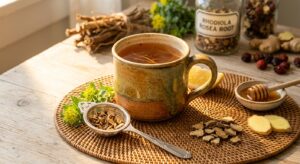
The resulting tea is warming, mildly spicy, and refreshingly bright, with the peppermint cutting through the earthier root herbs to create a drink that feels restorative rather than medicinal. It is not a cure, and it is not a substitute for professional care, but as a daily ritual, it supports the body’s own capacity to manage energy, stress, and inflammation in a way that caffeine simply cannot replicate.
2
cups
Ingredients
- 2 tspdried eleuthero root (cut and sifted)
- 1.5 tspdried ashwagandha root (cut and sifted)
- 1 tspdried peppermint leaf
- 4 slicesfresh ginger root (thin coins, about 3mm thick)
- 500 mlwater (filtered, cold for cold brew or 95°C / 203°F for hot brew)
- —raw honey or maple syrup to taste (optional)
- —a squeeze of fresh lemon juice (optional, brightens the blend)
How to Brew
Click on an item below to shop for the recommended items for this recipe on Amazon.
As an Amazon Associate, we earn from qualifying purchases.
- Combine the eleuthero root and ashwagandha root with 500ml of cold filtered water in a small saucepan. Starting from cold water allows more gradual extraction of the root compounds.
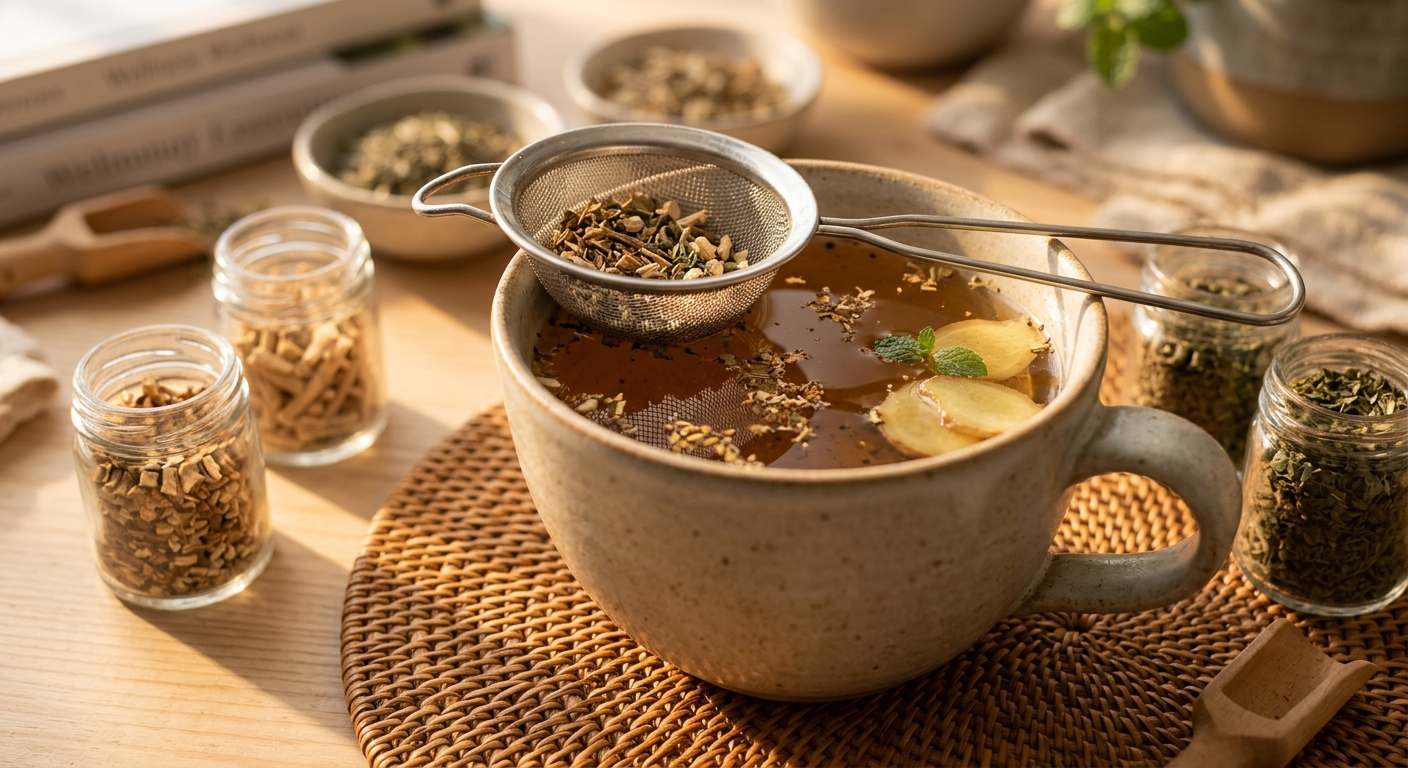
- Bring the water and roots to a gentle boil over medium heat, then immediately reduce to a low simmer. Cover the saucepan with a lid to retain volatile compounds and simmer for 10 minutes.
- Remove the saucepan from heat. Add the dried peppermint leaf and fresh ginger slices directly into the simmering liquid. Replace the lid and allow everything to steep together off the heat for 3 to 5 minutes. The residual heat is sufficient to extract peppermint oils without scorching them.
- Strain through a fine mesh strainer into two warmed mugs, pressing the herbs lightly with the back of a spoon to extract the last of the liquid.
- Add a squeeze of lemon juice and raw honey to taste if desired. Drink warm, ideally in the morning or early afternoon to support daytime energy without interfering with sleep.
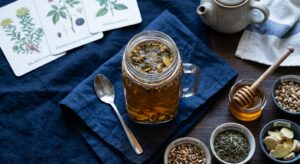
- Add the eleuthero root, ashwagandha root, fresh ginger slices, and dried peppermint to a clean glass jar. Do not crush or grind the roots, as coarse pieces release compounds slowly and evenly over the long cold-brew period.
- Pour 500ml of cold filtered water over the herbs. Stir briefly to ensure all plant material is submerged. Loosely cover the jar with a lid or a small plate.
- Leave the jar at room temperature for 1 hour to begin initial extraction, then transfer to the refrigerator. Allow to steep for a total of 10 to 12 hours (overnight is ideal).
- In the morning, strain the brew through a fine mesh strainer or cheesecloth into a clean jar or pitcher. Press gently on the spent herbs to recover remaining liquid.
- Serve over ice in a tall glass, or gently warm a portion in a small saucepan over low heat if you prefer a warm drink in the morning. Sweeten with maple syrup or honey and add lemon juice to taste. The cold brew keeps refrigerated for up to 48 hours.
- Multiply the eleuthero and ashwagandha root quantities by five (10 tsp eleuthero and 7.5 tsp ashwagandha) and add to a medium saucepan with 750ml of cold filtered water. This higher herb-to-water ratio, combined with longer cooking, creates a concentrated extract.
- Bring to a full boil, then reduce immediately to a low, steady simmer. Simmer uncovered for the first 15 minutes to allow the water to reduce slightly, then cover for the remaining 10 to 15 minutes. Total simmer time: 25 to 30 minutes. The liquid should reduce by roughly one-third.
- Remove from heat and add 5 tsp of dried peppermint leaf and the ginger slices. Cover and let rest off the heat for 10 minutes.
- Strain through a fine mesh strainer lined with cheesecloth into a clean glass jar, pressing the roots firmly to extract maximum liquid. Allow to cool completely before sealing.
- Store the concentrate in a sealed glass jar in the refrigerator for up to 5 days. To serve, combine 60 to 80ml of concentrate with 180 to 240ml of hot water or warm oat milk in a mug. Add honey and lemon to taste. Shake or stir well before each use, as natural compounds may settle.
Health Benefits
The eleutherosides in eleuthero root modulate the HPA axis, the system that governs cortisol and adrenaline output. In fibromyalgia, this axis is frequently dysregulated, producing either excess cortisol (contributing to poor sleep and anxiety) or adrenal fatigue patterns. Regular adaptogen use helps normalize this response, producing steadier energy across the day without stimulant spikes.
Both 6-gingerol from ginger and withanolides from ashwagandha inhibit key inflammatory enzymes and cytokines, including COX-2, IL-6, and TNF-alpha. In fibromyalgia, central sensitization involves chronic low-grade neuroinflammation that amplifies pain signals, and reducing this inflammatory burden can lower pain intensity and sensory hypersensitivity over time.
Menthol and rosmarinic acid in peppermint have documented effects on working memory, alertness, and processing speed. A 2016 study in the International Journal of Neuroscience found that peppermint aroma alone improved memory and processing accuracy. For fibromyalgia patients experiencing significant cognitive impairment, the aroma and bioactive compounds in this tea provide a gentle cognitive lift.
Ashwagandha is one of the most clinically studied adaptogens for cortisol reduction. A double-blind, placebo-controlled trial published in Medicine in 2019 found that 240mg of standardized ashwagandha extract significantly reduced morning cortisol and self-reported stress compared to placebo. High cortisol is a known contributor to the non-restorative sleep that perpetuates fibromyalgia fatigue cycles.
Ginger’s antispasmodic action relaxes smooth and skeletal muscle tissue, which is particularly useful for fibromyalgia patients who experience concurrent IBS-like digestive symptoms (present in up to 70% of fibromyalgia cases). Peppermint similarly relaxes gastrointestinal smooth muscle, supporting digestive ease and reducing the discomfort that can drain energy and mood.
🧪 Key Bioactive Compounds
The Science Behind Eleuthero (Siberian Ginseng)
The fatigue of fibromyalgia is not simply the result of poor sleep, though disrupted sleep certainly plays a significant role. Research increasingly points to a dysfunctional hypothalamic-pituitary-adrenal (HPA) axis, mitochondrial dysfunction in muscle tissue, and chronic low-grade neuroinflammation as the underlying physiological drivers of fibromyalgia’s most debilitating symptoms. This is why stimulant-based approaches so frequently fail: they push an already dysregulated system harder, rather than addressing the root biochemical imbalances. The herbs in this blend are selected precisely because their bioactive compounds act at these deeper levels of dysfunction.
Eleuthero’s eleutherosides B and E have demonstrated adaptogenic effects in multiple human clinical trials, improving physical work capacity, cognitive performance under stress, and immune resilience without raising cortisol. Ashwagandha’s withanolides, particularly withaferin A, have shown the ability to reduce the activity of the NF-kB pathway, one of the master regulators of inflammatory gene expression. Several randomized controlled trials have confirmed that standardized ashwagandha extracts reduce serum cortisol, self-reported stress, and markers of oxidative stress. A 2021 review in the journal Phytomedicine concluded that ashwagandha supplementation significantly improved energy levels, sleep quality, and mental well-being in adults with chronic stress, outcomes directly relevant to fibromyalgia management.
Ginger’s 6-gingerol and shogaol compounds inhibit both COX-2 and 5-LOX inflammatory enzymes simultaneously, a dual mechanism that makes fresh ginger comparable in some studies to non-steroidal anti-inflammatory drugs, but without gastrointestinal side effects. This is particularly significant for fibromyalgia patients, as centrally sensitized pain pathways are sustained in part by chronic inflammatory signaling. Peppermint contributes menthol, which acts on TRPM8 cold receptors to produce analgesic and cooling effects on muscle tissue, and rosmarinic acid, a blood-brain-barrier-permeable polyphenol with documented neuroprotective and anti-neuroinflammatory properties. Together, these compounds create a synergistic, multi-target botanical approach to the layered physiology of fibromyalgia fatigue and pain.
Brewing Tips
- Use cut-and-sifted (not powdered) eleuthero and ashwagandha root for cleaner straining and a less gritty brew. Powdered root can pass through strainers and create a muddy texture.
- Adaptogens typically require consistent daily use over four to six weeks before full effects are noticed. Think of this tea as a long-term tonic rather than an acute remedy, and build it into your morning routine with that timeframe in mind.
- If ginger flavor is too intense, start with two thin slices instead of four and gradually increase as your palate and digestion adjust. Dried ginger powder (a quarter teaspoon) can substitute for fresh but will produce a sharper, more pungent heat.
- Peppermint is best added at the very end of any heating process. Boiling it along with the roots will destroy the delicate volatile oils responsible for its cognitive and sensory benefits, leaving only a flat, slightly grassy flavor.
- Those with particularly low energy may benefit from drinking this tea in two smaller portions: one cup mid-morning and one cup early afternoon, rather than a single large serving. This approach maintains steadier plasma levels of the adaptogenic compounds throughout the day.