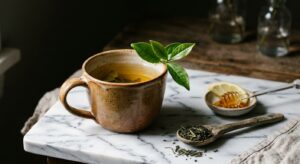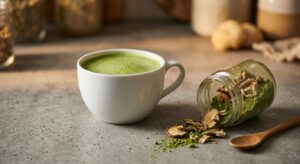
Long before barley grain became a staple of bread-making and brewing, the young green shoots of the barley plant were revered in ancient Egypt, China, and the Mediterranean world as a nourishing tonic. Egyptian texts dating back thousands of years reference barley grass as a source of strength for laborers and soldiers, and in Traditional Chinese Medicine, young barley shoots were prescribed to support liver health, cool inflammatory heat, and restore vitality. The plant, known botanically as Hordeum vulgare, reaches its peak nutritional density at the young grass stage, before the plant shifts its energy toward seed production. It is at this tender, brilliant-green moment that the shoots are harvested and dried to make one of the most nutrient-dense herbal teas available.
What sets barley grass apart from other green teas is its extraordinary mineral and vitamin profile. A single cup contains meaningful amounts of iron, calcium, magnesium, potassium, and zinc, along with vitamins C, E, K, and several B vitamins including folate. Unlike stimulant herbs that spike energy through caffeine or adaptogenic compounds, barley grass supports energy at a cellular level by providing the cofactors the body needs for mitochondrial function and red blood cell production. The result is a smooth, grounded alertness that many drinkers describe as feeling deeply nourished rather than wired.
The flavor of barley grass tea is a gentle introduction to the world of green herbal teas. It carries a mild, slightly sweet grassiness with subtle earthy undertones, and when brewed carefully at lower temperatures, it avoids the bitterness that can afflict poorly made green juices or powders. Its pale jade-green color is visually calming, and the aroma is fresh and clean, reminiscent of a meadow just after rain. Whether you are new to herbal teas or a seasoned plant medicine enthusiast, barley grass tea is a rewarding, grounding daily ritual worth adopting.
2
cups
Ingredients
- 2 tspdried barley grass (loose cut) or 1 tsp barley grass powder
- 480 mlwater (75°C / 167°F)
- —raw honey or a squeeze of lemon to taste (optional)
- —pinch of matcha or spirulina to deepen the green color (optional)
How to Brew
Click on an item below to shop for the recommended items for this recipe on Amazon.
As an Amazon Associate, we earn from qualifying purchases.
- Heat filtered water to 70 to 80°C (158 to 176°F). If you do not have a temperature-controlled kettle, bring water to a boil and allow it to cool for 4 to 5 minutes before using.
- Place 1 teaspoon of dried loose barley grass per 240 ml of water into a fine-mesh tea infuser or strainer and set it inside your mug. If using barley grass powder, place it directly into the mug.
- Pour the heated water gently over the grass or powder. If using powder, stir well with a small whisk or spoon until fully dissolved and no clumps remain.
- Steep loose barley grass for 3 to 5 minutes. If using powder, the tea is ready to drink immediately after thorough mixing.
- Remove the infuser and discard the spent grass. Taste the tea and adjust with a small drizzle of raw honey or a squeeze of fresh lemon juice, which brightens the green flavor beautifully.
- Sip warm and enjoy within 10 minutes for the best nutrient retention and freshest flavor.
- Add 2 teaspoons of dried loose barley grass per 480 ml of cold filtered water to a clean glass jar. If using barley grass powder, use 1.5 teaspoons per 480 ml and stir vigorously before sealing.
- Seal the jar with a lid and give it a gentle shake to ensure the grass is fully submerged and in contact with the water.
- Leave the jar at room temperature for 30 minutes to allow initial infusion to begin, then transfer to the refrigerator.
- Allow the tea to cold brew for 6 to 8 hours, or leave overnight for a richer, more minerally flavor. The cold extraction pulls sweetness and nutrients without activating the grassy bitterness that heat can amplify.
- Strain the tea through a fine-mesh strainer or cheesecloth into a clean glass, pressing gently on the grass to extract all liquid. If you used powder, strain through a fine cloth or skip straining for a denser, smoothie-like drink.
- Serve over ice in a tall glass. Add a slice of cucumber or a sprig of fresh mint for a refreshing, spa-like variation that complements the natural green flavors.
- Prepare a blended herb mixture by combining 1 teaspoon dried barley grass, half a teaspoon of dried peppermint leaf, and a quarter teaspoon of dried nettle leaf per 240 ml serving. These three herbs work synergistically: peppermint sharpens mental focus, nettle adds additional iron and mineral content, and barley grass provides the chlorophyll base.
- Place the herb blend into a fine-mesh infuser or a small muslin bag and set it in your mug or a warmed teapot.
- Heat filtered water to 70 to 75°C (158 to 167°F) and pour it slowly over the herb blend, ensuring all herbs are fully submerged.
- Cover the mug or teapot with a small plate or lid to trap volatile aromatic compounds from the peppermint, which would otherwise evaporate into the air and diminish flavor.
- Steep for 4 to 5 minutes. Remove the infuser and press gently to release the last of the liquid from the herbs.
- Finish with a squeeze of fresh lemon juice (which also enhances the absorption of iron from the barley grass and nettle) and a small spoonful of raw honey if desired. Drink on an empty stomach first thing in the morning for maximum mineral absorption and a clear, focused start to the day.
Health Benefits
Unlike caffeine-based stimulants, barley grass energizes at a cellular level by supplying iron, magnesium, and B vitamins that are essential cofactors for ATP synthesis and oxygen transport in red blood cells. Regular consumption has been associated with reduced fatigue, particularly in individuals with borderline iron or magnesium deficiency.
The combination of GABA precursors, hordenine, and antioxidants like 2-O-GIV supports balanced neurotransmitter function and protects brain cells from oxidative stress. A 2015 study published in Food Chemistry found that barley grass extract significantly reduced cognitive fatigue markers in animal models.
Barley grass has a strongly alkaline mineral profile, and its chlorophyll content supports phase-two liver detoxification enzymes. Habitual consumption is linked to reduced acid load in the body, which may benefit those who consume high amounts of processed or protein-heavy foods.
Superoxide dismutase (SOD) and the flavonoid 2-O-GIV give barley grass an exceptionally high antioxidant capacity. Research has shown that these compounds scavenge free radicals more effectively than many common antioxidant foods, protecting DNA and cellular membranes from oxidative damage.
Multiple human studies have found that regular barley grass supplementation reduces LDL cholesterol and fasting blood glucose. The fiber-like beta-glucan compounds in the grass slow glucose absorption and support healthy lipid metabolism, making it a valuable addition for cardiovascular wellness.
🧪 Key Bioactive Compounds
The Science Behind Barley Grass
The energy-supporting reputation of barley grass is grounded in its exceptional micronutrient density rather than any single dramatic compound. At the biochemical level, the B vitamins present in barley grass, particularly thiamine (B1), riboflavin (B2), niacin (B3), and folate, serve as enzymatic cofactors in the Krebs cycle, the mitochondrial process by which cells convert glucose into usable ATP energy. When these cofactors are present in adequate supply, mitochondria function more efficiently, producing energy with less oxidative byproduct. Iron, also abundant in barley grass, is essential for hemoglobin synthesis, meaning that regular consumption can support oxygen delivery to muscles and the brain, one of the most overlooked yet impactful factors in sustained cognitive performance and physical endurance.
The antioxidant profile of barley grass is notably distinct from that of other green foods. Superoxide dismutase (SOD) is an enzyme rather than a simple phytonutrient, and it catalytically neutralizes superoxide radicals, a particularly destructive class of reactive oxygen species generated during normal cellular metabolism and amplified by stress, pollution, and poor diet. Laboratory studies have confirmed measurable SOD activity in barley grass extracts. The flavonoid glycoside 2-O-glycosylisovitexin (2-O-GIV) is a compound found at high concentrations almost exclusively in young barley shoots and has been the subject of multiple Japanese research studies examining its protective effects on liver cells and brain tissue against lipid peroxidation, a chain reaction of oxidative damage that disrupts cell membrane integrity.
Hordenine, a naturally occurring alkaloid in barley grass, interacts with adrenergic receptors and inhibits the reuptake of dopamine and norepinephrine at nerve synapses, producing mild but measurable improvements in mood and alertness. Unlike synthetic stimulants, hordenine’s effects are subtle and do not appear to cause the rebound fatigue associated with caffeine. The presence of naturally occurring GABA in barley grass adds a further dimension of calm focus: rather than simply stimulating the nervous system, barley grass appears to support a state of alert relaxation, where mental sharpness and composure are simultaneously enhanced, a quality that has made it a growing favorite among students, athletes, and anyone seeking clean, functional energy throughout the day.
Brewing Tips
- Always brew barley grass at temperatures below 80°C (176°F). Boiling water destroys the heat-sensitive enzymes, chlorophyll, and vitamin C that give barley grass its distinctive nutritional advantages over other teas.
- If you are new to barley grass tea, start with half a teaspoon per cup and gradually increase to a full teaspoon or more. The potent chlorophyll can occasionally cause mild digestive adjustment in the first few days for sensitive stomachs.
- For the best loose barley grass tea, look for products that specify harvest at the jointing stage, when the plant is between 15 and 30 cm tall. This is when nutrient density peaks before the plant converts energy toward seed development, and the flavor is at its mildest and sweetest.