The follicular phase, which spans from the first day of menstruation through ovulation, is a time of renewal and rising energy in the body. As estrogen begins its gradual climb, the body rebuilds the uterine lining and matures an egg for release. This hormonal shift often brings a sense of clarity, creativity, and physical lightness, making it the ideal window to nourish yourself with herbs that work in harmony with your body’s natural momentum. Traditional plant medicine traditions from Ayurveda to Western herbalism have long recognized this phase as a time to support liver health, gentle detoxification, and hormonal balance through carefully chosen botanicals.
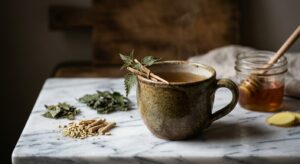
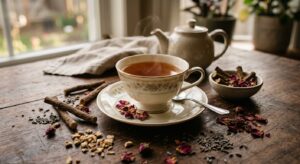
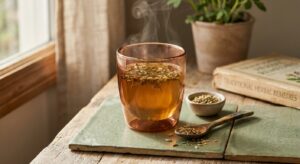
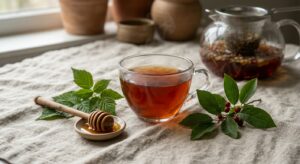
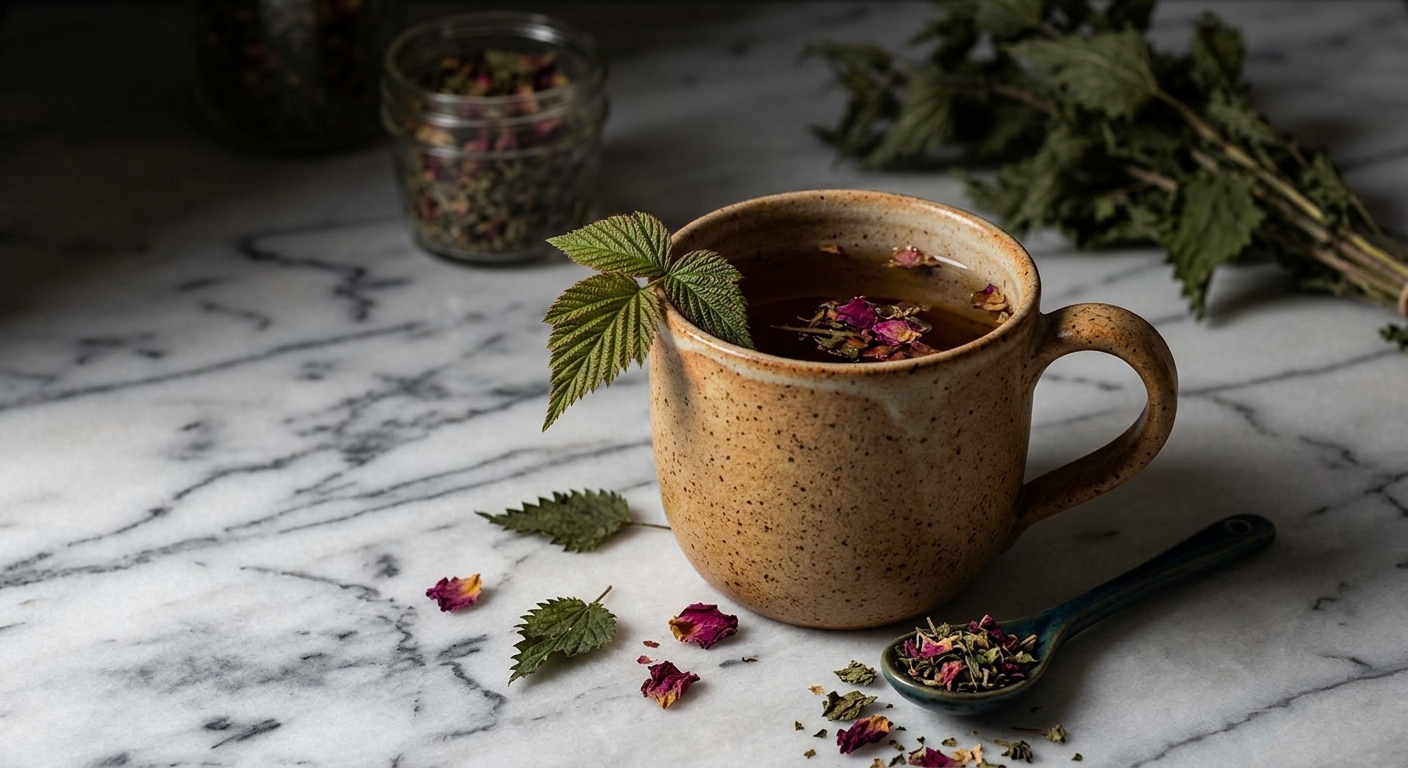
This follicular phase tea blends raspberry leaf, nettle, rose petals, and spearmint, four herbs with deep roots in women’s wellness traditions. Raspberry leaf has been treasured for centuries as a uterine tonic, used by Indigenous and European herbalists alike to strengthen and tone reproductive tissue. Nettle, one of the most nutrient-dense plants available, provides a wealth of minerals including iron and magnesium that help the body recover from menstruation and prepare for the demands of ovulation. Rose petals bring a gentle astringency, a uplifting aroma, and a history in Persian and Chinese medicine as a heart-opening, hormone-harmonizing botanical. Spearmint, the mildest of the mints, contributes a bright freshness while emerging research highlights its role in reducing androgen excess, making it particularly useful for those managing hormonal imbalances such as PCOS.
Together, these four herbs create a tea that feels as good as it tastes, with a rosy, gently minty flavor profile that makes it easy to enjoy daily throughout the follicular phase. Whether you are new to cycle-syncing practices or a longtime follower of menstrual wellness, this blend offers a simple, sensory ritual to root your morning or afternoon in intentional self-care. Brew it hot on cool mornings, cold brew it overnight for a refreshing midday drink, or concentrate it into a base for herbal lemonade as the weather warms.
2
cups
Ingredients
- 2 tspdried raspberry leaf
- 1 tspdried nettle leaf
- 1 tspdried rose petals
- 0.5 tspdried spearmint leaf
- 480 mlwater (95°C / 203°F)
- —raw honey or rose syrup to taste (optional)
- —fresh lemon slice (optional)
How to Brew
Click on an item below to shop for the recommended items for this recipe on Amazon.
As an Amazon Associate, we earn from qualifying purchases.
- Heat filtered water to 93 to 96°C (200 to 205°F). If you do not have a temperature-controlled kettle, bring water to a full boil and let it rest uncovered for 60 to 90 seconds before using.
- Combine the dried raspberry leaf, nettle leaf, rose petals, and spearmint in a tea infuser or loose-leaf strainer. Place the infuser inside your mug or teapot.
- Pour 480 ml of hot water over the herbs and immediately cover the mug or teapot with a lid or small saucer. This traps the volatile aromatic oils from the rose and spearmint that would otherwise escape with the steam.
- Steep for 7 to 10 minutes. The longer end of the range yields a more mineral-rich, astringent brew; 7 minutes gives a lighter, more floral cup. Taste at 7 minutes and decide based on your preference.
- Remove the infuser, pressing it gently against the side of the mug to extract the last of the liquid without over-squeezing the tannins.
- Sweeten with a small amount of raw honey or rose syrup if desired, and add a fresh lemon slice to brighten the mineral notes. Sip slowly and mindfully.
- Measure out a double portion of herbs: 4 tsp dried raspberry leaf, 2 tsp dried nettle leaf, 2 tsp dried rose petals, and 1 tsp dried spearmint. The larger quantity compensates for the slower, less efficient cold extraction.
- Add the herbs to a glass jar or pitcher. Pour 480 ml of room-temperature filtered water over the herbs. Do not use hot or warm water for this method, as it changes the extraction profile and tannin content.
- Stir gently with a long spoon to ensure all the dried herbs are fully submerged and saturated. Seal the jar with a lid.
- Place the jar in the refrigerator and steep for 8 to 12 hours. Overnight steeping is the most practical approach. The cold infusion slowly draws out the minerals, phytoestrogens, and gentle floral compounds.
- In the morning, strain the herbs through a fine mesh strainer or cheesecloth into a clean glass or pitcher. Press the herbs lightly to extract the remaining liquid.
- Serve over ice. Add a sprig of fresh mint, a few fresh or dried rose petals as garnish, and a squeeze of lemon or a drizzle of honey to taste. The cold brew keeps well in the refrigerator for up to 48 hours.
- Measure a triple batch of herbs: 6 tsp dried raspberry leaf, 3 tsp dried nettle leaf, 3 tsp dried rose petals, and 1.5 tsp dried spearmint. Place all herbs into a small saucepan or a large heatproof jar with a lid.
- Heat 480 ml of filtered water to 93 to 96°C (200 to 205°F) and pour it over the herbs. Cover immediately with a lid to prevent aromatic loss.
- Allow the herbs to steep for 20 to 25 minutes. This extended steep is intentional: the concentrate will be diluted before drinking, so a stronger extraction is the goal. The resulting liquid will be deep amber with a rich, pronounced flavor.
- Strain through a fine mesh strainer lined with cheesecloth into a clean glass jar, pressing the spent herbs firmly to extract all the liquid. Discard the spent herbs.
- Allow the concentrate to cool to room temperature before sealing and refrigerating. Store for up to 4 days in the refrigerator.
- To serve, dilute 1 part concentrate with 2 to 3 parts still or sparkling water. For a follicular phase herbal lemonade, combine 120 ml concentrate with 240 ml sparkling water, the juice of half a lemon, and a teaspoon of honey. Serve over ice.
Health Benefits
Raspberry leaf and nettle both contain compounds that support healthy liver estrogen metabolism. Quercetin in nettle specifically activates liver Phase II detoxification pathways that conjugate and clear excess estrogens, while the gentle phytoestrogenic activity of rose petals may help modulate estrogen receptor sensitivity during the follicular rise.
Nettle leaf is exceptionally rich in bioavailable iron, magnesium, and calcium, all of which are depleted during menstruation. Drinking this blend during the follicular phase helps restore these critical minerals, supporting energy production, nerve function, and the enzymatic synthesis of new hormones.
A randomized controlled trial published in Phytotherapy Research found that women drinking two cups of spearmint tea daily experienced a statistically significant reduction in free testosterone over 30 days. This makes spearmint a valuable inclusion for those managing PCOS or androgen excess, both of which can interfere with healthy follicular development.
Raspberry leaf has a centuries-long traditional use as a uterine tonic, and the alkaloid fragrine is believed to improve the contractile efficiency of smooth muscle in the uterus. Regular consumption during the follicular phase is thought to prepare the uterine lining for a healthy cycle, though rigorous clinical trials specifically on the follicular phase remain limited.
The volatile terpenes in rose petals, including geraniol and citronellol, have demonstrated mild anxiolytic effects in animal models and small human studies. Since cortisol and chronic stress can suppress LH and disrupt the ovulatory surge, incorporating calming botanicals into a daily ritual supports a hormonal environment conducive to healthy ovulation.
🧪 Key Bioactive Compounds
The Science Behind Raspberry Leaf
The follicular phase is governed primarily by rising follicle-stimulating hormone (FSH) and the gradual increase in estradiol secreted by the maturing follicle. Supporting this process nutritionally means providing the liver with the cofactors it needs to metabolize estrogens through Phase I and Phase II detoxification, while also ensuring adequate mineral status for hormone synthesis. Nettle leaf earns its place in this blend on both counts: its exceptional quercetin content activates sulfotransferase and glucuronidation enzymes in the liver that conjugate used estrogens for excretion, and its iron, magnesium, and calcium content supports the enzymatic reactions that produce steroid hormones from cholesterol precursors.
Spearmint’s contribution to hormonal health has attracted genuine scientific interest over the past two decades. A 2010 randomized controlled trial by Grant published in Phytotherapy Research demonstrated that women with PCOS who drank spearmint tea twice daily for 30 days showed statistically significant reductions in free and total testosterone, alongside increases in LH and FSH. The mechanism appears to involve inhibition of 5-alpha reductase, the enzyme that converts testosterone into the more potent dihydrotestosterone (DHT), as well as direct antiandrogenic activity at the receptor level. For women experiencing androgen excess during the follicular phase, whether from PCOS or other causes, this is a meaningful and accessible intervention.
Rose petals bring both chemistry and tradition to this blend. Their primary aromatic constituents, geraniol, citronellol, and nerol, belong to the monoterpene family and have been studied for anxiolytic and mild antidepressant effects in rodent models, with several small human trials showing reduced salivary cortisol following rose petal aromatherapy and ingestion. Since elevated cortisol suppresses the hypothalamic-pituitary-ovarian axis and can delay or blunt the LH surge needed for ovulation, reducing psychological stress during the follicular phase has direct reproductive implications. The synergy of these four herbs creates a blend that is simultaneously nourishing, balancing, and calming, addressing the follicular phase from multiple physiological angles at once.
Brewing Tips
- Cycle-sync your brewing: start drinking this blend on day 1 or 2 of your cycle and continue through ovulation (roughly days 1 to 14 in a typical cycle). Keep a journal to track how the tea influences your energy, mood, and cycle symptoms over two to three months.
- For the richest mineral extraction from the nettle leaf, consider making a nettle nourishing herbal infusion as a base: steep 1 tablespoon of nettle in 480 ml of just-boiled water for a full 4 hours in a sealed jar, then add the other herbs for the last 10 minutes of steeping before straining.
- Source your rose petals carefully. Choose food-grade, pesticide-free dried rose petals, as conventionally grown roses are among the most heavily pesticide-treated flowers in commercial cultivation. Look for certified organic roses from culinary or herbal suppliers rather than using dried flowers from floral shops.