Saw palmetto (Serenoa repens) is a low-growing fan palm native to the subtropical southeastern United States, particularly the coastal plains of Florida, Georgia, and the Carolinas. For centuries, Indigenous peoples including the Seminole and Muscogee nations prized its dark purple berries as both a food staple and a medicinal remedy, using them to address urinary complaints, reproductive issues, and general vitality. Spanish explorers recorded their observations of these practices as early as the 16th century, and by the late 19th century, Eclectic physicians had formally adopted saw palmetto into American herbal medicine as a tonic for the genitourinary system.
Though saw palmetto is most commonly associated with prostate health in men, a growing body of traditional use and emerging research points to its meaningful benefits for women as well. It is increasingly used by women navigating polycystic ovary syndrome (PCOS), hormonal acne, excess androgen activity, and the urinary symptoms that accompany perimenopause and menopause. Herbalists have long recognized the berry’s ability to modulate hormonal activity without the sharp edges of pharmaceutical interventions, making it a gentle but purposeful addition to a women’s wellness routine.
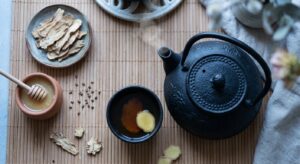
Brewing saw palmetto as a tea is one of the gentler ways to work with this herb. The dried and lightly crushed berries yield a warm, woody infusion with faintly resinous and slightly sweet notes, reminiscent of a walk through a sun-warmed coastal scrubland. The fatty acids and plant sterols that give saw palmetto its therapeutic character are only partially water-soluble, so the tea is best understood as a mild daily tonic rather than a high-potency extract. Combined with patience and consistency, a daily cup can be a grounding ritual that supports the body’s natural hormonal rhythms over time.
2
cups
Ingredients
- 2 tbspdried saw palmetto berries, lightly crushed
- 480 mlwater (95°C / 203°F)
- —raw honey or maple syrup to taste (optional)
- —a cinnamon stick or slice of fresh ginger to balance the resinous notes (optional)
How to Brew
Click on an item below to shop for the recommended items for this recipe on Amazon.
As an Amazon Associate, we earn from qualifying purchases.
- Place the dried saw palmetto berries in a mortar and pestle or in a sealed bag and use a rolling pin to lightly crush them. You are not grinding them to a powder, just cracking the surface so the interior is exposed to the water.
- Bring filtered water to 95°C (203°F). If you do not have a thermometer, bring water to a full boil and let it rest for about 30 seconds before pouring.
- Add the crushed berries to a mesh tea infuser or a small muslin bag and place it in your mug or teapot.
- Pour the hot water over the berries and cover the mug with a small saucer or lid to trap the volatile aromatic compounds and retain heat.
- Steep for 10 to 15 minutes. A longer steep will produce a stronger, more resinous cup. Start at 10 minutes if this is your first time to gauge your tolerance for the flavor.
- Remove the infuser, sweeten lightly with honey or maple syrup if desired, and sip slowly while warm. Drink one to two cups daily for best results.
- Lightly crush 3 tablespoons of dried saw palmetto berries per 600 ml of water using a mortar and pestle or the back of a spoon. The extra herb compensates for the slower, cooler extraction process.
- Add the crushed berries directly to a glass jar or cold brew pitcher. No infuser is required at this stage as straining happens at the end.
- Pour room-temperature filtered water over the berries, stir once to ensure all the herb is submerged, then seal the jar with a lid.
- Let the jar sit at room temperature for one hour to begin the initial extraction, then transfer it to the refrigerator and allow it to steep for a further 12 to 18 hours.
- When ready, strain the liquid through a fine-mesh sieve lined with cheesecloth or a nut milk bag into a clean pitcher, pressing gently on the berries to extract the last of the liquid.
- Serve over ice with a slice of lemon or a sprig of mint. Store any remaining cold brew in the refrigerator for up to 48 hours.
- Coarsely crush 3 tablespoons of dried saw palmetto berries using a mortar and pestle and place them directly in a small stainless steel or ceramic saucepan. Avoid aluminum cookware, which can react with the herb’s natural acids.
- Add 600 ml of cold filtered water to the pan. Starting with cold water and bringing it up to temperature gradually improves compound extraction from hard plant material.
- Bring the water to a full rolling boil over medium-high heat, then immediately reduce the heat to a gentle simmer at around 85 to 90°C (185 to 194°F). You should see small, steady bubbles but not a vigorous rolling boil.
- Simmer uncovered for 20 to 25 minutes, stirring occasionally. The liquid will reduce slightly and deepen to a rich mahogany color. If the liquid reduces by more than one-quarter, add a small splash of hot water to compensate.
- Remove from heat and allow the decoction to cool for 3 to 5 minutes before straining through a fine-mesh sieve lined with cheesecloth into a heatproof mug or pitcher, pressing firmly on the spent berries.
- This yields a potent, full-bodied brew. Divide into two servings and sweeten as needed. A small amount of whole milk or oat milk can be stirred in to complement the earthy flavor and to aid absorption of the fat-soluble compounds.
Health Benefits
Saw palmetto’s phytosterols, particularly beta-sitosterol and campesterol, partially inhibit the 5-alpha reductase enzyme responsible for converting testosterone into the more potent DHT. This mechanism is meaningful for women with PCOS or other conditions marked by androgen excess, where elevated DHT contributes to acne, hirsutism, and irregular cycles.
Declining estrogen during perimenopause and menopause can thin the tissues of the urethra and bladder, leading to urgency, frequency, and mild incontinence. Saw palmetto has traditionally been used to tone and soothe the genitourinary tract, and some clinical observations suggest it may help reduce urinary urgency and improve bladder control in women experiencing these changes.
DHT binds to receptors in hair follicles and causes them to miniaturize over time, a process known as androgenic alopecia. By gently moderating DHT levels through 5-alpha reductase inhibition, saw palmetto may help slow this process in women who experience hormone-related hair thinning, as supported by a small but growing body of clinical research.
The triterpenoids and fatty acids in saw palmetto, including lupeol and oleic acid, exert measurable anti-inflammatory effects that may benefit women dealing with pelvic inflammatory conditions or endometriosis-related discomfort. While not a primary treatment, the herb’s systemic anti-inflammatory action makes it a supportive companion to other therapeutic strategies.
Caprylic and lauric acids in saw palmetto berries have demonstrated antifungal and antimicrobial activity in laboratory settings. These compounds may help maintain a balanced vaginal and urinary microbiome, supporting women who are prone to recurrent yeast infections or urinary imbalances linked to disrupted microbial communities.
🧪 Key Bioactive Compounds
The Science Behind Saw Palmetto
The therapeutic reputation of saw palmetto rests primarily on its unusually rich content of fatty acids and phytosterols, with beta-sitosterol being the most studied of these compounds. Beta-sitosterol and its structural relatives interfere with the enzyme 5-alpha reductase, which catalyzes the conversion of testosterone to dihydrotestosterone (DHT). DHT is a significantly more potent androgen than testosterone and is responsible for driving androgenic alopecia, sebaceous gland overactivity leading to hormonal acne, and urinary tissue changes. By partially inhibiting this conversion, saw palmetto reduces the androgenic burden on sensitive tissues without fully suppressing testosterone levels, which is an important distinction from pharmaceutical 5-alpha reductase inhibitors that carry more significant hormonal side effects.
Several clinical trials, while predominantly conducted in men with benign prostatic hyperplasia, have illuminated mechanistic pathways directly relevant to women’s health. Research published in journals including the Journal of Alternative and Complementary Medicine and JAMA has shown that saw palmetto extracts can reduce receptor binding affinity for DHT, modulate inflammatory cytokine activity, and support smooth muscle tone in the lower urinary tract. For women, particularly those in perimenopause or with elevated androgen states, these mechanisms translate into potential benefits for bladder control, reduced pelvic inflammation, and moderated androgen signaling. A notable 2023 review in Phytotherapy Research highlighted saw palmetto’s relevance for women with PCOS, noting its multi-target approach to androgen modulation as an area warranting further dedicated clinical investigation.
It is important to understand that the fat-soluble compounds responsible for saw palmetto’s most potent hormonal effects, particularly the free fatty acids and sterols, are more bioavailable in lipid-based extract forms such as standardized capsules than in a water-based tea. That said, the tea form still delivers meaningful amounts of water-soluble phenolic compounds, anti-inflammatory triterpenoids, and microbial-modulating medium-chain fatty acids that contribute real wellness value. Drinking the decoction with a small amount of whole milk or a fat-containing food improves the absorption of what lipophilic compounds do pass into the brew, making the combination of method and consumption context genuinely relevant to how much benefit a person derives from their cup.
Brewing Tips
- Always lightly crush dried saw palmetto berries before brewing regardless of method. The hard outer skin of the dried berry significantly limits extraction if left intact, and even a few taps with the back of a spoon will meaningfully increase the surface area in contact with the water.
- Consistency matters more than quantity with saw palmetto. The phytosterols and fatty acids that support hormonal balance build up their effects gradually over weeks of regular use. One to two cups daily for at least four to six weeks is the standard herbalist recommendation before evaluating results.
- Store dried saw palmetto berries in an airtight glass container away from heat and direct light. The fatty acid content makes them more susceptible to rancidity than many other dried herbs. If the berries develop an unpleasant sharp or off smell, they have likely oxidized and should be replaced with a fresh batch from a reputable supplier.