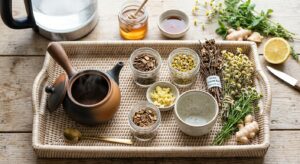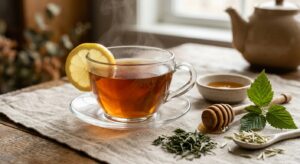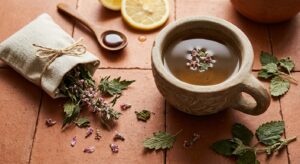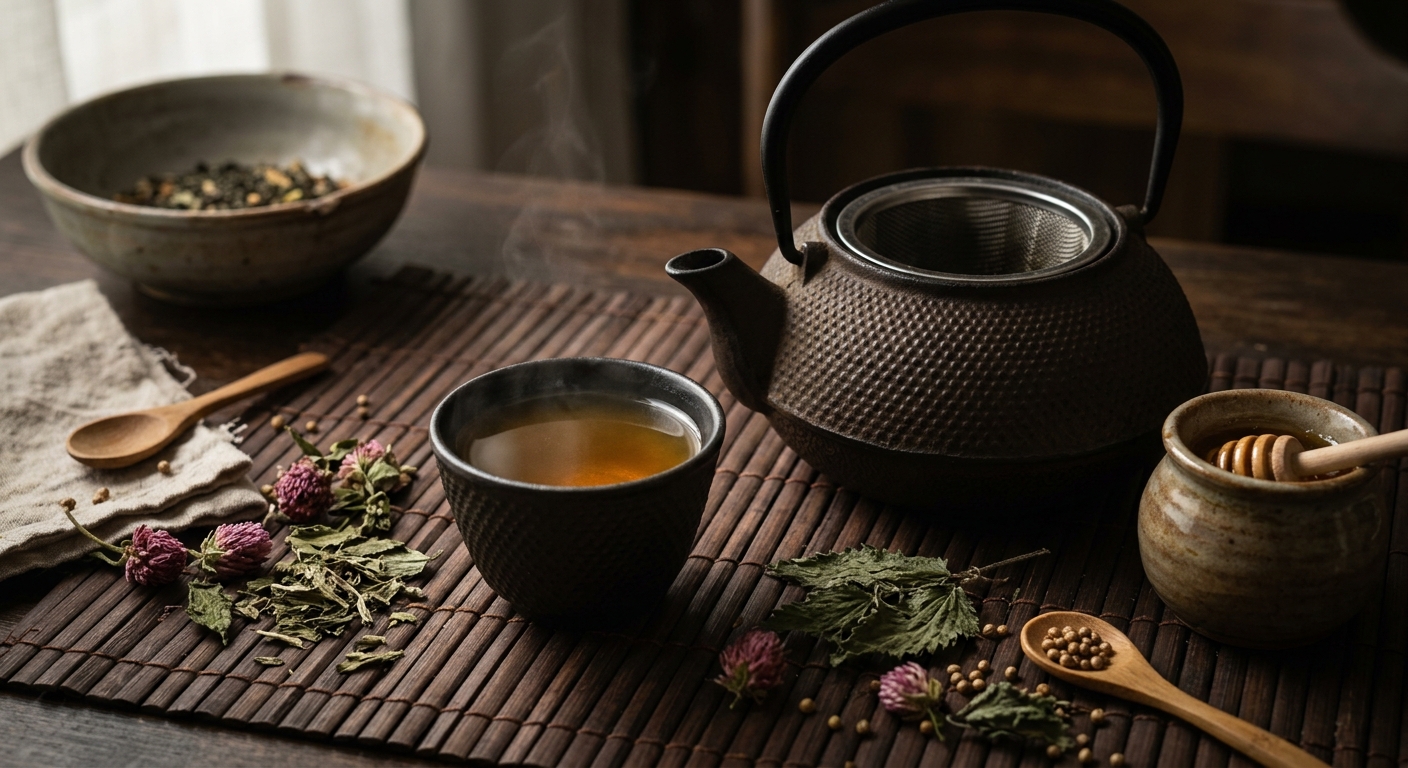
Hormonal acne is one of the most frustrating skin conditions because it resists topical treatments. It flares along the jawline, chin, and neck in a predictable monthly rhythm, driven by fluctuating androgens like testosterone and dihydrotestosterone (DHT) that stimulate excess sebum production and clog pores. For centuries, herbalists in Europe, the Middle East, and South America turned to specific plants to regulate this hormonal cascade, long before endocrinology existed as a science. Spearmint, nettle, and red clover were each recorded in traditional medicine as remedies for skin eruptions tied to reproductive cycles and excess male-pattern hormones in women.
Spearmint is the cornerstone of this blend and the most studied herb for androgen-related skin concerns. Two small but promising clinical trials published in Phytotherapy Research found that women with polycystic ovary syndrome (PCOS) who drank two cups of spearmint tea daily for 30 days showed significantly reduced free testosterone levels. Spearmint contains rosmarinic acid and flavonoids that appear to inhibit 5-alpha reductase, the enzyme that converts testosterone into the more potent DHT. Stinging nettle root works synergistically by binding to sex hormone-binding globulin (SHBG), which helps reduce the amount of free testosterone circulating in the bloodstream. Red clover adds isoflavones that interact gently with estrogen receptors, helping to rebalance the androgen-to-estrogen ratio that often tips during luteal phase flares.
Beyond hormones, this blend is deeply anti-inflammatory. Nettle leaf is rich in quercetin and beta-sitosterol, both of which calm the inflammatory response that turns a clogged pore into a red, painful cyst. Spearmint contributes its own antioxidant polyphenols, while red clover’s biochanin A has demonstrated antibacterial activity against Cutibacterium acnes, the bacteria that thrives in inflamed follicles. Together, these three herbs create a tea that works on multiple levels: modulating androgens, cooling inflammation, and providing the antioxidants your skin needs to heal and regenerate. It is a slow, nourishing approach, and most people notice meaningful changes after four to six consistent weeks.
2
cups
Ingredients
- 2 tspdried spearmint leaf
- 1 tspdried nettle leaf
- 1 tspdried red clover blossoms
- 480 mlwater (90°C / 194°F)
- —raw honey or a slice of fresh lemon to taste (optional)
How to Brew
Click on an item below to shop for the recommended items for this recipe on Amazon.
As an Amazon Associate, we earn from qualifying purchases.
- Measure 2 tsp of dried spearmint leaf, 1 tsp of nettle leaf, and 1 tsp of red clover blossoms into a tea infuser or strainer and place it in your mug.
- Heat 480 ml of filtered water to 90 to 95°C (194 to 203°F). If you do not have a temperature-controlled kettle, bring water to a full boil then allow it to rest for 90 seconds.
- Pour the hot water directly over the herbs in the infuser, filling the mug. Place a small saucer over the top of the mug to trap volatile oils and prevent them from escaping with the steam.
- Steep for 7 to 10 minutes. A 7-minute steep produces a lighter, brighter mint flavor; 10 minutes yields a more robust, slightly grassy infusion with fuller herbal extraction.
- Remove the infuser and press it gently with a spoon to extract the remaining beneficial compounds. Add raw honey or a squeeze of fresh lemon if desired, and drink while warm.
- Add 4 tsp of dried spearmint leaf, 2 tsp of dried nettle leaf, and 2 tsp of dried red clover blossoms to a clean glass jar (this makes a double-batch sized for the longer, slower extraction).
- Pour 700 ml of cold, filtered water over the herbs. The higher herb-to-water ratio compared to hot brewing compensates for the lower extraction efficiency of cold water.
- Stir gently to ensure all the herbs are fully submerged, then seal the jar with a lid. Leave at room temperature for one hour to begin the extraction, then transfer to the refrigerator.
- Allow the tea to cold brew in the refrigerator for a minimum of 8 hours and up to 12 hours. Do not exceed 14 hours, as nettle can develop a slightly muddy, over-steeped quality.
- Strain the tea through a fine mesh strainer or cheesecloth into a clean glass, pressing the herbs firmly to extract all liquid. Serve over ice, add a slice of cucumber or lemon for brightness, and store remaining tea in a sealed jar in the refrigerator for up to 48 hours.
- Combine 6 tsp of dried spearmint leaf, 3 tsp of dried nettle leaf, and 3 tsp of dried red clover blossoms in a small saucepan.
- Add 480 ml of filtered water and gently heat to 90 to 95°C (194 to 203°F) over medium-low heat. Do not allow the liquid to reach a rolling boil, as this will volatilize the spearmint’s essential oils and diminish the brew’s potency.
- Maintain a gentle steam (not a simmer) and allow the herbs to steep in the hot water for 15 to 20 minutes, keeping the lid on the saucepan to retain volatile compounds.
- Remove from heat and allow the concentrate to cool for 5 minutes. Strain through a fine mesh strainer into a clean glass jar with a tight-fitting lid, pressing the herbs firmly to extract all liquid.
- Store the concentrate in the refrigerator for up to 5 days. To serve, dilute 120 ml of concentrate with 120 to 240 ml of hot water, cold water, or sparkling water depending on preference. Add honey or lemon as desired.
Health Benefits
Two randomized controlled trials published in Phytotherapy Research found that drinking two cups of spearmint tea daily for 30 days significantly reduced free testosterone and total testosterone levels in women with PCOS and hirsutism. This anti-androgenic effect directly addresses the hormonal driver behind jawline and chin breakouts.
The quercetin in nettle leaf and the luteolin and rosmarinic acid in spearmint collectively suppress multiple inflammatory pathways, including NF-kB, COX-2, and histamine signaling. This systemic anti-inflammatory action reduces the severity of active lesions and supports faster healing of post-inflammatory hyperpigmentation.
Red clover’s isoflavones biochanin A and formononetin interact with estrogen receptors to provide a mild estrogenic effect, helping to counterbalance androgen dominance common in PCOS. Nettle’s beta-sitosterol further supports this balance by increasing SHBG levels, which binds and deactivates excess free testosterone.
Spearmint ranks among the highest antioxidant herbs measured by ORAC values, with rosmarinic acid and luteolin neutralizing free radicals that damage sebaceous cells and trigger inflammatory acne responses. Regular consumption supports the skin’s natural repair mechanisms and may reduce the oxidative stress that worsens comedone formation.
Nettle leaf is one of the most mineral-rich herbs available, providing bioavailable silica, zinc, magnesium, and iron. Zinc in particular plays a well-documented role in reducing acne severity, inhibiting DHT conversion, and supporting wound healing, making nettle a genuinely nourishing addition to any skin-focused herbal protocol.
🧪 Key Bioactive Compounds
The Science Behind Spearmint
The science behind this blend centers on the androgen pathway that drives hormonal acne. In women prone to this type of breakout, the enzyme 5-alpha reductase converts testosterone into dihydrotestosterone (DHT) inside sebaceous glands. DHT is five to ten times more potent than testosterone at stimulating oil production, and excess sebum combined with skin cell turnover irregularities creates the anaerobic environment that Cutibacterium acnes thrives in. Spearmint’s primary mechanism appears to be competitive inhibition of this same enzyme. Research published in Phytotherapy Research (Grant, 2010) demonstrated that 30 days of twice-daily spearmint tea consumption reduced free testosterone by 30% and total testosterone by 51% in women with PCOS, with a corresponding rise in luteinizing hormone (LH) and follicle-stimulating hormone (FSH), suggesting a genuine endocrine interaction rather than a statistical artifact.
Nettle leaf adds a complementary mechanism at the level of sex hormone-binding globulin (SHBG). SHBG is a liver-produced protein that binds sex hormones in the bloodstream, rendering them biologically inactive. Lower SHBG levels, which are common in insulin-resistant and androgen-dominant states, mean more free testosterone is available to stimulate oil glands. Beta-sitosterol and other lignans found in nettle have been shown in in vitro studies to bind directly to SHBG, potentially increasing the protein’s binding affinity for testosterone. Simultaneously, quercetin in nettle inhibits the NF-kB transcription factor, which is a master regulator of the inflammatory gene expression responsible for the redness, swelling, and pain of cystic acne lesions. Red clover’s isoflavones, particularly formononetin and biochanin A, add a third layer of hormonal modulation by gently occupying estrogen receptor-beta sites, which may help counterbalance androgen dominance without the potency or risks associated with synthetic estrogens.
It is important to set realistic expectations about this tea’s mechanisms. These are gentle, cumulative phytochemical effects, not pharmaceutical-strength interventions. The evidence is most robust for spearmint in the context of PCOS-related androgen excess, while the nettle and red clover data is largely preclinical (cell and animal studies) with human evidence still emerging. However, the safety profile of these three herbs is excellent when used as directed, and their combined anti-inflammatory, antioxidant, and hormonal modulating properties represent a well-reasoned traditional herbal approach that integrative dermatologists increasingly recommend as a supportive adjunct to conventional acne care. Consistent daily use over a minimum of four to six weeks is necessary for meaningful hormonal changes to accumulate, mirroring the timeline of clinical trials that showed significant results.
Brewing Tips
- Consistency is everything with this tea. The anti-androgenic and hormone-modulating effects are cumulative, meaning you must drink it daily for at least four to six weeks to see meaningful changes in skin clarity. Set a morning and evening ritual rather than drinking it occasionally.
- Source your nettle leaf from a reputable supplier who tests for heavy metals. Nettle is a bioaccumulator, meaning it absorbs minerals and contaminants from the soil where it grows. Certified organic nettle from a tested source ensures you are getting beneficial minerals, not unwanted residues.
- Track your cycle alongside your tea ritual. Hormonal acne flares most commonly in the luteal phase (days 15 to 28 for most women). Keeping a simple log of your skin condition, cycle phase, and tea consumption will help you confirm that the blend is working and identify whether you need additional herbal support around ovulation.