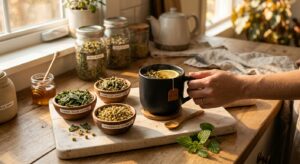
Few experiences are as frightening as a panic attack. The sudden surge of adrenaline, the pounding heartbeat, the overwhelming sense of dread – these sensations have sent countless people to emergency rooms, only to be told that nothing is physically wrong. Herbalists and traditional healers across cultures have long turned to nervine plants, those that specifically nourish and calm the nervous system, to address exactly this kind of acute anxiety. Long before pharmaceutical anxiolytics existed, people brewed teas from passionflower in the Americas, lemon balm in European monastic gardens, and skullcap in indigenous North American traditions to quiet the mind and restore equilibrium.
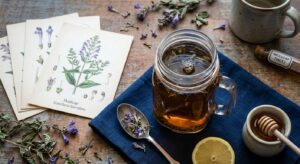
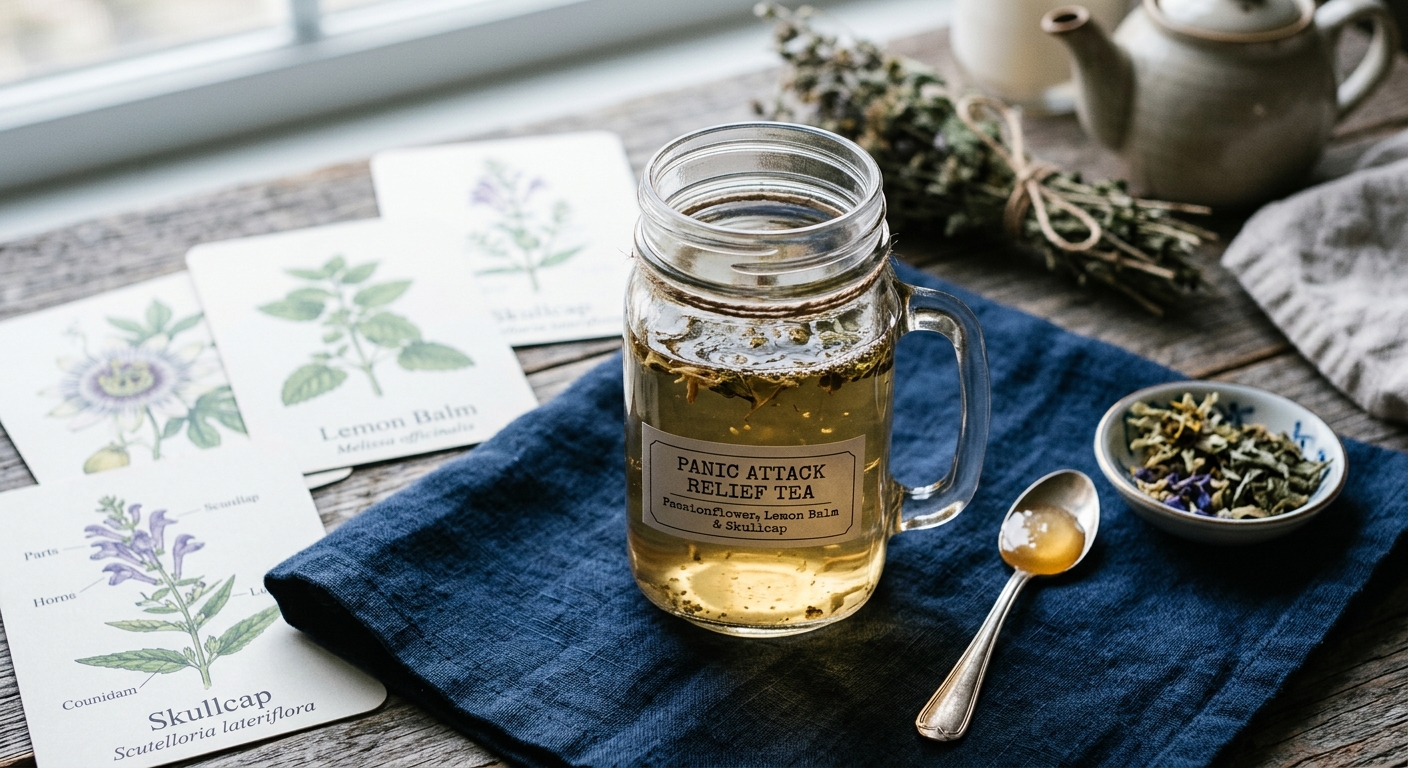
This blend brings together three botanicals that have each earned deep respect in herbal medicine for their ability to address anxiety at different levels. Passionflower (Passiflora incarnata) is revered for its ability to interrupt the feedback loop of anxious thought. Lemon balm (Melissa officinalis) has been sipped in Mediterranean kitchens for over two thousand years as a remedy for nervous tension and palpitations. Skullcap (Scutellaria lateriflora), used by Cherokee and Iroquois healers for centuries, is perhaps the most powerful nervine of the three, working deeply on the central nervous system to release held tension in the body and mind. Together, they create a synergistic formula that is greater than the sum of its parts.
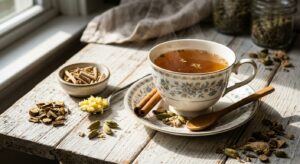
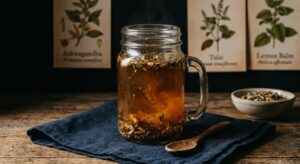
What makes this tea especially practical is its versatility. Brewed hot with a little honey, it offers immediate comfort during or after a panic episode. Made as a cold brew and kept in the refrigerator, it becomes a ready-to-drink daily tonic for those prone to anxiety. The flavor is surprisingly pleasant: softly floral and citrus-bright, with an earthy undercurrent that itself feels grounding. Whether you are navigating a particularly stressful period or simply building a more resilient nervous system over time, this blend offers something both immediate and cumulative.
2
cups
Ingredients
- 2 tspdried passionflower herb (aerial parts)
- 1.5 tspdried lemon balm leaves
- 1 tspdried skullcap herb
- 480 mlwater (90°C / 194°F)
- —raw honey or maple syrup to taste (optional)
- —a thin slice of fresh lemon (optional)
How to Brew
Click on an item below to shop for the recommended items for this recipe on Amazon.
As an Amazon Associate, we earn from qualifying purchases.
- Heat filtered water to 90 to 93°C (194 to 199°F). Avoid a full rolling boil, as excessive heat can degrade delicate volatile compounds in lemon balm and passionflower. An electric kettle with temperature control is ideal.
- Combine the dried passionflower, lemon balm, and skullcap in a tea infuser or place them loose in a teapot. If using a teapot, cover it with a lid to trap the aromatic steam inside.
- Pour the hot water over the herbs and immediately cover the cup or pot with a small lid, saucer, or folded cloth. This step is essential – the volatile oils responsible for calming effects escape easily with steam, and covering the brew preserves them.
- Steep for a minimum of 10 minutes and up to 15 minutes. The brew should deepen to a warm golden-green. If the color is very pale after 10 minutes, steep for the full 15.
- Strain thoroughly, pressing gently on the herbs to extract the remaining liquid. Add raw honey and a squeeze of lemon if desired. Sip slowly and mindfully, ideally seated in a quiet space.
- Measure out double the standard herb amounts per serving to compensate for the slower cold extraction: use 4 tsp dried passionflower, 3 tsp dried lemon balm, and 2 tsp dried skullcap for approximately 4 servings (960 ml of water).
- Combine the herbs and cold filtered water in a clean glass jar. Stir briefly to ensure all herbs are submerged. Do not use warm or hot water – the entire extraction process must be cold to achieve the smooth, mellow flavor profile that defines this method.
- Seal the jar with a lid or cover tightly with plastic wrap. Leave it at room temperature for the first 30 minutes to allow initial extraction, then transfer to the refrigerator.
- Refrigerate for a minimum of 8 hours. For a stronger brew with a more pronounced nervine effect, steep for the full 12 hours. The tea will develop a beautiful pale jade color and a noticeably clean, citrus-forward aroma.
- Strain through a fine mesh strainer or cheesecloth, pressing the herbs gently. Pour over ice to serve immediately, or store in the refrigerator in a sealed jar for up to 48 hours. Add honey stirred in during the last hour of steeping if you prefer a pre-sweetened batch.
- Use triple the standard herb ratio: 6 tsp dried passionflower, 4.5 tsp dried lemon balm, and 3 tsp dried skullcap for 480 ml of water. This produces a concentrate that will be diluted 1:1 before drinking.
- Heat water to 88 to 90°C (190 to 194°F) – slightly lower than the hot brew method to protect delicate compounds during the extended steep. Combine herbs in a small saucepan or teapot with a tight-fitting lid.
- Pour the hot water over the herbs, cover immediately, and steep for 20 to 25 minutes. Check the color at 20 minutes – it should be a deep, rich amber-green. The aroma will be noticeably more intense and earthy than a standard cup.
- Strain through a fine mesh strainer lined with cheesecloth for the cleanest result, pressing the herbs firmly to capture all liquid. You should yield approximately 400 ml of concentrate after the herbs absorb some liquid.
- To serve, dilute the concentrate 1:1 with hot water for a warming cup, or 1:1 with chilled water or oat milk over ice for a soothing iced drink. Stir in honey to the full batch while still warm if sweetening. Store remaining concentrate in a sealed glass jar in the refrigerator for up to 3 days, or pour into an ice cube tray and freeze for up to 4 weeks.
Health Benefits
Passionflower’s chrysin and isovitexin act on benzodiazepine and GABA-A receptor sites, blunting the cascade of neurological excitation that fuels panic attacks. A 2011 study published in Phytotherapy Research found passionflower extract comparable to low-dose oxazepam for managing generalized anxiety disorder, with fewer side effects.
Lemon balm has a documented history in European herbal medicine for calming palpitations and nervous heart tension. Clinical research supports its ability to significantly reduce anxiety symptoms and associated physical manifestations such as rapid heartbeat, particularly when combined with other nervines.
Skullcap’s baicalin works at GABA-A receptors throughout the central nervous system, reducing the state of hyper-arousal that predisposes individuals to panic. Unlike pharmaceutical anxiolytics, skullcap does not appear to impair cognitive function or cause rebound anxiety when discontinued at normal herbal doses.
The combined sedative-adjacent properties of all three herbs in this blend make it effective not only during acute anxiety but also for the exhausting aftermath of a panic episode, when the body struggles to downregulate enough to rest. Passionflower in particular has been studied specifically for sleep quality improvement.
Lemon balm and skullcap are classified as trophorestorative nervines, meaning they do not merely sedate but actively nourish and rebuild nerve tissue over time with consistent use. Daily consumption of this blend may raise the threshold at which the nervous system tips into panic, reducing both frequency and intensity of episodes.
🧪 Key Bioactive Compounds
The Science Behind Passionflower
The calming power of this blend is not folklore alone – it is rooted in measurable neurochemistry. All three herbs in this formula work primarily through the GABAergic system, the brain’s main inhibitory network. GABA (gamma-aminobutyric acid) is the neurotransmitter that quiets overactive neurons, and it is precisely the system targeted by pharmaceutical benzodiazepines such as diazepam. Passionflower’s flavonoids, particularly chrysin, isovitexin, and vitexin, have been shown in receptor binding studies to interact with benzodiazepine binding sites on GABA-A receptors. This provides a biochemical explanation for passionflower’s traditional use in anxiety, and it contextualizes why a 2011 randomized controlled trial found passionflower extract statistically equivalent to oxazepam for generalized anxiety disorder treatment over a four-week period.
Lemon balm contributes to this picture through a complementary mechanism. Rather than binding directly to receptors, its primary active compound rosmarinic acid inhibits GABA-transaminase, the enzyme responsible for breaking down GABA in synaptic spaces. By slowing GABA degradation, lemon balm effectively extends the life of each calming neurotransmitter signal the brain produces. A 2014 human clinical study published in Nutrients found that a standardized lemon balm extract significantly reduced anxiety and insomnia scores, with measurable mood improvements noted within hours of a single dose. The herb’s aromatic monoterpenes, particularly citral, also act on the olfactory-limbic pathway, meaning the simple act of inhaling the steam from a hot cup begins activating calming neural circuits before a single sip is taken.
Skullcap rounds out the formula with what many herbalists consider the most powerful nervine action of the three. Baicalin, skullcap’s primary flavone glycoside, demonstrates high affinity binding to GABA-A receptors and has shown anticonvulsant, anxiolytic, and neuroprotective effects across numerous preclinical models. Importantly, research suggests that unlike pharmaceutical anxiolytics that act indiscriminately across GABA receptor subtypes (producing sedation, muscle relaxation, and amnesia as side effects), skullcap’s compounds may preferentially bind to the receptor subtypes most associated with anxiety reduction, which may explain why clinical herbalists observe that skullcap reduces panic without producing the cognitive fog associated with prescription sedatives at therapeutic herbal doses.
Brewing Tips
- Prepare this tea before you think you need it. If you are prone to panic attacks, brew a cold batch on Sunday evening so a calming tea is available within seconds of an anxious moment during the week, eliminating the barrier of preparation when anxiety is already rising.
- Cover your cup while steeping, every time. The volatile aromatic oils in lemon balm and passionflower that contribute to the calming effect are water-soluble steam, and an uncovered steep can lose a meaningful percentage of these compounds before the tea even reaches your lips.
- Source herbs individually from certified organic, quality-tested suppliers rather than buying a pre-made panic blend. This allows you to adjust ratios based on your personal response. Some people find skullcap makes them mildly drowsy and prefer to increase the lemon balm ratio; others find passionflower the most effective and increase it accordingly.
- Pair this tea with a deliberate breathing practice. Sipping slowly and synchronizing each sip with a four-count inhale and six-count exhale amplifies the physiological calming response, as slow exhalation activates the vagus nerve independently of the herbal chemistry.
- Store your dried herbs in amber glass jars away from light, heat, and moisture. Passionflower and lemon balm in particular are rich in volatile oils that degrade with light and heat exposure, significantly reducing potency within weeks if stored improperly.