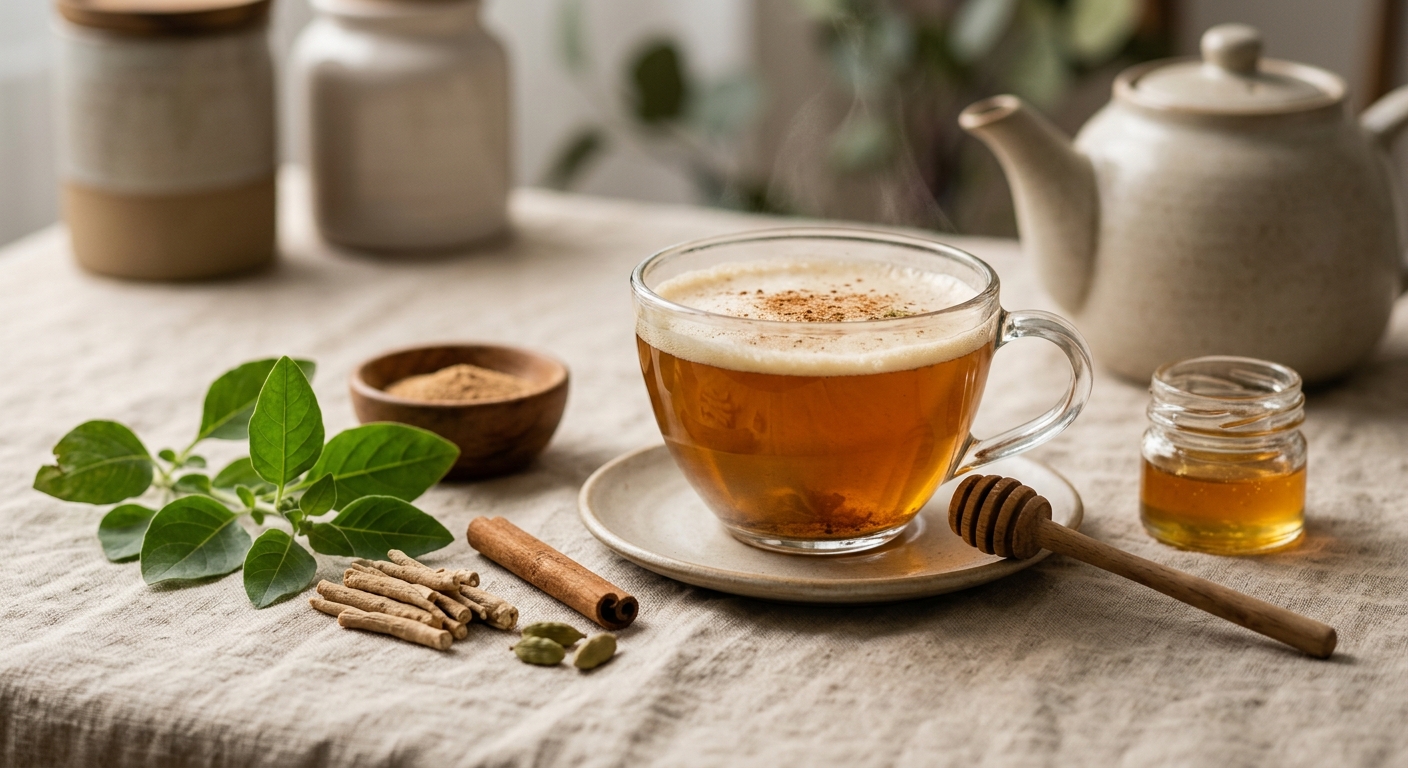
Few herbs carry as much weight in the world of traditional medicine as ashwagandha (Withania somnifera). Known in Sanskrit as “the strength of a horse,” this small shrubby root has been a cornerstone of Ayurvedic practice for over three millennia. Ancient healers prescribed it as a rasayana, a rejuvenating tonic meant to promote longevity, vitality, and resilience against the relentless demands of life. Today, modern herbalists and researchers alike are rediscovering what Indian physicians have long known: this humble root has a remarkable ability to help the body find balance when stress threatens to pull it apart.
Ashwagandha belongs to a class of herbs called adaptogens, a term coined in 1947 to describe plants that help the body resist physical, chemical, and biological stressors without disrupting normal function. Unlike sedatives that simply dull the nervous system, ashwagandha works intelligently, modulating the body’s stress-response pathways so that cortisol surges are dampened and adrenal fatigue is eased over time. Its earthy, slightly bitter flavor has been described as the taste of the forest floor after rain, a deeply grounding sensory experience that mirrors its effect on the mind and body.
Drinking ashwagandha as a tea, rather than taking it as a capsule, honors the herb’s traditional roots and allows you to engage with the full ritual of preparation. The warmth of the brew, blended with milk or golden spices, connects this practice to the ancient Indian preparation known as ashwagandha milk or “warm moon milk,” a bedtime tonic that has soothed restless minds for generations. Whether you are navigating a high-pressure workday or winding down before sleep, a well-brewed cup of ashwagandha tea offers something pills simply cannot: a moment of intentional calm.
2
cups
Ingredients
- 2 tspashwagandha root powder
- 480 mlwater (95°C / 203°F)
- 120 mlwhole milk or oat milk
- 0.5 tspground cinnamon
- 0.25 tspground cardamom
- —raw honey or jaggery to taste (optional)
- —pinch of black pepper (optional, enhances absorption)
How to Brew
Click on an item below to shop for the recommended items for this recipe on Amazon.
As an Amazon Associate, we earn from qualifying purchases.
- Pour 480 ml of cold water into a small saucepan and bring it to a gentle simmer over medium heat. Do not use a kettle for this method as sustained simmering draws out far more of the root’s active compounds than a single pour.
- Once the water reaches a low simmer, whisk in 2 teaspoons of ashwagandha root powder along with the ground cinnamon and cardamom. The powder will not fully dissolve, so continuous gentle stirring every couple of minutes prevents clumping.
- Reduce the heat slightly and allow the mixture to simmer uncovered for 10 to 15 minutes, stirring occasionally. You will notice the liquid deepening to a warm tawny brown and the aroma shifting from sharp and earthy to something rounder and spiced.
- Add 120 ml of whole milk or oat milk to the saucepan and stir to combine. Allow the mixture to warm together for another 2 minutes without boiling. This is the moment the tea transforms into something genuinely golden and aromatic.
- Pour the liquid through a fine-mesh sieve or nut milk bag into your mugs, pressing gently to extract all liquid. Sweeten with raw honey or jaggery if desired, and finish with a pinch of black pepper to enhance bioavailability. Serve immediately.
- Measure 2 teaspoons of ashwagandha root powder into a glass jar. Add 600 ml of room-temperature filtered water and stir vigorously for 30 to 45 seconds to disperse the powder as evenly as possible before refrigeration.
- Add a cinnamon stick and 3 to 4 lightly crushed cardamom pods to the jar. These whole spices cold-infuse beautifully overnight and add complexity without the sharpness that ground spices can bring to a cold preparation.
- Seal the jar tightly and place it in the refrigerator. Allow it to infuse for 10 to 12 hours, ideally overnight. Avoid steeping longer than 14 hours as extended cold steeping can intensify bitterness in the root compounds.
- In the morning, shake the jar well before opening, then strain the liquid through a fine-mesh sieve lined with cheesecloth into a serving glass or pitcher. Press the solids to extract the full infusion.
- Serve over ice with a splash of chilled oat milk or coconut milk and a drizzle of honey. Cold ashwagandha concentrate also stores well in the refrigerator for up to 48 hours, so this batch can serve multiple mornings.
- Combine 480 ml of whole milk (or full-fat coconut milk for a dairy-free version) with 240 ml of water in a small, heavy-bottomed saucepan. The ratio of milk to water is intentional: as the liquid reduces during simmering, the final cup will be richly milk-forward and deeply nourishing.
- Whisk 2 teaspoons of ashwagandha root powder into the cold milk-water mixture before heating. Starting cold prevents the powder from clumping when it hits hot liquid, a common pitfall of this preparation.
- Place the saucepan over low to medium-low heat and bring the mixture to a very gentle simmer. Stir frequently to prevent the milk from scorching on the base of the pan. This is a method that rewards patience over a quick high flame.
- Maintain the gentle simmer for 20 to 25 minutes, stirring every 3 to 4 minutes. The liquid will reduce by roughly one-third, and the color will deepen to a warm golden brown. The aroma will shift from raw and earthy to something mellow, nutty, and almost caramel-like.
- Remove from heat and stir in a pinch of ground nutmeg, a pinch of black pepper, and your choice of honey or jaggery. Strain through a fine-mesh sieve directly into a warmed mug. Sip slowly 30 to 45 minutes before bed for maximum sleep and stress-support benefits.
Health Benefits
Multiple randomized controlled trials, including a landmark 2012 study published in the Indian Journal of Psychological Medicine, found that adults taking standardized ashwagandha extract experienced a 27.9% reduction in serum cortisol and significantly lower scores on validated stress scales compared to placebo. The mechanism appears to involve modulation of the hypothalamic-pituitary-adrenal (HPA) axis, the body’s central stress-response system.
A 2019 randomized double-blind study in PLOS ONE found that ashwagandha root extract significantly improved sleep quality, sleep onset latency, and morning alertness in adults with insomnia. Researchers attributed this to the root’s ability to calm an overactivated nervous system through GABA-mimetic activity, rather than through any direct sedative suppression.
Ashwagandha has been shown in several clinical trials to increase VO2 max and reduce exercise-induced muscle damage, particularly in adults under significant physical or occupational stress. Its adaptogenic properties allow the body to allocate energy more efficiently when facing sustained demands, rather than simply masking tiredness.
Preliminary clinical evidence suggests ashwagandha may gently stimulate thyroid hormone production in individuals with subclinical hypothyroidism, making it one of the few adaptogens with a direct thyroid-modulating action. This effect is thought to be connected to its reduction of cortisol, as chronically elevated stress hormones are a known suppressor of thyroid function.
A 2017 study in the Journal of Dietary Supplements found that ashwagandha supplementation significantly improved immediate and general memory, executive function, attention, and processing speed in adults with mild cognitive impairment. The compound withanolide D appears to play a key role in promoting neuronal regeneration in stress-affected brain regions including the hippocampus.
🧪 Key Bioactive Compounds
The Science Behind Ashwagandha
Ashwagandha’s therapeutic reputation rests primarily on a family of compounds called withanolides, naturally occurring steroidal lactones that are structurally similar to the ginsenosides found in ginseng. These compounds are largely unique to the genus Withania and are found in highest concentration in the root. The most studied of these, withaferin A and withanolide D, have demonstrated the ability to modulate key molecular stress pathways, including the suppression of the NF-kB inflammatory cascade and the regulation of heat shock proteins, both of which are overactivated during chronic psychological and physical stress. This gives ashwagandha a genuinely multi-target mechanism of action that no single synthetic compound has yet replicated.
The herb’s relationship with the hypothalamic-pituitary-adrenal (HPA) axis is perhaps its most clinically significant feature. When the body perceives stress, the HPA axis triggers a cascade of hormonal responses culminating in the release of cortisol from the adrenal glands. In acute situations this is protective, but chronic cortisol elevation damages brain structures including the hippocampus, impairs immune function, disrupts sleep architecture, and contributes to metabolic dysfunction. Multiple human clinical trials have now confirmed that standardized ashwagandha root extract meaningfully reduces serum cortisol levels, suggesting that the withanolides act as modulators of this axis rather than as simple blockers or stimulants. Notably, the herb appears to normalize cortisol rather than suppress it entirely, which is consistent with the adaptogen model of bidirectional regulation.
Emerging research has also shed light on ashwagandha’s neuroprotective properties. Withanolide D and the glycowithanolide withanoside IV have been shown in cellular and animal models to promote the growth of axons and dendrites in neurons of the prefrontal cortex and hippocampus, two brain regions that are disproportionately affected by chronic stress. This suggests that regular ashwagandha consumption may not just prevent further stress-related neural damage but may actively support the structural recovery of a stress-burdened brain. While large-scale human neuroimaging trials are still in early stages, the convergence of traditional clinical wisdom and modern molecular research makes ashwagandha one of the most compelling herbs in the adaptogens category.
Brewing Tips
- Always use a fine-mesh sieve lined with cheesecloth when straining ashwagandha powder preparations. The root powder is extremely fine and a standard tea infuser will allow most of it to pass straight through, leaving a gritty cup.
- Consistency matters far more than dose intensity with ashwagandha. The adaptogenic effects accumulate over four to eight weeks of daily use, so a moderate daily cup is considerably more effective than occasional large doses.
- If the earthy, slightly horse-like aroma of ashwagandha is off-putting at first, lean into the milk decoction method and increase the cardamom and cinnamon quantities slightly. These warming spices naturally complement and soften the root’s more pungent volatile compounds, and most new drinkers find the flavor grows on them within a week.