Long before modern pharmacology offered pills for panic, healers across ancient Greece, Rome, and medieval Europe were reaching for the roots of Valeriana officinalis. The Greek physician Dioscorides prescribed it for digestive troubles and insomnia, while in medieval monasteries it was tucked into herbal gardens alongside lavender and lemon balm as a remedy for what they called “nervous complaints.” Its very name is thought to derive from the Latin valere, meaning “to be strong” or “to be well,” a fitting tribute to one of herbalism’s most enduring allies.
What makes valerian remarkable among calming herbs is the sheer complexity of its chemistry. Unlike a single-compound pharmaceutical, valerian root contains dozens of interacting constituents, including valerenic acid, isovaleric acid, iridoid compounds called valepotriates, and a rich array of flavonoids. These compounds appear to work in concert, modulating gamma-aminobutyric acid (GABA) pathways in the brain, the same fundamental mechanism targeted by anti-anxiety medications, but in a gentler, non-habit-forming way according to current evidence.
As a tea, valerian is earthy, robust, and unmistakably funky. Its aroma is famously assertive, often described as reminiscent of aged wood, damp soil, or even old socks, a quality that surprises first-time brewers. That pungent character comes from the breakdown of its volatile compounds during drying, and it is actually a sign of potency. Pairing it with softer herbs like passionflower, lavender, or lemon balm in your cup is a time-honored way to both mellow its flavor and compound its calming effects.
2
cups
Ingredients
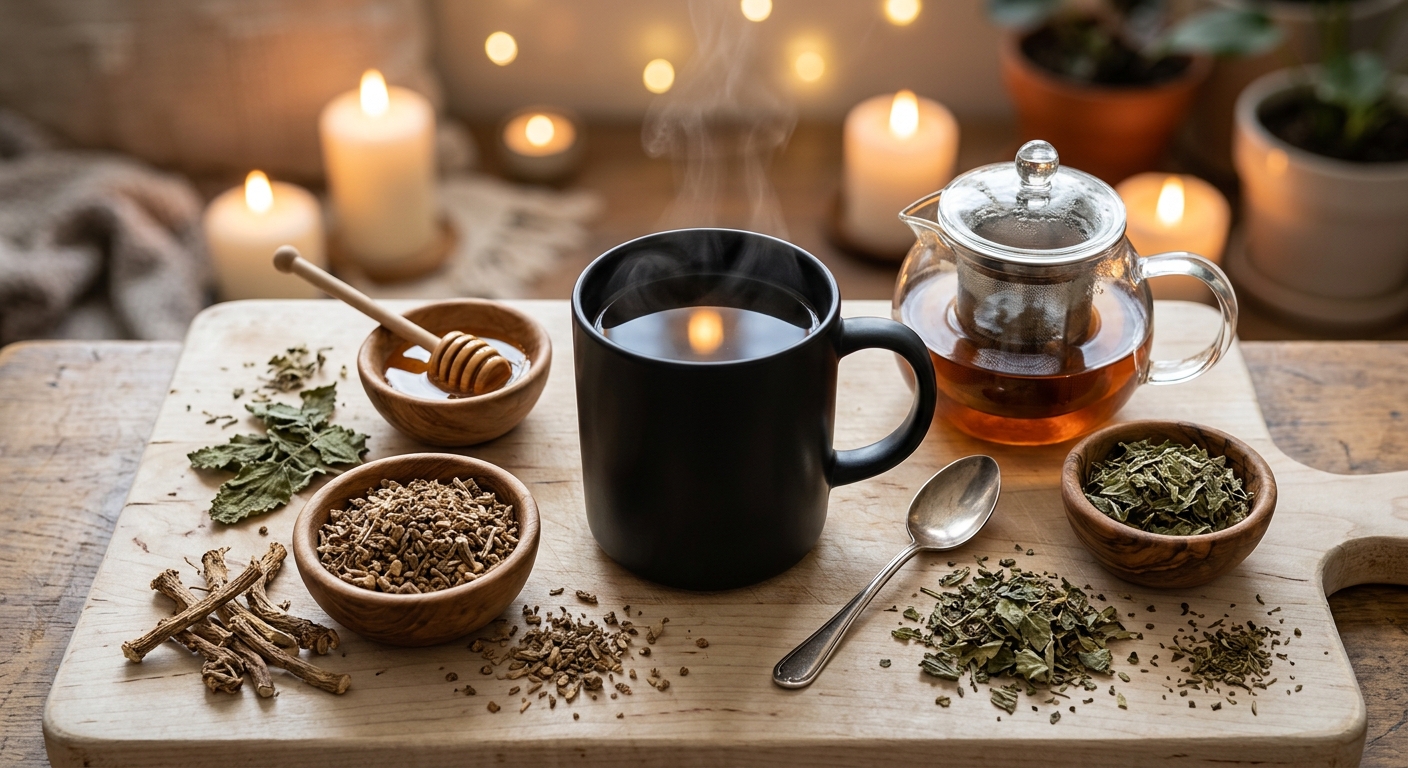
- 2 tspdried valerian root (cut and sifted)
- 480 mlwater (85°C / 185°F)
- —raw honey or maple syrup to taste (optional)
- —1 tsp dried lemon balm or passionflower (optional, to soften flavor)
How to Brew
Click on an item below to shop for the recommended items for this recipe on Amazon.
As an Amazon Associate, we earn from qualifying purchases.
- Heat filtered water to 85°C (185°F). If you do not have a temperature-controlled kettle, bring water to a full boil and allow it to rest uncovered for 3 to 4 minutes before using.
- Add 1 teaspoon of dried, cut-and-sifted valerian root per 240 ml of water into a tea infuser, strainer basket, or teapot. If using a companion herb such as lemon balm or passionflower, add it now in equal proportion.
- Pour the heated water over the roots, cover your cup or teapot with a lid or small plate to trap the volatile aromatic compounds, and steep for 10 to 15 minutes. A shorter steep yields milder flavor; a full 15 minutes produces stronger sedative potency.
- Remove the infuser and strain thoroughly. Valerian root particles are fine and can settle, so pour through a mesh strainer if needed.
- Sweeten with raw honey or maple syrup to balance the earthiness. Drink 30 to 60 minutes before bedtime or during a period of acute anxiety.
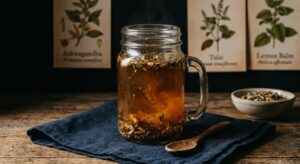
- Measure 2 teaspoons of dried valerian root per 480 ml of cold, filtered water. If desired, add 1 teaspoon of dried lemon balm or a few slices of fresh ginger to complement the flavor during the long steep.
- Combine the herbs and cold water in a clean glass jar. Stir briefly to ensure all the root is submerged, then seal the jar with a lid.
- Allow the jar to sit at room temperature for 1 hour to begin extraction, then transfer to the refrigerator and steep for a further 7 to 11 hours, ideally overnight for a full 8 to 12 hours total.
- In the morning, strain the liquid through a fine mesh strainer or cheesecloth into a clean pitcher or jar, pressing gently on the spent roots to extract remaining liquid.
- Serve cold over ice, or gently warm a single portion on the stovetop over low heat without boiling. Sweeten to taste and consume within 48 hours, keeping the remainder refrigerated.
- Add 2 teaspoons of dried valerian root per 300 ml of cold, filtered water directly into a small saucepan. Starting in cold water helps draw compounds out gradually from the dense root tissue as the temperature rises.
- Place the saucepan over medium-low heat and bring the water slowly to a gentle simmer. Do not allow it to reach a rolling boil, which can volatilize and destroy key active compounds.
- Maintain a low, steady simmer for 20 to 25 minutes. The liquid will reduce and deepen in color to a dark amber brown. Keep a lid partially on the pot to limit evaporation while still allowing a small amount of steam to escape.
- Remove the saucepan from heat, cover fully with a lid, and allow the decoction to rest for a further 10 minutes. This final resting period allows additional compound diffusion as the temperature slowly falls.
- Strain the liquid through a fine mesh strainer or cheesecloth into a mug, pressing on the spent roots. You will have approximately 200 ml of a concentrated, potent preparation. Dilute with an additional 50 ml of hot water if desired, sweeten with honey, and drink 45 minutes before sleep or during a high-stress period.
Health Benefits
Valerenic acid in valerian root modulates GABA-A receptor activity, the same pathway targeted by pharmaceutical anti-anxiety drugs, reducing feelings of worry and nervous tension. A 2002 double-blind study published in Phytotherapy Research found that a valerian extract significantly reduced situational anxiety compared to placebo, supporting centuries of traditional use.
Multiple randomized controlled trials have found that valerian root reduces the time it takes to fall asleep and improves subjective sleep quality, particularly with regular use over two to four weeks. Its GABA-enhancing action calms nervous system activity in the lead-up to sleep without the grogginess associated with many pharmaceutical sleep aids.
Valerian has a traditional reputation as an antispasmodic, and research suggests its compounds may relax smooth muscle tissue. This makes the tea particularly useful for tension headaches, tight shoulders, and stress-related digestive cramping, physical symptoms that often accompany anxiety states.
Several clinical trials have explored valerian’s use in menopausal women, finding that it may reduce the frequency and severity of hot flashes and improve sleep disruption associated with perimenopause. A 2013 study in Complementary Therapies in Clinical Practice reported significant reductions in hot flash severity after eight weeks of valerian supplementation.
Preliminary research, including a small 2011 study in Phytomedicine, has explored valerian’s effects on obsessive-compulsive behaviors, finding modest reductions in obsessive thoughts and compulsive actions. Researchers attribute this to valerenic acid’s GABAergic activity, which may quiet the neural loops underlying repetitive anxious thinking.
🧪 Key Bioactive Compounds
The Science Behind Valerian Root
Valerian root’s anxiolytic and sedative reputation is rooted in a well-studied but still partially understood mechanism: modulation of gamma-aminobutyric acid (GABA), the brain’s primary inhibitory neurotransmitter. Valerenic acid, the most studied of valerian’s sesquiterpene compounds, has been shown in laboratory studies to inhibit an enzyme called GABA transaminase, which normally breaks GABA down. By slowing this breakdown, valerenic acid allows GABA to remain active at synapses longer, producing a calming, inhibitory effect on neural activity. A landmark 2006 paper by Trauner and colleagues confirmed that valerenic acid also acts as a positive allosteric modulator at GABA-A receptors, meaning it enhances the receptor’s response to GABA without binding at the same site as benzodiazepines, which helps explain why valerian does not carry the same risk of dependency or tolerance.
The iridoid esters known as valepotriates add another dimension to valerian’s action. These compounds, most abundant in fresh root and cold preparations, have shown cytotoxic and sedative properties in cell and animal studies. However, valepotriates are chemically unstable and degrade readily with heat and prolonged storage, which is one reason why traditional European herbalists sometimes favored cold or room-temperature preparations for valerian and why cold brew extraction is considered by many practitioners to yield a chemically distinct and complementary product. The flavonoids linarin and hesperidin found in valerian extracts have also demonstrated independent anxiolytic effects in rodent models, suggesting the plant’s calming action is genuinely polypharmacological, meaning it arises from the synergistic interplay of many compounds rather than a single active molecule.
Human clinical evidence for valerian, while promising, is still accumulating and somewhat inconsistent due to variation in the extracts studied and trial designs. A 2006 meta-analysis in the American Journal of Medicine examined 16 randomized controlled trials and concluded that valerian may improve sleep quality without producing side effects, though the authors called for larger and more rigorous trials. More recent research has focused on valerian’s combination with other herbs, particularly hops and lemon balm, where synergistic effects on sleep latency and anxiety scores tend to show more robust and consistent results. The current scientific picture supports valerian as a meaningful, multi-target botanical for the nervous system, particularly for individuals dealing with stress-related insomnia and mild to moderate anxiety.
Brewing Tips
- Source valerian root that is cut and sifted rather than finely powdered for tea, as powder can pass through most infusers and creates a gritty, difficult-to-strain brew. Look for roots with a strong, unmistakable earthy aroma as a sign of freshness and potency.
- Valerian’s effects tend to build with consistent use over one to two weeks rather than acting as a dramatic single-dose sedative. Drink one cup nightly for at least 10 days before evaluating its full effect on your sleep or anxiety patterns.
- Store dried valerian root in an airtight glass jar away from light and heat. Its volatile compounds degrade quickly when exposed to air, so buy in small quantities and use within six months for peak potency.