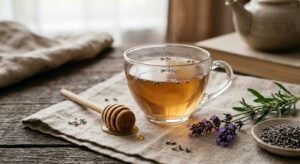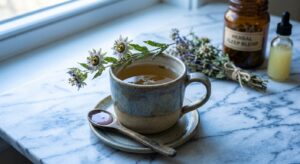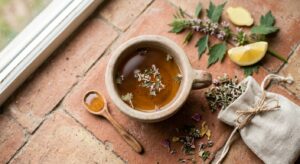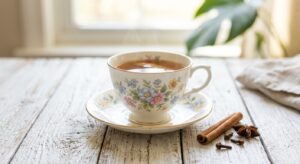
For athletes, sleep is not a luxury – it is the most anabolic window of the day. Growth hormone peaks during deep sleep, muscle protein synthesis accelerates, and the nervous system resets from the stress of training. Yet intense exercise, elevated cortisol, and racing post-workout minds often make falling and staying asleep harder than it should be. This recovery sleep tea was designed with that paradox in mind, drawing on centuries of herbal tradition to help the body shift gears from exertion to restoration.
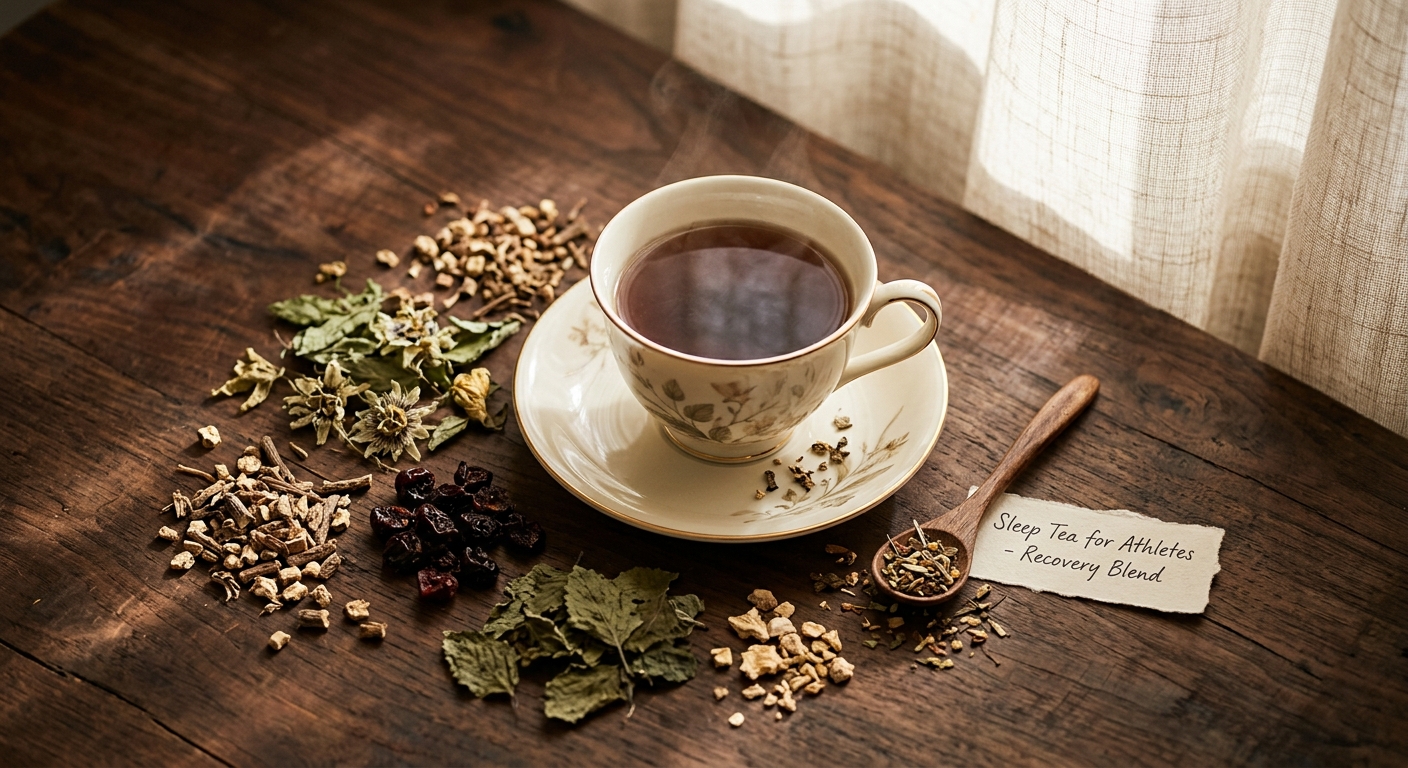
The blend anchors itself around three powerhouse herbs: valerian root, one of Europe’s oldest sleep aids documented in ancient Greek and Roman texts; passionflower, revered by Indigenous peoples of the Americas and later adopted by European herbalists for its gentle nervine action; and tart cherry, a more modern addition backed by a growing body of sports science research for its natural melatonin content and anti-inflammatory anthocyanins. Together they form a tea that addresses sleep from multiple angles – calming the nervous system, easing physical tension, and synchronizing the body’s circadian rhythm.
What makes this blend particularly well-suited to athletes is its dual action on both mind and muscle. While chamomile and lemon balm soothe the nervous system and quiet mental chatter, tart cherry and ginger work at the tissue level, reducing post-exercise oxidative stress and joint inflammation. The result is a cup that does far more than just help you fall asleep – it actively supports the recovery processes your training depends on.
2
cups
Ingredients
- 2 tspdried valerian root
- 1 tspdried passionflower
- 1 tspdried tart cherry pieces or tart cherry powder
- 0.5 tspdried lemon balm
- 0.25 tspdried ginger root
- 480 mlwater (95°C / 203°F)
- —raw honey or tart cherry concentrate to taste (optional)
- —pinch of cinnamon (optional)
How to Brew
Click on an item below to shop for the recommended items for this recipe on Amazon.
As an Amazon Associate, we earn from qualifying purchases.
- Bring filtered water to 95°C (203°F). Avoid a full rolling boil, which can degrade some of the delicate flavonoids in passionflower and lemon balm.
- Add 2 tsp dried valerian root, 1 tsp passionflower, 1 tsp tart cherry pieces, 0.5 tsp lemon balm, and 0.25 tsp ginger into a tea infuser or muslin bag placed inside a warmed ceramic mug.
- Pour 240 ml of hot water over each serving and cover the mug with a small plate or saucer. This traps volatile aromatic compounds that would otherwise escape as steam, preserving both the flavor and the therapeutic benefit.
- Steep for 10 to 15 minutes. The tea will deepen to a rich ruby-amber. The earthy, slightly pungent scent of valerian will be noticeable – this is normal and a sign of a potent brew.
- Remove the infuser and stir in raw honey or a small splash of tart cherry concentrate if desired. Drink 30 to 60 minutes before bed for best effect.
- Measure out a double-strength batch: 4 tsp dried valerian root, 2 tsp passionflower, 2 tsp tart cherry pieces, 1 tsp lemon balm, and 0.5 tsp ginger. Cold water extracts compounds less aggressively than heat, so using more herb ensures a therapeutically effective brew.
- Combine all herbs in a clean glass jar and pour 480 ml of cold, filtered water over them. Do not use hot or warm water – this is a true cold extraction.
- Stir gently to ensure all herbs are submerged, then cover the jar loosely with a lid or cloth. Leave at room temperature for 2 hours to begin extraction, then transfer to the refrigerator.
- Steep overnight for 8 to 10 hours. The slow cold extraction draws out anthocyanins from the tart cherry beautifully, giving the brew a vibrant ruby hue and a naturally sweeter, less bitter profile than hot brewing.
- Strain through a fine mesh strainer or cheesecloth into a clean bottle or pitcher. The cold brew will keep refrigerated for up to 48 hours.
- To serve, pour over a small amount of ice or gently warm a single portion on the stovetop (do not boil) if you prefer a warm drink before bed. Add honey to taste.
- Place 2 tsp dried valerian root and 0.25 tsp dried ginger into a small saucepan with 600 ml of cold filtered water. Starting in cold water and gradually bringing to temperature draws out more of the root compounds compared to adding roots to hot water.
- Bring to a very gentle simmer over medium-low heat, watching carefully. You want small, lazy bubbles, not a rolling boil. Maintain this low simmer for 20 to 25 minutes. The liquid will reduce and deepen considerably.
- In the final 5 minutes of simmering, add the passionflower, lemon balm, and tart cherry pieces directly to the saucepan. These more delicate herbs should not be simmered the full duration, as prolonged heat degrades their volatile compounds.
- Remove from heat, cover the saucepan with a lid, and allow to rest for 5 minutes before straining. This resting period allows the flavors to integrate and the delicate constituents to finish infusing in the residual heat.
- Strain through a fine mesh strainer into two mugs, pressing the herbs gently with the back of a spoon to extract the remaining liquid. You should yield approximately 400 to 450 ml after evaporation.
- Sweeten with raw honey if desired and drink warm 30 to 45 minutes before your sleep window. This decoction method is especially recommended on heavy training days or after competition.
Health Benefits
Tart cherry’s anthocyanins and ginger’s gingerols work synergistically to reduce post-exercise inflammation and oxidative stress, with multiple randomized controlled trials showing tart cherry supplementation significantly reduces muscle soreness and strength loss after intense exercise.
Valerian root’s valerenic acid modulates GABA activity in the central nervous system, with a meta-analysis of 16 studies finding it significantly improved sleep quality and reduced the time to fall asleep compared to placebo.
Passionflower and lemon balm both act on the GABAergic system to quiet overactivation of the hypothalamic-pituitary-adrenal axis, helping bring elevated post-training cortisol back to baseline more quickly.
Tart cherry is one of the few whole foods with measurable melatonin content, and studies in both athletes and older adults have shown that tart cherry juice supplementation extends sleep duration and improves sleep efficiency by supporting the body’s own circadian signaling.
Ginger’s anti-spasmodic properties combined with valerian’s muscle-relaxant effects make this blend useful for athletes who experience post-exercise cramping or restless legs that interrupt sleep.
🧪 Key Bioactive Compounds
The Science Behind Valerian Root
The science behind this recovery sleep blend operates on two distinct but complementary axes: the neuroendocrine axis, which governs sleep and stress hormones, and the musculoskeletal axis, which governs post-exercise inflammation and repair. Valerian root works on the first axis by preventing the enzymatic degradation of gamma-aminobutyric acid (GABA), the brain’s primary inhibitory neurotransmitter. When GABA activity is sustained, the central nervous system shifts from sympathetic dominance – the alert, activated state that persists after intense training – toward parasympathetic rest. Passionflower’s chrysin compound reinforces this shift by directly binding to GABA-A receptor sites, producing an anxiolytic effect comparable in mechanism to benzodiazepine drugs, though far gentler in magnitude and without the dependency risks.
Tart cherry operates on both axes simultaneously, making it perhaps the most strategically valuable ingredient in this blend for athletes. Its melatonin content is genuine and measurable, with studies showing that tart cherry juice consumption raises urinary melatonin metabolites and improves both sleep duration and efficiency in healthy adults. On the inflammatory front, its anthocyanins – particularly cyanidin-3-glucoside and cyanidin-3-rutinoside – inhibit the same COX-1 and COX-2 enzymes targeted by non-steroidal anti-inflammatory drugs, but without the gastrointestinal side effects. A landmark study published in the Scandinavian Journal of Medicine and Science in Sports found that marathon runners who consumed tart cherry juice before and after a race experienced significantly lower oxidative stress markers and a faster return of isometric strength compared to placebo.
Lemon balm’s rosmarinic acid contributes a third GABAergic mechanism by inhibiting GABA transaminase, the enzyme that breaks GABA down in the synaptic cleft, effectively prolonging the calming signal. Ginger’s 6-gingerol rounds out the formula by targeting nuclear factor kappa B (NF-kB), a master regulator of the inflammatory response. By downregulating NF-kB activity, ginger helps reduce the systemic low-grade inflammation that intense training accumulates over days and weeks, which if left unaddressed can fragment sleep architecture and impair overnight recovery. Together these compounds do not merely sedate – they create the biochemical conditions in which quality sleep and genuine tissue repair can occur.
Brewing Tips
- Brew this tea 30 to 45 minutes before your intended sleep time, not right at bedtime. Valerian and passionflower take time to be absorbed and reach peak effect in the bloodstream.
- Valerian root smells pungent and earthy – sometimes compared to old gym socks – and this is completely normal. The tart cherry and ginger in this blend are specifically chosen to balance that aroma. Do not be deterred by the dry herb smell; the brewed tea is far more pleasant.
- If you train late in the evening, consider adding an extra quarter teaspoon of lemon balm to your blend on those nights. Lemon balm has been shown to specifically lower post-stress cortisol and works quickly, making it ideal for bridging the gap between a late workout and sleep.