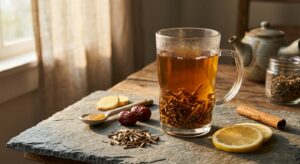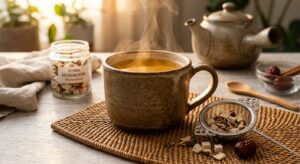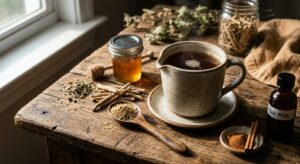
Clary sage (Salvia sclarea) has wandered through the gardens of monasteries, the notebooks of medieval herbalists, and the apothecary shelves of European physicians for well over a thousand years. Its name is thought to derive from the Latin clarus, meaning clear, a nod to the herb’s long historical use as an eye wash and clarifying tonic. Native to the northern Mediterranean basin and parts of Central Asia, clary sage grows tall and proud, its large, velvety leaves and whorls of pale lilac flowers filling the air with a warm, musky-sweet scent that sits somewhere between lavender, amber, and fresh herbs. Ancient Roman herbalists praised it as a warming, fortifying plant, and medieval European healers incorporated it into remedies for everything from digestive complaints to nervous exhaustion.
In the traditions of European folk medicine, clary sage was regarded as a plant of balance and calm. German herbalists called it Muskatellersalbei and used it to flavor wine and ales, believing it amplified feelings of warmth and ease. It was also a staple in women’s herbal traditions across France and Italy, used to ease tension associated with hormonal cycles and to bring on a sense of grounded wellbeing. Modern aromatherapy has enthusiastically adopted clary sage essential oil as one of its premier relaxants, and contemporary herbalists are increasingly returning to the whole plant, brewed as a tea, to access its gentler, more holistic benefits.
What makes clary sage particularly compelling as a sleep and relaxation tea is the unusual richness of its phytochemical profile. Unlike many calming herbs that work primarily through a single pathway, clary sage brings together aromatic terpenes, anxiolytic esters, and phytoestrogenic compounds that work in concert to quiet the mind, relax smooth muscle, and shift the body toward a parasympathetic, rest-and-digest state. Brewed as a hot tea in the evening, it delivers a cup that is deeply aromatic, gently warming, and unmistakably medicinal in the most ancient and welcoming sense of that word.
2
cups
Ingredients
- 2 tspdried clary sage leaves and flowers
- 480 mlwater (90°C / 194°F)
- —raw honey to taste (optional)
- —a strip of lemon peel (optional, brightens the flavor)
How to Brew
Click on an item below to shop for the recommended items for this recipe on Amazon.
As an Amazon Associate, we earn from qualifying purchases.
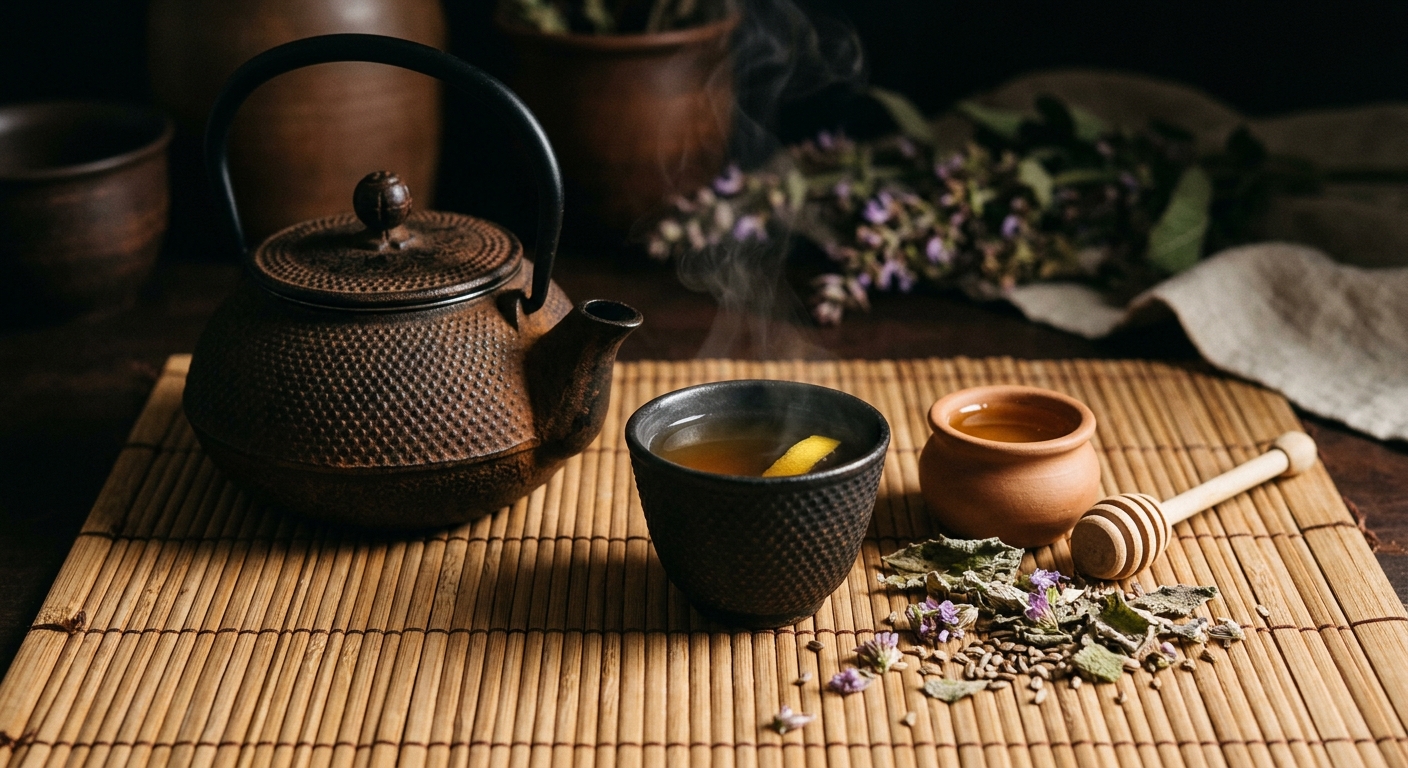
- Heat fresh filtered water to 88 to 92°C (190 to 198°F). If you do not have a temperature-controlled kettle, bring water to a full boil and then allow it to rest for 2 to 3 minutes before using.
- Place 1 teaspoon of dried clary sage leaves and flowers per cup into a tea infuser or a warmed teapot. Lightly crush the dried leaves between your fingers as you load them to release the aromatic oils before brewing.
- Pour the hot water slowly over the herb, fully submerging the plant material. Place a small saucer or lid over the cup or teapot to trap the volatile aromatic compounds that would otherwise escape with the steam.
- Steep for 7 to 10 minutes. A shorter steep of 7 minutes produces a lighter, more floral cup; a full 10 minutes yields a richer, more resinous infusion with more pronounced bitterness.
- Remove the infuser or strain the leaves and flowers through a fine mesh strainer. Sweeten with raw honey if desired. Sip slowly in the 30 to 60 minutes before bedtime for best effect.
- Measure 3 teaspoons of dried clary sage leaves and flowers per 480 ml of filtered water. The higher herb ratio compensates for the slower cold extraction and produces a well-flavored infusion.
- Combine the dried herb and cold filtered water in a clean glass jar. Stir gently with a spoon to ensure all plant material is moistened and submerged. Do not crush the leaves before cold brewing, as the slower extraction is better controlled with whole dried material.
- Seal the jar with a lid or cover with a small plate. Leave at room temperature for 1 hour to allow initial extraction of the aromatic top notes, then transfer to the refrigerator.
- Allow to cold brew in the refrigerator for 10 to 14 hours, or overnight. The longer the brew, the more pronounced the sclareol and terpene content becomes without the sharpness introduced by heat.
- Strain through a fine mesh strainer or a piece of cheesecloth into a clean pitcher or glass. Serve over ice or chilled, with a light drizzle of honey or a few fresh mint leaves for an especially refreshing evening drink.
- Just before or around dusk, measure 3 teaspoons of dried clary sage leaves and flowers into a clear glass jar or ceramic vessel. Gently bruise the leaves very lightly with clean fingers to encourage slow aromatic release without breaking the plant material apart.
- Pour 480 ml of room-temperature filtered water over the herb. The water should be cool, not cold, ideally drawn from the tap and allowed to sit for 15 minutes to reach ambient temperature.
- Stir once with a wooden or ceramic spoon, then cover the vessel with a breathable cloth or cheesecloth secured with a rubber band. This allows the infusion to breathe while keeping dust and insects out.
- Place the jar in a calm, undisturbed spot, near a windowsill if moonlight is available, though direct outdoor exposure is not necessary for the method to work effectively. Allow to infuse for 4 to 6 hours at ambient temperature.
- Strain through a fine mesh strainer just before bedtime. Gently warm the strained infusion in a small saucepan over very low heat until just comfortable to drink, being careful not to bring it to a simmer, which would destroy the delicate volatile compounds. Sweeten with honey and sip as part of a conscious wind-down ritual.
Health Benefits
Clary sage’s linalool and linalyl acetate interact with GABA-A receptors in the brain, reducing neural excitability and inducing a natural sedative state. Inhalation and ingestion studies with these compounds have shown meaningful reductions in sleep latency and improvements in sleep quality, particularly in individuals experiencing stress-related insomnia.
Rosmarinic acid in clary sage inhibits the enzyme that breaks down GABA, the brain’s primary calming neurotransmitter, effectively raising GABA levels and sustaining a state of mental calm. Combined with linalool’s direct receptor activity, the herb produces measurable anxiolytic effects supported by both traditional use and emerging pharmacological research.
Sclareol, a compound found almost exclusively in Salvia sclarea, exhibits phytoestrogenic activity by weakly binding to estrogen receptors. This interaction has made clary sage a valued herb in women’s traditional medicine for easing mood disturbances, tension, and sleep disruption associated with the luteal phase of the menstrual cycle and perimenopause.
Salvigenin and other smooth-muscle-relaxant compounds in clary sage reduce spasms in the gastrointestinal tract, making the tea particularly useful for stress-related digestive complaints such as cramping, bloating, and nervous stomach that often accompany anxiety and disrupted sleep.
Rosmarinic acid and alpha-terpineol contribute meaningful antioxidant activity, neutralizing free radicals and reducing systemic inflammation. Chronic low-grade inflammation is increasingly recognized as a driver of poor sleep and heightened anxiety, making these compounds a meaningful secondary benefit of a regular clary sage tea practice.
🧪 Key Bioactive Compounds
The Science Behind Clary Sage
The sedative and anxiolytic reputation of clary sage is grounded in a well-characterized set of bioactive compounds that act on multiple pathways within the central and peripheral nervous system. The most significant of these is linalool, a monoterpene alcohol that directly modulates GABA-A receptors, the same neurological target as benzodiazepine medications, though through a gentler, non-addictive mechanism. A 2009 study published in the Journal of Agricultural and Food Chemistry demonstrated that inhaled linalool significantly reduced anxiety behaviors in mice by acting on the GABAergic system, and subsequent research has extended these findings to oral administration. Linalyl acetate, the dominant ester in clary sage, amplifies this effect and has been shown in clinical contexts to reduce cortisol levels and slow heart rate, signaling a measurable shift into parasympathetic nervous system dominance.
Equally important is rosmarinic acid, a phenolic compound abundant in many members of the Lamiaceae family, including clary sage. Rosmarinic acid functions as an inhibitor of GABA transaminase, the enzyme responsible for breaking down GABA in the synaptic cleft. By slowing the degradation of GABA, rosmarinic acid effectively prolongs and amplifies the brain’s own calming signals, an effect that has been studied in the context of anxiety, mild depression, and cognitive stress. A 2014 randomized trial published in Phytotherapy Research found that a standardized extract of rosmarinic acid-containing herbs reduced state anxiety scores in healthy adults under stress, with results comparable to low-dose pharmaceutical anxiolytics and no reported adverse effects at therapeutic doses.
Sclareol is perhaps the most pharmacologically intriguing compound in clary sage and the one that most distinguishes it from other calming herbs. This bicyclic diterpene has been identified as a selective partial agonist at estrogen receptors, giving clary sage its phytoestrogenic character. Research into sclareol has shown it possesses not only hormonal modulatory effects but also cytostatic properties against certain cancer cell lines and meaningful antimicrobial activity. In the context of sleep and relaxation, its phytoestrogenic action is particularly relevant for individuals experiencing hormonally driven sleep disruption, as fluctuating estrogen levels are well established as a driver of insomnia in perimenopausal and premenstrual contexts. The convergence of these compounds, each working through a distinct but complementary mechanism, gives clary sage a depth of therapeutic action that reflects its long and respected history in plant medicine traditions.
Brewing Tips
- Always cover your cup or teapot while steeping clary sage, as the most therapeutically valuable aromatic compounds, including linalool and linalyl acetate, are highly volatile and will escape with the steam if the vessel is left uncovered.
- Source your clary sage from a reputable supplier who can confirm the herb is Salvia sclarea specifically, as common sage (Salvia officinalis) and other Salvia species look similar in dried form but have a distinctly different phytochemical profile and are not appropriate substitutes for sleep support.
- For best results as a sleep aid, drink your clary sage tea as a consistent evening practice for at least two to three weeks. Adaptogenic and GABA-supportive herbs tend to build in effect over time, and the calming ritual itself signals to the nervous system that the wind-down period has begun.