Few herbal teas carry the weight of history quite like linden flower tea. Known as tilleul in France and Lindenblütentee in Germany, this fragrant infusion has been brewed from the blossoms and bracts of the Tilia tree for at least a thousand years. Medieval European herbalists prescribed it for nervous complaints, fevers, and restless nights, and village pharmacies across France and Central Europe still stock dried linden flowers today as a household staple. The great naturalist Pliny the Elder wrote admiringly of the linden tree, and its flowers appear in folk traditions from Slavic weddings to Germanic midsummer festivals, symbols of grace, tenderness, and protection.
The Tilia genus includes several closely related species, most commonly Tilia cordata (small-leaved linden), Tilia platyphyllos (large-leaved linden), and Tilia europaea, a natural hybrid. All produce clusters of small, creamy white to pale yellow flowers attached to a distinctive pale green bract, and it is this flower-and-bract combination that is harvested, dried, and steeped for tea. The blossoms appear for only a brief window in midsummer, filling the air around linden trees with a powerfully sweet, almost honeyed fragrance that bees find irresistible. Linden honey, produced from these blossoms, is considered one of the finest in the world.
What makes linden flower tea truly special is the seamless marriage of sensory pleasure and therapeutic effect. The cup is pale golden, the aroma is soft and floral with hints of fresh hay and wild honey, and the taste is mildly sweet with a gentle, almost velvety body. Unlike some herbal teas that feel medicinal, linden genuinely feels like a treat. Traditionally consumed in the evening to ease anxiety, calm a racing mind, and invite restful sleep, linden flower tea is one of the gentlest yet most effective herbal allies in the sleep and relaxation category, backed by both generations of traditional wisdom and a growing body of modern research.
2
cups
Ingredients
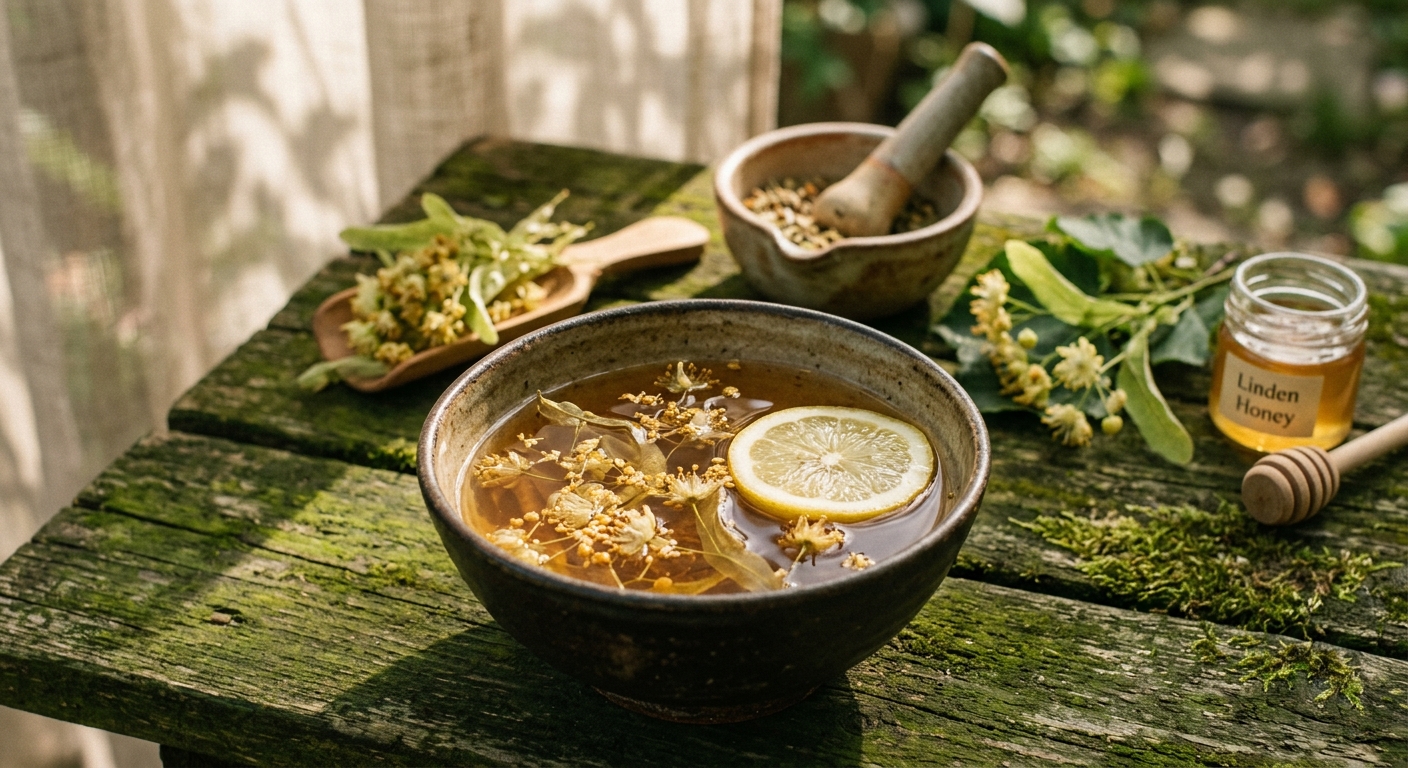
- 2 tbspdried linden flowers and bracts
- 480 mlwater (85 to 90°C / 185 to 194°F)
- —raw honey or linden honey to taste (optional)
- —thin lemon slice (optional)
How to Brew
Click on an item below to shop for the recommended items for this recipe on Amazon.
As an Amazon Associate, we earn from qualifying purchases.
- Heat fresh filtered water to 85 to 90°C (185 to 194°F). If you do not have a temperature-controlled kettle, bring water to a full boil and let it rest uncovered for 2 to 3 minutes before pouring.
- Place 1 tablespoon of dried linden flowers and bracts per cup into a tea infuser or directly into a warmed teapot. The bracts are an important part of the preparation and should be included alongside the flowers.
- Pour the hot water gently over the linden blossoms, covering them fully. Place a lid or small saucer over the cup or teapot to trap the aromatic steam and volatile oils inside.
- Steep for 5 to 10 minutes. A 5-minute steep yields a lighter, more floral cup. A 10-minute steep produces a fuller-bodied infusion with more pronounced soothing properties. Taste at 5 minutes and decide based on your preference.
- Strain thoroughly into your mug, pressing the flowers gently against the infuser to extract the last of the liquid. Sweeten with a small spoonful of linden honey if desired, and serve with a thin slice of lemon for a gentle citrus lift.
- Measure 3 tablespoons of dried linden flowers and bracts for every 480 ml of water. Cold brewing is less efficient than hot, so a slightly higher ratio is needed to achieve a well-flavored infusion.
- Place the linden blossoms directly into a clean glass jar or pitcher. Pour cold, filtered water over them at room temperature, ensuring all the flowers are fully submerged. Stir gently once.
- Cover the jar or pitcher loosely with a lid, cloth, or plate to prevent absorption of refrigerator odors. Allow the jar to sit at room temperature for 30 minutes to begin extraction, then transfer to the refrigerator.
- Refrigerate for 8 to 12 hours, or overnight. The slow, cool extraction draws out the sweet, floral compounds gradually without releasing the tannins that can cause bitterness in hot-brewed teas.
- Strain through a fine mesh strainer into glasses filled with ice. Cold-brewed linden is beautiful served over large ice cubes with a sprig of fresh mint or a few drops of lemon juice. It can be stored refrigerated for up to 48 hours.
- Choose a warm, sunny day with consistent direct sunlight. Use a large, clear glass jar so the sunlight can penetrate the water fully and you can watch the color develop. Rinse the jar with hot water first to remove any residual odors.
- Add 2 to 3 tablespoons of dried linden flowers and bracts to the jar for every 480 ml of cold, filtered water. The flowers will float at first and gradually sink and open as they absorb water.
- Seal the jar loosely with a lid and place it in a spot that will receive 2 to 4 hours of uninterrupted direct sunlight, such as a sunny windowsill, patio, or garden table.
- Check the tea every 30 to 45 minutes. When the water has turned a warm, pale golden hue and the aroma rising from the jar when you briefly lift the lid is fragrant and honeyed, the tea is ready. This typically takes 2 to 4 hours depending on sun intensity.
- Bring the jar indoors and strain the tea through a fine mesh strainer into a clean pitcher or directly into glasses over ice. Taste before sweetening, as sun-brewed linden is often naturally sweet enough on its own. Consume within a few hours or refrigerate and use within 24 hours.
Health Benefits
Linden flowers contain flavonoids including kaempferol and tiliroside that interact with GABA pathways in the brain, producing a gentle sedative effect similar in mechanism to some pharmaceutical sleep aids but far milder. Traditional European herbalism has prescribed linden flower infusions as an evening sleep remedy for centuries, and modern pharmacological studies support this anxiolytic and mild hypnotic activity.
The flavonoid compounds in linden, particularly quercetin and kaempferol, have demonstrated anxiolytic effects in preclinical research by modulating activity in the central nervous system. Linden is classified as a nervine herb in traditional plant medicine, meaning it specifically targets and calms nervous system overactivity, making it useful for stress-related tension, restlessness, and a racing mind.
Linden has a long history of use for mild hypertension and heart palpitations linked to nervous tension. Its flavonoids, particularly quercetin, exert mild vasodilatory effects and antioxidant protection on blood vessel walls. While it should not replace medical treatment for cardiovascular conditions, it is a supportive botanical for stress-related cardiovascular symptoms.
The mucilaginous polysaccharides in linden flowers form a protective film over irritated mucous membranes in the throat and upper airways. Combined with mild antimicrobial and anti-inflammatory activity from its phenolic compounds, linden flower tea has been used in European traditional medicine as a trusted remedy for sore throats, dry coughs, and the early stages of colds.
Linden’s antispasmodic properties help relax smooth muscle in the digestive tract, easing cramping, bloating, and nervous stomach upset. The mucilaginous compounds also soothe the gut lining, making a warm cup of linden flower tea a gentle remedy for stress-related digestive discomfort after meals.
🧪 Key Bioactive Compounds
The Science Behind Linden Flower
The calming power of linden flower tea is rooted primarily in its rich flavonoid content, particularly kaempferol, quercetin, and tiliroside. These compounds have been shown in pharmacological studies to interact with gamma-aminobutyric acid (GABA) receptors in the brain, the same receptors targeted by benzodiazepine medications. By modulating GABAergic signaling, these flavonoids can reduce neural excitability, lower feelings of anxiety, and facilitate the transition into sleep. Unlike pharmaceutical sedatives, the effect is gentle and non-habit-forming, making linden a practical ally for everyday stress and occasional sleeplessness.
Linden’s volatile aromatic compounds, including farnesol and geraniol found in the essential oil fraction of the flowers, may also contribute to its relaxing effects through inhalation as well as ingestion. Aromatherapy research has explored how fragrant terpene compounds can influence the limbic system, the brain region governing emotion and memory, through the olfactory pathway. This partly explains why even the act of sitting quietly with a warm, fragrant cup of linden tea feels calming before the first sip is taken. The sensory ritual itself becomes a meaningful part of the therapeutic experience.
The mucilaginous polysaccharides present in linden flowers represent a separate but complementary dimension of the herb’s activity. These long-chain sugar molecules are not absorbed into the bloodstream but instead act locally within the digestive and respiratory tracts, forming a soothing, protective coating over irritated mucous membranes. This accounts for linden’s traditional use as a remedy for sore throats and dry, irritating coughs. Meanwhile, the phenolic acids present, particularly p-coumaric acid, contribute antioxidant activity that may reduce systemic inflammation, a factor increasingly recognized as a contributor to disrupted sleep and chronic stress.
Brewing Tips
- Always cover your cup or pot while linden flowers steep. The aromatic volatile oils responsible for much of the herb’s calming effect are highly susceptible to evaporation, and a simple lid or saucer placed over the vessel dramatically preserves both fragrance and therapeutic potency.
- Source linden flowers that include the pale green bracts attached to the flower clusters. The bracts are not just packaging – they contain mucilaginous compounds and flavonoids in their own right, and traditional preparations in Europe always include them. Flowers sold without bracts deliver a less complete cup.
- Brew linden flower tea as part of a consistent evening ritual rather than only when sleep is already a problem. The combination of warmth, fragrance, and the act of intentional slowing down creates a conditioned relaxation response over time, making the tea increasingly effective the more regularly it is used.