In Traditional Chinese Medicine, the concept of Shen refers to the spirit or mind that resides in the heart. When Shen is settled and nourished, sleep comes easily, thoughts flow without turbulence, and the emotions rest in balance. When Shen is disturbed, the result is restlessness, vivid or troubled dreams, palpitations, and the kind of racing mind that keeps you staring at the ceiling long after midnight. For thousands of years, Chinese herbalists have crafted formulas specifically to anchor and calm the Shen, drawing on a sophisticated understanding of how certain plants interact with the body’s vital energy, or Qi.
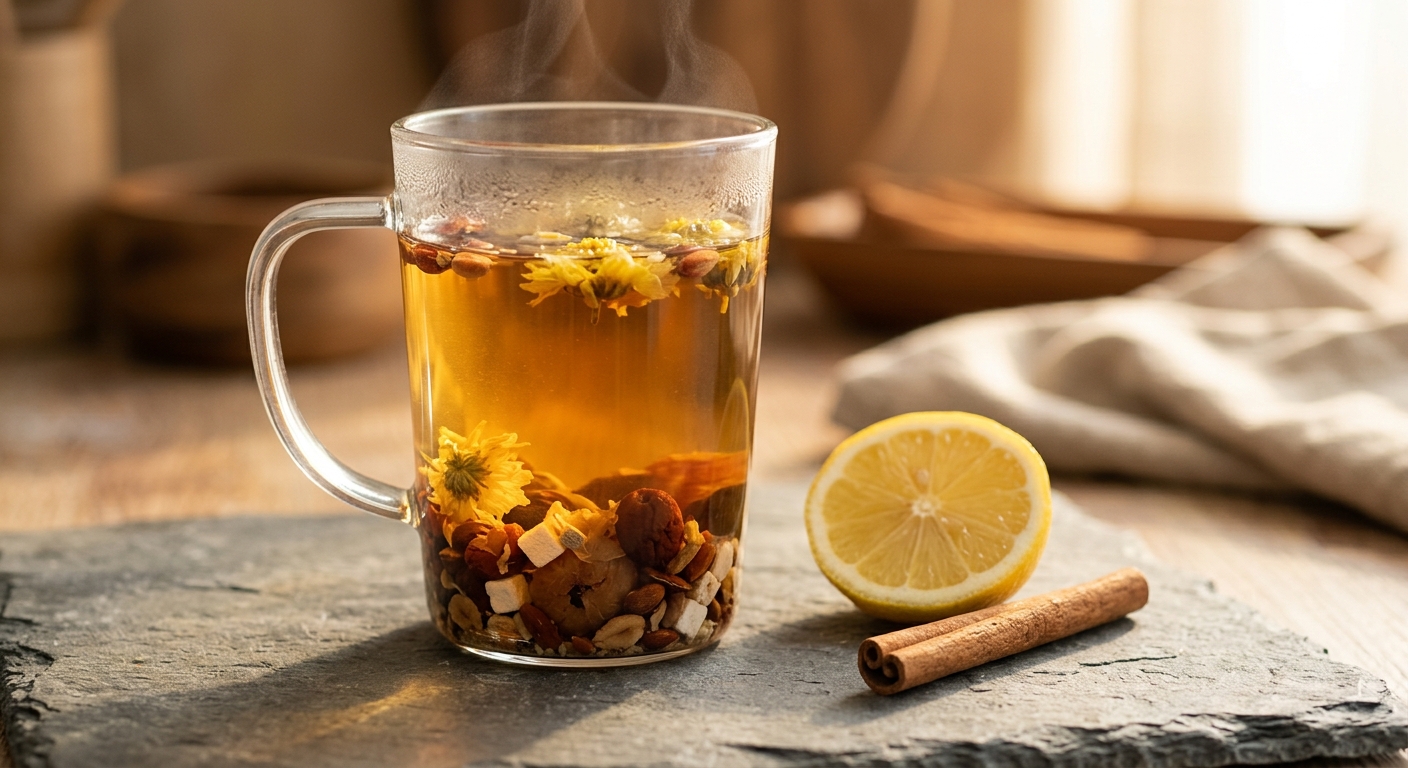
This Shen-calming tea draws on the core herbs of that tradition: sour jujube seed (Suan Zao Ren), the most celebrated sleep herb in the Chinese pharmacopoeia; longan fruit (Long Yan Rou), a sweet tonic that nourishes heart blood; poria mushroom (Fu Ling), which quiets the spirit and supports the spleen; and a touch of chrysanthemum flower, prized for clearing liver heat and calming the eyes and mind. Together they form what TCM practitioners call a heart-blood-nourishing formula, one that addresses the root cause of restlessness rather than simply suppressing the nervous system. The taste is earthy, gently sweet, and warming, with a subtle floral note that makes it genuinely pleasurable to drink.
Modern research is beginning to catch up with what classical texts like the Shennong Bencao Jing described centuries ago. Studies on sour jujube seed have identified saponins and flavonoids that modulate GABA receptors and serotonin pathways, offering a pharmacological basis for its traditional reputation as the great calmer of the troubled mind. Longan’s polysaccharides show adaptogenic and neuroprotective activity, while poria’s triterpenoids demonstrate anxiolytic effects in preclinical models. This is not simply folk medicine waiting to be validated; it is a mature, elegant system of plant knowledge that modern science is progressively confirming.
2
cups
Ingredients
- 15 gsour jujube seeds (Suan Zao Ren), lightly crushed
- 10 gdried longan fruit flesh (Long Yan Rou)
- 8 gporia mushroom pieces (Fu Ling)
- 6 gdried chrysanthemum flowers (Ju Hua)
- 600 mlfiltered water
- —raw honey or rock sugar to taste (optional)
- —a thin slice of fresh ginger (optional, for added warmth)
How to Brew
Click on an item below to shop for the recommended items for this recipe on Amazon.
As an Amazon Associate, we earn from qualifying purchases.
- Place the lightly crushed sour jujube seeds and poria mushroom pieces into a small clay pot, ceramic saucepan, or stainless steel pot. Cover with 600 ml of cold filtered water and allow to soak for 15 minutes. This pre-soak softens the dense material and jumpstarts extraction.
- Bring the pot to a full boil over medium-high heat, then immediately reduce the heat to a gentle simmer. The surface should be barely bubbling. Add the longan fruit flesh at this stage, as it releases its sweetness and polysaccharides best over slow, sustained heat.
- Simmer uncovered for 15 minutes, then add the dried chrysanthemum flowers. Continue simmering for a further 5 to 10 minutes. Adding chrysanthemum late preserves its delicate volatile compounds and floral aromatics, which would be lost if cooked for the full duration.
- Remove from heat and strain the tea through a fine-mesh strainer into warmed mugs or a ceramic teapot. Press gently on the solids with the back of a spoon to extract the last of the liquid.
- Taste and sweeten lightly with rock sugar or raw honey if desired. Drink warm, ideally 30 to 60 minutes before bed. The remaining solids can be re-simmered once with 400 ml of fresh water for a lighter second brew.
- Lightly crush the sour jujube seeds using a mortar and pestle or the flat of a heavy knife. Place the crushed seeds, poria pieces, and longan flesh into a clean glass jar. Do not add the chrysanthemum flowers yet, as their delicate aromatics do not benefit from prolonged cold extraction and can become slightly bitter.
- Pour 700 ml of cold filtered water over the herbs. The volume is slightly higher than the hot brew to compensate for the lower extraction efficiency of cold water. Stir briefly, then cover the jar loosely with a cloth or lid and leave at room temperature for 1 hour to begin initial extraction.
- After 1 hour, move the jar to the refrigerator and allow to steep for a further 8 to 12 hours, or overnight. The slow, cold extraction draws out the complex polysaccharides and jujube saponins in a gentler, more gradual way than heat.
- When ready to serve, strain the cold brew through a fine-mesh strainer into a clean container. Add the dried chrysanthemum flowers to the strained liquid and allow them to bloom at room temperature for 10 minutes before a final strain.
- To serve as a warming evening drink, gently heat one portion in a small saucepan over low heat until steaming but not boiling. Sweeten with a little raw honey, which should be added after removing from heat to preserve its enzymes. Store the remaining cold brew in the refrigerator for up to 48 hours.
- Double the ingredient quantities: 30 g crushed sour jujube seeds, 20 g longan flesh, 16 g poria, and 12 g chrysanthemum flowers. Place everything except the chrysanthemum into a medium clay or stainless steel pot. Cover with 1 litre of cold filtered water and soak for 20 minutes.
- Bring to a full boil over medium-high heat, then reduce to a low, steady simmer. Cook uncovered for 30 minutes, watching that the liquid reduces by roughly half. This concentration process extracts the maximum potency from the dense roots and seeds.
- Add the chrysanthemum flowers in the final 8 minutes of simmering. The goal is a rich, dark amber liquid with a noticeably thicker body than a standard brew.
- Remove from heat and allow to cool for 10 minutes. Strain through a fine-mesh strainer lined with cheesecloth if available, pressing the solids firmly. You should have approximately 400 to 500 ml of concentrate.
- Pour the cooled concentrate into a clean glass jar and refrigerate. It will keep for up to 5 days. To serve, mix 80 to 100 ml of concentrate with 150 ml of hot water (not boiling, approximately 85°C), adjust sweetness, and drink warm before bed. Each batch yields approximately 4 to 5 servings.
Health Benefits
Sour jujube seed is one of the most studied sleep herbs in East Asian medicine. Clinical trials and meta-analyses have found that its saponin and flavonoid content meaningfully reduces sleep latency (the time to fall asleep) and increases total sleep time, with effects comparable in some studies to low-dose pharmaceutical anxiolytics but without morning grogginess.
The combination of poria’s pachymic acid and jujube’s jujubosides acts on overlapping GABA and serotonin pathways to calm an overactivated nervous system. TCM describes this as anchoring a floating Shen, and modern pharmacology confirms that both herbs exert meaningful anxiolytic effects through distinct but complementary mechanisms.
In TCM, many forms of insomnia are attributed to heart blood deficiency, a state in which the mind lacks adequate nourishment to rest. Longan fruit and sour jujube seed are both classified as heart-blood tonics, and longan’s polysaccharides have shown real neuroprotective and restorative effects on neuronal health in preliminary research.
Poria mushroom has a long reputation in TCM for calming the spirit and supporting the spleen’s ability to manage worry, the emotion most associated with that organ in Chinese medicine. Its adaptogenic triterpenoids help moderate the HPA axis stress response, making this formula useful not only at bedtime but during periods of sustained emotional strain.
Chrysanthemum is a classical TCM herb for clearing liver heat, a pattern associated with eye strain, headaches, irritability, and a mind that feels wired and overheated. Its inclusion in this formula addresses the common modern experience of screen-induced tension and evening hyperarousal, making the blend particularly well suited to contemporary lifestyles.
🧪 Key Bioactive Compounds
The Science Behind Sour Jujube Seed (Suan Zao Ren)
The science behind this Shen-calming formula begins with the nervous system and the two primary inhibitory and excitatory neurotransmitter systems: GABA and glutamate. When the brain is in an aroused, anxious state, glutamate activity is elevated relative to GABA, keeping neurons firing when they should be winding down. Jujuboside A and B, the signature triterpenoid saponins of sour jujube seed, are among the few plant-derived compounds that have been demonstrated to directly inhibit glutamate-mediated excitation in the hippocampus. Simultaneously, spinosin and other flavonoids in the seed appear to sensitize serotonin 1A receptors, promoting a calmer mood baseline. A 2020 randomized controlled trial published in Phytomedicine found that standardized sour jujube seed extract significantly improved sleep quality scores in adults with chronic insomnia compared to placebo, lending important clinical weight to centuries of traditional use.
Poria mushroom operates through a parallel but complementary pathway. Its lanostane triterpenoids, particularly pachymic acid and poricoic acids, have been shown in preclinical studies to modulate GABA-A receptor subunit expression and reduce serum corticosterone in stress-exposed animals. This suggests that poria works not merely as a direct sedative but as a modulator of the stress-response system itself, helping the body recalibrate its threat perception rather than simply dulling it. This aligns well with the TCM description of poria as calming the spirit without sedating the mind, a subtle but clinically meaningful distinction. Longan polysaccharides add a third layer by protecting neuronal mitochondria from oxidative damage, a process increasingly understood to underlie both chronic anxiety and the kind of fragmented, unrefreshing sleep associated with modern chronic stress.
Chrysanthemum’s contribution is perhaps the most nuanced. Its luteolin content has demonstrated the ability to inhibit neuroinflammation by suppressing microglial activation, the process by which the brain’s immune cells contribute to mood dysregulation and cognitive fatigue. Chlorogenic acid, meanwhile, supports hepatic detoxification and blunts the cortisol spike that many people experience in the evening due to accumulated metabolic and emotional stress. In TCM terms, this is described as clearing liver heat and smoothing the flow of Qi, but in biochemical terms it represents a meaningful reduction in the neuroinflammatory and hormonal drivers of evening hyperarousal. The combination of these four herbs is therefore not simply additive but synergistic, addressing sleep and anxiety at the neurotransmitter, hormonal, mitochondrial, and inflammatory levels simultaneously.
Brewing Tips
- Always lightly crush sour jujube seeds before brewing, whether using a mortar and pestle or the flat of a heavy knife. The hard outer shell significantly limits extraction if the seed is left whole, and breaking it open can increase the concentration of active saponins in your cup by a meaningful margin.
- Source your herbs from a reputable TCM supplier or licensed herb dispensary rather than a generic online marketplace. Quality varies enormously with this formula: poria should be firm, cream-white inside, and free from musty odor; longan flesh should be dark, pliable, and intensely sweet-smelling. Degraded or improperly stored herbs will produce a flat, ineffective brew.
- Consistency matters more than any single cup. The nourishing, tonifying herbs in this formula (particularly longan and poria) build their effects gradually through regular use. Most TCM practitioners recommend drinking this tea nightly for at least two to four weeks before assessing its full impact on sleep quality and anxiety levels.