For thousands of years, herbalists across Europe, Asia, and the Americas have reached for the same handful of plants when sleep refused to come. Valerian root was prescribed by Greek physician Galen in the second century as a remedy for insomnia and nervous complaints. Passionflower, native to the Americas, was adopted by European colonists after witnessing its calming effects in indigenous medicine, and it was later listed in official pharmacopoeias in the United States and Europe. Lemon balm, a fragrant member of the mint family, has been cultivated in monastery gardens since the Middle Ages, where monks brewed it into a tonic for melancholy and restlessness. Together, these three herbs form one of the most time-tested and evidence-supported sleep blends in the herbal tradition.
What makes Deep Rest Herbal Tea more than the sum of its parts is the way its key botanicals work through complementary mechanisms. Valerian root targets the GABA system, the brain’s primary calming network, while passionflower quiets racing thoughts by modulating the same receptors in a gentler, non-habit-forming way. Lemon balm contributes its own GABAergic activity through rosmarinic acid, while also reducing the physical symptoms of stress such as elevated heart rate and tension. The result is a tea that addresses sleep disruption from multiple angles, making it especially useful for those whose insomnia is rooted in anxiety and an overactive mind.
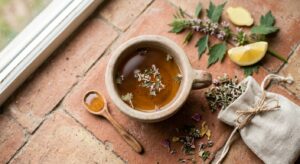
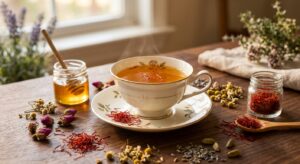
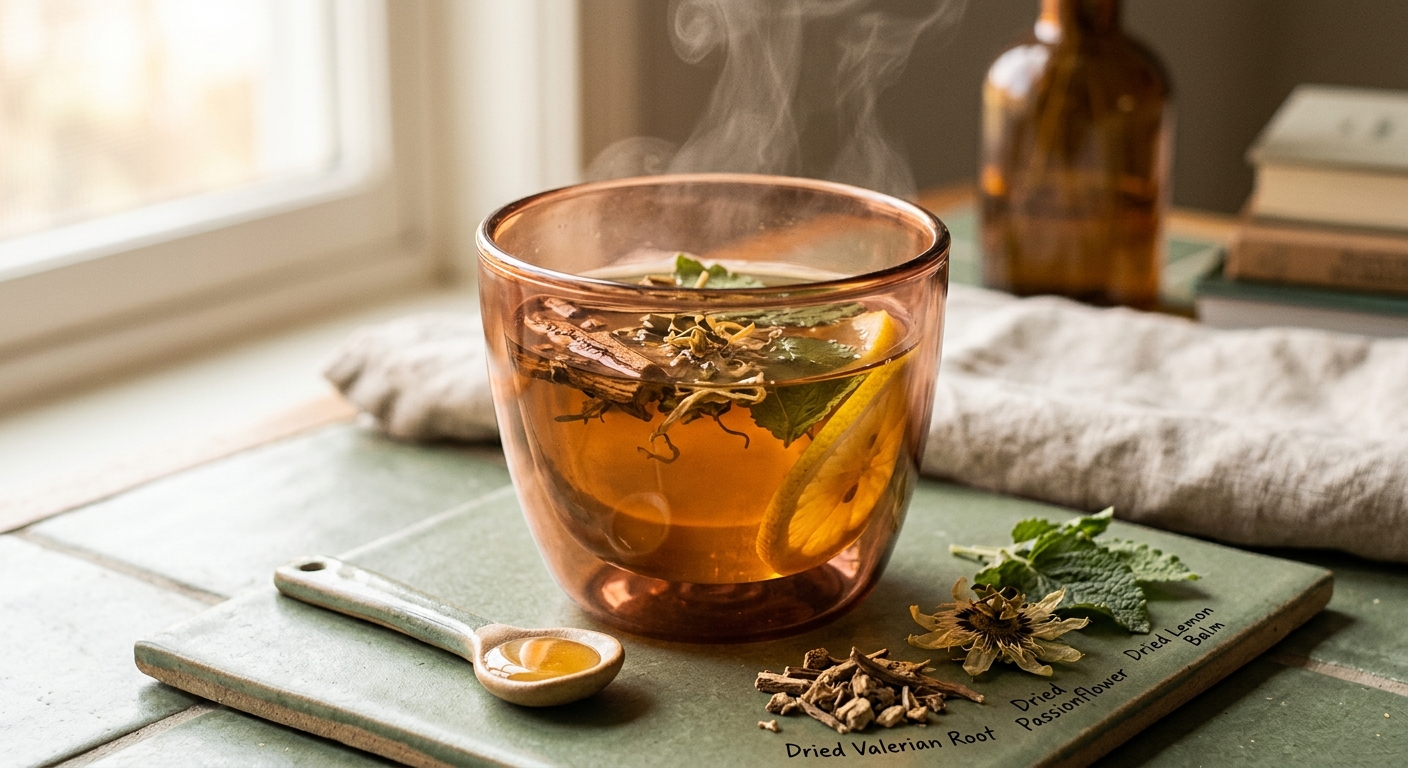
Sensory experience matters as much as chemistry when it comes to winding down at night. Deep Rest tea has an earthy, faintly woody base from the valerian root, softened by the green, slightly floral notes of passionflower and the bright lemony lift of lemon balm. A touch of honey rounds out any bitterness and adds a grounding sweetness that signals to the body that the day is truly over. Brewed properly and sipped slowly in the hour before bed, this tea becomes a ritual as much as a remedy, a moment of deliberate stillness in a world that rarely stops moving.
2
cups
Ingredients
- 1 tspdried valerian root
- 1 tspdried passionflower
- 1 tspdried lemon balm
- 480 mlwater (90°C / 194°F)
- —raw honey to taste (optional)
- —a slice of fresh lemon (optional)
How to Brew
Click on an item below to shop for the recommended items for this recipe on Amazon.
As an Amazon Associate, we earn from qualifying purchases.
- Heat filtered water to 90 to 95°C (194 to 203°F). Avoid a full rolling boil, as excessive heat can degrade the delicate volatile compounds in lemon balm and passionflower.
- Combine 1 teaspoon of dried valerian root, 1 teaspoon of dried passionflower, and 1 teaspoon of dried lemon balm in a tea infuser or teapot. This recipe makes 2 cups (approximately 480 ml).
- Pour the hot water over the herbs and immediately cover the vessel with a lid or small saucer. Covering is essential to trap the aromatic volatile oils that would otherwise escape with the steam.
- Steep for 10 to 15 minutes. For a milder flavor and lighter sedative effect, remove the infuser at 10 minutes. For a stronger therapeutic dose to address more persistent sleeplessness, allow the full 15 minutes.
- Remove the infuser and strain the tea thoroughly. Add raw honey to taste and a squeeze of fresh lemon if desired. Sip slowly in the 30 to 60 minutes before bedtime.
- Measure 1.5 teaspoons each of dried valerian root, dried passionflower, and dried lemon balm into a clean glass jar. The increased ratio compensates for the slower, lower-temperature extraction.
- Pour 480 ml of cold, filtered water directly over the herbs. Do not use warm or hot water at any stage, as the goal is a slow cold extraction.
- Seal the jar tightly and let it sit at room temperature for 1 hour to begin the initial extraction, then transfer it to the refrigerator.
- Allow the herbs to steep in the refrigerator for a further 7 to 11 hours, for a total cold brew time of 8 to 12 hours. Overnight brewing works perfectly for this purpose.
- Strain the tea through a fine mesh strainer or cheesecloth into a clean container. Serve over ice or gently warmed in a saucepan over low heat. Stir in honey before drinking. Consume within 48 hours and keep refrigerated.
- Place 2 teaspoons of dried valerian root in a small saucepan with 600 ml of cold, filtered water. Starting in cold water and gradually raising the temperature improves the extraction of water-soluble compounds from the root.
- Bring the water slowly to a gentle simmer over medium-low heat. Do not allow the water to reach a full boil. Once you see small, steady bubbles forming, reduce the heat to maintain a gentle simmer.
- Simmer the valerian root uncovered for 15 minutes, allowing the water to reduce slightly and concentrate the decoction.
- After 15 minutes, remove the saucepan from heat and add 1 teaspoon of dried passionflower and 1 teaspoon of dried lemon balm directly to the saucepan. Cover with a lid and allow to steep for an additional 10 minutes off the heat. Adding the more delicate herbs at this stage protects their volatile oils from being cooked away.
- Strain the decoction through a fine mesh strainer into two mugs, pressing the spent herbs gently with the back of a spoon to extract remaining liquid. Sweeten with honey and serve warm. This method yields a noticeably stronger brew, so begin with one cup and assess your response before drinking a second.
Health Benefits
Valerenic acid in valerian root inhibits GABA breakdown in the synaptic cleft, sustaining the inhibitory signal that quiets neural activity. Multiple clinical trials, including a 2006 meta-analysis published in the American Journal of Medicine, found valerian significantly reduced the time participants took to fall asleep compared to placebo.
Vitexin and orientin from passionflower bind to GABA-A receptors, producing anxiolytic effects comparable in some studies to low-dose benzodiazepines, without the dependency risk. A 2011 randomized controlled trial found passionflower extract as effective as oxazepam for generalized anxiety disorder.
Lemon balm’s rosmarinic acid raises circulating GABA levels, promoting deeper and more sustained sleep stages. A combined valerian and lemon balm formula was shown in a 2003 study in Phytomedicine to significantly improve sleep quality in 81% of participants compared to placebo.
The synergistic combination of vitexin from passionflower and citral from lemon balm targets both GABAergic and cholinergic pathways simultaneously, addressing the ruminating, racing thoughts that are among the most common causes of sleep-onset insomnia.
Chronic stress elevates evening cortisol levels, directly interfering with melatonin production and sleep architecture. Lemon balm has been shown in human trials to reduce urinary cortisol metabolites and lower self-reported stress scores, helping restore the hormonal conditions necessary for natural sleep.
🧪 Key Bioactive Compounds
The Science Behind Valerian Root
The sedative and anxiolytic effects of Deep Rest Herbal Tea are rooted in its influence on the GABAergic system, the brain’s primary inhibitory network. Gamma-aminobutyric acid, or GABA, is a neurotransmitter that reduces neuronal excitability throughout the nervous system. When GABA binds to its receptors, particularly the GABA-A subtype, it opens chloride ion channels that hyperpolarize the neuron, making it less likely to fire. Prescription sleep aids and anti-anxiety medications such as benzodiazepines and Z-drugs work by artificially amplifying this same mechanism. The herbs in this blend achieve a gentler version of the same effect through multiple independent pathways, reducing the risk of dependency or next-day cognitive impairment.
Valerian root’s primary active constituent, valerenic acid, works not by mimicking GABA directly but by inhibiting the enzyme GABA transaminase, which is responsible for breaking GABA down. By slowing GABA’s degradation, valerenic acid effectively prolongs and strengthens the inhibitory signal without overstimulating the receptor itself. Passionflower contributes vitexin and orientin, flavonoids that bind directly to GABA-A receptor sites and have demonstrated anxiolytic potency in both animal models and human clinical trials. Lemon balm’s rosmarinic acid adds a third layer to this network by also inhibiting GABA transaminase, working in parallel with valerenic acid to sustain elevated GABA activity in key sleep-regulating brain regions including the hypothalamus and basal forebrain.
Beyond GABA, lemon balm exerts additional effects through the cholinergic system. Citral and other volatile terpenes in lemon balm have been shown to inhibit acetylcholinesterase, the enzyme that breaks down acetylcholine, a neurotransmitter associated with memory and mood regulation. This may explain why lemon balm is particularly effective for the anxiety-driven, ruminating form of insomnia, where the mind replays memories and worries instead of releasing into sleep. Luteolin, present in both passionflower and lemon balm, contributes anti-neuroinflammatory effects that may further support the calm neural environment needed for deep, restorative sleep. The combined, multi-target pharmacology of this blend is why it often outperforms any single herb used alone.
Brewing Tips
- Store your dried herbs in separate airtight amber glass jars away from light and heat. Pre-mixed blends lose their volatile aromatic compounds faster than individual herbs stored separately and combined at brew time.
- Valerian root’s distinctive earthy, almost musky aroma intensifies significantly if the herb is boiled rather than steeped. Always keep your water below a full boil and cover the vessel during steeping to preserve the more pleasant aromatic notes.
- For best results, drink Deep Rest Tea consistently for 2 to 3 weeks before assessing its full effect on your sleep. Valerian in particular has been shown in clinical studies to produce cumulative benefits, with improvement in sleep quality becoming more pronounced after sustained use.