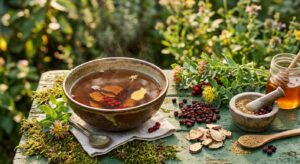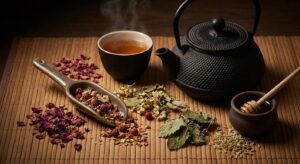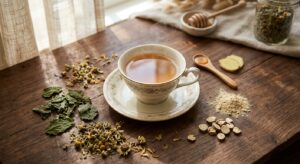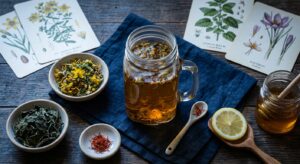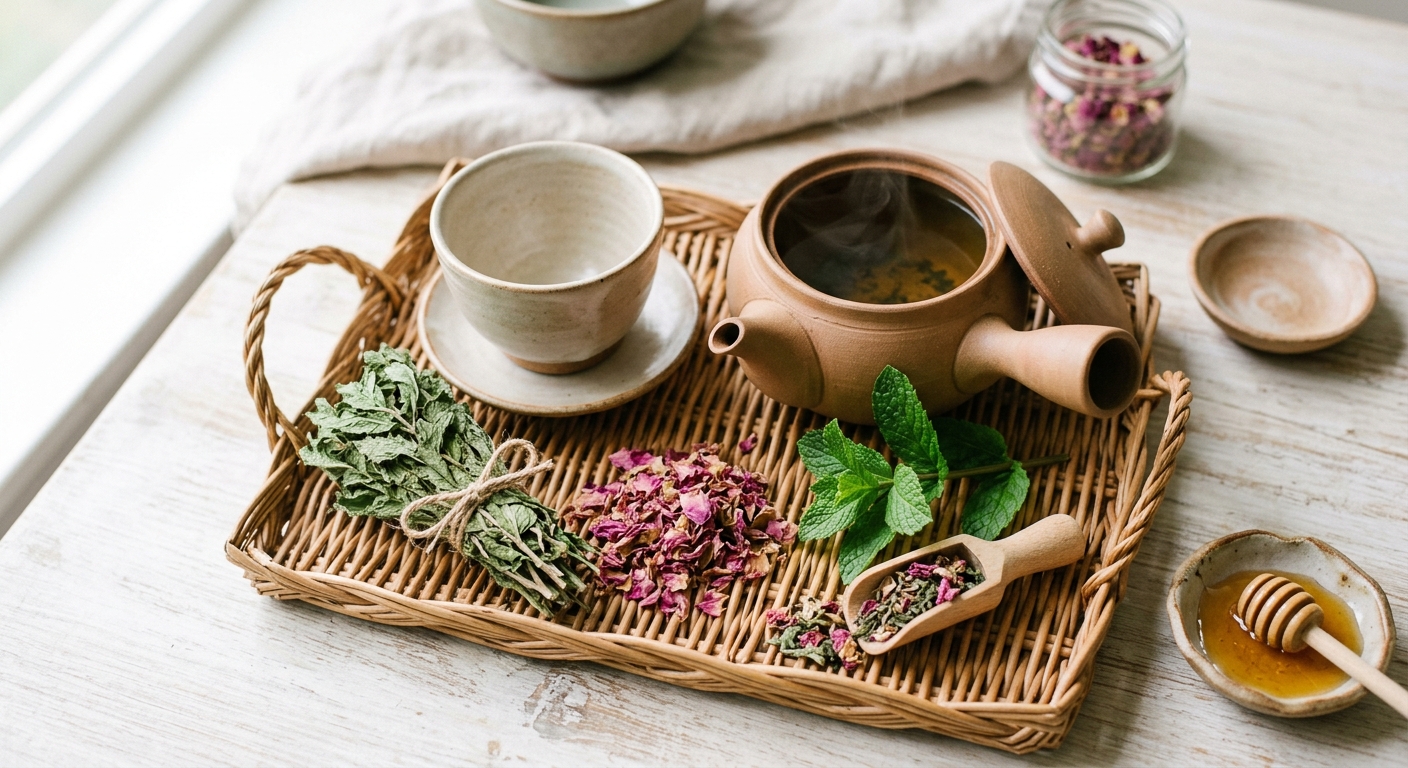
In Morocco, tea is not simply a beverage. It is a ritual of welcome, a gesture of hospitality, and a daily practice of slowing down. Traditional Moroccan mint tea, known as atay, has been served in ornate silver teapots for centuries, poured from a height to create a froth and release its full fragrance. While classic atay is built on green tea and fresh spearmint, this wellness-focused variation weaves in dried rose petals to create a blend that honours that tradition while amplifying its calming, stress-relieving qualities.
Spearmint (Mentha spicata) has been used across North African, Middle Eastern, and European herbalism for centuries to ease tension headaches, settle digestive discomfort, and clear the mind. Rose (Rosa damascena), cultivated in the famous Valley of Roses near Kelaa M’Gouna in Morocco, holds a deep place in Islamic medicine and Ayurveda alike, prized for its gentle effect on the heart and nervous system. Together, they form a pairing that is both culturally rooted and botanically synergistic, each herb amplifying the other’s ability to ease anxiety and restore a sense of calm.
What makes this blend particularly special is its sensory depth. The cool, slightly sweet sharpness of spearmint grounds you in the present moment, while the soft, honeyed floral note of rose petals wraps around you like a gentle exhale. Whether you brew it hot on a slow afternoon, cold-steep it overnight for a refreshing summer drink, or prepare a concentrate to keep in the fridge all week, Moroccan Mint and Rose Tea rewards attention and intention with every sip.
2
cups
Ingredients
- 2 tspdried spearmint leaves
- 1 tspdried rose petals (food-grade)
- 480 mlwater (85°C / 185°F)
- —raw honey or sugar to taste (optional)
- —a few fresh mint sprigs for garnish (optional)
How to Brew
Click on an item below to shop for the recommended items for this recipe on Amazon.
As an Amazon Associate, we earn from qualifying purchases.
- Bring 480 ml of fresh filtered water to approximately 85°C (185°F). If you do not have a temperature-controlled kettle, bring water to a full boil and allow it to rest off the heat for 2 to 3 minutes before pouring.
- Warm your teapot or mug by swirling a small amount of hot water inside and then discarding it. This prevents the vessel from cooling your brew too quickly.
- Place 2 tsp of dried spearmint leaves and 1 tsp of dried rose petals into your tea infuser or directly into the teapot. If using a teapot, you can steep loose and strain when pouring.
- Pour the 85°C water over the herbs and steep for 4 to 6 minutes. Check at 4 minutes for a lighter, more floral cup, or allow the full 6 minutes for a more intense minty character.
- Remove the infuser or strain the tea into mugs. In the Moroccan tradition, pour from a height of around 30 cm to aerate the tea and develop a light froth. Sweeten with raw honey or sugar if desired, and garnish with a fresh mint sprig.
- Measure 3 tsp of dried spearmint leaves and 2 tsp of dried rose petals into a clean glass jar or pitcher. The slightly higher ratio compensates for the gentler cold extraction.
- Pour 500 ml of cold, filtered water directly over the herbs at room temperature. Give the jar a gentle stir to ensure all the plant material is submerged.
- Seal the jar with a lid or cover the pitcher with cling film. Allow the blend to rest at room temperature for 30 minutes to begin the initial aromatic extraction, then transfer to the refrigerator.
- Cold steep for 8 to 12 hours, ideally overnight. Taste at 8 hours for a lighter, very floral infusion or leave the full 12 hours for a more robust minty flavour.
- Strain the tea through a fine mesh strainer or cheesecloth into a clean serving vessel, pressing the herbs gently to extract the last of the infusion. Serve over ice in tall glasses, sweeten if desired, and garnish with a fresh rose petal or mint sprig.
- Measure 4 tsp of dried spearmint and 2 tsp of dried rose petals into a small saucepan or teapot. This doubled herb ratio is essential for achieving a true concentrate with enough flavour intensity to survive dilution.
- Heat 240 ml of filtered water to 85°C (185°F) and pour it over the herbs. Allow to steep uncovered for 10 to 12 minutes, which is longer than a standard hot brew to maximise extraction at the lower volume.
- Strain the concentrate through a fine mesh strainer into a clean glass bottle or jar, pressing the spent herbs to capture all the liquid. Allow to cool to room temperature.
- Once cooled, seal and store the concentrate in the refrigerator for up to 5 days. To serve hot, combine one part concentrate with two parts hot water in a mug and stir gently. To serve iced, combine one part concentrate with two parts cold water or sparkling water over ice and sweeten to taste.
Health Benefits
Both spearmint and rose contain volatile compounds including rosmarinic acid, citronellol, and geraniol that interact with GABA receptors and reduce cortisol activity. A 2018 clinical study found that Rosa damascena aromatherapy significantly reduced anxiety scores, with internal use supporting similar calming effects through gut-brain axis signalling.
Spearmint has been shown in clinical trials to lower excess androgen levels in women, and its anti-androgenic activity may help reduce stress-related hormonal fluctuations. This makes the blend particularly supportive for women experiencing stress tied to hormonal changes.
The menthol and carvone in spearmint have mild analgesic and vasodilatory effects that can ease tension headaches triggered by stress or fatigue. Inhaling the steam while sipping this tea delivers these volatile compounds directly to nasal receptors, providing additional relief.
Spearmint is a well-established antispasmodic herb that relaxes smooth muscle in the gastrointestinal tract, easing the nausea, bloating, and cramping that frequently accompany anxiety. Rose petals have a mild astringent quality that soothes irritated gut lining.
The combined aromatherapy effect of inhaling a freshly brewed cup of mint and rose has measurable mood-boosting properties. Luteolin from spearmint supports serotonin pathways while the scent of rose has been linked to increased dopamine activity in olfactory studies, creating a gentle but genuine uplift in emotional tone.
🧪 Key Bioactive Compounds
The Science Behind Spearmint
The calming effects of this blend are not simply a matter of tradition or placebo. Spearmint’s primary aromatic compound, L-carvone, has shown measurable anxiolytic activity in rodent studies by modulating GABAergic and serotonergic pathways, the same neurotransmitter systems targeted by many pharmaceutical anti-anxiety medications. More directly relevant to everyday stress, spearmint is one of the richest herbal sources of rosmarinic acid, a polyphenol that inhibits the enzyme 11-beta-hydroxysteroid dehydrogenase, which converts inactive cortisone to active cortisol within tissues. By partially suppressing this conversion, spearmint may help the body maintain more balanced cortisol activity during periods of chronic stress.
Rosa damascena contributes its own impressive phytochemical profile through compounds like citronellol, geraniol, and nerol. These monoterpenoids have demonstrated sedative and anxiolytic effects in multiple preclinical studies, including reduced locomotor activity and enhanced sleeping time in models of anxiety and insomnia. The mechanism appears to involve both direct GABA receptor modulation and olfactory pathway signalling, which means simply inhaling the scent of this tea as it brews begins to activate the calming response before you even take a sip. This dual oral and aromatherapeutic action makes brewing ritual itself a meaningful part of the therapeutic experience.
Luteolin, the flavonoid found in meaningful concentrations in spearmint, adds a third dimension to the blend’s neurological profile. Research published in Neuropharmacology has shown luteolin reduces neuroinflammation by inhibiting microglial activation and suppressing pro-inflammatory cytokines, including TNF-alpha and IL-6, both of which are elevated during chronic stress and have been linked to anxiety and depression. Luteolin also acts as a phosphodiesterase inhibitor, increasing intracellular cAMP levels in neurons, which supports mood regulation and cognitive function. Together, these compounds create a blend whose calming properties are chemically coherent and increasingly well supported by emerging research.
Brewing Tips
- Always source rose petals that are explicitly labelled food-grade or culinary-grade. Commercial florist roses are treated with pesticides and fungicides that are not safe for consumption, no matter how beautiful they look.
- If brewing in the traditional Moroccan style, steep the spearmint for a full minute first before adding rose petals for the remaining 3 to 4 minutes. This way the mint base sets fully without the rose becoming overpowering or soapy.
- Store your dried herbs separately in airtight, dark glass jars and blend them fresh each time you brew. Spearmint loses its carvone-rich aroma quickly once mixed with rose, which is slightly more humid and can accelerate flavour degradation.
- For an iced version in a hurry, brew the hot version at double strength using 4 tsp spearmint and 2 tsp rose in 240 ml of water, steep for 5 minutes, then pour immediately over a full glass of ice to chill rapidly without losing the aromatic compounds to prolonged heat exposure.