When the days shorten and the light fades, millions of people feel something heavier than ordinary tiredness. Seasonal Affective Disorder, sometimes called winter depression, is a well-documented pattern of low mood, fatigue, social withdrawal, and disrupted sleep tied directly to reduced sunlight exposure. Long before clinical psychiatry gave it a name, herbalists across Europe and the Middle East were already reaching for the same small handful of plants to help people through the darkest months of the year. St. John’s Wort was harvested at the summer solstice as if to bottle the sun itself, lemon balm was pressed into cordials to brighten the spirits, and saffron was treasured across Persia and the Mediterranean not only as a spice but as a tonic for melancholy.
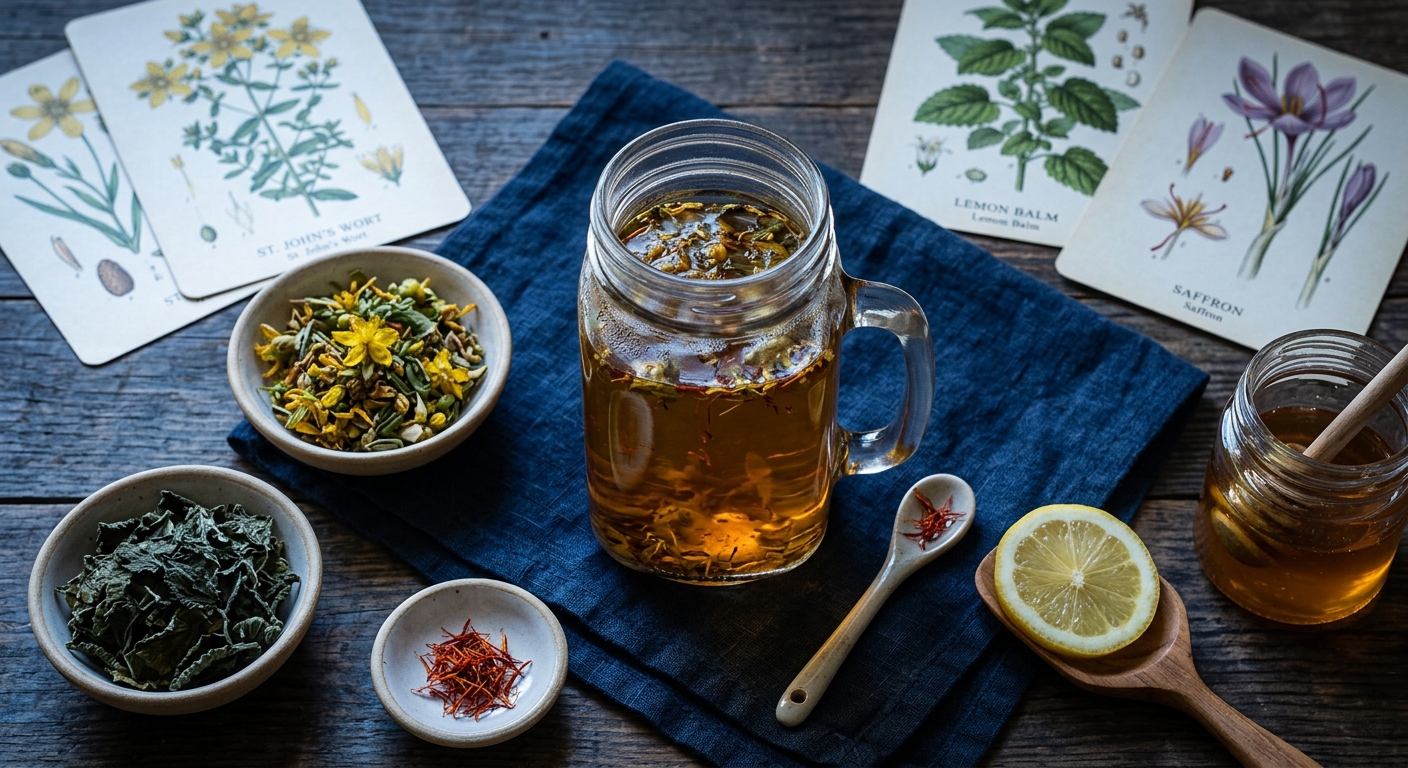
This blend brings those three traditions together in a single warming cup. St. John’s Wort (Hypericum perforatum) forms the backbone, offering the most extensively studied herbal support for mild to moderate depression currently available. Lemon balm (Melissa officinalis) adds a gentle anxiolytic layer, quieting the restless mental chatter that often accompanies low mood. A small pinch of saffron (Crocus sativus) contributes both a subtle, honeyed complexity to the flavor and a meaningful dose of mood-supporting carotenoids that modern research is only beginning to appreciate. Together, the three herbs work on complementary pathways rather than a single mechanism, making this a genuinely synergistic formula.
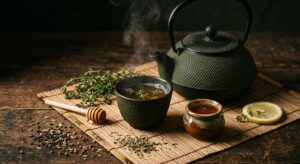
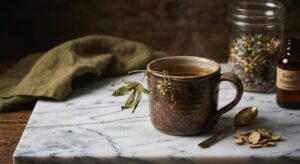
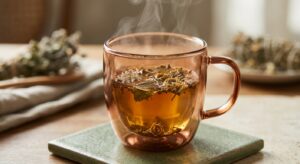
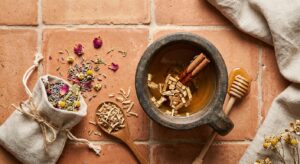
The sensory experience of this tea is itself part of the medicine. The liquor brews to a rich, burnished gold that seems to hold light in the cup. The aroma is bright and herbaceous with a faint citrus lift from the lemon balm, and the flavor opens floral before settling into a gently earthy, slightly resinous finish. Drinking it daily as a ritual, ideally in the morning near a window or a light therapy lamp, anchors the habit in both the body and the rhythm of the season. This is slow, intentional plant medicine for the long months of grey skies.
2
cups
Ingredients
- 2 tspdried St. John’s Wort aerial parts (flowers and buds preferred)
- 1.5 tspdried lemon balm leaves
- 6 threadssaffron (lightly crushed between fingers)
- 480 mlwater (85 to 90°C / 185 to 194°F)
- —raw honey or maple syrup to taste (optional)
- —thin slice of fresh lemon (optional, for garnish)
How to Brew
Click on an item below to shop for the recommended items for this recipe on Amazon.
As an Amazon Associate, we earn from qualifying purchases.
- Lightly crush the saffron threads between your fingers and place them directly into the teapot or infuser. This releases the crocin pigment and aroma compounds before brewing begins.
- Add the dried St. John’s Wort and lemon balm to the infuser on top of the saffron. Measure generously as these are light, fluffy herbs that pack loosely.
- Heat water to 85 to 90°C (185 to 194°F). If using a kettle without temperature control, bring water to a full boil then allow it to rest for 2 to 3 minutes uncovered.
- Pour the water slowly over the herbs, ensuring all plant material is fully submerged. Cover the teapot or mug with a small plate or lid to trap the volatile oils released in the steam.
- Steep for 7 to 10 minutes. Begin tasting at 7 minutes. The tea is ready when the liquor is a deep burnished gold and carries a bright, herby aroma. Steeping longer than 12 minutes may introduce bitterness.
- Remove the infuser, sweeten lightly with raw honey if desired, and add a lemon slice for a citrus lift. Drink warm, ideally in morning light.
- Combine the crushed saffron threads, dried St. John’s Wort, and lemon balm in a clean glass jar. Use slightly more herb than you would for hot brew: approximately 1.5 times the standard amount, since cold water extracts more slowly and less completely.
- Pour cold, filtered water at room temperature over the herbs. Stir gently with a long spoon to ensure even wetting of the plant material, then seal the jar with a lid.
- Allow the jar to sit at room temperature for 30 minutes to begin the infusion, then transfer it to the refrigerator.
- Steep for 10 to 14 hours, or overnight. The liquor will develop a bright golden color with a softer, more floral profile than the hot brew version.
- Strain the infusion through a fine mesh strainer or cheesecloth into a pitcher or glasses. Press the herbs gently to release remaining liquid.
- Serve over ice with a slice of lemon and a light drizzle of honey. The cold brew keeps refrigerated for up to 48 hours without significant loss of quality.
- Place the crushed saffron threads, dried St. John’s Wort, and lemon balm into a large, very clean glass jar with a tight-fitting lid. Use 1.5 times the standard herb amount to compensate for the low extraction temperature.
- Fill the jar with cold, filtered water and stir to moisten all the herbs. Seal the lid firmly.
- Set the jar in a spot that receives direct sunlight for most of the day, such as a south-facing windowsill, a sunny porch, or a garden table. Position it by 9 or 10 in the morning to capture peak sun hours.
- Allow the jar to steep in sunlight for 3 to 5 hours. The infusion will gradually shift from pale straw to a warm, glowing amber as the saffron releases its crocin pigments. Check at 3 hours: when the color is a clear, rich gold and the aroma is bright and floral, it is ready.
- Bring the jar indoors, strain the infusion through a fine mesh strainer, and refrigerate immediately. Do not leave sun tea at room temperature after straining as warm, brewed tea can harbor bacterial growth.
- Serve at room temperature or lightly chilled. Add a small squeeze of fresh lemon and honey to taste. Sun tea keeps refrigerated for up to 24 hours.
Health Benefits
A 2008 Cochrane Review of 29 clinical trials found St. John’s Wort to be significantly more effective than placebo and similarly effective to standard antidepressants for mild to moderate depression, with a markedly better side-effect profile. Hyperforin and hypericin together modulate the reuptake of at least five neurotransmitters implicated in mood regulation.
Lemon balm has been shown in randomized controlled trials to significantly reduce anxiety scores and improve mood in healthy adults. Its rosmarinic acid content elevates GABA levels in the brain by inhibiting GABA transaminase, producing a calming effect without sedation at typical tea doses.
Saffron’s active carotenoid crocin has been studied specifically in populations with seasonal mood changes and mild depressive episodes. A 2014 randomized trial found saffron extract comparable to fluoxetine in reducing Hamilton Depression Rating Scale scores, with growing evidence that its effects include regulation of circadian rhythms relevant to seasonal mood disorders.
Both St. John’s Wort and lemon balm have been associated with improved sleep quality in clinical studies, making this blend useful for the disrupted, unrefreshing sleep patterns common in Seasonal Affective Disorder. Lemon balm in particular reduced sleep disturbances in a 2014 study without causing morning grogginess.
Rosmarinic acid in lemon balm and several flavonoid compounds in St. John’s Wort have demonstrated cortisol-modulating effects in preclinical research. Lower cortisol reactivity is associated with improved resilience to the fatigue and low motivation characteristic of winter-pattern mood disorders.
🧪 Key Bioactive Compounds
The Science Behind St. John’S Wort
The science behind this blend centers on its multi-pathway approach to mood regulation, which mirrors how Seasonal Affective Disorder itself is understood. SAD is not a single-mechanism disorder: it involves disruption to the serotonergic system (influenced by reduced sunlight on retinal photoreceptors), dysregulation of melatonin timing, altered dopamine availability, elevated cortisol, and reduced GABA tone. A blend targeting only one of these pathways would provide incomplete support. St. John’s Wort’s primary active constituent, hyperforin, is remarkable for inhibiting the neuronal reuptake of serotonin, dopamine, norepinephrine, GABA, and glutamate simultaneously. This non-selective mechanism, studied extensively since the 1990s, distinguishes it from synthetic SSRIs and may explain why clinical trials show it performs well across a broad range of depressive symptom clusters rather than only mood.
Saffron’s contribution is increasingly well-supported by modern research. The carotenoid glycoside crocin and its volatile counterpart safranal both appear to influence serotonin availability, with safranal specifically shown to inhibit serotonin reuptake in in vitro and animal models. A growing body of human clinical trials, many conducted in Iran where saffron is a traditional medicinal plant, has found standardized saffron extracts producing statistically significant reductions in depression scores compared to placebo, with two trials reporting equivalence to fluoxetine at 20mg per day. The dose in a tea prepared with 6 to 8 threads of saffron is lower than the extract doses used in trials, but regular daily consumption over weeks may produce meaningful cumulative effects, particularly when combined with the other active herbs in this blend.
Lemon balm’s rosmarinic acid rounds out the blend by targeting GABA metabolism directly. GABA is the primary inhibitory neurotransmitter in the central nervous system, and reduced GABAergic tone is associated with anxiety, rumination, and the emotional flatness characteristic of winter depression. Rosmarinic acid works by inhibiting GABA transaminase, the enzyme responsible for degrading GABA, thereby increasing its availability at synapses. This mechanism is distinct from benzodiazepine action, carrying no risk of dependence at normal herbal intake levels. A 2014 double-blind crossover study published in Nutrients found lemon balm extract significantly improved mood, calmness, and memory performance in healthy adults within hours of a single dose, supporting both its acute and long-term utility in this blend.
Brewing Tips
- Buy St. John’s Wort that still contains visible reddish-purple hypericin dots on the flowers and buds: hold a dried flower up to a light source and you should see tiny translucent oil glands. Pale, greenish-brown herb with no visible oil glands is degraded and will have negligible therapeutic value.
- Consistency matters more than dose with this blend. Clinical trials on St. John’s Wort and saffron typically show mood effects emerging after 4 to 6 weeks of daily use. Treat this tea as a seasonal daily practice beginning in early autumn rather than a rescue remedy for acute low mood.
- Store your dried herbs in dark glass jars away from heat and light. St. John’s Wort’s hypericin and hyperforin are both sensitive to UV degradation, and lemon balm loses its volatile aromatic oils rapidly when exposed to air. Properly stored, the dried herbs will remain potent for up to 12 months.