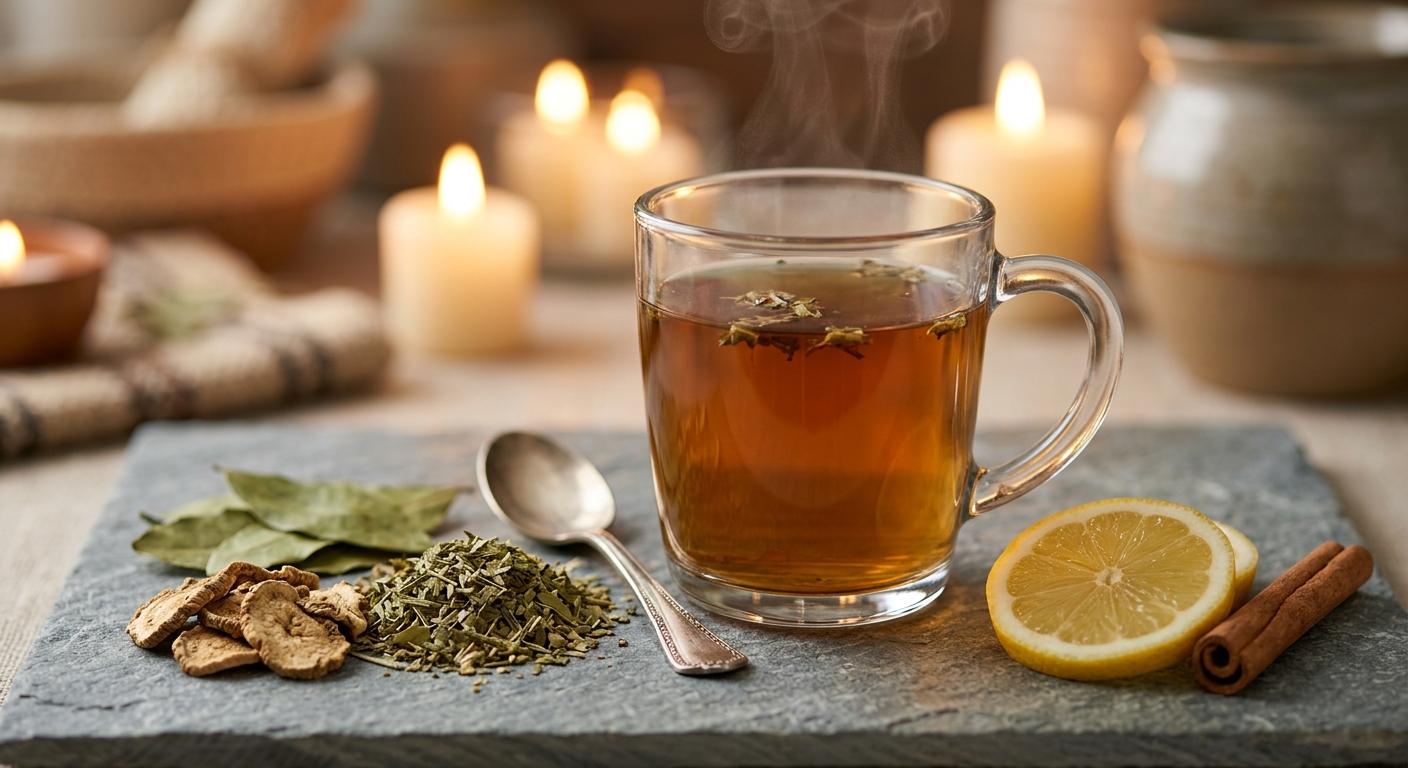
High in the Andes Mountains, where the air is thin and the landscape is vast, indigenous communities have relied on a trinity of powerful plants for generations: maca root, muña, and coca leaf. Long before the concept of adaptogens entered Western wellness vocabulary, Quechua healers were brewing these herbs together to ease anxiety, combat altitude fatigue, and bring a grounded sense of calm to both mind and body. This tea is not a trendy wellness invention but a living tradition passed down through families in Peru, Bolivia, and Ecuador, brewed in clay pots over open fires and shared during moments of rest, ceremony, and community gathering.
Maca root (Lepidium meyenii) is perhaps the most globally recognized of the three, celebrated for its ability to regulate the stress response by supporting healthy cortisol rhythms through the hypothalamic-pituitary-adrenal axis. Muña (Minthostachys mollis), a mint-like herb native to Andean valleys, adds a cooling, slightly camphoraceous quality to the blend while offering notable antispasmodic and digestive-calming properties that complement the nervous system benefits. Coca leaf (Erythroxylum coca), the most sacred and culturally complex of the three, has been chewed and brewed in the Andes for at least 8,000 years. In its traditional whole-leaf tea form, known as mate de coca, it contains trace alkaloids including cocaine at concentrations far too low to produce psychoactive effects, yet sufficient to ease tension, sharpen focus, and warm the body from within.
It is worth noting that the legal status of coca leaf varies significantly by country. In Peru, Bolivia, Colombia, and Ecuador, whole dried coca leaves for tea are legal and widely available. In the United States, the European Union, and many other nations, importing or possessing whole coca leaf is prohibited, and travelers must research their local laws carefully. For those outside South America, this recipe can be adapted using only maca root and muña, which are legal and available internationally, while still delivering meaningful stress-relieving benefits. The soul of this tea is the Andean tradition of turning to the earth for equilibrium, wherever you happen to be brewing it.
2
cups
Ingredients
- 1 tspdried maca root powder or sliced dried maca root
- 1 tspdried muña herb (Minthostachys mollis)
- 2 tspdried whole coca leaves (where legally permitted)
- 480 mlwater (90°C / 194°F)
- —raw Andean honey or panela (raw cane sugar) to taste, optional
- —a squeeze of fresh lime juice, optional
How to Brew
Click on an item below to shop for the recommended items for this recipe on Amazon.
As an Amazon Associate, we earn from qualifying purchases.
- Bring 480 ml of filtered water to 88 to 92°C (190 to 198°F). If using a standard kettle, bring to a boil and allow to cool for 2 minutes before brewing.
- If using sliced dried maca root rather than powder, place the slices in a small saucepan with the water and simmer gently on low heat for 5 minutes to begin extracting its dense root compounds. Skip this step if using maca powder.
- Place the muña herb and coca leaves (where legally permitted) into a tea infuser, strainer, or directly into the pot alongside the maca. If using maca powder, add it directly to the water now.
- Pour the hot water over all herbs (or continue simmering the saucepan on the lowest heat setting) and steep uncovered for 10 to 15 minutes. Stir once at the halfway point to help the maca powder incorporate fully.
- Strain thoroughly through a fine-mesh strainer into two warmed mugs, pressing gently on the herbs to extract remaining liquid. Sweeten with raw Andean honey or panela if desired, and add a small squeeze of lime to brighten the earthy malt flavors.
- Combine 1 teaspoon of maca root powder (powder works better than slices for cold brew), 1 teaspoon of dried muña, and 2 teaspoons of dried coca leaves (where legally permitted) in a clean glass jar.
- Pour 500 ml of cold, filtered water over the herbs. Stir vigorously for 30 seconds to ensure the maca powder is fully dispersed rather than clumping at the bottom.
- Seal the jar with a lid or cover tightly with a cloth secured by a rubber band to prevent contamination. Leave at room temperature for 1 hour, then transfer to the refrigerator.
- Allow to cold brew in the refrigerator for 10 to 14 hours, ideally overnight. The slow cold extraction produces a mellower flavor with a natural sweetness from the maca root.
- Remove from the refrigerator and shake the jar well before opening, as maca powder will settle. Strain through a fine-mesh strainer lined with a coffee filter for a cleaner pour, then serve over ice. Add a slice of lime and a small drizzle of honey to taste.
- Place 1.5 teaspoons of dried maca root slices into a small clay pot or heavy-bottomed saucepan. Add 600 ml of cold filtered water and bring slowly to a low simmer over medium-low heat. Do not rush this stage.
- Once a gentle simmer is reached (small bubbles breaking the surface but not a rolling boil), reduce heat to the lowest setting and maintain this temperature for 15 minutes with the lid slightly ajar. Stir occasionally. The liquid will begin to deepen in color and take on a roasted, malty aroma.
- After 15 minutes, add the dried muña and coca leaves (where legally permitted) directly to the simmering pot. Replace the lid and continue simmering on the lowest heat for a further 8 to 10 minutes. Muña is delicate and should not decoct for too long or its volatile aromatic oils will dissipate.
- Remove the pot from heat and allow to rest, covered, for 3 to 5 minutes. This resting period allows the volatile compounds in the muña to settle back into the liquid rather than escaping as steam.
- Strain the decoction through a fine-mesh strainer into two cups, pressing the plant material firmly to extract the maximum volume of concentrated liquid. Sweeten with panela or raw honey if desired. This method yields a noticeably stronger, richer brew than hot steeping and can be diluted slightly with hot water if preferred.
Health Benefits
The macamides and benzylglucosinolates in maca root act as adaptogens, helping the body maintain balanced cortisol levels under prolonged stress. Several randomized trials have found maca supplementation significantly reduces self-reported psychological symptoms including anxiety and depression, particularly in perimenopausal women.
Trace alkaloids in coca leaf, particularly the interaction of cocaine alkaloid at sub-psychoactive concentrations with dopaminergic and serotonergic pathways, provide a gentle cognitive lift that improves alertness and concentration without the overstimulation associated with caffeine. This effect has been central to Andean work culture for millennia.
Muña has a long traditional history as a digestive antispasmodic in Andean medicine. Its primary volatile compound, pulegone, relaxes smooth muscle in the gastrointestinal tract, relieving the nausea, cramping, and bloating that frequently accompany anxiety states. This gut-brain benefit makes the blend particularly useful for those whose stress manifests physically.
Maca root has been shown in multiple clinical studies to reduce symptoms of hormonal imbalance, including mood fluctuations, irritability, and sleep disruption, through non-estrogenic mechanisms that modulate the hypothalamic-pituitary axis rather than directly influencing hormone levels. This makes it considered safe for individuals who cannot use phytoestrogenic herbs.
Both maca and coca leaf have been used for centuries specifically to address the hypoxic stress of high-altitude environments. Ecgonine in coca leaf promotes vasodilation and enhanced oxygen delivery to brain tissue, while maca’s iron and zinc content supports healthy red blood cell function, together addressing fatigue and mental sluggishness that mirror the effects of chronic stress at any altitude.
🧪 Key Bioactive Compounds
The Science Behind Maca Root
The stress-relieving power of this Andean blend is rooted in its multi-pathway approach to the nervous system. Maca root operates primarily through the hypothalamic-pituitary-adrenal (HPA) axis, the central hormonal cascade governing the body’s stress response. Its unique fatty acid amides called macamides interact with the endocannabinoid system in a manner analogous to anandamide, the body’s endogenous mood-regulating molecule, producing anxiolytic effects that have been demonstrated in rodent models and increasingly supported by human clinical data. A 2015 randomized, double-blind trial published in Climacteric found that daily maca supplementation significantly reduced psychological symptoms including anxiety and depression without altering serum hormone concentrations, confirming its non-hormonal adaptogenic mechanism.
Coca leaf’s pharmacological profile in tea form is far more nuanced than its reputation suggests. The concentration of cocaine alkaloid in a standard brewed cup of mate de coca is estimated at 4 to 6 milligrams per cup, compared to the hundreds of milligrams in recreational doses of isolated cocaine. At these concentrations, the compound does not produce euphoria or dependence but does gently inhibit dopamine and serotonin reuptake transport proteins, increasing the availability of these mood-stabilizing neurotransmitters at synaptic junctions. This mechanism is chemically similar in type to certain pharmaceutical antidepressants, though vastly milder in magnitude. A landmark 1975 study by Duke, Aulik, and Plowman in the Harvard Botanical Museum Leaflets established the safety and traditional context of coca leaf tea, findings that have been broadly supported by subsequent ethnopharmacological research.
Muña contributes rosmarinic acid, a polyphenol with well-documented inhibition of GABA transaminase, an enzyme that breaks down gamma-aminobutyric acid in the brain. By slowing this breakdown, rosmarinic acid effectively increases GABAergic tone, producing calming effects on the central nervous system through the same inhibitory neurotransmitter system targeted by benzodiazepine medications, though again far more gently. A 2014 review in Food and Chemical Toxicology confirmed rosmarinic acid’s anxiolytic properties and its neuroprotective effects against oxidative stress, both mechanisms highly relevant to chronic stress management. Together, these three plants create a complementary, multi-target approach to anxiety that reflects millennia of empirical refinement in one of the world’s most demanding natural environments.
Brewing Tips
- If maca powder is clumping in hot water, whisk it briskly with a small milk frother or matcha whisk before adding remaining herbs. This produces a smoother, more evenly flavored cup without any chalky sediment at the bottom.
- Source muña from specialty Latin American herb suppliers or Andean food importers rather than substituting common spearmint or peppermint. While these relatives share some compounds, muña’s specific pulegone-dominant volatile profile and its adaptation to high-altitude conditions gives it a distinct therapeutic character that common mint varieties do not replicate.
- Store dried maca root, muña, and coca leaf (where legal) in separate airtight glass containers away from light and heat. Maca powder absorbs moisture readily and can develop off-flavors within weeks if stored in humid conditions or in its original paper packaging. Properly stored in glass, all three herbs remain potent for 12 to 18 months.