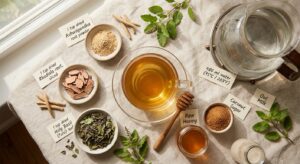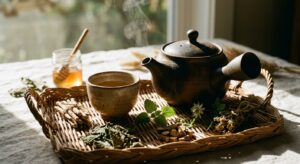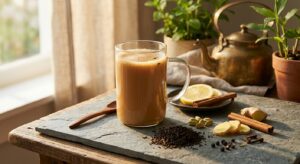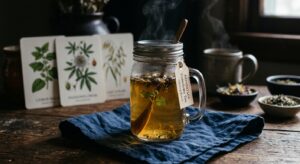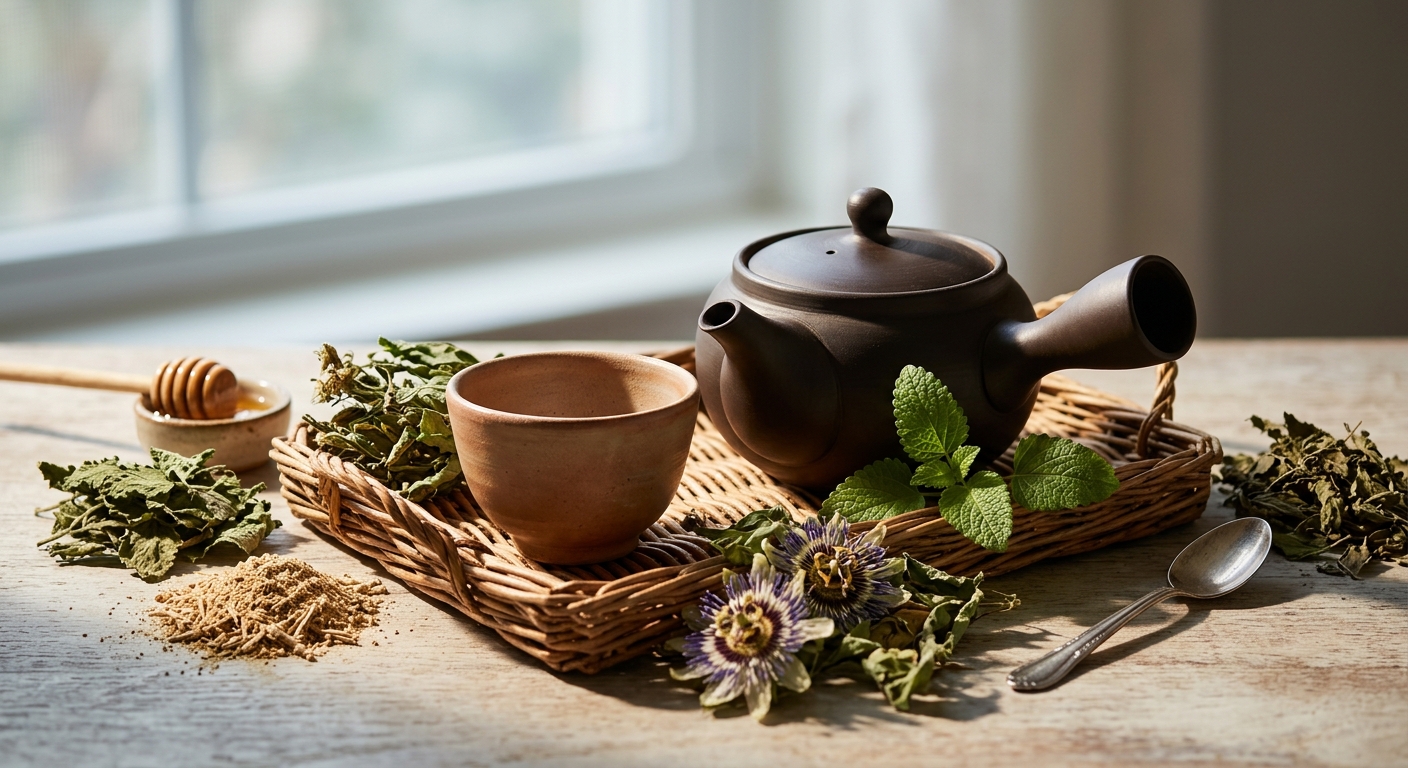
Trauma leaves its fingerprints on the nervous system long after the triggering event has passed. For centuries, healers across Ayurvedic, Traditional Chinese, and Western herbal traditions have reached for specific plant allies to help soothe what we now understand as a dysregulated autonomic nervous system. Ashwagandha has been used in Ayurvedic medicine for over 3,000 years as a rasayana, or rejuvenating tonic, prized for its ability to help the body adapt to both physical and emotional stress. Holy basil, known in Sanskrit as Tulsi, was considered so sacred in ancient India that it was planted around temples and homes as a protective herb for body, mind, and spirit.
Lemon balm, with its gentle citrus fragrance, has a recorded history stretching back to ancient Greece, where Dioscorides wrote of its ability to lift the spirits and quiet the heart. Passionflower entered Western herbalism through indigenous traditions of the Americas, where various tribes used it to ease restlessness and nervous tension. Together, these four herbs form a synergistic blend that targets multiple pathways of stress response: the HPA axis, GABA receptors, cortisol regulation, and the parasympathetic nervous system. This is not a sedative that numbs the senses but a gentle restorative that encourages the body to find its own equilibrium.
It is important to understand that no herbal tea replaces professional trauma therapy, psychiatric care, or prescribed medications. Rather, this blend serves as a compassionate daily ritual, a moment of intentional pause that signals to the nervous system that safety is present. The act of brewing, inhaling the steam, and sipping slowly is itself a somatic practice, an embodied anchor that can become part of a broader trauma-informed wellness routine. Whether you are supporting yourself or someone you love through recovery, this tea offers warmth, science-backed plant compounds, and thousands of years of collective human wisdom in every cup.
2
cups
Ingredients
- 1 tspashwagandha root powder or finely cut dried root
- 1 tspdried lemon balm leaves
- 1 tspdried passionflower aerial parts
- 0.5 tspdried holy basil (tulsi) leaves
- 480 mlwater (95°C / 203°F)
- —raw honey or coconut sugar to taste (optional)
- —a thin slice of fresh ginger (optional, for warmth and digestion)
How to Brew
Click on an item below to shop for the recommended items for this recipe on Amazon.
As an Amazon Associate, we earn from qualifying purchases.
- Bring 480 ml of filtered water to approximately 95°C (203°F). If using an electric kettle without temperature control, bring water to a full boil and allow it to rest for 30 seconds before proceeding.
- If using cut dried ashwagandha root rather than powder, place it alone in a small saucepan with the 480 ml of water and gently simmer on low heat for 5 minutes. This decoction step helps extract the dense withanolides from the woody root material. If using ashwagandha powder, skip this step and proceed directly.
- Place the ashwagandha powder (or transfer the simmered root liquid into a teapot or infuser), then add the dried lemon balm, passionflower, and holy basil to a mesh infuser or teapot strainer basket.
- Pour the hot water over all the herbs together. If you simmered the root, pour the strained root liquid back over the leaf herbs in the infuser.
- Cover the teapot or mug with a lid or small saucer to trap the volatile aromatic compounds from the lemon balm and holy basil. Steep for 10 to 15 minutes.
- Remove the infuser, stir gently, and sweeten with raw honey if desired. Sip slowly in a quiet space, taking three deep breaths before the first sip as a grounding ritual.
- Measure all four herbs in their standard amounts per serving into a clean glass jar. For two servings, use 2 tsp ashwagandha powder, 2 tsp lemon balm, 2 tsp passionflower, and 1 tsp holy basil.
- Pour 480 ml of room-temperature filtered water over the herbs. Stir vigorously for 30 seconds to fully disperse the ashwagandha powder and ensure all dried leaf herbs are fully saturated and submerged.
- Seal the jar tightly with a lid or cover with a small plate. Allow to steep at room temperature for the first 2 hours, then transfer to the refrigerator for the remaining 8 to 12 hours.
- In the morning, strain the blend through a fine-mesh sieve lined with cheesecloth or through a nut milk bag to remove all plant material, including the fine ashwagandha powder particles.
- Pour over ice, sweeten with a small amount of honey dissolved in a teaspoon of warm water, and optionally add a squeeze of fresh lemon to brighten the flavor. Consume within 24 hours.
- Combine 600 ml of filtered water and the ashwagandha root (powder or cut root) in a small saucepan. Add the optional slice of fresh ginger at this stage if desired.
- Bring the water to a gentle boil over medium heat, then immediately reduce to a low simmer. The surface should gently bubble but not roll. Maintain this temperature for 20 to 25 minutes, stirring occasionally, until the liquid reduces by roughly one-third to about 400 ml.
- In the final 5 minutes of simmering, add the holy basil to the pot, as it benefits from a little heat to release its eugenol compounds without fully destroying its delicate aromatics.
- Remove the saucepan from the heat entirely. Add the lemon balm and passionflower directly to the hot liquid off the heat. Cover the pot with a tight lid and allow the leaf herbs to infuse for an additional 7 to 10 minutes in the residual heat.
- Strain through a fine-mesh sieve, pressing the plant material gently with the back of a spoon to extract remaining liquid. Pour approximately 150 to 180 ml per serving into a small cup or mug.
- Sweeten lightly if desired and consume warm. Because this decoction is more concentrated, drink it intentionally and avoid more than two small servings per day.
Health Benefits
Ashwagandha’s withanolides have been shown in multiple randomized controlled trials to significantly reduce serum cortisol levels in chronically stressed adults. In PTSD, the HPA axis is often stuck in a state of hyperactivation or paradoxical blunting, and adaptogens like ashwagandha help restore more normal cortisol rhythms over regular use.
Passionflower’s flavonoids, particularly chrysin and isovitexin, bind to benzodiazepine receptor sites on GABA-A receptors, calming the overactive fight-or-flight signaling characteristic of PTSD hyperarousal. A 2011 double-blind trial found passionflower comparable to oxazepam for generalized anxiety disorder with fewer side effects.
Both ashwagandha and passionflower have demonstrated sleep-promoting effects in clinical research. Ashwagandha in particular has been shown to improve sleep quality, sleep onset latency, and morning alertness, which is critical for trauma survivors whose sleep is frequently disrupted by hypervigilance and nightmares.
Chronic trauma exposure is associated with elevated pro-inflammatory cytokines including IL-6, TNF-alpha, and CRP. Ashwagandha’s Withaferin A and holy basil’s eugenol both demonstrate measurable anti-inflammatory activity, targeting neuroinflammation that may worsen emotional dysregulation in PTSD.
Holy basil and ashwagandha are both classified as adaptogens, compounds that increase the body’s nonspecific resistance to stressors without causing stimulation or sedation. Regular consumption is associated with improved mood, reduced depressive symptoms, and greater perceived capacity to manage stress in clinical populations.
🧪 Key Bioactive Compounds
The Science Behind Ashwagandha
The science behind this blend centers on three interconnected biological systems disrupted by trauma: the HPA axis, the GABAergic inhibitory system, and the neuroinflammatory cascade. Ashwagandha’s withanolides are the most extensively studied compounds in the blend. A landmark 2019 randomized, double-blind, placebo-controlled study published in Medicine found that 240 mg of ashwagandha extract daily significantly reduced cortisol levels, stress scores, and anxiety in adults with chronic stress. The mechanism involves downregulation of the hypothalamic corticotropin-releasing hormone (CRH), reducing the cascade that leads to excess adrenal cortisol output, the very system that becomes dysregulated in PTSD.
Passionflower’s anxiolytic effects are mediated primarily by its flavonoid glycosides, with chrysin and isovitexin identified as the principal active compounds. These flavonoids act as partial agonists at the benzodiazepine binding site on the GABA-A receptor complex, mimicking the calming action of pharmaceutical anxiolytics but with a significantly more favorable safety profile. Unlike benzodiazepines, passionflower does not appear to impair cognitive function or produce physical dependence at therapeutic doses, making it a compelling option for trauma survivors who may be wary of habit-forming medications. Rosmarinic acid, shared between lemon balm and holy basil, adds another layer of GABAergic support by inhibiting GABA transaminase, the enzyme responsible for breaking down GABA in the synaptic cleft, effectively prolonging the calming signal.
Emerging research on trauma and the body has highlighted the role of chronic neuroinflammation in perpetuating PTSD symptoms. Elevated levels of pro-inflammatory cytokines such as IL-1-beta, IL-6, and TNF-alpha have been consistently observed in individuals with PTSD compared to trauma-exposed controls, and these inflammatory markers correlate with symptom severity. Withaferin A from ashwagandha and eugenol from holy basil both inhibit the NF-kB transcription factor, a master regulator of inflammatory gene expression. By dampening this inflammatory pathway in the central nervous system, these compounds may help interrupt the neuroinflammatory cycle that keeps the traumatized brain locked in a state of threat vigilance. While no single cup of tea reverses the neurological changes wrought by trauma, consistent daily use of this evidence-informed blend may contribute meaningfully to the broader healing process when paired with professional therapeutic support.
Brewing Tips
- Brew this tea at the same time each day to build a predictable somatic ritual, as nervous systems recovering from trauma respond powerfully to safe, repeated cues of regularity and predictability.
- If the earthy bitterness of ashwagandha is off-putting at first, start with half the recommended amount and gradually increase over one to two weeks as your palate adjusts, or add a small amount of cinnamon to the blend, which complements ashwagandha beautifully and adds its own blood sugar-stabilizing benefit.
- Store your pre-mixed dry herb blend in an airtight dark glass jar away from heat and light. Pre-mixing a two-week supply reduces the friction of preparation on difficult days, making it easier to maintain the ritual when stress peaks.