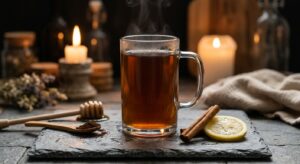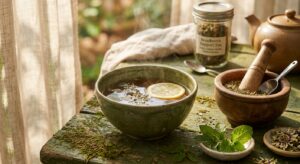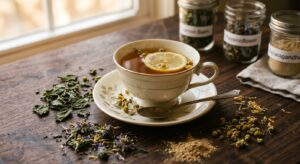
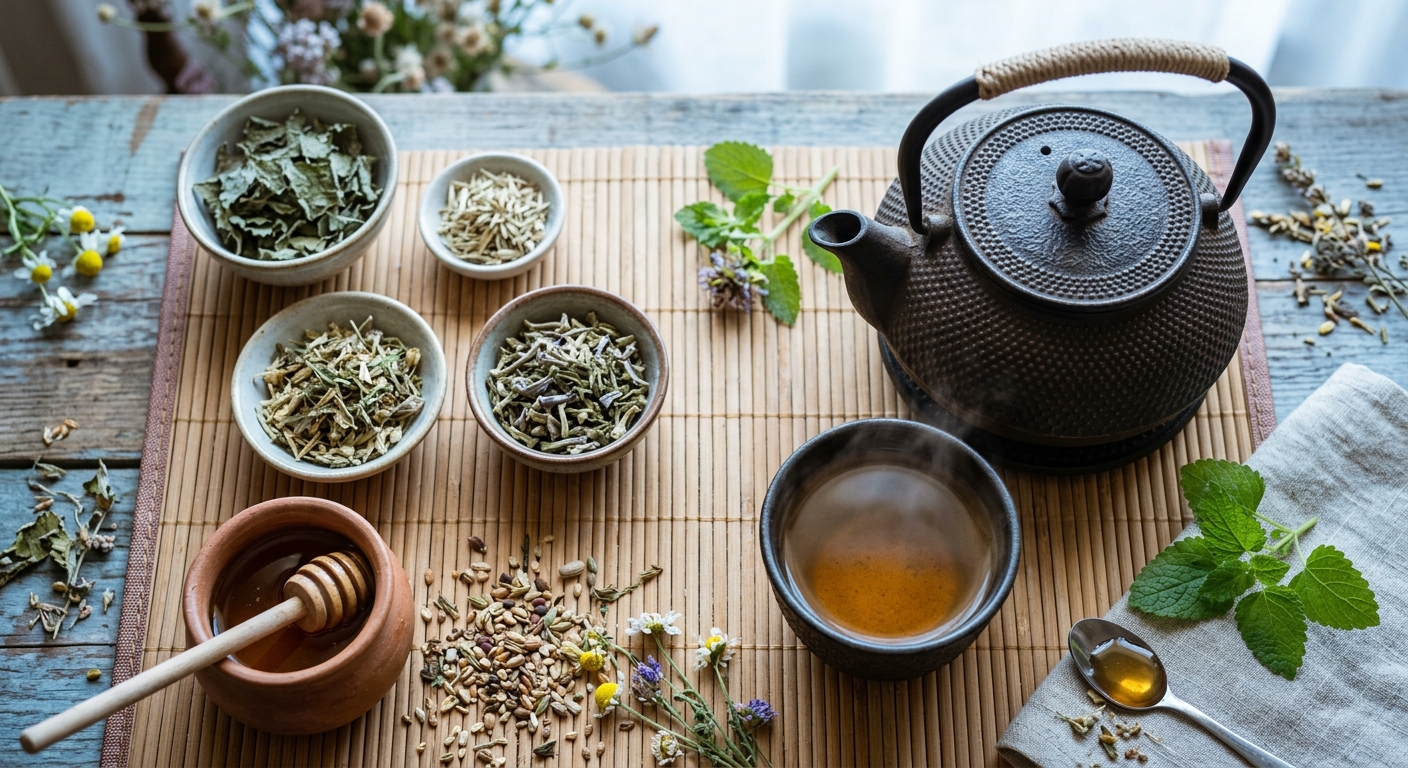
Long before modern pharmacology, the healers and herbalists of the Celtic lands, from the windswept coasts of Ireland to the misty highlands of Scotland, relied on a core group of nervine plants to calm frayed nerves, ease grief, and prepare the mind for sleep. These herbs, including oat straw, lemon balm, passionflower, and skullcap, grew abundantly in hedgerows, riverbanks, and cottage gardens, and were brewed into warming infusions shared at the end of long, physically demanding days. This tradition of nervine blending was not accidental. It reflected a sophisticated understanding of how different plant constituents complement one another to produce a broader, more balanced calming effect than any single herb could achieve alone.
The term “nervine” refers to any herb that has a tonic, strengthening, or soothing effect on the nervous system. Celtic herbalism leaned heavily on nervines because life in the northern Atlantic climate brought both physical hardship and psychological strain, with long dark winters, unpredictable harvests, and the emotional weight of tight-knit communal living. Healers known as bean feasa in Ireland and wise women in the Scottish tradition would prepare these blends as part of broader wellness rituals involving warmth, rest, and community. The act of preparing and drinking the tea was itself considered therapeutic, a moment of intentional stillness in a demanding world.
Today, Celtic Nervine Herb Tea draws on that same wisdom, combining herbs with complementary phytochemical profiles to address stress at multiple levels. Lemon balm calms the mind through GABA modulation, oat straw nourishes an exhausted nervous system, passionflower quiets racing thoughts, and skullcap eases physical tension held in the muscles. Together they produce a tea that is greater than the sum of its parts, deeply calming without being sedating, and grounding without being dulling. The flavor is herbaceous, gently floral, and subtly sweet, making it as enjoyable to drink as it is effective.
2
cups
Ingredients
- 2 tspdried lemon balm leaves
- 1 tspdried oat straw
- 1 tspdried passionflower herb
- 0.5 tspdried skullcap herb
- 480 mlwater (90°C / 194°F)
- —raw honey or a pinch of stevia to taste (optional)
- —slice of fresh lemon (optional)
How to Brew
Click on an item below to shop for the recommended items for this recipe on Amazon.
As an Amazon Associate, we earn from qualifying purchases.
- Bring fresh, filtered water to approximately 90°C (194°F). Avoid a full rolling boil as excessive heat can degrade delicate volatile oils in lemon balm and skullcap. If using a standard kettle, allow boiled water to rest for 2 minutes before pouring.
- Combine the dried lemon balm, oat straw, passionflower, and skullcap in a tea infuser, muslin bag, or teapot infuser basket. Use the full measured amounts from the ingredients list for two servings.
- Place the infuser in your warmed mug or teapot. Pre-warm your vessel by rinsing it with a small amount of hot water first, then discarding. This keeps the brew temperature stable throughout steeping.
- Pour the hot water over the herbs, ensuring all plant material is fully submerged. Immediately cover the mug with a small saucer or lid to prevent the escape of volatile aromatic oils that carry some of the herb’s calming properties.
- Steep for 10 to 15 minutes. The longer end of this range produces a richer, more potent cup. Remove the infuser and gently press it against the side of the mug to extract the last of the infusion.
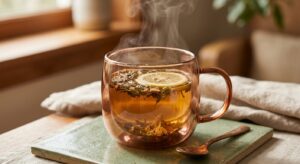
- Sweeten lightly with raw honey if desired, and add a slice of fresh lemon to brighten the flavor. Drink slowly in a calm environment for the fullest therapeutic effect.
- Measure out the full blend: 2 tsp dried lemon balm, 1 tsp oat straw, 1 tsp passionflower, and 0.5 tsp skullcap per 480 ml of water. For a cold brew batch, scale up as needed, using the same ratio of herbs to water.
- Place the loose herbs into a clean glass jar or cold brew pitcher. Add cold, filtered water at room temperature. Stir briefly with a long spoon to ensure all plant material is moistened and in contact with the water.
- Cover the jar with a lid or a tight layer of cheesecloth secured with a rubber band. Let the jar sit at room temperature for 30 minutes to allow the initial extraction to begin gently, then transfer to the refrigerator.
- Allow the blend to cold steep in the refrigerator for 8 to 12 hours. Overnight is ideal. The cold environment slows extraction, producing a smoother, less bitter infusion compared to hot brewing.
- In the morning, strain the liquid through a fine mesh strainer or cheesecloth into a clean container or directly into glasses filled with ice. Press the herbs gently to extract remaining liquid.
- Serve over ice and garnish with a sprig of fresh lemon balm or a lemon slice if available. Add a small drizzle of honey and stir well before drinking, as cold temperatures can slow honey from dissolving. Consume within 48 hours and store refrigerated.
- Double the herb quantities to create a concentrate: use 4 tsp dried lemon balm, 2 tsp oat straw, 2 tsp passionflower, and 1 tsp skullcap for every 480 ml of water. This yields a concentrate that you will dilute 1 to 1 before drinking.
- Heat filtered water to 90°C (194°F) as with the hot brew method. Place the measured herbs into a small saucepan or a large teapot with an infuser basket. A saucepan is preferable here as it allows you to maintain a consistent low simmer if needed.
- Pour the hot water over the herbs, cover the saucepan or teapot with a lid, and allow the blend to steep undisturbed for 20 to 30 minutes. The extended steep time and higher herb-to-water ratio is what creates the concentrate’s potency.
- Strain the concentrate through a fine mesh strainer lined with cheesecloth into a clean glass jar, pressing the herbs firmly to extract all remaining liquid. Allow to cool fully before sealing.
- Once cooled, label the jar with the date and store in the refrigerator for up to 4 days. When ready to serve, combine equal parts concentrate and hot or cold water in a mug or glass. Adjust the dilution ratio to personal taste, using more concentrate for a stronger effect.
- Sweeten with honey after dilution, not before storing, to preserve the concentrate’s shelf life. This method is particularly useful for preparing calming drinks quickly during high-stress periods without compromising quality or potency.
Health Benefits
The combined GABAergic activity of rosmarinic acid from lemon balm, chrysin from passionflower, and baicalin from skullcap creates a multi-pathway calming effect on the central nervous system. Clinical studies on lemon balm and passionflower independently support meaningful reductions in self-reported anxiety scores.
Passionflower has demonstrated effectiveness comparable to low-dose pharmaceutical sleep aids in randomized controlled trials, improving sleep quality and reducing nighttime wakefulness. Paired with the sedative-adjacent properties of skullcap and lemon balm, this blend makes an excellent evening tea for those with stress-related insomnia.
Oat straw is classified as a trophorestorative nervine, meaning it does not simply sedate but actively rebuilds and strengthens nervous tissue over time. It is particularly suited for individuals experiencing burnout, chronic fatigue, or prolonged stress, where acute calming herbs alone are insufficient.
Lemon balm has been shown in double-blind studies to improve mood, reduce negative emotional states, and enhance calm alertness without sedation at moderate doses. Its inhibition of monoamine oxidase and acetylcholinesterase may also support mild improvements in focus alongside reduced stress.
Skullcap has a particular affinity for physical manifestations of stress such as tension headaches, jaw clenching, and tight shoulders. Its antispasmodic properties complement its nervine action, addressing both the mental and somatic dimensions of anxiety simultaneously.
🧪 Key Bioactive Compounds
The Science Behind Lemon Balm
The calming power of Celtic Nervine Herb Tea lies in its ability to modulate gamma-aminobutyric acid (GABA), the brain’s primary inhibitory neurotransmitter. When GABA levels are adequate, neurons fire less readily, the nervous system downregulates its stress response, and a sense of calm settles in. Both lemon balm and skullcap influence GABAergic tone through complementary mechanisms: rosmarinic acid in lemon balm inhibits GABA transaminase, the enzyme responsible for breaking down GABA, effectively raising its availability in the synaptic cleft. Baicalin in skullcap acts directly on GABA-A receptors, producing a mild benzodiazepine-like effect without the receptor desensitization or dependency risk associated with pharmaceutical agents.
Passionflower brings additional anxiolytic depth through its flavonoid content. Chrysin, one of its most studied compounds, has demonstrated affinity for central benzodiazepine binding sites in animal models, while the C-glycosyl flavonoids orientin and vitexin appear to extend the duration of the anxiolytic effect. A 2011 randomized controlled trial published in Phytotherapy Research found that passionflower extract performed comparably to oxazepam in reducing generalized anxiety disorder symptoms, with significantly fewer side effects including impaired job performance. These findings give scientific grounding to what Celtic herbalists observed empirically for centuries.
Oat straw occupies a distinct pharmacological niche within this blend. Rather than acting acutely on neurotransmitter systems, its avenanthramides and silica-rich phytochemicals work over weeks to months to support myelin sheath integrity, reduce neuroinflammation, and buffer the adrenal response to chronic stress. A 2011 study from the Scottish Highlands found that a standardized oat straw extract significantly improved attention, concentration, and mental flexibility in older adults, suggesting its value extends beyond sedation into genuine neural nourishment. Together, these four herbs create a layered pharmacological approach to stress, addressing acute anxiety, physical tension, sleep disruption, and long-term nervous system resilience in a single, elegantly composed cup.
Brewing Tips
- Source each herb individually from reputable suppliers rather than buying pre-blended versions. This allows you to adjust the ratios based on your personal stress profile, for example, increasing passionflower for sleep issues or adding more lemon balm for daytime anxiety.
- Always cover your mug during steeping. Lemon balm and skullcap both contain volatile aromatic oils that carry significant therapeutic value and will evaporate with the steam if the cup is left open. A small saucer placed on top of the mug is sufficient.
- Drink this tea consistently for at least two weeks before judging its effectiveness. Trophorestorative herbs like oat straw work cumulatively and build their effect over time rather than producing an immediate sedative response like valerian or hops would.