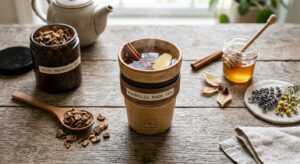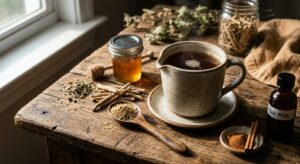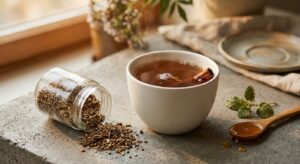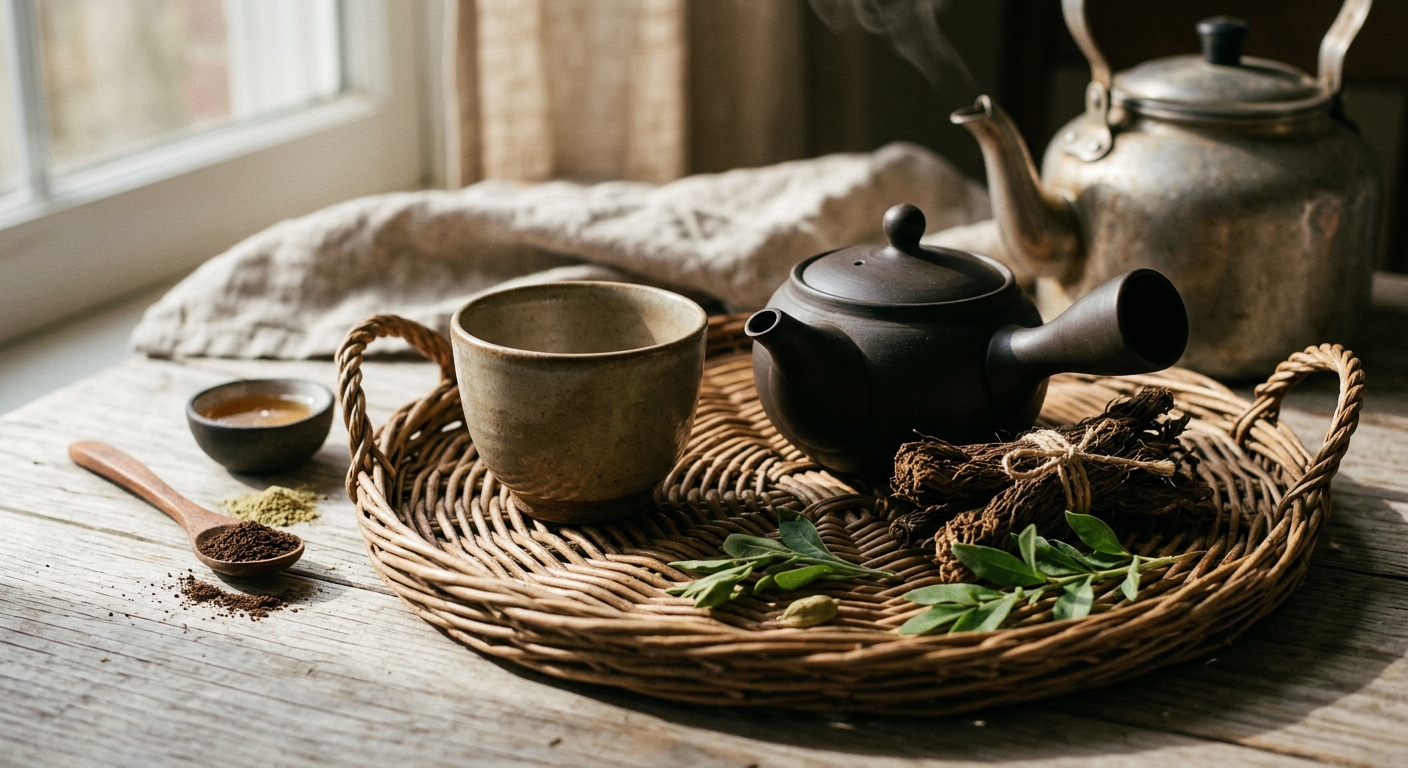
High in the cold, rocky meadows of the Himalayas, between altitudes of 3,000 and 5,000 meters, grows one of Ayurveda’s most treasured nervine herbs: Nardostachys jatamansi. Known by many names, including spikenard, musk root, and nardin, this small flowering plant produces a thick, hairy rhizome that has been harvested for its medicinal and aromatic properties for more than 3,000 years. Ancient Sanskrit texts, including the Charaka Samhita and Sushruta Samhita, list jatamansi as a premier medhya rasayana, an herb that nourishes and rejuvenates the mind. Its reputation traveled far beyond India, appearing in ancient Egyptian perfumery, Greek medicine, and Biblical accounts, where spikenard oil was considered precious enough to anoint royalty.
In classical Ayurvedic medicine, jatamansi is classified as having a tikta (bitter) and kashaya (astringent) taste, a cooling energy, and a sweet post-digestive effect. It is said to pacify all three doshas, making it one of the few tridoshic herbs in the tradition. Practitioners have long prescribed it for conditions rooted in an imbalanced nervous system: insomnia, anxiety, palpitations, epilepsy, and what Ayurveda calls unmada, a category encompassing mental agitation and emotional turbulence. The root was traditionally prepared as a powder called churna, blended into medicated ghee, or decocted into a warm tea to be taken in the evening before sleep.
What makes jatamansi particularly compelling today is the growing body of scientific research validating what Himalayan healers observed millennia ago. Its dense concentration of sesquiterpene compounds, particularly jatamansone and nardosinone, has been studied for sedative, anxiolytic, and neuroprotective effects. As a tea, the powdered or finely ground root yields a warm, earthy, woody brew with subtle musky and camphor-like undertones that itself feels like a ritual of slowing down. Whether you are exploring Ayurvedic traditions or simply seeking a plant-based ally for sleep, jatamansi tea offers a deeply grounding experience unlike any common herbal blend.
2
cups
Ingredients
- 1 tspjatamansi root powder (or 1.5 tsp coarsely ground dried root)
- 300 mlwater (95°C / 203°F)
- —raw honey or jaggery to taste (optional)
- —a pinch of cardamom powder (optional, to balance bitterness)
How to Brew
Click on an item below to shop for the recommended items for this recipe on Amazon.
As an Amazon Associate, we earn from qualifying purchases.
- Measure 1 teaspoon of jatamansi root powder per serving into a fine-mesh infuser, tea filter bag, or directly into a small saucepan. If using coarsely ground root pieces rather than powder, increase the amount to 1.5 teaspoons and allow an extra 3 to 5 minutes of steeping.
- Heat filtered water to 90 to 95°C (194 to 203°F). If you do not have a temperature-controlled kettle, bring water to a full boil and then allow it to rest for 60 to 90 seconds before pouring.
- Pour 300 ml of hot water over the jatamansi. If brewing directly in a saucepan, place the lid on the pan to trap the volatile aromatic compounds that carry much of the herb’s calming character.
- Steep for 10 to 15 minutes. Jatamansi root is dense and woody, so it benefits from a longer steep than most floral or leaf teas. The tea will deepen noticeably in color and aroma during this time.
- Strain thoroughly through a fine-mesh strainer into your cup, pressing gently on the spent root material to release the last of the liquid. Stir in a pinch of cardamom and a small spoonful of raw honey or jaggery if desired to soften the bitterness.
- Drink slowly in the 30 to 60 minutes before bed. Hold the warm cup in your hands, inhale the earthy aroma, and allow the ritual itself to signal to your nervous system that it is time to unwind.
- Combine 1.5 teaspoons of coarsely ground or roughly broken jatamansi root per serving with 500 ml of cold, filtered water in a small stainless steel or clay saucepan. Starting with cold water allows a gentler, more complete extraction to begin before the heat intensifies.
- Place the saucepan over medium heat and bring the mixture slowly to a gentle boil, stirring occasionally. This initial heating phase should take 5 to 8 minutes. Do not rush it with high heat.
- Once a gentle boil is reached, reduce the heat to low so the liquid maintains a steady, quiet simmer. Do not cover the pan fully at this stage, as you want some evaporation to concentrate the brew. Simmer for 20 to 25 minutes, stirring occasionally.
- Monitor the liquid level. The goal is to reduce the starting volume by roughly half, ending with approximately 250 ml of richly concentrated decoction per serving. Add a small splash of water if the liquid reduces too quickly before the time is complete.
- Remove from heat and allow the decoction to cool for 3 to 5 minutes. Strain through a fine-mesh strainer lined with cheesecloth into a warmed mug, pressing the root material firmly to extract every last drop of the concentrated liquid.
- Taste the decoction before adding anything. It will be notably more bitter and earthy than the hot-brew version. Stir in a teaspoon of raw honey, a pinch of cardamom, or a small slice of fresh ginger to harmonize the flavors. Drink warm, ideally 45 to 60 minutes before sleep.
- Add 2 teaspoons of jatamansi root powder per 500 ml of cold, filtered water into a clean glass jar with a tight-fitting lid. Because cold water extracts more slowly and less aggressively than hot water, a slightly higher herb-to-water ratio ensures a flavorful result after overnight steeping.
- Stir the mixture thoroughly with a long spoon for 30 to 60 seconds to disperse the root powder evenly throughout the water and prevent clumping at the bottom of the jar.
- Leave the jar at room temperature for the first 60 minutes, stirring once more halfway through. This initial ambient-temperature phase encourages the aromatic volatile compounds to begin dissolving before refrigeration slows the process.
- Seal the jar and transfer it to the refrigerator. Allow the jatamansi to cold steep for 10 to 12 hours, ideally overnight. The brew will gradually shift from a cloudy suspension to a darker, more settled liquid.
- In the morning or evening, remove the jar from the refrigerator. Shake gently, then strain the entire contents through a fine-mesh strainer lined with a cheesecloth or a nut milk bag into a clean pitcher or mug, pressing firmly to extract the liquid.
- The cold brew can be enjoyed chilled over a small amount of ice, or gently warmed in a small saucepan over low heat for a few minutes if you prefer a warm evening drink. Sweeten with a drizzle of honey or a few drops of stevia if desired. Store any remaining cold brew in a sealed container in the refrigerator and consume within 48 hours.
Health Benefits
Jatamansone, the herb’s principal sesquiterpene, has been shown in multiple animal studies to extend sleep duration and reduce sleep onset latency by modulating GABAergic neurotransmission, the same pathway targeted by pharmaceutical sleep aids but through a gentler, plant-mediated mechanism. Traditional Ayurvedic use consistently positions jatamansi as a first-line herb for insomnia rooted in nervous exhaustion or mental overactivity.
Research published in journals including the Journal of Ethnopharmacology has found jatamansi root extract to produce significant anxiolytic effects comparable in some models to diazepam, without the same degree of motor impairment. The isocoumarin jatamansin contributes by inhibiting MAO enzymes, helping to preserve mood-regulating neurotransmitters like serotonin and dopamine.
Nardosinone has been shown to stimulate nerve growth factor (NGF) synthesis, a protein critical for the growth, maintenance, and survival of neurons. This makes jatamansi one of the few traditionally used sleep herbs with a credible evidence base for protecting long-term brain health, a property Ayurvedic practitioners described centuries ago with the term medhya, meaning mind-nourishing.
Several studies have found that jatamansi root extracts produce a measurable hypotensive effect, helping to lower elevated blood pressure by relaxing vascular smooth muscle. This cardiovascular calming action complements its nervous system effects and makes it particularly useful for individuals whose insomnia is accompanied by racing heart or tension headaches.
The combination of MAO-inhibiting activity from jatamansin and the antioxidant protection offered by the root’s phenolic compounds contributes to a stabilizing effect on mood over time. In Ayurvedic clinical practice, jatamansi is frequently used for emotional volatility, grief-related insomnia, and the low-grade anxiety that accompanies vata imbalance.
🧪 Key Bioactive Compounds
The Science Behind Jatamansi
The sedative and anxiolytic reputation of jatamansi is not merely the product of ancient intuition; it is increasingly supported by modern pharmacological research. The most studied compound, jatamansone (also called valeranone), is a bicyclic sesquiterpene ketone that acts on the central nervous system by enhancing GABAergic tone. GABA (gamma-aminobutyric acid) is the brain’s primary inhibitory neurotransmitter, and compounds that potentiate its activity at GABA-A receptors produce sedation, reduced anxiety, and muscle relaxation. Studies in rodent models have found that jatamansone significantly decreases locomotor activity, prolongs pentobarbital-induced sleep time, and reduces anxious behavior in the elevated plus-maze test at doses that do not cause the coordination impairment seen with benzodiazepine drugs. Jatamansi also appears to downregulate brain norepinephrine levels, a neurochemical associated with the fight-or-flight stress response, which may explain its traditional use for palpitations and emotional agitation.
The isocoumarin compound jatamansin adds another pharmacological dimension by inhibiting monoamine oxidase (MAO) enzymes. MAO enzymes are responsible for breaking down key neurotransmitters including serotonin, dopamine, and norepinephrine. By slowing this breakdown, jatamansin helps sustain the availability of mood-regulating and pleasure-associated chemicals in the synaptic cleft, contributing to the mood-lifting and emotional-balancing effects that Ayurvedic physicians have observed clinically for generations. This mechanism places jatamansi in a similar (though far milder) pharmacological category as certain prescription antidepressants, which is precisely why caution is warranted when combining it with those medications.
Perhaps the most exciting area of emerging jatamansi research concerns nardosinone and its ability to promote nerve growth factor (NGF) synthesis. NGF is a critical signaling protein that supports the survival, growth, and maintenance of neurons, particularly in the hippocampus and basal forebrain, regions central to memory, learning, and emotional regulation. A 2009 study published in the journal Phytomedicine found that nardosinone significantly enhanced NGF-stimulated neurite outgrowth in PC12 cells, suggesting a genuine neuroprotective capacity. Combined with the root’s substantial antioxidant content, which protects neurons from oxidative damage, jatamansi presents a rare profile as an herb that not only helps you sleep tonight but may also support the long-term resilience and health of the brain that is doing the sleeping.
Brewing Tips
- Always buy jatamansi from a reputable Ayurvedic supplier that certifies sustainably cultivated stock. Wild-harvested Himalayan jatamansi is ecologically vulnerable and may be illegal to trade depending on your country’s CITES regulations.
- Start with a half teaspoon per cup for your first two or three brews to assess your personal sensitivity before working up to the full recommended dose. Its sedative effects can be pronounced, especially for those new to adaptogenic or nervine herbs.
- For the smoothest, most palatable hot brew, add a pinch of cardamom and a tiny knob of coconut oil or ghee to the cup before pouring. The fat helps emulsify the root’s fat-soluble sesquiterpene compounds for better absorption and softens the bitter edge considerably.