Acid reflux, also known as gastroesophageal reflux, is one of the most common digestive complaints in the modern world, affecting millions of people after meals, at night, or during periods of stress. The burning sensation that rises from the stomach into the chest and throat is caused by stomach acid creeping past a weakened lower esophageal sphincter, irritating the delicate mucosal lining of the esophagus. While conventional antacids offer quick relief, many people are turning to traditional plant medicine for gentler, longer-term support that works with the body rather than simply suppressing acid.
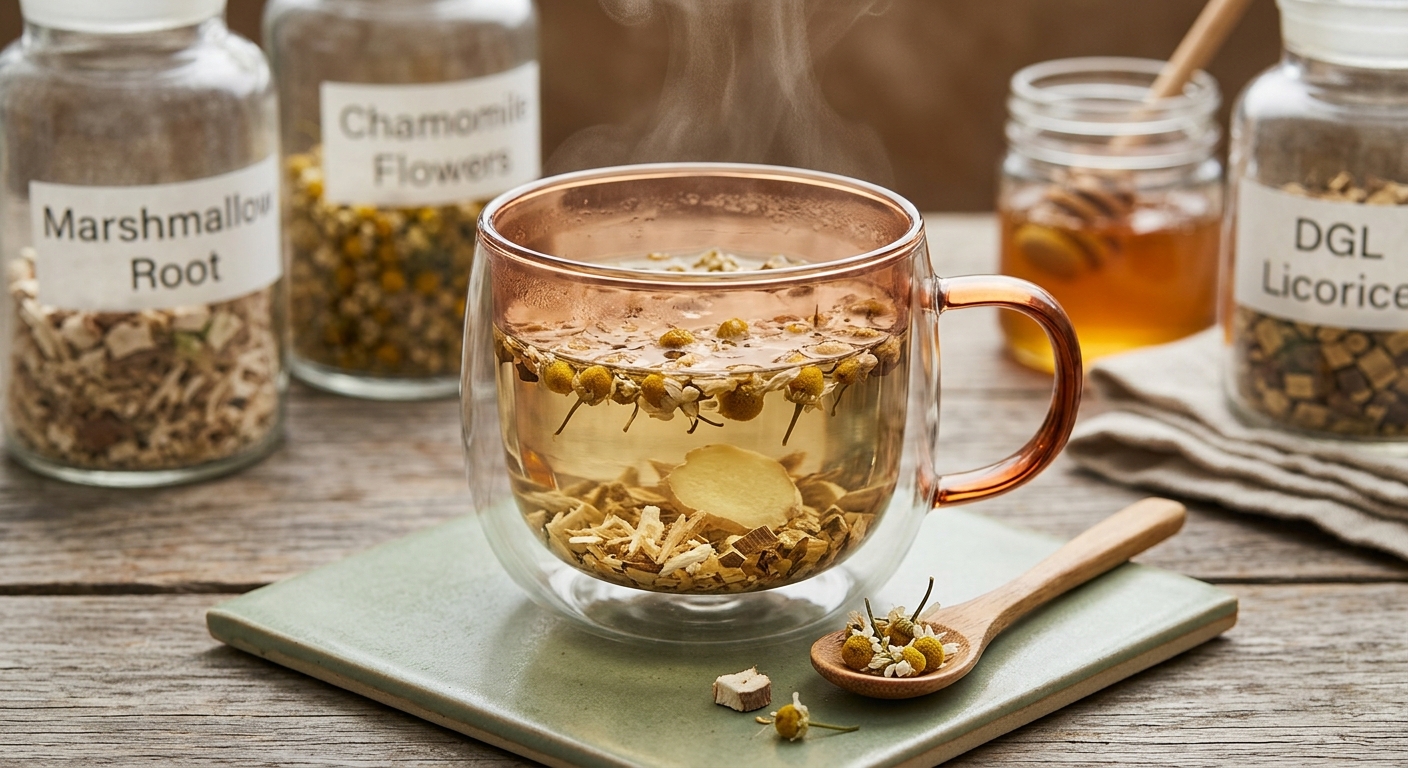
Herbalists and traditional healers across Europe, the Middle East, and Asia have long relied on mucilaginous and anti-inflammatory plants to soothe the digestive tract. Marshmallow root, known in Latin as Althaea officinalis, has been used since ancient Greek and Roman times to coat inflamed tissues and calm irritated mucous membranes. Licorice root, particularly in its deglycyrrhizinated form, has a rich history in Ayurvedic and Traditional Chinese Medicine as a digestive harmonizer. Chamomile, beloved across Central Europe for centuries, rounds out this blend with its antispasmodic and inflammation-quelling properties. Together, these three herbs create a synergistic cup that addresses reflux from multiple angles.
What makes this blend genuinely therapeutic is the mucilage content of marshmallow root, which forms a viscous, protective gel when steeped in cool or warm water. This gel coats the esophageal and stomach lining much like a natural antacid, buffering acid contact and giving irritated tissue time to heal. The result is a tea that tastes gently sweet, mildly floral, and subtly earthy, with a pleasantly silky mouthfeel that itself feels soothing as you drink it. This is a cup best sipped slowly, 20 to 30 minutes before a meal or whenever reflux symptoms arise.
2
cups
Ingredients
- 2 tspdried marshmallow root (Althaea officinalis)
- 1 tspdeglycyrrhizinated licorice root (DGL), chopped or granulated
- 2 tspdried chamomile flowers
- 500 mlwater (85°C / 185°F)
- —raw honey to taste (optional)
- —a thin slice of fresh ginger (optional, for extra digestive support)
How to Brew
Click on an item below to shop for the recommended items for this recipe on Amazon.
As an Amazon Associate, we earn from qualifying purchases.
- Heat filtered water to 80 to 85°C (176 to 185°F). If using a standard kettle, bring water to a boil and let it rest for 4 to 5 minutes before using.
- Combine 2 tsp dried marshmallow root, 1 tsp DGL licorice root, and 2 tsp dried chamomile flowers in a tea infuser or heatproof teapot.
- Pour 500 ml of the cooled hot water over the herbs and cover the pot or mug with a lid or small plate. Covering the brew traps volatile aromatic compounds from the chamomile, preserving its antispasmodic benefits.
- Steep for 10 to 15 minutes. For a more mucilaginous, coating texture, steep closer to 15 minutes. For a lighter, more floral cup, steep for 10 minutes.
- Strain the herbs and pour into two warmed mugs. Add raw honey if desired. Sip slowly 20 to 30 minutes before a meal or at the first sign of reflux discomfort.
- Place 3 tsp dried marshmallow root, 1 tsp DGL licorice root, and 2 tsp dried chamomile flowers into a clean glass jar with a lid.
- Pour 500 ml of cold, filtered water directly over the herbs at room temperature. Do not use hot or warm water for this method.
- Stir gently to ensure all the herbs are fully submerged, then seal the jar with its lid.
- Let the jar sit at room temperature for 1 hour to begin extraction, then transfer to the refrigerator and steep for an additional 8 to 12 hours, or overnight.
- In the morning, strain the herbs through a fine mesh strainer or cheesecloth, pressing gently on the plant material to extract the maximum mucilaginous gel.
- Pour the cold brew into two glasses. Notice the slightly thicker, silkier texture compared to the hot brew. Sip slowly at room temperature or slightly chilled. This brew keeps refrigerated for up to 24 hours.
- Place 2.5 tsp dried marshmallow root and 1.5 tsp DGL licorice root into a small saucepan. Add 600 ml of cold filtered water.
- Bring the water to a very gentle simmer over low to medium heat, targeting 85 to 90°C (185 to 194°F). Use a kitchen thermometer to keep the temperature below a rolling boil, which would degrade the marshmallow mucilage.
- Simmer uncovered at this gentle heat for 20 minutes, stirring occasionally. The liquid will reduce slightly and take on a deeper amber color.
- Remove the pan from heat and add 2 tsp dried chamomile flowers directly to the hot liquid. Cover the saucepan with a lid immediately.
- Allow the chamomile to steep in the cooling liquid for 10 minutes, extracting its apigenin and volatile oils gently in the residual heat.
- Strain through a fine mesh strainer into two mugs, yielding roughly 500 ml of concentrated, deeply soothing tea. Add a small amount of raw honey if desired. Drink one mug warm and store the second covered in the refrigerator for up to 12 hours.
Health Benefits
The mucilage polysaccharides in marshmallow root dissolve in water to form a thick, slippery gel that physically adheres to the esophageal mucosa, creating a protective barrier between the tissue and stomach acid. A 2020 pilot study published in Complementary Medicine Research found that marshmallow root syrup significantly reduced symptoms of irritation in patients with gastroesophageal reflux after just one week of use.
Deglycyrrhizinated licorice has been shown in multiple clinical studies to stimulate mucin production, enhance mucosal cell regeneration, and reduce the inflammatory cascade triggered by acid exposure. A meta-analysis published in Evidence-Based Complementary and Alternative Medicine confirmed DGL’s efficacy in reducing ulcer symptoms and improving gastric lining integrity.
Chamomile’s alpha-bisabolol and apigenin exert measurable antispasmodic effects on gastrointestinal smooth muscle, reducing the uncomfortable cramping and involuntary contractions that often accompany acid reflux episodes. This makes the tea especially effective when reflux is triggered or worsened by stress.
Apigenin in chamomile modulates the hypothalamic-pituitary-adrenal axis and binds to central GABA receptors, reducing the stress response that commonly triggers excess gastric acid secretion. Drinking this tea before stressful meals may help interrupt the stress-acid reflux cycle.
Both licorice root flavonoids and chamomile’s terpenoids have demonstrated inhibitory activity against Helicobacter pylori in laboratory studies, a gram-negative bacterium that compromises the stomach’s acid-buffering mucus layer and is a key contributor to chronic reflux and gastric ulceration.
🧪 Key Bioactive Compounds
The Science Behind Marshmallow Root
The therapeutic effectiveness of this acid reflux blend is rooted in a well-documented mechanism called mucosal cytoprotection. Marshmallow root contains a high concentration of pectic polysaccharides and arabinogalactans that, when exposed to water, swell and form a viscous hydrocolloid gel. This gel behaves similarly to the natural mucus layer that lines a healthy stomach and esophagus. When that natural lining is compromised by repeated acid exposure, the marshmallow mucilage essentially stands in as a temporary surrogate barrier, giving inflamed tissue relief from further irritation. Notably, cold water extraction yields a measurably higher mucilage concentration than hot water, which is why the cold brew method in this guide is particularly valuable for people experiencing active symptoms.
Deglycyrrhizinated licorice works through a complementary but distinct pathway. Rather than simply coating tissue, DGL’s active flavonoids, particularly liquiritin and isoliquiritin, directly stimulate goblet cells in the stomach lining to produce more mucus and signal for increased turnover of mucosal epithelial cells. This essentially encourages the body to repair its own protective barrier. Research published in the Journal of Ethnopharmacology and other peer-reviewed sources has confirmed that licorice flavonoids also inhibit the enzyme 15-hydroxyprostaglandin dehydrogenase, prolonging the activity of prostaglandins that maintain mucosal blood flow and tissue integrity. Several clinical trials comparing DGL to conventional antacids have found comparable symptom relief, without acid suppression side effects.
Chamomile’s contribution comes primarily from its volatile terpenoids and flavonoids, which are most effectively extracted at temperatures below 90°C. Chamazulene, formed during the steam distillation and drying process from the precursor compound matricine, is a potent COX-2 inhibitor with anti-inflammatory activity comparable to some non-steroidal anti-inflammatory drugs in animal models, but without the gastric side effects. Alpha-bisabolol directly reduces the contractility of smooth muscle in the gastrointestinal wall, addressing the painful esophageal spasms that accompany reflux. Meanwhile, apigenin’s action on central GABA-A receptors provides a systemic calming effect that reduces the stress-driven stimulation of the vagus nerve, one of the key triggers of excess gastric acid secretion in people whose reflux is closely tied to anxiety and stress.
Brewing Tips
- Always cover your mug or teapot while steeping this blend. The volatile aromatic oils in chamomile, which carry much of its antispasmodic benefit, evaporate quickly in open-air steeping and will be lost if the vessel is left uncovered.
- For the best therapeutic results with marshmallow root, use the cold brew method at least three times per week during active reflux flare-ups. The cold extraction produces up to 30 percent more mucilage than a hot steep, giving you a noticeably thicker, more protective cup.
- Store dried marshmallow root in an airtight container away from light and heat. Marshmallow root’s mucilage can absorb ambient moisture and clump if stored improperly, which does not reduce its effectiveness but makes it harder to measure and infuse.