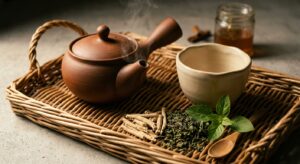
Long before the age of sleeping pills, healers across Europe and the Middle East reached for wild lettuce, known botanically as Lactuca virosa, to soothe restless minds and quiet aching bodies at nightfall. Sometimes called “opium lettuce” due to the milky white latex it exudes when its stems are cut, wild lettuce bears a striking resemblance in action to its more famous namesake, though it is far gentler and entirely non-addictive. Ancient Egyptian physicians used related Lactuca species as offerings to Min, their god of fertility, and as remedies for insomnia. By the 19th century, European pharmacists were processing the dried latex of wild lettuce into a substance called lactucarium, which appeared in official medical texts as a mild sedative and cough suppressant.
Wild lettuce thrives along roadsides, hedgerows, and disturbed ground across Europe, western Asia, and naturalized parts of North America. The plant grows tall and proud, sometimes reaching six feet in height, with spiky-edged leaves and tiny pale yellow flowers. It is the leaves, upper stems, and dried sap that herbalists harvest, typically just before or during flowering when the concentration of active compounds is at its peak. The taste is unmistakably bitter, a quality herbalists associate with digestive stimulation and nervous system calming, and it pairs well with sweeteners or complementary herbs like passionflower or lemon balm.
Today, wild lettuce occupies an intriguing space in modern herbalism, sitting at the intersection of traditional folk medicine and emerging scientific curiosity. While robust clinical trials are still limited, the plant’s known compounds, including lactucin and lactucopicrin, have demonstrated real sedative and analgesic activity in animal studies, lending credibility to centuries of empirical use. For those seeking a deeply grounding, bittersweet bedtime ritual with genuine botanical heritage, wild lettuce tea is a worthy and fascinating brew.
2
cups
Ingredients
- 2 tspdried wild lettuce leaves and stem pieces
- 480 mlwater (85°C / 185°F)
- —raw honey or maple syrup to taste (strongly recommended to offset bitterness)
- —dried lemon balm or passionflower (optional, for blending)
How to Brew
Click on an item below to shop for the recommended items for this recipe on Amazon.
As an Amazon Associate, we earn from qualifying purchases.
- Heat filtered water to 85°C (185°F). If you do not have a temperature-controlled kettle, bring water to a full boil and let it cool uncovered for 4 to 5 minutes before proceeding.
- Place 1 teaspoon of dried wild lettuce leaves and stem pieces per cup into a tea infuser or directly into a small teapot. For a stronger sedative effect, increase to 1.5 teaspoons per cup.
- Pour the heated water over the herb, ensuring all plant material is fully submerged. Cover your mug or teapot with a lid or small saucer to trap volatile aromatic compounds during steeping.
- Steep for 10 to 15 minutes. A longer steep extracts more lactucin and lactucopicrin but significantly increases bitterness, so begin with 10 minutes on your first brew.
- Strain thoroughly, pressing the spent herb gently with the back of a spoon to extract the last of the liquid. Add honey or maple syrup to taste and drink warm, ideally 30 to 60 minutes before bed.
- Measure 2 teaspoons of dried wild lettuce per 480 ml of cold, filtered water. The higher ratio compensates for the slower, less aggressive extraction that occurs at low temperatures.
- Combine the herb and cold water in a clean glass jar with a lid. Stir gently to ensure all the plant material is saturated and no dry clumps remain on the surface.
- Seal the jar and leave it at room temperature for the first hour to begin extraction, then transfer to the refrigerator. Allow it to steep for a total of 8 to 12 hours, or overnight for convenience.
- When steeping is complete, strain through a fine-mesh sieve lined with a piece of muslin or cheesecloth to remove all fine plant particles. Press the herb mass firmly to extract maximum liquid.
- Serve the cold brew chilled over ice, or gently warm a single portion on the stovetop without bringing it to a boil. Sweeten with honey dissolved in a small amount of warm water first, as honey does not blend easily into cold liquid.
- Place 2 teaspoons of coarser dried wild lettuce stem pieces and any leaf fragments into a small saucepan. Add 480 ml of cold filtered water and allow the herb to soak for 10 minutes before applying heat, which helps begin cell wall breakdown.
- Place the saucepan over low to medium heat and bring the water slowly up to a gentle simmer, around 85 to 90°C (185 to 194°F). Do not allow the liquid to reach a rolling boil, as excessive heat can break down lactucin into less active forms.
- Maintain the gentle simmer, partially covered, for 20 to 25 minutes. The liquid will deepen in color to a darker olive-green and reduce slightly in volume. Watch carefully and lower heat if it approaches a boil.
- Remove from heat and allow the decoction to rest, still covered, for an additional 5 minutes before straining.
- Strain through a fine-mesh sieve into a mug, pressing the spent herb to extract all liquid. The resulting brew will be more concentrated and more bitter than a standard hot infusion. Dilute with an additional 60 to 120 ml of hot water if desired, and sweeten generously before drinking about 45 minutes before sleep.
Health Benefits
Lactucin and lactucopicrin, the primary sesquiterpene lactones in wild lettuce, have demonstrated dose-dependent sedative effects in controlled animal studies, reducing sleep onset time and increasing sleep duration. These findings align directly with the herb’s centuries-long traditional use as a bedtime remedy.
Research published in the Journal of Ethnopharmacology found that lactucin and lactucopicrin showed analgesic activity comparable to ibuprofen in mice, suggesting wild lettuce tea may help ease minor physical discomfort, including headaches and joint aches, that would otherwise disrupt sleep.
Wild lettuce has a long traditional application as a nervine, used by 19th-century physicians to calm nervous excitement and anxiety. The flavonoids quercetin and luteolin, alongside the sesquiterpene lactones, likely contribute to this effect through modulation of GABA pathways and reduction of neuroinflammation.
Lactucarium, the dried sap of wild lettuce, was listed in the British Pharmacopoeia as a cough remedy for over a century. The antispasmodic properties of its coumarin compounds and bitter principles help relax bronchial spasms and reduce irritating dry coughs, especially those that worsen at night.
As a classic bitter herb, wild lettuce stimulates bile production and digestive secretions when its bitter compounds contact the taste receptors, helping to ease sluggish digestion, bloating, and cramping. This digestive ease can indirectly support sleep quality by reducing physical discomfort after evening meals.
🧪 Key Bioactive Compounds
The Science Behind Wild Lettuce
The sedative reputation of wild lettuce rests primarily on two sesquiterpene lactones found concentrated in its milky latex and leaf tissue: lactucin and lactucopicrin. A landmark study by Wesołowska and colleagues, published in the Journal of Ethnopharmacology in 2006, demonstrated that both compounds produced statistically significant sedative and analgesic effects in mice at doses proportional to traditional human use. Lactucin appeared to act via opioid receptor pathways, producing analgesia that was partially reversed by naloxone, an opioid antagonist, offering a plausible pharmacological mechanism for the herb’s ancient reputation as a pain-calming sleep remedy. This interaction does not produce dependency or euphoria at normal tea doses, but it does underscore why wild lettuce should not be combined with pharmaceutical opioids or sedatives.
The anti-inflammatory flavonoids luteolin and quercetin complement the sesquiterpene lactones by addressing one of the most common underlying causes of poor sleep: neuroinflammation and pain-mediated arousal. Luteolin has been shown in multiple studies to inhibit NF-kB signaling and reduce the production of interleukin-6 and TNF-alpha, key inflammatory cytokines that disrupt sleep architecture and reduce slow-wave sleep. Quercetin, meanwhile, has demonstrated low-affinity binding to GABA-A receptors, the same receptor class targeted by benzodiazepines, providing a mild but real anxiolytic mechanism that helps reduce sleep-onset anxiety without the risks associated with pharmaceutical GABA modulators.
The coumarin-related compounds in wild lettuce contribute an antispasmodic dimension to its activity, relaxing smooth muscle in both the respiratory and gastrointestinal tracts. This makes wild lettuce particularly valuable for individuals whose sleep is disturbed by nocturnal cough, muscle cramps, or digestive discomfort. It is worth noting that the concentration of active compounds in dried leaf material is lower than in the raw latex or commercially prepared lactucarium, meaning tea preparations represent a gentler and more accessible form of the herb’s activity spectrum, well-suited to daily bedtime use within sensible dose ranges.
Brewing Tips
- Always cover your mug while steeping wild lettuce tea. The resinous volatile compounds that contribute to its calming aroma and effect are easily lost to evaporation if the cup is left open.
- Start with a 10-minute steep on your first brew and taste before extending the time. The bitterness escalates significantly between 10 and 15 minutes, and finding your personal tolerance threshold first will make the tea far more enjoyable.
- If the bitterness is overwhelming even with sweetener, try blending wild lettuce with dried lemon balm at a 1:2 ratio of wild lettuce to lemon balm. Lemon balm softens the flavor dramatically while adding its own GABA-supportive compounds for a more pleasant and equally effective cup.