Long before pharmacies lined every high street, European herbalists maintained carefully tended apothecary gardens filled with plants dedicated to calming the nervous system. Valerian root, with its earthy intensity, was prescribed by physicians from ancient Greece through the medieval period as a remedy for trembling, palpitations, and sleeplessness. Lemon balm, a cheerful member of the mint family, was cultivated in monastery gardens across France, Germany, and England, where monks brewed it into what they called eau de mélisse, a spirit tonic for nervous tension and melancholy. Passionflower, though native to the Americas, was so enthusiastically adopted by European herbalists after the 16th century that it became a cornerstone of the continental botanical tradition, appearing in pharmacopoeias across Germany, France, and Switzerland.
Together, these three herbs form a classic nervine blend, a category of plant medicine specifically intended to nourish, tone, and calm the nervous system. Each herb brings its own constellation of active compounds, and their synergy is greater than the sum of their parts. Valerian contributes deep sedation and muscle relaxation, lemon balm adds a gentle mood-lifting quality while reducing mental chatter, and passionflower provides anxiolytic support that particularly benefits those whose minds race at bedtime. This combination has been formalized in several European herbal traditions and remains one of the most studied botanical sleep formulas in clinical research.
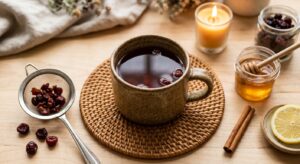
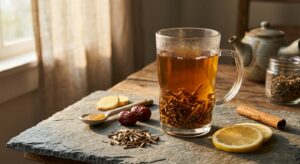
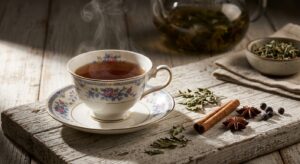
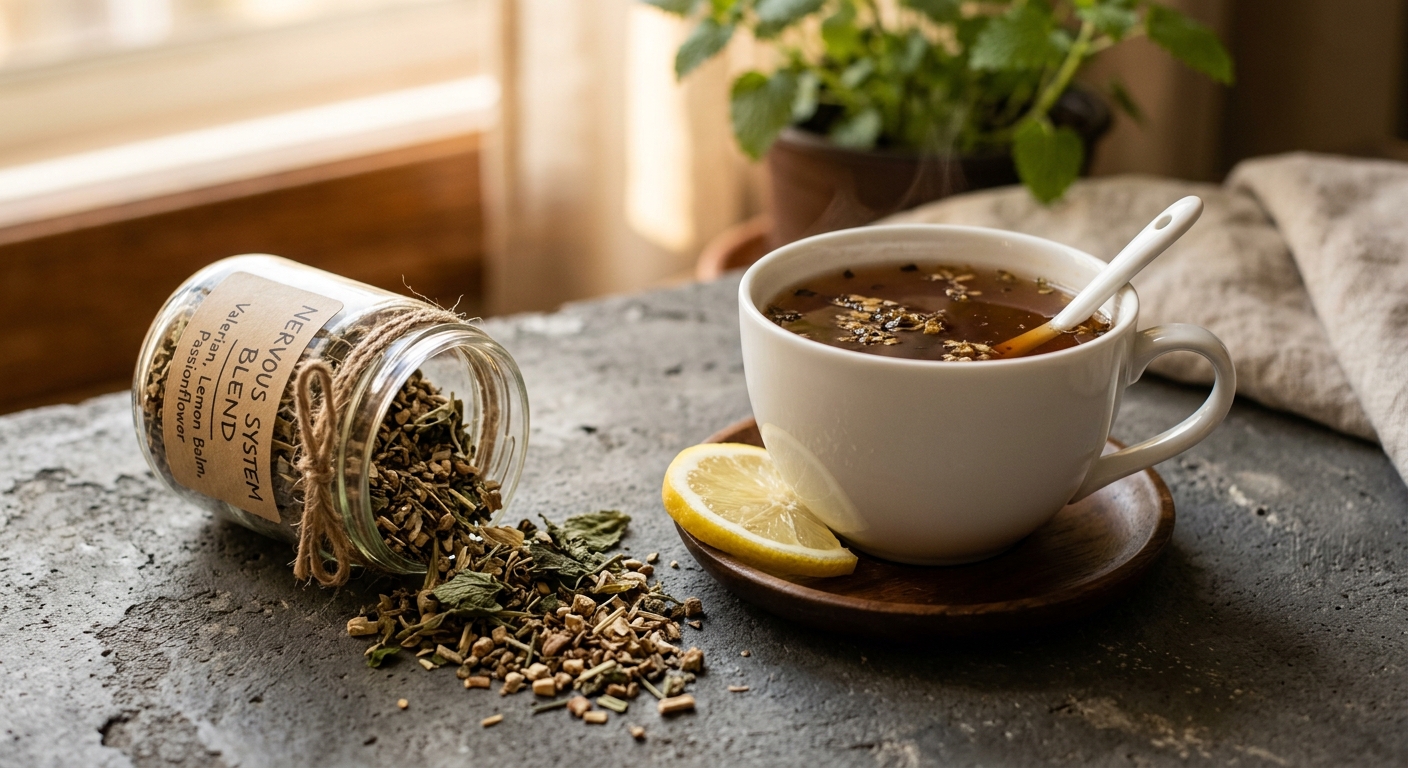
Brewing this tea is itself a small ritual of unwinding. The warm, slightly musty earthiness of valerian mingles with the bright citrus lift of lemon balm and the faintly grassy, floral notes of passionflower, producing a cup that smells and tastes like a walk through a quiet herb garden at dusk. Taken an hour before bed, or simply sipped on a tense afternoon, this blend offers something increasingly rare in modern life: a pause, a breath, and a gentle invitation to let go.
2
cups
Ingredients
- 1.5 tspdried valerian root (chopped or cut)
- 1.5 tspdried lemon balm leaves
- 1 tspdried passionflower herb (aerial parts)
- 300 mlwater (90°C / 194°F)
- —raw honey or a small slice of fresh lemon to taste (optional)
How to Brew
Click on an item below to shop for the recommended items for this recipe on Amazon.
As an Amazon Associate, we earn from qualifying purchases.
- Combine the dried valerian root, lemon balm leaves, and passionflower in a tea infuser or small teapot. If your valerian root is in larger cut pieces, lightly crush them in your palm before adding to help release the active compounds.
- Heat filtered water to 88 to 92°C (190 to 198°F). If you do not have a temperature-controlled kettle, bring water to a full boil and let it rest uncovered for 2 to 3 minutes to cool slightly.
- Pour the hot water over the herbs and immediately cover the infuser or teapot with a lid or small plate. This traps the aromatic volatile oils, particularly the beneficial terpenes in lemon balm, which would otherwise evaporate into the air.
- Steep for 10 to 15 minutes. A full 15-minute steep yields a more potent sedative effect from the valerian. For a milder cup suitable for afternoon use, 10 minutes is sufficient.
- Remove the infuser or strain the blend through a fine mesh strainer into your mug. Add honey or a squeeze of lemon if desired to soften the earthy bitterness of the valerian.
- Drink slowly, ideally 45 minutes to 1 hour before bedtime, in a dimly lit, quiet environment to support the onset of the relaxation response.
- Combine the dried valerian root, lemon balm leaves, and passionflower in a clean glass jar. Because the cold extraction is gentler, increase the total herb quantity by approximately 25 percent: use 2 tsp valerian root, 2 tsp lemon balm, and 1.5 tsp passionflower per 600 ml of water for two servings.
- Pour cold, filtered water directly over the herbs at room temperature. Do not use ice-cold water from the start, as starting at room temperature encourages the initial release of water-soluble compounds before refrigeration slows extraction.
- Stir gently to ensure all the plant material is saturated, then seal the jar with a lid.
- Leave the jar at room temperature for the first 30 minutes, then transfer to the refrigerator and allow to steep for a further 8 to 12 hours (overnight works well).
- Strain through a fine mesh strainer or cheesecloth into glasses, pressing the spent herbs lightly to extract remaining liquid. Serve over ice with a sprig of fresh lemon balm or a thin lemon wheel for aroma, and sweeten with a light honey syrup if desired.
- Cold-brewed portions will keep refrigerated for up to 24 hours. Shake or stir gently before pouring if any settling has occurred.
- Place the dried valerian root pieces into a small saucepan and add 450 ml of cold, filtered water per serving of two. Starting with cold water and slowly bringing it up to temperature encourages a more complete extraction of valerenic acids and other root-bound compounds.
- Set the burner to medium-low and bring the water to a gentle simmer, just below a rolling boil, at around 85 to 90°C (185 to 194°F). Maintain this gentle simmer for 20 to 25 minutes. The liquid will reduce slightly and take on a deeper amber color and a noticeably earthy, woody aroma.
- Remove the saucepan from heat and immediately add the dried lemon balm leaves and passionflower aerial parts directly to the hot decoction liquid. Cover the saucepan tightly with a lid.
- Allow the lemon balm and passionflower to infuse in the residual heat for a full 10 minutes, covered. This two-stage approach honors the different needs of root versus leaf and flower material, extracting maximum benefit from each.
- Strain the entire decoction through a fine mesh strainer into mugs, pressing the plant material gently. The resulting liquid will be considerably stronger and darker than a standard hot brew.
- Sweeten with raw honey, a small cinnamon stick, or a few slices of fresh ginger to complement the earthiness. Drink approximately 1 hour before bed. Because this method is more concentrated, a smaller cup of 150 to 180 ml per person is appropriate.
Health Benefits
Multiple randomized controlled trials and meta-analyses have demonstrated that valerian root significantly reduces sleep latency (the time taken to fall asleep) and improves subjective sleep quality. When combined with lemon balm, a landmark study published in Phytomedicine found the combination was significantly more effective than either herb alone in reducing sleep disorders in mildly insomniac subjects.
Passionflower has been compared to low-dose oxazepam (a benzodiazepine) in a controlled clinical trial for generalized anxiety disorder, with comparable efficacy and fewer side effects related to impaired job performance. Lemon balm independently lowers self-reported anxiety and mood disturbance at doses achievable through tea consumption.
Valerenic acid and rosmarinic acid together support parasympathetic nervous system tone by enhancing GABAergic activity, which helps lower resting heart rate, reduce muscle tension, and calm the physiological symptoms of stress such as shallow breathing and digestive discomfort.
Lemon balm’s rosmarinic acid inhibits acetylcholinesterase, the enzyme that degrades acetylcholine, thereby supporting the cholinergic system associated with calm focus and memory consolidation. Studies have shown improved calmness and memory speed following lemon balm supplementation in stressed adults.
Valerian’s isovaleric acid and related compounds have demonstrated antispasmodic activity on smooth muscle tissue, which may explain traditional use of the root for tension headaches, menstrual cramps, and nervous stomach complaints in European folk medicine.
🧪 Key Bioactive Compounds
The Science Behind Valerian, Lemon Balm, And Passionflower
The nervine effect of this European blend is rooted in a shared mechanism across all three herbs: the enhancement of gamma-aminobutyric acid (GABA) activity in the brain. GABA is the central nervous system’s primary inhibitory neurotransmitter, the neurochemical equivalent of a dimmer switch that turns down neural excitability. Valerenic acid, the principal sesquiterpene in valerian root, has been shown in multiple in vitro and animal studies to allosterically modulate GABA-A receptors and to inhibit the enzyme GABA transaminase, which normally breaks GABA down. The result is a net increase in GABA availability that slows neural firing, reduces anxiety, relaxes skeletal muscle, and facilitates the transition from wakefulness to sleep, all without the dependency profile associated with pharmaceutical GABA modulators.
Lemon balm contributes to this GABAergic action through its own GABA transaminase inhibition via rosmarinic acid, a polyphenol also found in rosemary, sage, and other Lamiaceae family members. Rosmarinic acid additionally functions as a potent antioxidant, protecting neuronal tissue from oxidative stress, which is increasingly recognized as a contributing factor in anxiety disorders and sleep disruption. Passionflower adds chrysin and other flavonoids that bind directly to benzodiazepine receptor sites on the GABA-A complex, mimicking part of the mechanism of anti-anxiety medications but with considerably lower potency and without the suppression of REM sleep that pharmaceutical options often cause. Human trials using passionflower extract have recorded measurable reductions in anxiety biomarkers including cortisol and heart rate variability.
What makes this tri-herb combination particularly compelling from a phytopharmacological perspective is the concept of phytosynergy: the idea that botanicals work more effectively together than their individual compounds would predict. A notable 2006 double-blind crossover study found that a fixed combination of valerian and lemon balm improved sleep quality in adults with mild insomnia significantly more than placebo and more effectively than either herb used alone. The redundant but complementary GABA-enhancing mechanisms of all three plants, operating through slightly different receptor sites and enzymatic pathways, suggest a cooperative pharmacological effect that reinforces the wisdom of traditional European herbalists who developed these blends through generations of careful clinical observation long before the underlying mechanisms were understood.
Brewing Tips
- Always source valerian root that is visibly cut and sifted with a strong, characteristic earthy aroma. Root that smells faint or has no scent has likely lost its volatile active constituents through poor storage or age, and will produce a weak, ineffective cup.
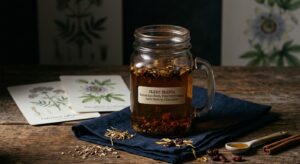
- Store your dried herb blend in a dark glass jar away from heat and light. Lemon balm’s volatile citral compounds are particularly photosensitive and will degrade within weeks if stored in clear containers on a sunny shelf.
- For consistency and convenience, pre-blend a larger batch using a 1.5:1.5:1 ratio of valerian to lemon balm to passionflower by volume, store in a labeled jar, and use 4 teaspoons of the pre-mixed blend per two servings of tea. This ensures a balanced cup every time without re-measuring three separate herbs.