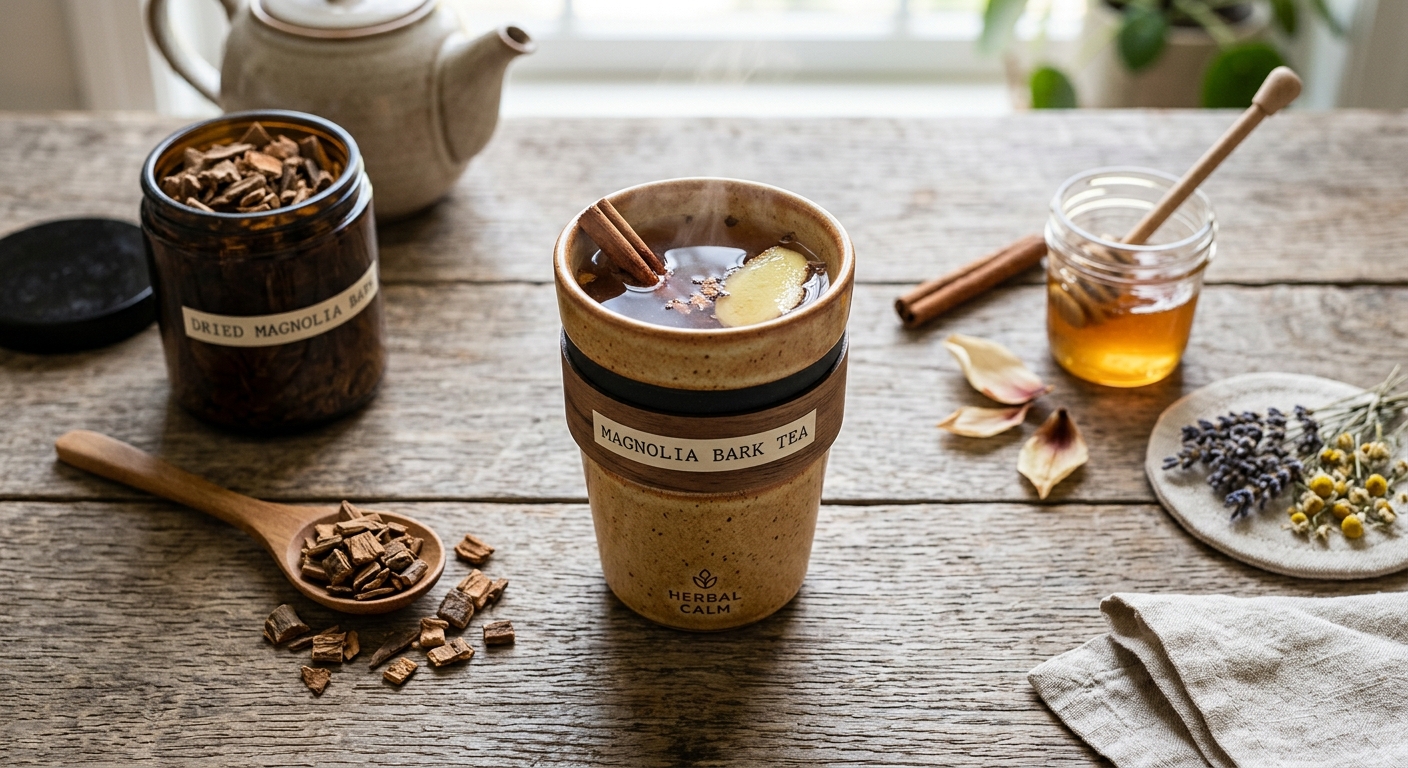
Long before sleep aids lined pharmacy shelves, healers in ancient China were steeping magnolia bark to calm restless minds and soothe tense bodies. Known as Hou Po in Traditional Chinese Medicine (TCM), Magnolia officinalis has been documented in Chinese pharmacopeias for over 2,000 years, where it was prescribed to treat everything from digestive discomfort and emotional unrest to chronic anxiety and insomnia. It was considered one of the most important herbs in the classical TCM repertoire, appearing in foundational formulas like Ban Xia Hou Po Tang, a remedy still used today for anxiety accompanied by a sensation of tightness in the throat or chest.
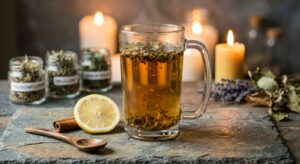
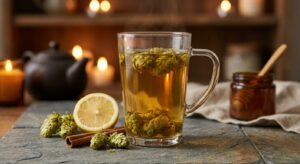
What distinguishes magnolia bark from more familiar sleep herbs like chamomile or lavender is its remarkable potency. The bark contains a concentrated profile of bioactive lignans, particularly honokiol and magnolol, which interact directly with the brain’s GABA and serotonin receptors to produce genuinely measurable reductions in anxiety and improvements in sleep quality. This is not a subtle, gentle floral infusion. Magnolia bark tea is bold, earthy, and slightly bitter with a warm, spicy undertone that speaks to its medicinal heritage. A single cup in the evening is enough to notice its calming effect.
The tree itself is as striking as its medicine. Magnolia officinalis is a large deciduous tree native to the mountains and valleys of central and southern China, bearing enormous creamy-white flowers and thick, aromatic bark that is harvested from mature trees, then dried and processed. In Japan, a closely related species, Magnolia obovata, has been used in similar ways. Today, magnolia bark extract is one of the most researched botanical compounds in sleep science, with a growing body of clinical studies validating what TCM practitioners observed millennia ago.
2
cups
Ingredients
- 2 tspdried magnolia bark pieces or powder
- 480 mlwater (95°C / 203°F)
- —raw honey or maple syrup to taste (optional)
- —a cinnamon stick or slice of fresh ginger (optional, to balance bitterness)
How to Brew
Click on an item below to shop for the recommended items for this recipe on Amazon.
As an Amazon Associate, we earn from qualifying purchases.
- Bring filtered water to 95°C (203°F). If you do not have a temperature-controlled kettle, bring water to a full boil and allow it to rest for 30 to 45 seconds before pouring.
- Add 1 teaspoon of dried magnolia bark per serving to your infuser, strainer, or teapot. If using a fine powder rather than bark pieces, use a fine mesh strainer to prevent sediment in your cup.
- Pour the hot water directly over the bark and cover the vessel with a lid or small saucer. Covering the tea is important as it traps aromatic compounds that would otherwise escape with the steam.
- Steep for 10 to 15 minutes. The longer the steep, the more pronounced the bitterness. Start at 10 minutes on your first brew and adjust to taste from there.
- Remove the bark and pour the deep amber liquid into a warmed mug. If the bitterness is strong, stir in a small amount of raw honey or add a cinnamon stick during the last 3 minutes of steeping to add warmth and natural sweetness.
- Drink approximately 30 to 60 minutes before bed for best results as a sleep aid.
- Measure 2 teaspoons of dried magnolia bark pieces per 480 ml of cold, filtered water. Slightly increase the amount of bark compared to a hot brew, as cold water extracts more slowly and less efficiently.
- Combine the bark and water in a clean glass jar. Stir briefly to make sure all the bark is submerged, then seal the jar with a lid.
- Allow the jar to sit at room temperature for 1 hour, then transfer it to the refrigerator and steep for a further 10 to 14 hours, or overnight.
- Strain the liquid through a fine mesh strainer into a clean container, pressing the bark gently to extract the last of the liquid.
- Pour over ice to serve cold, or gently warm a single serving on the stovetop over low heat without boiling to enjoy it warm. Store remaining cold brew in the refrigerator for up to 48 hours.
- Sweeten with a small amount of honey dissolved while warm, or stir in a touch of maple syrup if serving cold.
- Add 2 teaspoons of dried magnolia bark pieces to a small saucepan. Pour in 600 ml of cold, filtered water. Starting with cold water and a slow heat-up helps draw compounds out of the bark before the water reaches boiling point.
- Place the saucepan over medium heat and bring the water to a gentle boil uncovered, watching carefully. As soon as it reaches a boil, reduce the heat to a steady simmer.
- Simmer uncovered or partially covered for 20 to 30 minutes, allowing the liquid to reduce by approximately one third. You will notice the water deepening to a rich reddish-brown and taking on the full resinous aroma of the bark.
- Remove from heat and allow the decoction to rest for 5 minutes off the burner so the remaining volatile aromatic compounds can settle back into the liquid.
- Strain through a fine mesh strainer into a warmed mug or a heat-safe pouring vessel, pressing the bark firmly to extract the remaining liquid.
- The resulting decoction will be significantly stronger and more bitter than a standard infusion. Dilute with additional hot water to taste, and sweeten with honey and a pinch of cinnamon or dried ginger to round out the intensity.
Health Benefits
Honokiol and magnolol both modulate GABA-A receptors, the same pathway targeted by prescription sleep medications, without the risk of dependency. Clinical research and animal studies show that these compounds reduce sleep latency and increase time spent in slow-wave and REM sleep stages.
Multiple human clinical trials have found that magnolia bark extract significantly reduces self-reported anxiety and tension, particularly the kind associated with an overactive, worried mind at night. Its dual action on GABA and serotonin receptors provides a broader anxiolytic effect than herbs that act on only one pathway.
Studies have found that honokiol suppresses excessive cortisol secretion, which is a key driver of stress-related insomnia and anxiety. By dampening the HPA axis stress response, magnolia bark helps break the cycle of elevated evening cortisol that prevents the nervous system from downregulating before sleep.
In TCM, Hou Po has long been prescribed for digestive stagnation, bloating, and abdominal distension caused by stress. Modern research supports this use, as magnolol demonstrates anti-spasmodic effects on smooth muscle tissue in the gut, helping to relieve tension-related digestive discomfort.
Both honokiol and magnolol are potent free radical scavengers that cross the blood-brain barrier with ease, providing antioxidant protection directly to neural tissue. Emerging research suggests these compounds may help protect against neuroinflammation and oxidative damage associated with age-related cognitive decline.
🧪 Key Bioactive Compounds
The Science Behind Magnolia Bark
The therapeutic power of magnolia bark rests primarily on two closely related lignans: honokiol and magnolol. Both compounds are found in high concentrations in the bark of Magnolia officinalis and share a structural similarity that allows them to cross the blood-brain barrier with remarkable ease, a property that distinguishes them from many other botanical compounds. Once in the brain, honokiol acts as a positive allosteric modulator of GABA-A receptors, the same class of receptors targeted by benzodiazepine drugs like diazepam. However, unlike pharmaceutical GABA modulators, honokiol appears to act at a different binding site, which may explain why it produces calming and sleep-promoting effects without the tolerance buildup, next-day grogginess, or dependency risk associated with prescription medications.
Magnolol complements honokiol’s action by also engaging with 5-HT1A serotonin receptors, adding a mood-stabilizing and anxiolytic dimension that pure GABA modulators lack. Together, these two compounds create what researchers describe as a synergistic effect that is greater than either compound alone. A notable 2012 study published in Natural Product Communications demonstrated that honokiol increased both REM and non-REM sleep duration in animal models, while a human clinical trial using a standardized magnolia bark extract reported significant reductions in anxiety and improvements in sleep quality scores compared to placebo. The bark’s sesquiterpene beta-eudesmol further contributes by acting as a muscle relaxant, addressing the physical component of tension that often accompanies stress-related insomnia.
Magnolia bark’s effect on cortisol is another well-documented mechanism. Chronic stress elevates evening cortisol levels, which in turn suppresses melatonin production and delays sleep onset. Honokiol has been shown to inhibit excessive cortisol secretion by moderating HPA axis activity, helping restore the natural hormonal rhythm that governs the sleep-wake cycle. This cortisol-lowering action, combined with direct GABAergic sedation and serotonergic mood support, makes magnolia bark one of the most pharmacologically sophisticated botanical sleep aids currently studied. For those whose insomnia is rooted in stress and anxiety rather than a circadian rhythm disorder, the science strongly supports its traditional use.
Brewing Tips
- Source your magnolia bark from a reputable supplier who sells food-grade or TCM-grade Hou Po, as quality varies significantly and some commercial products contain very low concentrations of the active lignans.
- Start with a smaller amount of bark on your first brew, around half a teaspoon per cup, to assess your personal sensitivity before working up to a full therapeutic serving.
- Never brew magnolia bark in a reactive metal vessel. Use glass, ceramic, or stainless steel, as reactive metals can interact with the bark’s tannins and alter both the flavor and the chemical profile of the brew.