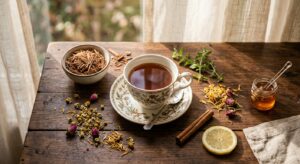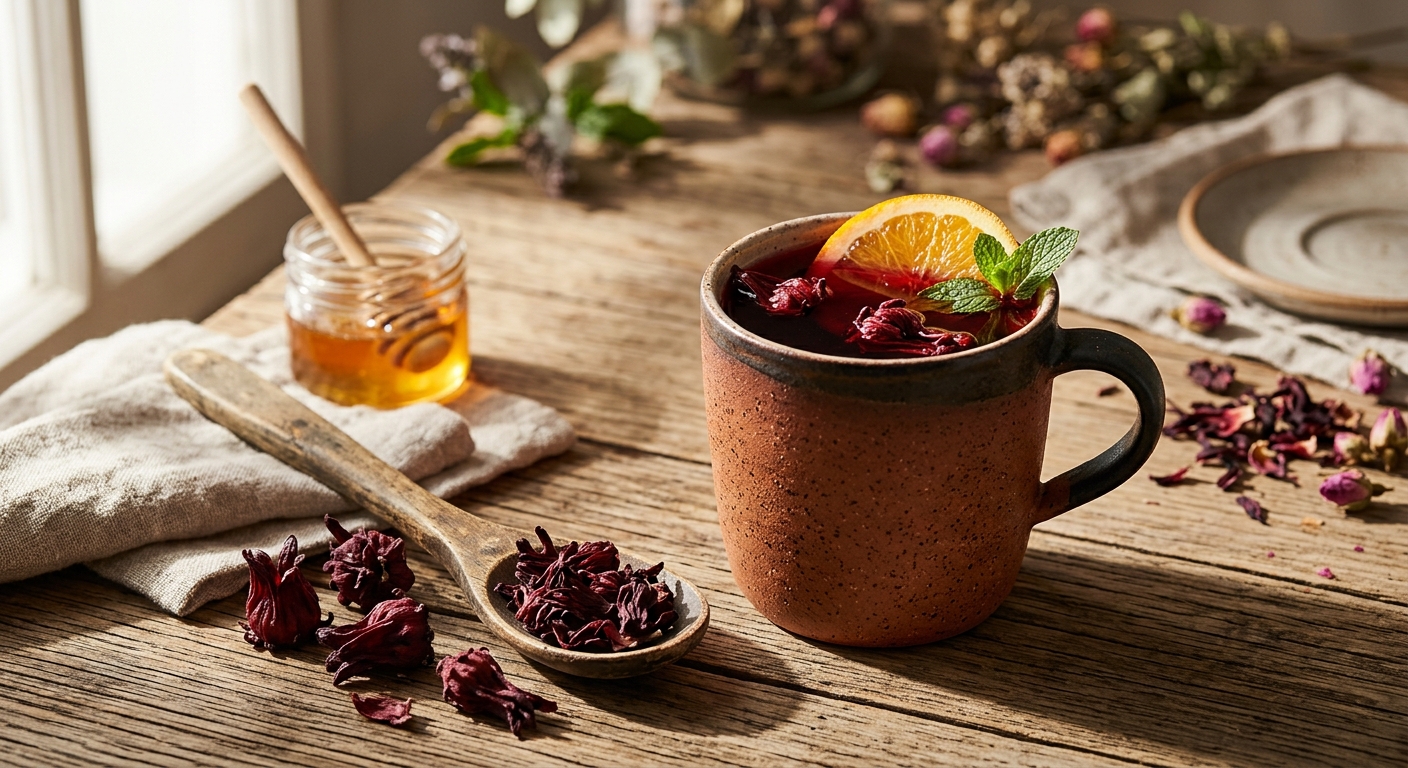
Few herbal teas announce themselves as boldly as hibiscus. The moment dried hibiscus calyces meet hot water, the liquid transforms into a jewel-bright crimson that looks almost too beautiful to drink. Known as karkade in Egypt and Sudan, agua de Jamaica in Mexico, bissap in West Africa, and sorrel in the Caribbean, this flower has been a beloved beverage across warm-climate cultures for thousands of years. Ancient Egyptians reportedly served it to pharaohs, valuing it both as a refreshment in intense desert heat and as a remedy for heart and nerve conditions. Today it remains the national drink of Egypt, served sweet and chilled at celebrations and everyday meals alike.
The part of the hibiscus plant used in tea is not the petal itself but the fleshy calyx, the protective cup-like structure that cradles the flower bud. After the bloom falls away, the calyx swells and deepens to a vivid burgundy, and it is at this point that it is harvested and dried. This calyx is packed with organic acids, polyphenols, and natural pigments that give hibiscus tea its signature tartness, color, and impressive nutritional profile. The flavor is often compared to tart cranberry or pomegranate, with a refreshing acidity that makes it equally enjoyable hot or iced.
Beyond its cultural richness and sensory appeal, hibiscus has attracted serious scientific attention in recent decades. Studies have examined its effects on blood pressure, cholesterol, blood sugar regulation, and immune function, with several well-designed trials producing encouraging results. Whether you are drawn to hibiscus for its dazzling appearance, its tangy flavor, its deep roots in world herbal traditions, or its potential to support your health, this is one herbal tea that earns a permanent place in your pantry.
2
cups
Ingredients
- 2 tbspdried hibiscus calyces
- 480 mlwater (90 to 95°C / 194 to 203°F)
- —raw honey or cane sugar to taste (optional)
- —fresh lime or orange slice for garnish (optional)
How to Brew
Click on an item below to shop for the recommended items for this recipe on Amazon.
As an Amazon Associate, we earn from qualifying purchases.
- Heat water to 90 to 95°C (194 to 203°F). If you do not have a temperature-controlled kettle, bring water to a full boil and let it rest for 60 to 90 seconds before using.
- Place 1 tablespoon of dried hibiscus calyces per serving into a tea infuser, strainer basket, or teapot. The calyces are fairly large, so a roomy infuser works best to allow full water contact.
- Pour the hot water over the hibiscus calyces and begin your timer. Watch the water turn a vivid crimson within the first 30 seconds.
- Steep for 5 to 7 minutes. Taste at the 5-minute mark. A shorter steep delivers a lighter, more delicate tartness; the full 7 minutes produces a bolder, more intensely sour cup.
- Remove the infuser or strain out the calyces. Sweeten with honey or cane sugar while the tea is still hot, as sweetener dissolves most easily at this stage. Squeeze in a little lime juice if desired, and serve immediately.
- Measure 2 tablespoons of dried hibiscus calyces per 480 ml of cold, filtered water. Because cold water extracts more slowly and gently, you can increase this to 2.5 tablespoons if you prefer a bolder flavor.
- Combine the hibiscus and cold water in a glass jar or pitcher. Stir briefly to ensure all the calyces are submerged. Do not add sweetener at this stage, as it can encourage fermentation during the long steep.
- Cover the jar with a lid or plastic wrap and place it on the counter for 30 minutes to allow the initial color extraction to begin, then transfer it to the refrigerator.
- Steep in the refrigerator for 8 to 12 hours, or overnight. The longer end of the range is ideal for a deeper, more complex flavor without bitterness.
- Strain the calyces through a fine mesh strainer, pressing gently to extract the last of the liquid. Sweeten to taste, add ice cubes, and serve over ice. A sprig of fresh mint or a slice of blood orange makes a beautiful garnish.
- Combine 6 tablespoons of dried hibiscus calyces with 480 ml of water (90 to 95°C / 194 to 203°F) in a small saucepan. The higher ratio of herb to water is what creates the concentrate.
- Add 3 to 4 tablespoons of cane sugar or honey directly to the saucepan and stir to dissolve. The sweetener helps balance the intense acidity of the concentrate and preserves it slightly longer in the fridge.
- Allow the hibiscus to steep off the heat for 15 to 20 minutes, stirring once halfway through. The liquid will be a deep, almost opaque ruby-black at this concentration.
- Strain through a fine mesh strainer or cheesecloth into a clean glass jar or bottle, pressing the calyces firmly to extract all the liquid. Discard the spent calyces.
- Allow the concentrate to cool to room temperature, then seal and refrigerate. To serve, mix one part concentrate with two to three parts still or sparkling water over ice, adjusting the ratio to your taste preference.
Health Benefits
Hibiscus calyces contain a meaningful concentration of vitamin C alongside polyphenols that work synergistically to support white blood cell activity and help neutralize the oxidative stress that can suppress immune defenses during illness.
Multiple randomized controlled trials, including a notable 2010 study published in the Journal of Nutrition, found that daily consumption of hibiscus tea significantly reduced systolic blood pressure in adults with mildly elevated levels. The anthocyanins are thought to act as natural ACE inhibitors, relaxing blood vessel walls.
Hibiscus ranks among the highest antioxidant-scoring herbal teas, with its anthocyanins and phenolic acids actively scavenging free radicals and reducing markers of oxidative stress. This systemic protection may lower long-term risk for chronic disease.
Several studies have found that regular hibiscus consumption is associated with reduced LDL cholesterol and triglyceride levels, particularly in people with metabolic syndrome. Hibiscus acid and chlorogenic acid are thought to play a role in inhibiting lipid absorption and synthesis.
Traditional medicine systems across Africa, the Middle East, and Central America have long used hibiscus as a febrifuge, a natural aid for reducing fever and cooling the body in hot climates. Modern research suggests this effect may relate to its mild diuretic properties and anti-inflammatory action.
🧪 Key Bioactive Compounds
The Science Behind Hibiscus
The brilliant crimson color of hibiscus tea is not merely ornamental. It is produced by a family of water-soluble pigments called anthocyanins, principally delphinidin-3-sambubioside and cyanidin-3-sambubioside. These compounds belong to the broader flavonoid class and are among the most studied antioxidants in plant medicine. In the body, they work by donating electrons to unstable free radical molecules, neutralizing them before they can damage cell membranes, DNA, and proteins. Clinical research has consistently linked high anthocyanin intake to reduced markers of systemic inflammation, including C-reactive protein (CRP), which is a key driver of both cardiovascular disease and immune dysregulation.
The cardiovascular benefits of hibiscus have been investigated in multiple controlled human trials. A frequently cited 2010 randomized trial published in the Journal of Nutrition demonstrated that participants who drank three cups of hibiscus tea daily for six weeks experienced a statistically significant reduction in systolic blood pressure compared to the placebo group. Researchers attribute this to the anthocyanins’ apparent ability to inhibit angiotensin-converting enzyme (ACE), a key regulator of blood vessel tension. This is the same mechanism targeted by a class of common pharmaceutical antihypertensives. Additionally, hibiscus’s organic acids, particularly hibiscus acid and chlorogenic acid, appear to interfere with lipid absorption pathways, which may account for the observed improvements in LDL cholesterol and triglyceride levels seen in several metabolic syndrome studies.
From an immune support perspective, hibiscus contributes through two distinct pathways. First, its naturally occurring ascorbic acid (vitamin C) provides direct nutritional support for immune cell synthesis and function, including the production of lymphocytes and the maintenance of epithelial barriers, the body’s first line of defense against pathogens. Second, the polyphenol protocatechuic acid, a metabolite formed when anthocyanins are broken down in the gut, has demonstrated antimicrobial properties against certain bacterial strains in laboratory settings, as well as anti-inflammatory effects that help regulate the immune response rather than simply stimulating it. Together, these compounds make hibiscus one of the more scientifically credible options in the immunity tea category.
Brewing Tips
- Store dried hibiscus calyces in an airtight container away from light and heat. Properly stored, they retain their color and potency for up to two years, though the best flavor comes within the first year of purchase.
- Do not steep hibiscus in fully boiling water for extended periods. Prolonged exposure to very high heat can degrade anthocyanins and introduce a slightly bitter, astringent aftertaste that masks the tea’s natural fruitiness.
- If you find hibiscus too tart on its own, try balancing it with a small piece of fresh ginger and a half teaspoon of honey. The ginger adds warmth and complexity while the honey rounds out the acidity without making the tea overly sweet.