Ear infections have plagued humanity for thousands of years, and long before antibiotics became the standard of care, herbalists turned to the plant world for relief. Mullein (Verbascum thapsus) holds a particularly honored place in this tradition. Native American tribes including the Potawatomi and Mohegan used mullein leaf and flower infusions to address respiratory and ear complaints, often combining them with warming, antimicrobial herbs to amplify the effect. Garlic (Allium sativum) has an equally ancient pedigree, revered in Ayurvedic, Traditional Chinese, and Mediterranean folk medicine as one of nature’s most potent antibacterial agents. Together, these herbs form the heart of a tea designed not just to comfort, but to actively support the immune response.
This blend also draws on echinacea (Echinacea purpurea), the celebrated prairie herb of the Great Plains whose root and aerial parts have been the subject of more clinical research than almost any other medicinal herb. Echinacea’s role here is systemic: it primes immune cells, stimulates lymphatic activity, and helps the body mount a more effective defense against the bacterial or viral agents often behind ear infections. A touch of ginger adds both a gentle warming quality and its own considerable anti-inflammatory firepower, making every sip feel purposeful as well as soothing.
It is important to note that this tea is intended as a supportive measure alongside, not a replacement for, professional medical care. Ear infections in children especially can escalate quickly, and persistent pain, fever, or discharge always warrants a visit to a healthcare provider. That said, this warming, fragrant blend has a genuine place in any holistic wellness toolkit as a way to nurture the immune system, reduce systemic inflammation, and keep the body as comfortable as possible during recovery.
2
cups
Ingredients
- 2 tspdried mullein leaves
- 1 tspdried echinacea root or aerial parts
- 1 clovefresh garlic, thinly sliced
- 3 slicesfresh ginger root (about 1cm thick each)
- 480 mlwater (95°C / 203°F)
- —raw honey to taste (optional)
- —a squeeze of fresh lemon juice (optional)
How to Brew
Click on an item below to shop for the recommended items for this recipe on Amazon.
As an Amazon Associate, we earn from qualifying purchases.
- Bring filtered water to 95°C (203°F). If you do not have a temperature-controlled kettle, bring water to a full boil and allow it to rest for 60 seconds.
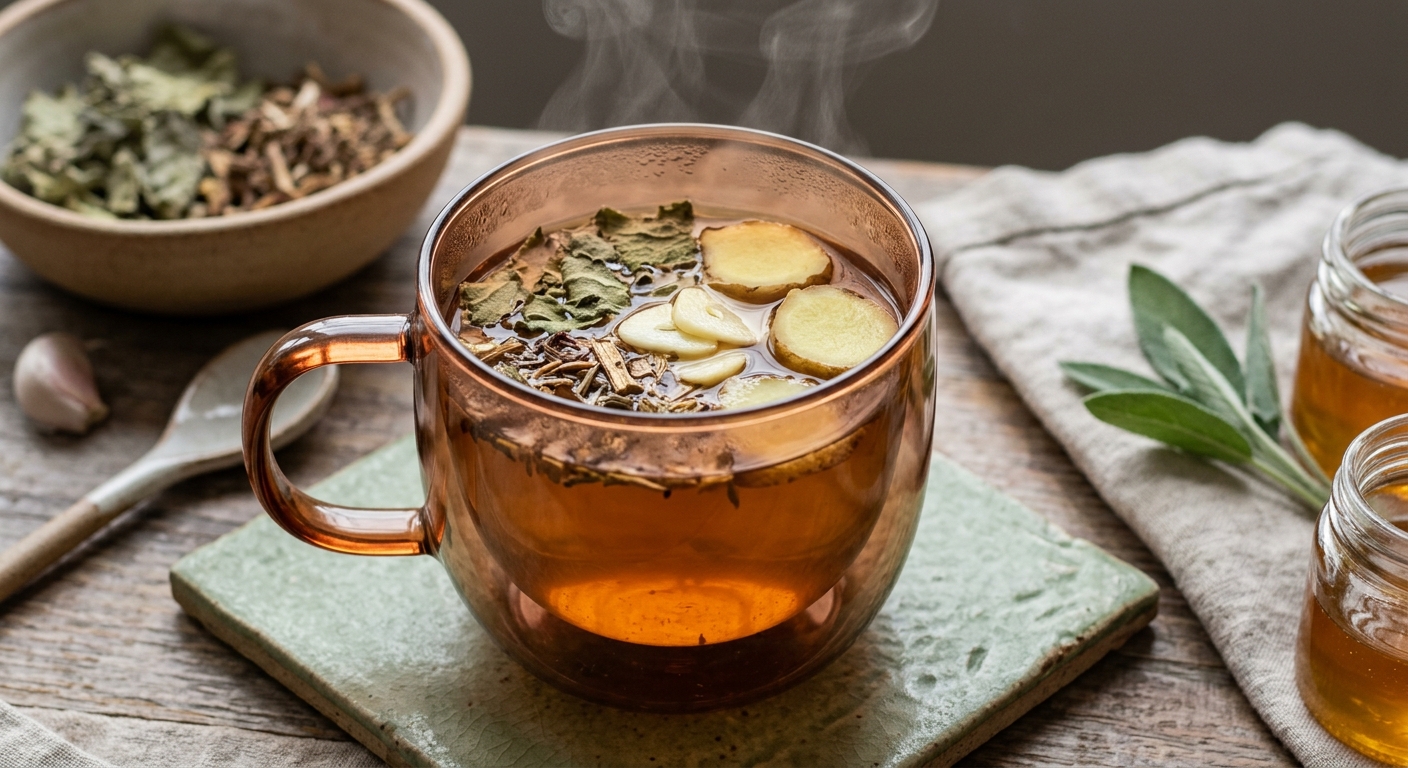
- Thinly slice one fresh garlic clove and three 1cm-thick rounds of fresh ginger. Add these directly to your teapot or infuser along with 2 teaspoons of dried mullein leaves and 1 teaspoon of dried echinacea.
- Pour the hot water over all the herbs. Cover the pot or place a small saucer over your mug immediately to prevent the volatile oils in ginger and garlic from escaping with the steam.
- Steep for 10 to 15 minutes. The longer end of this range yields a more potent, more bitter cup. Start with 10 minutes on your first brew and adjust to taste.
- Strain carefully through a fine-mesh strainer lined with cheesecloth to remove all mullein fibers, which can irritate the throat if swallowed. Discard the spent herbs.
- Add raw honey and a squeeze of fresh lemon juice if desired. Drink while warm, two to three times daily during acute illness.
- Prepare your herbs as for the hot brew: thinly slice one fresh garlic clove and three rounds of ginger, and measure out your mullein and echinacea. Place everything into a clean glass jar.
- Pour 480ml of cold, filtered water over the herbs. Do not use warm or hot water for this method. Stir gently to ensure all plant material is submerged.
- Cover the jar with a lid or a clean cloth secured with a rubber band. Leave the jar at room temperature for 1 hour to begin the extraction, then transfer it to the refrigerator.
- Cold steep for a total of 8 to 12 hours, or overnight. The lower temperature slows extraction and produces a milder, less harsh flavor with less sharp garlic pungency.
- Strain thoroughly through a fine-mesh strainer lined with cheesecloth to remove all mullein leaf fibers and fine particles. Press gently on the spent herbs to release remaining liquid.
- Refrigerate the strained tea for up to 48 hours. Warm individual portions gently on the stovetop or in a microwave before drinking, or sip cold if preferred. Add honey and lemon to each cup as you serve it.
- Combine the sliced garlic, ginger, and echinacea root in a small saucepan with 600ml of cold filtered water. Starting in cold water helps draw compounds out of dense root material more effectively than plunging roots into boiling water.
- Bring the mixture to a full rolling boil over medium-high heat, then immediately reduce the heat to a gentle simmer. The water should bubble steadily but not aggressively.
- Simmer uncovered for 20 to 25 minutes. You will notice the liquid reducing and deepening in color. The aroma will be strong and pungent, a sign that active compounds are being released.
- In the final 5 minutes of simmering, add the dried mullein leaves to the pot. Mullein is delicate and should not be boiled at full heat for extended periods, so this late addition protects its more fragile constituents.
- Remove from heat and allow the decoction to cool for 3 to 5 minutes. Strain twice through a fine-mesh strainer lined with cheesecloth to remove all particulate matter, pressing the spent herbs firmly.
- The yield will be approximately 400ml of concentrated, deeply flavorful tea. Sweeten with raw honey once cooled slightly below 60°C (140°F) to preserve honey’s own antimicrobial enzymes. Drink one cup twice daily.
Health Benefits
Fresh garlic’s allicin has been shown in multiple laboratory studies to inhibit the growth of Streptococcus pneumoniae and Haemophilus influenzae, two bacteria frequently implicated in otitis media (middle ear infection). While human clinical trials specifically on ear infections are limited, garlic’s broad antimicrobial activity is among the best-supported of any culinary herb.
Echinacea’s alkylamides and polysaccharides have been shown in randomized clinical trials to reduce the duration and severity of upper respiratory tract infections by 1.4 days on average. This immune-stimulating effect is particularly relevant because ear infections frequently follow or accompany viral upper respiratory illness.
Ginger’s 6-gingerol and its related compound 6-shogaol have been shown to downregulate NF-kB signaling, a central pathway in inflammatory response. By dampening systemic inflammation, ginger tea may help reduce the pressure and pain sensations associated with middle ear inflammation.
Mullein’s saponins and verbascoside work together to thin congested mucus and calm inflamed mucous membranes along the respiratory tract and Eustachian tube. Clearing Eustachian tube congestion is key to reducing the pressure buildup that causes much of the pain in middle ear infections.
The combination of verbascoside from mullein, gingerols from ginger, and the flavonoids present in echinacea delivers a meaningful antioxidant load, helping to neutralize the oxidative stress that intensifies during acute infection and slows tissue recovery.
🧪 Key Bioactive Compounds
The Science Behind Mullein
The science behind this ear infection support tea centers on two complementary mechanisms: direct antimicrobial activity and immune modulation. Garlic’s most celebrated compound, allicin, is not present in the intact clove but is produced enzymatically when the clove is cut or crushed, triggering the conversion of alliin by the enzyme alliinase. Once formed, allicin is a potent inhibitor of microbial thiol-containing enzymes, disrupting the metabolic function of a wide range of bacteria. Studies published in journals including Antimicrobial Agents and Chemotherapy have confirmed garlic extract’s inhibitory activity against respiratory pathogens such as Streptococcus pneumoniae and Haemophilus influenzae, both of which play a role in otitis media. Slicing the garlic thinly and allowing it to rest for a few minutes before adding hot water gives the alliinase reaction time to proceed, maximizing allicin yield.
Echinacea’s immunological action is better understood today than it was a generation ago. The alkylamides in Echinacea purpurea root bind to cannabinoid receptor type 2 (CB2) on immune cells, triggering the activation of macrophages and natural killer cells. Independently, the herb’s high-molecular-weight polysaccharides, including arabinogalactans, stimulate phagocytic activity and induce the production of interleukin-1 (IL-1) and tumor necrosis factor-alpha (TNF-alpha) in controlled quantities. A 2015 Cochrane-adjacent meta-analysis of 24 randomized trials found that echinacea preparations reduced the odds of developing a cold by 58% and shortened illness duration by 1.4 days. While colds and ear infections are not identical, the Eustachian tube connection is clinically relevant: most pediatric otitis media cases follow a viral upper respiratory infection, making immune stimulation at that stage a logical preventive and supportive measure.
Ginger’s contribution is primarily anti-inflammatory. Its phenolic compounds, particularly 6-gingerol and the heat-transformed 6-shogaol, inhibit the COX-2 enzyme pathway and suppress NF-kB transcription factor activation, two mechanisms shared with pharmaceutical non-steroidal anti-inflammatory drugs (NSAIDs) but acting through gentler, multi-target pathways. A 2015 review in the International Journal of Preventive Medicine confirmed ginger’s broad anti-inflammatory and antioxidant effects across multiple organ systems. Mullein rounds out the blend with verbascoside and triterpenoid saponins that reduce mucosal irritation and support the movement of congested fluids, addressing one of the root physical causes of the pressure and pain experienced during middle ear infections.
Brewing Tips
- Always use a cheesecloth-lined strainer when working with mullein leaves. The tiny hairs on dried mullein can pass through a standard mesh strainer and cause throat irritation if swallowed.
- Slice or crush your fresh garlic and let it sit on the cutting board for 5 to 10 minutes before adding it to the brew. This waiting period allows the alliinase enzyme to fully convert alliin into allicin, the compound responsible for most of garlic’s antimicrobial potency.
- If the flavor of the decoction or hot brew is too sharp, add a few extra slices of ginger and increase the honey. Do not reduce the garlic or echinacea quantities, as those provide the core therapeutic value of the blend.
- For best results during acute illness, drink two to three cups daily for five to seven days. Echinacea is generally recommended for short-term use of no longer than 8 to 10 consecutive days, after which a break of equal length is advised before resuming.
- Store any leftover cold brew or decoction in a sealed glass jar in the refrigerator and consume within 48 hours. The antimicrobial compounds in garlic degrade relatively quickly once extracted into water, so freshness matters for both flavor and potency.