Financial stress is one of the most persistent and physically damaging forms of anxiety modern people experience. Unlike situational worry, money stress often operates as a chronic background hum, elevating cortisol levels day after day and disrupting sleep, digestion, and clear thinking. Herbalists and traditional medicine practitioners across cultures have long recognized that the nervous system needs active support during prolonged periods of stress, and plant medicine offers some of the most time-tested tools available for exactly this purpose.
This blend draws on three pillars of herbal stress relief. Ashwagandha (Withania somnifera), revered for over 3,000 years in Ayurvedic medicine as a rasayana or rejuvenating tonic, acts as an adaptogen that helps the body regulate its stress response over time. Lemon balm (Melissa officinalis), a beloved nervine from the Mediterranean herbal tradition, has been used since the Middle Ages to lift the spirits and calm the mind. Passionflower (Passiflora incarnata), used by Indigenous peoples of North America and later adopted by European herbalists, brings a quieting quality that is especially useful when anxious thoughts spiral at night or before difficult financial conversations.
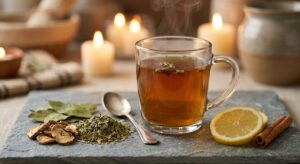
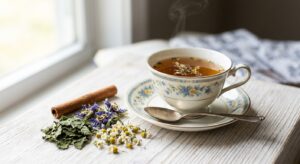
What makes this particular combination so well suited to financial stress is its layered action: the ashwagandha works on the adrenal and hormonal level to reduce chronic cortisol output, the lemon balm addresses the immediate mental restlessness and irritability that money worries produce, and the passionflower soothes the racing mind that makes it impossible to sleep or think clearly. Brewed together, they produce a warm, mildly herbal cup with grassy citrus notes and a gentle earthy undertone, a tea that signals safety to a nervous system that has been running on high alert for far too long.
2
cups
Ingredients
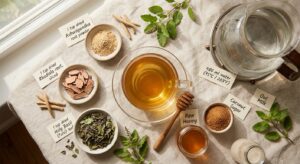
- 1 tspashwagandha root powder or sliced dried root
- 1.5 tspdried lemon balm leaves
- 1 tspdried passionflower herb
- 480 mlwater (95°C / 203°F for hot brew)
- —raw honey or maple syrup to taste (optional)
- —a thin slice of fresh ginger (optional, for warmth and digestion)
How to Brew
Click on an item below to shop for the recommended items for this recipe on Amazon.
As an Amazon Associate, we earn from qualifying purchases.
- If using ashwagandha root slices rather than powder, place them in a small saucepan with 500 ml of water and bring to a gentle simmer over medium-low heat. Simmer for 10 minutes uncovered to decoct the root before adding the delicate herbs.
- If using ashwagandha powder, bring your water to 95°C (203°F) in a kettle and add all three herbs directly to a teapot or infuser: 1 tsp ashwagandha powder, 1.5 tsp dried lemon balm, and 1 tsp dried passionflower.
- Pour the hot water over the herbs (or strain the simmered ashwagandha water over the lemon balm and passionflower in a teapot). Cover the vessel with a lid or small plate to trap volatile aromatic oils, especially those from the lemon balm.
- Steep for 12 to 15 minutes. The longer steep time is important for the ashwagandha to fully infuse, while lemon balm and passionflower remain pleasant even at this duration without becoming harsh.
- Strain into warmed mugs using a fine-mesh strainer to catch any powder residue. Sweeten with raw honey if desired, and sip slowly in a quiet space away from financial screens or paperwork.
- Measure 1 tsp ashwagandha root powder (cold brew works best with powder rather than root slices for full extraction without heat), 1.5 tsp dried lemon balm, and 1 tsp dried passionflower into a clean glass jar.
- Pour 500 ml of room temperature filtered water over the herbs. Stir gently with a long spoon to ensure the ashwagandha powder is fully distributed and not clumping at the bottom.
- Cover the jar with a lid or cloth secured with a rubber band and leave at room temperature for 1 hour to begin extraction, then transfer to the refrigerator.
- Allow to cold brew for 10 to 12 hours, or overnight. The slow, cold extraction softens the earthy bitterness of ashwagandha while preserving the fresh citrus brightness of lemon balm in a way that heat cannot.
- Strain through a fine-mesh strainer lined with a piece of muslin cloth or a paper coffee filter to remove fine powder particles. Serve over ice in tall glasses, or drink chilled straight from the jar. Stir in a small amount of honey dissolved in warm water if you prefer it sweetened.
- Scale up the recipe: combine 3 tsp ashwagandha root powder or 4 tsp sliced dried root, 4 tsp dried lemon balm, and 3 tsp dried passionflower in a medium saucepan with 750 ml of cold filtered water.
- Bring to a gentle boil over medium heat, then reduce to a low simmer. Simmer uncovered for 20 to 25 minutes, allowing the liquid to reduce by roughly one third. This concentrates the withanolides from the ashwagandha and creates a potent base.
- Remove the saucepan from heat and cover with a lid. Allow the lemon balm and passionflower to continue steeping in the residual heat for an additional 10 minutes to extract their volatile oils without burning off their delicate aromatics.
- Strain the concentrate through a fine-mesh strainer into a glass storage jar, pressing the spent herbs firmly with the back of a spoon to extract every last drop. Allow to cool to room temperature before sealing.
- To serve, dilute 60 to 80 ml of concentrate with 180 ml of hot water for a warm cup, or with cold sparkling water and ice for a calming fizzy drink. Sweeten each serving individually to taste. Store the jar in the refrigerator and use within 5 days.
Health Benefits
Multiple double-blind, placebo-controlled human trials have demonstrated that ashwagandha root extract significantly reduces serum cortisol levels after 8 to 12 weeks of regular use. A landmark 2012 study published in the Indian Journal of Psychological Medicine found a 27.9% reduction in cortisol in participants taking ashwagandha compared to placebo.
Lemon balm has been shown in clinical trials to reduce anxiety scores and improve mood within a single dose, with effects visible within 1 to 3 hours. Its rosmarinic acid content increases available GABA in the brain, producing a calming effect without sedation during the day.
Passionflower’s flavonoids, particularly vitexin and chrysin, have demonstrated sedative and sleep-promoting effects in both animal and human studies. A randomized controlled trial found that passionflower tea significantly improved subjective sleep quality compared to placebo, making it especially valuable when financial worry disrupts nighttime rest.
Chronic stress impairs memory, decision-making, and focus, which makes navigating financial challenges even harder. Ashwagandha has been shown in clinical studies to improve immediate and general memory, executive function, and attention in adults under chronic stress, helping restore the mental clarity needed for sound financial thinking.
Financial anxiety frequently manifests as nausea, stomach tension, and irritable digestion. Lemon balm has demonstrated antispasmodic effects on smooth muscle tissue and has been used traditionally to relieve stress-related stomach upset, while passionflower’s muscle-relaxing properties further support a calm digestive response.
🧪 Key Bioactive Compounds
The Science Behind Ashwagandha
The science behind this blend begins with the hypothalamic-pituitary-adrenal (HPA) axis, the body’s central stress regulation system. When financial worry becomes chronic, the HPA axis becomes dysregulated, producing excess cortisol that damages sleep, immunity, memory, and mood over time. Ashwagandha’s withanolides directly address this mechanism. Research published in peer-reviewed journals has shown that these steroidal lactones inhibit stress-induced increases in cortisol by acting on key regulatory proteins in the adrenal pathway, effectively recalibrating the body’s alarm system rather than simply suppressing symptoms.
Lemon balm approaches stress relief from a different biochemical angle. Its primary active compound, rosmarinic acid, inhibits GABA transaminase, the enzyme responsible for breaking down gamma-aminobutyric acid (GABA) in the synaptic cleft. The result is a higher concentration of this naturally calming neurotransmitter in the brain, producing an effect that is pharmacologically similar in principle to benzodiazepine medications but far milder and without the risks of dependence or cognitive impairment. Human trials using standardized lemon balm extract have demonstrated measurable reductions in anxiety and improvements in mood within 60 minutes of a single dose.
Passionflower completes the trio with its own GABA-modulating action, this time through direct binding of its flavonoid compounds, particularly vitexin, isovitexin, and chrysin, to GABA-A receptor sites in the central nervous system. This overlapping but distinct mechanism creates a complementary effect with lemon balm rather than simple redundancy, covering more receptor subtypes and producing a broader calming influence. Together, these three plants address financial stress from the hormonal level downward through the neurotransmitter level to the immediate sensory and emotional experience, making this blend one of the most scientifically coherent combinations in the herbal anxiety toolkit.
Brewing Tips
- Brew this tea as part of a deliberate financial wellness ritual: set aside 20 minutes each morning or evening to drink it without screens, allowing the herbs time to work and the pause itself to reset your nervous system before or after engaging with money tasks.
- If you find the earthy bitterness of ashwagandha root powder too strong, switch to a standardized ashwagandha root extract capsule taken separately and brew only the lemon balm and passionflower as your tea. You will still benefit from both actions, just through different delivery methods.
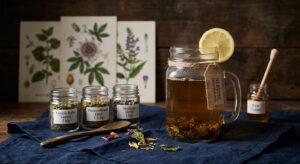
- Store your dried herbs in separate airtight glass jars away from light and heat. Pre-mixing them into a blended jar is convenient but can cause the volatile oils of lemon balm to diminish faster when stored next to the denser ashwagandha root material.