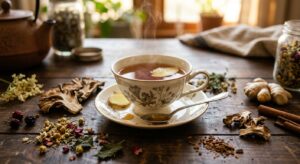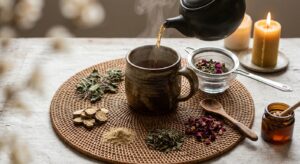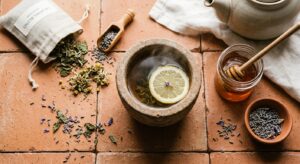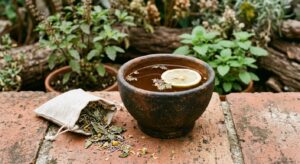
In an age where the average adult spends more than seven hours a day in front of screens, the nervous system rarely gets a true pause. The blue light, the constant context-switching, the low-grade anxiety of an always-on inbox, all of it accumulates in ways that feel increasingly difficult to shake. Digital Detox Herbal Tea was crafted as an antidote to exactly that experience, drawing on centuries-old plant medicine to help the body and mind genuinely decompress. This is not just a pleasant evening drink; it is a deliberate act of stepping away.
The blend centers on lemon balm, a fragrant member of the mint family that has been treasured since at least the Middle Ages for its ability to lift the spirits and quiet a restless mind. Medieval monks grew it in monastery gardens and called it the “gladdening herb.” Paired with passionflower, a vine native to the Americas whose intricate blooms were used by Indigenous healers and later adopted into European herbalism for nervousness and sleeplessness, the blend addresses both the mental chatter and the physical tension that screen overuse creates. Eyebright, a small wildflower with a long history in European folk medicine for soothing tired and strained eyes, completes the trio with a gentle astringency that feels clarifying in every sense.
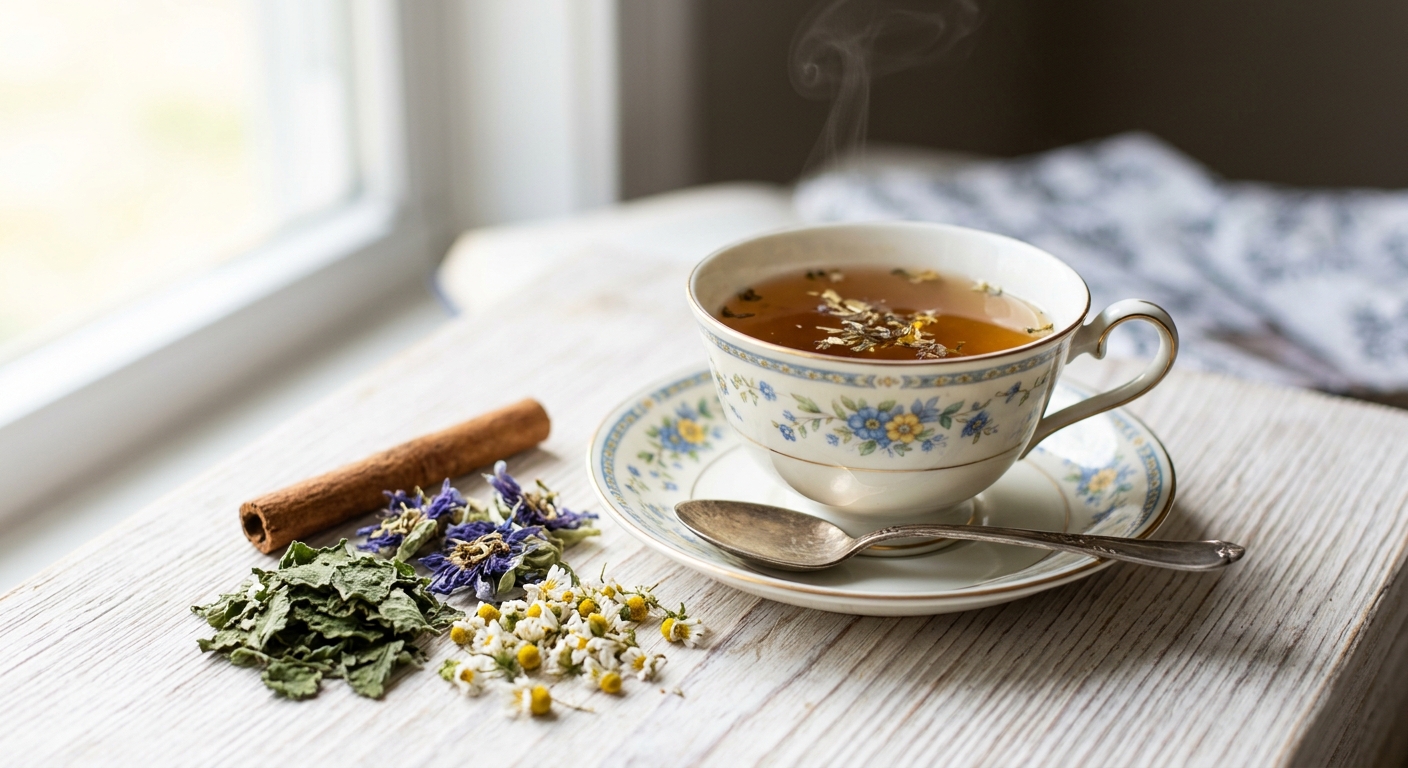
Together, these three herbs create a cup that tastes like a countryside walk you forgot to take. The flavor is bright and herbaceous with a soft floral undertone, and the effect, supported by a growing body of research, is a genuine reduction in perceived stress and nervous agitation. Whether you brew it hot as a winding-down ritual, cold as a refreshing midday reset, or as a sun-steeped slow infusion, this tea is best sipped away from your phone, your laptop, and anything with a notification badge.
2
cups
Ingredients
- 2 tspdried lemon balm leaves
- 1 tspdried passionflower herb
- 0.5 tspdried eyebright herb
- 480 mlwater (90°C / 194°F)
- —raw honey or agave to taste (optional)
- —thin slice of fresh lemon (optional garnish)
How to Brew
Click on an item below to shop for the recommended items for this recipe on Amazon.
As an Amazon Associate, we earn from qualifying purchases.
- Bring fresh, filtered water to 88 to 92°C (190 to 198°F). If you do not have a temperature-controlled kettle, bring water to a full boil and allow it to rest for 90 seconds before pouring.
- Combine 2 teaspoons of dried lemon balm, 1 teaspoon of dried passionflower, and half a teaspoon of dried eyebright in a tea infuser or directly into a small teapot.
- Pour the hot water over the herbs, filling your vessel. Cover immediately with a lid or a small saucer to trap the aromatic steam and prevent the volatile oils from escaping.
- Steep for 7 to 10 minutes. Begin at 7 minutes for a lighter, brighter cup and go to 10 minutes for a fuller, more sedating infusion.
- Remove the infuser or strain the herbs carefully. Add a slice of fresh lemon and raw honey to taste if desired.
- Cup your hands around the mug and take three slow breaths of the steam before your first sip. Put your phone in another room. This cup is yours.
- Measure out 3 teaspoons of dried lemon balm, 1.5 teaspoons of dried passionflower, and 1 teaspoon of dried eyebright into a clean glass jar. Cold brew requires slightly more herb than hot brewing because cold water extracts more slowly and less completely.
- Fill the glass jar with 600 ml of cold, filtered water. Give the herbs a gentle stir to ensure all the plant material is submerged.
- Seal the jar with a lid and leave it at room temperature for 1 hour to allow the herbs to begin releasing their compounds, then transfer the jar to the refrigerator.
- Steep in the refrigerator for a further 7 to 11 hours, for a total of 8 to 12 hours. Overnight is ideal. Do not exceed 14 hours or the flavor can become overly astringent.
- Remove the jar from the refrigerator and strain the herbs through a fine-mesh sieve or cheesecloth into a clean pitcher or bottle.
- Serve over a glass of ice, garnished with a sprig of fresh lemon balm or a thin cucumber slice. Sweeten with a liquid sweetener like agave or simple syrup, as granulated sweeteners do not dissolve well in cold liquid. The cold brew keeps in the refrigerator for up to 48 hours.
- On a warm, sunny day, measure 2.5 teaspoons of dried lemon balm, 1.5 teaspoons of dried passionflower, and half a teaspoon of dried eyebright into a large, clean glass jar with a lid.
- Fill the jar with 600 ml of cool, filtered water. Stir gently to submerge all the herbs. Do not use hot water for this method as the slow, low-temperature extraction is what defines sun tea.
- Secure the lid loosely, allowing a tiny gap for any expansion, and place the jar in a spot that receives consistent, direct sunlight, such as a sunny windowsill, a porch, or a garden table.
- Allow the jar to steep in the sunlight for 3 to 5 hours. You will notice the water gradually turning a soft golden green. Check at the 3-hour mark: a lightly golden color is a gentler brew; a deeper jade indicates a fuller extraction.
- Bring the jar inside and strain the herbs immediately using a fine-mesh sieve into a clean pitcher. Do not leave herbs steeping once the tea has reached your desired strength.
- Serve the sun tea over ice or at room temperature. Add a squeeze of fresh lemon and honey to taste. Because sun tea is not heated, it has a shorter shelf life than hot brewed tea. Consume within 2 hours or refrigerate and drink within 24 hours.
Health Benefits
Multiple randomized controlled trials have shown that lemon balm extract significantly reduces self-reported anxiety and stress. A 2014 study published in Nutrients found that single doses of lemon balm increased calmness and reduced alertness in healthy volunteers under acute laboratory stress, with effects attributed primarily to rosmarinic acid’s GABAergic action.
Passionflower has been studied for its ability to improve subjective sleep quality without causing morning grogginess. A randomized controlled pilot study in Phytotherapy Research found that participants who consumed passionflower tea daily for one week reported significantly better sleep quality scores compared to placebo, making it a valuable addition for unwinding after an overstimulating day.
Eyebright has been used in European folk medicine for centuries to address redness, fatigue, and irritation of the eyes. While strong clinical trial data is limited, its active compound aucubin demonstrates meaningful anti-inflammatory activity, and topical eyebright preparations have shown efficacy in small clinical studies for conjunctivitis, suggesting internal use may provide a complementary systemic anti-inflammatory effect.
Lemon balm has demonstrated cognitive and mood benefits in multiple studies. Research published in Psychosomatic Medicine showed that lemon balm supplementation improved mood and reduced the negative effects of psychological stress, with participants reporting reduced feelings of tension, anger, and mental fatigue, all hallmark symptoms of excessive screen time.
The combined GABAergic action of chrysin from passionflower and rosmarinic acid from lemon balm creates a synergistic calming effect on the central nervous system. This is particularly relevant for the hyperarousal state that prolonged screen use can trigger, where the brain becomes stuck in a low-level alert mode that makes it difficult to truly relax.
🧪 Key Bioactive Compounds
The Science Behind Lemon Balm
The calming effects of this blend are not simply the product of warm liquid and quiet time, though those help too. They are rooted in specific interactions between plant compounds and the brain’s primary inhibitory neurotransmitter system. Gamma-aminobutyric acid, commonly known as GABA, is the neurochemical that tells the nervous system to slow down. When GABA activity is low or GABA is broken down too quickly, the result is the anxious, wired, overstimulated mental state that many people recognize as their default after a day of heavy screen use. Rosmarinic acid in lemon balm addresses this directly by inhibiting the enzyme GABA transaminase, the enzyme responsible for breaking GABA down, effectively extending and amplifying the brain’s own calming signal. Chrysin and orientin from passionflower work in a complementary fashion, binding to GABA-A receptor sites and enhancing the receptor’s sensitivity to available GABA. Together, these mechanisms offer what researchers describe as a mild benzodiazepine-like effect without the tolerance, dependency, or sedative hangover associated with pharmaceutical options.
Beyond the GABAergic pathway, both lemon balm and passionflower contain flavonoids that interact with serotonin receptors, particularly the 5-HT2A subtype, which plays a central role in mood regulation and the perception of stress. Luteolin, present in both herbs, has demonstrated the ability to modulate this receptor and reduce neuroinflammation, the low-grade inflammatory activity in the brain that accumulates under chronic stress and is increasingly linked to anxiety disorders and depression. Caffeic acid in lemon balm adds a layer of antioxidant protection and mild monoamine oxidase inhibition, supporting the availability of mood-regulating neurotransmitters like serotonin and dopamine. This multi-pathway approach is one reason herbal blends often show clinical effects that single isolated compounds do not replicate.
The inclusion of eyebright adds a dimension that is less about neurotransmitters and more about peripheral inflammation. Aucubin, the primary iridoid glycoside in eyebright, has demonstrated anti-inflammatory activity in multiple in vitro and animal studies, reducing the production of pro-inflammatory cytokines. While human clinical trials specifically on eyebright tea are limited, a 2007 study evaluating an eyebright eye drop preparation found statistically significant improvements in eye redness, discharge, and discomfort compared to baseline, suggesting meaningful anti-inflammatory effects in ocular tissue. For anyone whose eyes feel gritty, strained, or tired after a day of screen exposure, the systemic anti-inflammatory contribution of eyebright in a cup of tea represents a gentle, evidence-adjacent form of support while more robust trials continue to emerge.
Brewing Tips
- Always cover your mug or teapot while steeping this blend. Lemon balm’s most therapeutically active compounds are bound to its volatile aromatic oils, and even a few minutes of uncovered steeping can allow a meaningful portion of those oils to evaporate with the steam.
- Source passionflower labeled as Passiflora incarnata specifically, as this is the species with the most research behind its anxiolytic effects. Other species in the Passiflora genus are not equivalent in terms of chrysin and orientin content.
- Make this tea part of a genuine offline ritual. Set a phone-free zone before you brew it, dim the lights, and avoid returning to a screen for at least 30 minutes after your last sip. The herbs help, but the behavioral cue of the ritual amplifies the effect significantly.