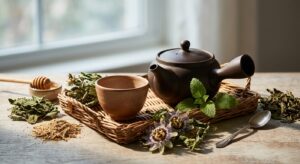
Stress headaches are among the most common complaints of modern life, arriving with the weight of deadlines, disrupted sleep, and the endless hum of anxiety. Long before ibuprofen and aspirin, herbalists across Europe, the Middle East, and Asia reached for their gardens to address these same tensions. Feverfew (Tanacetum parthenium) was described in medieval European herbals as a remedy for “the headache and megrim,” while lemon balm (Melissa officinalis) was prescribed by Paracelsus and later Gerard as a herb that “driveth away all troublesome cares and thoughts.” Lavender (Lavandula angustifolia) has been used in aromatherapy and teas across the Mediterranean for centuries to quiet a restless mind and ease physical tension.
This blend works on multiple pathways simultaneously, which is what makes it so effective for tension-type headaches that are rooted in stress. Feverfew inhibits platelet aggregation and prostaglandin synthesis, addressing the vascular and inflammatory components of head pain. Lemon balm’s rosmarinic acid and flavonoids modulate GABA activity to lower cortisol and ease the neural overstimulation that tightens the muscles around the scalp, neck, and temples. Lavender completes the trio with its linalool and linalool acetate, compounds that reduce anxiety, promote relaxation, and have demonstrated mild analgesic properties in clinical settings.
What makes this tea genuinely special is that it doesn’t simply mask pain. It addresses the stress response itself, making it useful both as a preventive measure during high-pressure periods and as an acute remedy when a headache has already set in. Brewed hot, it is grounding and warming. Cold-brewed, it becomes a delicate floral tonic perfect for sipping throughout a tense afternoon. However you choose to prepare it, this blend offers something that most headache remedies do not: a moment of genuine calm.
2
cups
Ingredients
- 1.5 tspdried feverfew leaves and flowers
- 2 tspdried lemon balm leaves
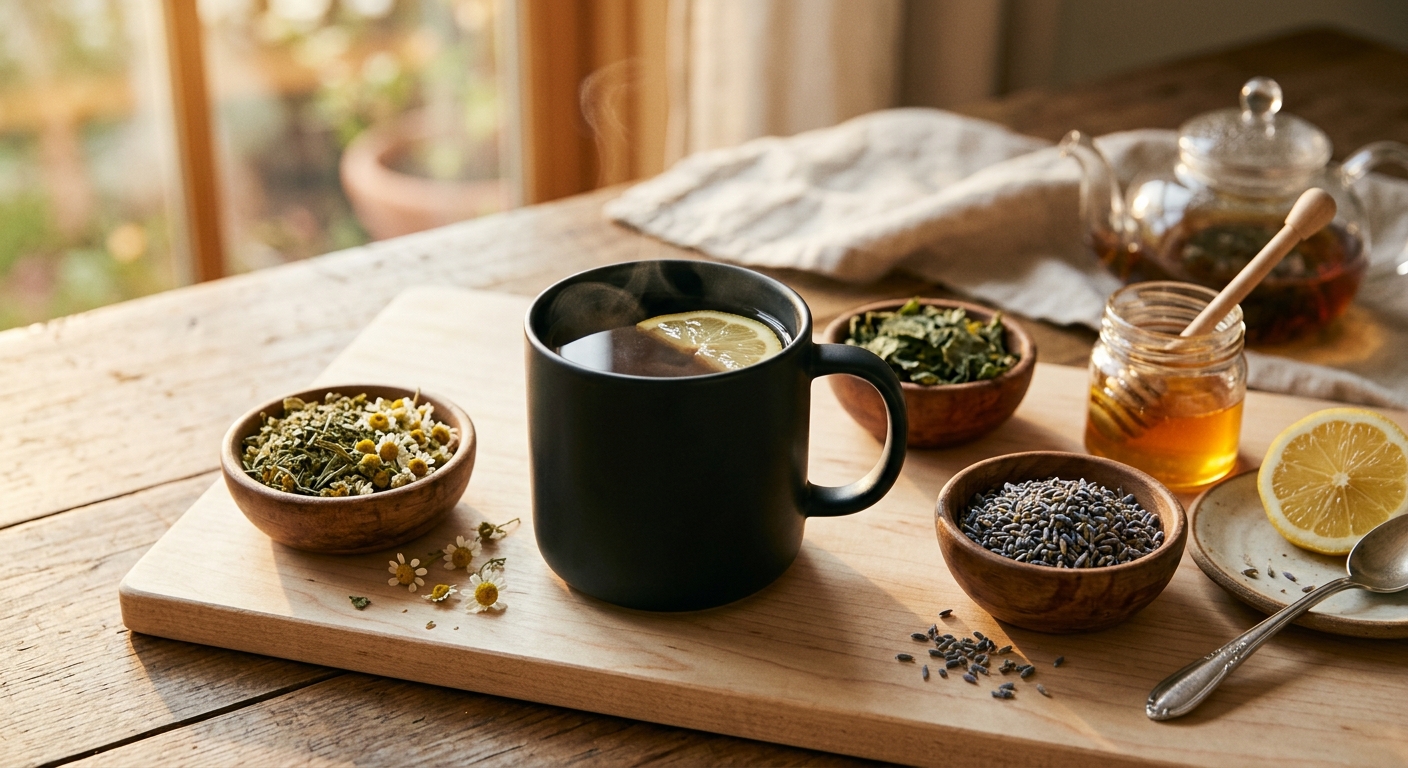
- 0.75 tspdried lavender buds (culinary grade)
- 480 mlwater (90°C / 194°F)
- —raw honey or agave to taste (optional)
- —a thin slice of fresh lemon (optional)
How to Brew
Click on an item below to shop for the recommended items for this recipe on Amazon.
As an Amazon Associate, we earn from qualifying purchases.
- Heat filtered water to 90°C (194°F). If you don’t have a temperature-controlled kettle, bring the water to a full boil, then let it rest for 2 to 3 minutes before pouring.
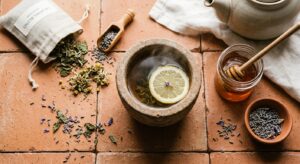
- Measure 1.5 tsp dried feverfew, 2 tsp dried lemon balm, and 0.75 tsp dried lavender buds per 2 cups (480 ml) of water. Add all herbs to a tea infuser or place directly into a warmed teapot.
- Pour the hot water over the herbs and cover the mug or teapot immediately with a lid or small plate. Covering is essential: it traps the volatile aromatic oils, especially those from lavender and lemon balm, that would otherwise escape with the steam.
- Steep for 8 to 10 minutes. Taste at 8 minutes. Feverfew’s natural bitterness intensifies with time, so avoid steeping beyond 10 minutes unless you enjoy a more medicinal, bitter cup.
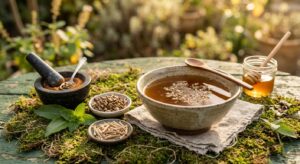
- Strain the herbs and pour into a warmed mug. Sweeten lightly with raw honey if desired, and add a thin slice of lemon to brighten the flavor. Sip slowly while seated in a quiet space for best effect.
- Combine 2 tsp dried feverfew, 3 tsp dried lemon balm, and 1 tsp dried lavender buds in a clean glass jar. The herb ratios are slightly increased compared to hot brew because cold water extracts compounds more slowly and less completely.
- Pour 600 ml of cold, filtered water over the herbs. Stir gently to ensure all the herbs are fully submerged. You can use a small spoon or chopstick to press them down if they float.
- Seal the jar with a lid and leave it at room temperature for the first 30 minutes to allow the initial extraction to begin without the shock of cold, then transfer to the refrigerator.
- Steep in the refrigerator for 8 to 12 hours (overnight works perfectly). Do not exceed 14 hours, as extended cold steeping can begin to pull bitter parthenolide compounds from the feverfew at higher concentrations.
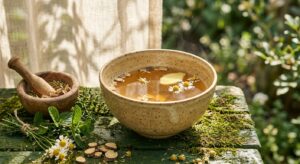
- Strain through a fine mesh strainer or cheesecloth into a pitcher or bottle. Serve over ice with a sprig of fresh lemon balm or a few fresh lavender blossoms as garnish. Keeps refrigerated for up to 48 hours.
- Bring 480 ml of water to a near boil (95 to 100°C). A slightly higher temperature is used here deliberately because the vapor itself is part of the therapy, and you want full volatilization of the aromatic oils.
- Place 1.5 tsp dried feverfew, 2 tsp dried lemon balm, and 1 tsp dried lavender (slightly more lavender than the standard recipe for enhanced aromatic effect) into a large, deep bowl or heat-safe ceramic mug.
- Pour the near-boiling water directly over the herbs in the bowl. Do not strain yet and do not cover.
- Drape a clean towel over your head and lean over the bowl at a comfortable distance of 25 to 30 cm. Close your eyes and breathe slowly and deeply through your nose for 3 to 5 minutes. This delivers linalool and rosmarinic acid vapors directly into the nasal passages and sinuses, which can provide rapid relief for sinus-pressure headaches and stress-induced tension.
- After the steam inhalation, strain the liquid into a mug and allow it to cool slightly to a comfortable drinking temperature (around 65 to 70°C). Sweeten with honey if desired and sip slowly. The combined internal and aromatic application creates a more comprehensive response than drinking alone.
Health Benefits
Feverfew’s parthenolide has been studied in multiple randomized controlled trials for migraine prevention, with regular consumption associated with a significant reduction in headache frequency. Its mechanisms, inhibiting platelet aggregation and blocking prostaglandin release, address the vascular and inflammatory triggers of both migraines and tension-type headaches.
Lemon balm has been shown in placebo-controlled human trials to significantly reduce cortisol levels and subjective anxiety scores under laboratory stress conditions. Its rosmarinic acid content is responsible for much of this effect via GABAergic modulation, helping to interrupt the stress response cycle that often initiates or sustains tension headaches.
The combination of lavender’s linalool and lemon balm’s flavonoids produces antispasmodic effects on skeletal and smooth muscle. Since tension headaches are largely driven by tightening of the pericranial muscles (the muscles surrounding the skull), this relaxation effect directly addresses one of the primary physical causes.
Lavender has demonstrated sleep-quality improvements in multiple clinical studies, reducing nighttime waking and increasing slow-wave sleep. Because poor sleep is both a trigger and a consequence of tension headaches, addressing sleep quality as part of a regular evening tea routine can create a meaningful preventive benefit.
The combined GABAergic activity of lemon balm’s rosmarinic acid and lavender’s linalool works to quiet the overactive sympathetic nervous system signaling that accompanies chronic stress. This reduces the hyperarousal state that sensitizes pain receptors in the head and neck, making the nervous system less reactive to headache triggers over time.
🧪 Key Bioactive Compounds
The Science Behind Feverfew
The science behind this stress headache blend is rooted in its multi-target approach to pain and stress. Feverfew’s most studied compound, parthenolide, works by inhibiting NF-kB, the master regulator of inflammatory gene expression, and by blocking the release of serotonin from platelets, a key step in the vascular cascade that produces migraines and tension headaches. A landmark double-blind crossover trial published in The Lancet found that daily feverfew consumption reduced migraine frequency by 24% compared to placebo, establishing it as one of the most evidence-supported herbal headache remedies. More recent research has also identified feverfew’s ability to inhibit arachidonic acid release, further reducing the downstream production of inflammatory prostaglandins that sensitize pain receptors.
Lemon balm’s primary active compound, rosmarinic acid, operates through a different but complementary pathway. It inhibits GABA transaminase, the enzyme responsible for breaking down gamma-aminobutyric acid in the brain. The result is elevated GABA availability, the same mechanism exploited by benzodiazepine medications, but in a gentler, non-habit-forming way. A randomized, double-blind, placebo-controlled trial published in Psychosomatic Medicine demonstrated that a standardized lemon balm extract significantly reduced cortisol levels and improved mood under experimentally induced stress, directly supporting its traditional use as a nervine. Elevated cortisol is a well-established driver of tension headache episodes, making cortisol reduction a pharmacologically meaningful outcome for headache prevention.
Lavender’s therapeutic effects are largely attributed to its monoterpenoids, particularly linalool and linalool acetate, which together make up 60 to 80% of lavender essential oil and are present in meaningful concentrations in the dried herb as well. Linalool has been shown to inhibit voltage-gated sodium channels in neurons, reducing the excitability of pain-signaling cells. A systematic review of lavender clinical trials published in Phytomedicine found consistent evidence for anxiolytic, sedative, and mild analgesic effects, with an excellent safety profile at normal therapeutic doses. When these three herbs are combined, their complementary mechanisms, anti-inflammatory, GABAergic, and analgesic, create a synergistic effect that addresses the neurological, vascular, and muscular dimensions of stress headaches more comprehensively than any single herb alone.
Brewing Tips
- Prepare a double batch of the cold brew at the beginning of a stressful week and keep it in the refrigerator so you have an instantly accessible tension-relief tonic throughout the day without any brewing effort in the moment.
- Source culinary-grade lavender buds specifically; ornamental lavender varieties may be treated with pesticides and can have a soapy, overpowering flavor that dominates the blend and is unpleasant to drink.
- If you find the bitterness of feverfew too pronounced in the hot brew, try adding a small strip of dried orange peel during steeping. The citrus oils bind to some of the bitter sesquiterpene lactones and soften their taste without reducing the herb’s therapeutic effectiveness.