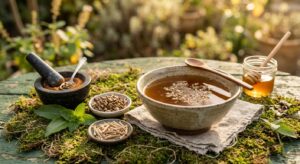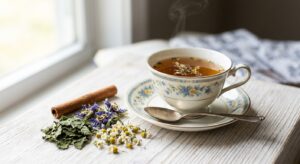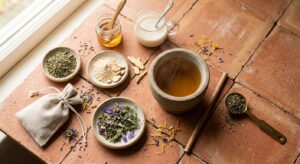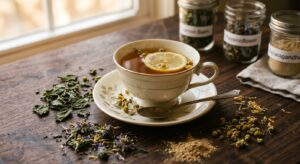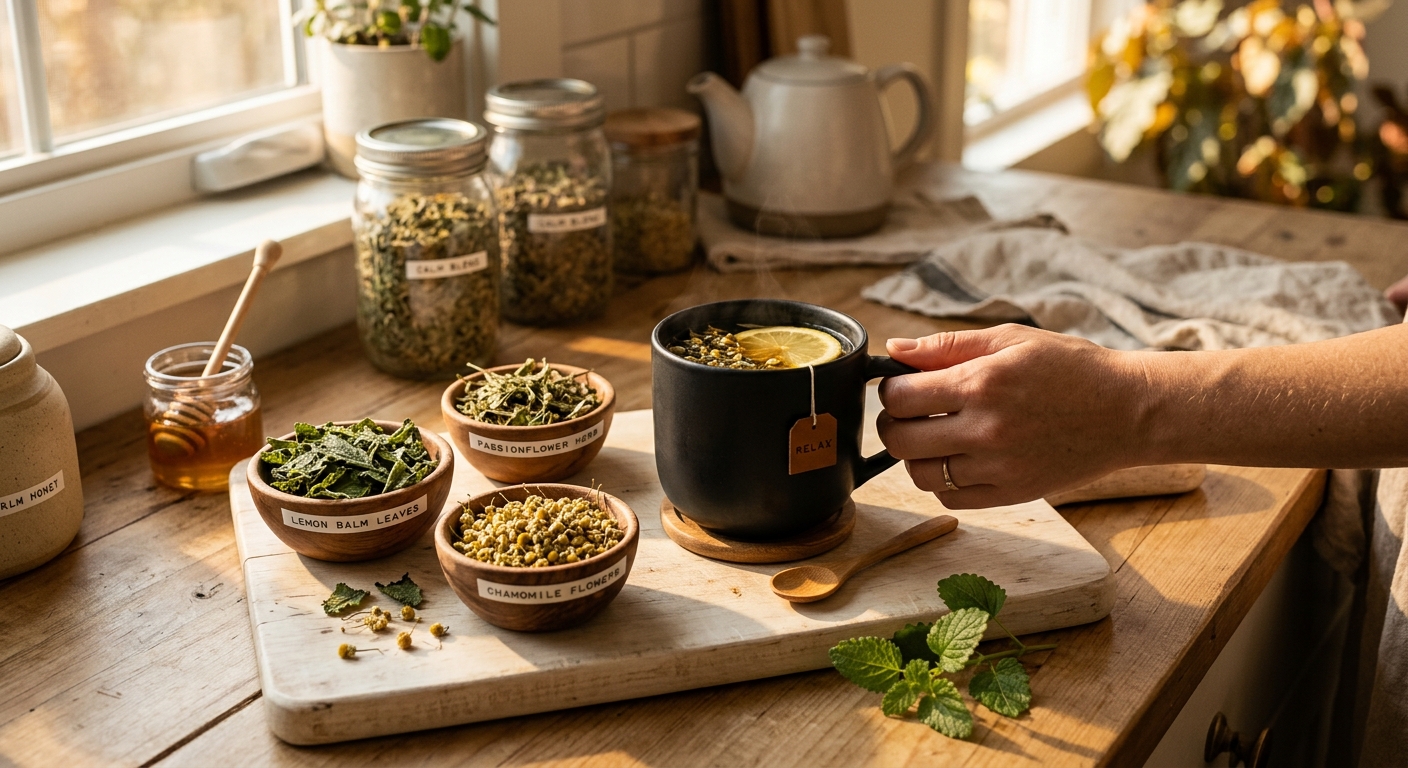
Long before pharmaceutical anxiolytics existed, healers across Europe, the Americas, and the Mediterranean relied on a handful of trusted nervine herbs to calm restless minds and frayed nerves. Lemon balm (Melissa officinalis) has been prescribed for anxiety and sleeplessness since at least the 10th century, appearing in the writings of Avicenna and later in English herbalist John Gerard’s 1597 Herball. Passionflower (Passiflora incarnata) was adopted into European medicine in the 17th century after Spanish explorers encountered it in the Americas, where Indigenous peoples had long used it as a sedative and wound herb. Chamomile (Matricaria chamomilla) completes the trio, bringing centuries of use in Greek, Roman, and Ayurvedic traditions as a gentle soother of both mind and body.
What makes this protocol more than just a pleasant cup of tea is the concept of herbal synergy. Each plant targets a slightly different aspect of the anxiety response. Lemon balm inhibits the enzyme that breaks down GABA, the brain’s primary calming neurotransmitter. Passionflower contains chrysin and other flavonoids that bind to GABA-A receptors directly. Chamomile’s apigenin reduces the activity of stress-related neural pathways. Used together, these three herbs create a compounding calming effect that is greater than any single herb alone, a principle deeply embedded in both traditional Western herbalism and contemporary clinical research.
This is not a one-size-fits-all remedy but a true protocol, meaning the way you brew, the time of day you drink it, and your consistency over days and weeks all matter. Whether you need acute relief from a stressful moment or are seeking a daily ritual to gently lower your baseline anxiety over time, this guide will walk you through every method, compound, and consideration you need to make this blend work for you.
2
cups
Ingredients
- 2 tspdried lemon balm leaves
- 1.5 tspdried passionflower herb (leaf and stem)
- 1.5 tspdried chamomile flowers
- 480 mlwater (90°C / 194°F)
- —raw honey to taste (optional)
- —fresh lemon slice (optional)
How to Brew
Click on an item below to shop for the recommended items for this recipe on Amazon.
As an Amazon Associate, we earn from qualifying purchases.
- Heat filtered water to 90°C (194°F). If you do not have a temperature-controlled kettle, bring water to a full boil and let it rest uncovered for 2 to 3 minutes before pouring.
- Combine 2 tsp dried lemon balm, 1.5 tsp dried passionflower, and 1.5 tsp dried chamomile in a tea infuser, strainer basket, or teapot. This blend is for two servings, so use a 400 to 500 ml teapot if available.
- Pour the hot water directly over the herbs, filling the vessel. Cover the pot or place a small saucer over your mug to trap volatile oils and aromatic compounds that would otherwise escape as steam.
- Steep for 7 to 10 minutes. For a gentler, more floral cup with mild calming effect, steep 7 minutes. For a stronger, more herbaceous cup with deeper nervine action, steep the full 10 minutes.
- Remove the infuser or strain the tea through a fine mesh strainer into your cups. Do not squeeze or press the herbs, as this can introduce bitter tannins into the cup.
- Add raw honey and a squeeze of fresh lemon if desired. Drink slowly and mindfully, ideally in a quiet space away from screens, to amplify the calming ritual.
- Measure out 2 tsp dried lemon balm, 1.5 tsp dried passionflower, and 1.5 tsp dried chamomile per 480 ml of water. Because cold water extracts more slowly, you can increase each herb by 0.5 tsp if you want a stronger infusion.
- Place the herbs loosely inside a glass jar fitted with a lid, or place them in a large reusable tea bag or fine mesh infuser that fits inside the jar. Using loose herbs directly in the jar and straining later also works well.
- Pour cold, filtered water over the herbs at room temperature. Stir gently to ensure all the plant material is saturated and not floating in a dry cluster at the top.
- Seal the jar and leave it at room temperature for 30 minutes to allow initial extraction to begin, then transfer to the refrigerator. Steep for a total of 8 to 12 hours. Overnight steeping is ideal for a ready-to-drink morning calm ritual.
- Remove the jar from the refrigerator and strain the tea through a fine mesh strainer or cheesecloth into a clean bottle or glass. Press the herbs lightly this time, as cold brew is less prone to bitterness.
- Serve over ice with a sprig of fresh mint, a slice of cucumber, or a light drizzle of honey dissolved first in a small amount of warm water. Store any remaining cold brew in the refrigerator for up to 48 hours.
- Double the herb quantities to make a concentrate: use 4 tsp dried lemon balm, 3 tsp dried passionflower, and 3 tsp dried chamomile. Place the herbs in a small saucepan or a teapot with a capacity of at least 300 ml.
- Heat 240 ml of filtered water to 88 to 90°C (190 to 194°F). This smaller volume of water relative to the herb quantity is what creates the concentrated extraction. Do not use boiling water, as the extended steep time makes temperature control especially important.
- Pour the hot water over the herbs and cover the vessel tightly with a lid or plate. Steep for 15 to 20 minutes. The resulting liquid will be much deeper in color, more aromatic, and notably more bitter than a standard cup.
- Strain the concentrate through a fine mesh strainer into a clean glass jar or heatproof container. Press the spent herbs gently to extract the remaining liquid.
- To serve, dilute 60 to 80 ml of concentrate with 160 to 180 ml of hot water, sparkling water, or warm oat milk. Adjust the ratio to taste. A 1:3 concentrate-to-liquid ratio works well as a starting point.
- Seal and store the remaining concentrate in the refrigerator for up to 3 days. Reheat gently or use cold. This gives you a ready-to-use anxiety support tea on demand throughout a high-stress week without brewing from scratch each time.
Health Benefits
Multiple clinical trials have found that lemon balm extract significantly reduces self-reported anxiety and mood disturbance within one to two hours of ingestion. Passionflower has matched the anxiolytic effect of low-dose oxazepam in at least one randomized controlled trial, with fewer side effects.
The GABA-potentiating activity of all three herbs has been shown to reduce the time it takes to fall asleep and improve subjective sleep quality. A combination preparation of lemon balm and valerian outperformed placebo in several European studies on insomnia, and chamomile’s apigenin content has demonstrated similar benefits in postpartum insomnia trials.
Anxiety frequently manifests as gastrointestinal distress, including irritable bowel symptoms, nausea, and cramping. Chamomile’s antispasmodic and anti-inflammatory properties directly address gut-based symptoms of anxiety, while lemon balm has demonstrated effectiveness against functional dyspepsia and nervous stomach in clinical settings.
Rosmarinic acid in lemon balm has shown measurable cortisol-modulating effects in stress studies. Regular consumption of nervine herbs like those in this blend has been associated with reduced hypothalamic-pituitary-adrenal axis reactivity, meaning smaller and shorter cortisol spikes in response to stressors over time.
Rosmarinic acid, apigenin, and the flavonoid glycosides in passionflower are potent antioxidants that protect neurons from oxidative stress, which is elevated during chronic anxiety. This neuroprotective action supports long-term brain health alongside the acute calming effects.
🧪 Key Bioactive Compounds
The Science Behind Lemon Balm
The anti-anxiety action of this herbal trio is rooted primarily in the GABAergic system, the same neurological pathway targeted by pharmaceutical anxiolytics like benzodiazepines. GABA (gamma-aminobutyric acid) is the brain’s principal inhibitory neurotransmitter, and insufficient GABAergic tone is strongly associated with anxiety disorders. Rosmarinic acid in lemon balm works upstream by inhibiting GABA transaminase, the enzyme responsible for degrading GABA, which allows the neurotransmitter to remain active longer in synaptic clefts. Meanwhile, apigenin from chamomile and chrysin from passionflower act downstream, binding directly to GABA-A receptor sites and enhancing the receptor’s response to endogenous GABA. This multi-point modulation of the same pathway is what makes the combination more effective than any single herb in isolation.
Beyond the GABAergic mechanism, rosmarinic acid and the orientin compounds in passionflower exert measurable effects on the hypothalamic-pituitary-adrenal (HPA) axis, the body’s central stress-response system. Chronic activation of the HPA axis leads to persistently elevated cortisol, which in turn degrades hippocampal neurons, disrupts sleep architecture, and amplifies the anxiety response itself, creating a damaging feedback loop. Early research suggests that regular consumption of rosmarinic acid-rich plants may blunt the cortisol response and reduce the duration of HPA activation following a stressor, making this blend potentially valuable not just for acute relief but for genuine long-term nervous system regulation.
The aromatic compounds in lemon balm, particularly citral, linalool, and geraniol, add a third layer of action through olfactory signaling. Research in psychoneuroimmunology has demonstrated that certain terpenes activate calming pathways through the olfactory bulb before they are even metabolized systemically, which is why the smell of brewing this tea can itself initiate a relaxation response. This is one scientific reason why the act of making herbal tea mindfully, inhaling the steam, holding the warm cup, and drinking slowly, genuinely enhances its efficacy beyond what the ingested compounds alone would produce. The ritual is not merely psychological; it is pharmacologically meaningful.
Brewing Tips
- For best results with a daily anxiety protocol, drink one cup in the mid-afternoon when cortisol naturally dips and anxiety often spikes, and a second cup 30 to 60 minutes before bed to support sleep onset.
- Always source passionflower labeled as Passiflora incarnata specifically, as other Passiflora species (particularly P. caerulea) can contain compounds with different safety profiles and are not the species used in clinical anxiety research.
- Use fresh or recently dried lemon balm if possible. Lemon balm’s volatile oils degrade quickly after drying, and herbs older than 12 months lose a significant proportion of their rosmarinic acid and aromatic compound content, meaningfully reducing therapeutic potency.