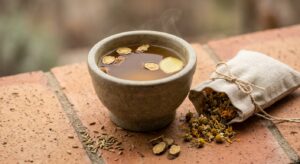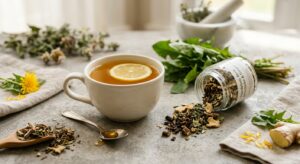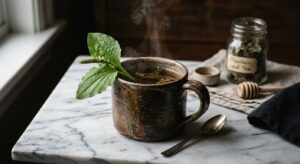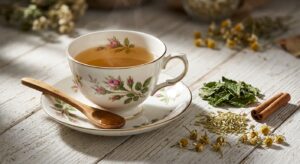
The gallbladder is a small but mighty organ, quietly storing and concentrating bile produced by the liver before releasing it into the small intestine to help break down dietary fats. When bile flow becomes sluggish, the result can be bloating, nausea after rich meals, right-sided discomfort, and a general sense of digestive heaviness. Herbal traditions across Europe, Asia, and the Americas have long recognised the power of bitter and cholagogue herbs to stimulate bile secretion, tone the gallbladder, and ease these complaints. Long before pharmaceutical interventions existed, healers turned to plants like dandelion root, milk thistle seed, and peppermint leaf as their primary tools for hepato-biliary wellness.
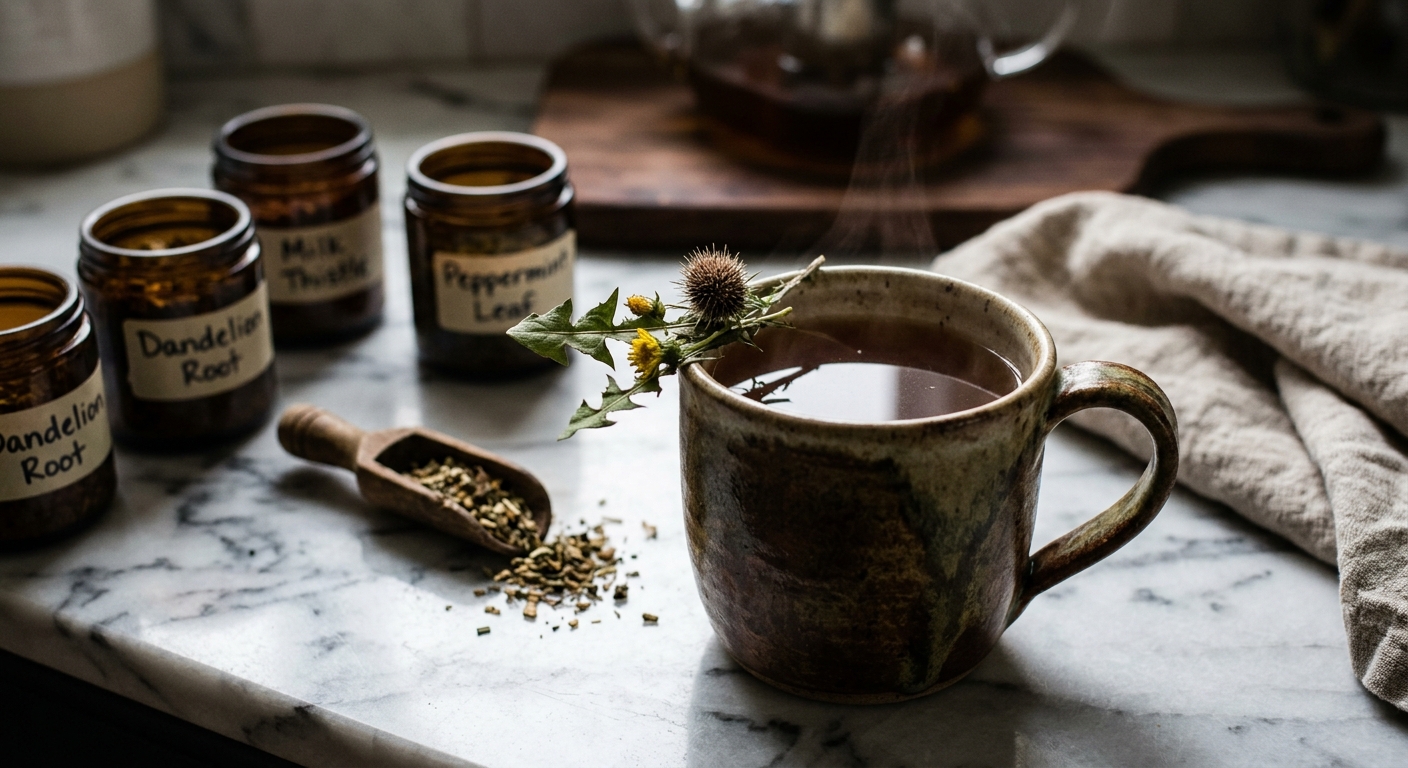
This blend draws on centuries of documented use. Dandelion root (Taraxacum officinale) has been recorded in Traditional Chinese Medicine and European folk herbalism as a primary liver and gallbladder tonic, prized for its gentle choleretic action. Milk thistle (Silybum marianum) brings its celebrated silymarin complex, which supports hepatocyte integrity and encourages healthy bile composition. Peppermint (Mentha piperita) rounds out the blend by relaxing the smooth muscle of the bile duct and reducing spasm, making it especially useful for post-meal discomfort. Together, these three herbs create a synergistic formula that addresses bile production, bile quality, and bile flow all at once.
The flavour of this tea is a sophisticated interplay of bitter earthiness from the dandelion root, a subtly roasted depth from the milk thistle, and a bright, cooling finish from the peppermint. It is assertive but pleasant, a tea that genuinely tastes medicinal in the best possible sense. Sipped 15 to 30 minutes before a meal, it primes the digestive system for action; taken after a rich or fatty meal, it helps ease the burden on an overworked gallbladder. This is a tea with a purpose, and once you understand what it is doing inside your body, each cup becomes an act of intentional self-care.
2
cups
Ingredients
- 2 tspdried dandelion root (chopped or granulated)
- 1 tspmilk thistle seeds (lightly crushed)
- 1 tspdried peppermint leaf
- 0.5 tspdried globe artichoke leaf (optional, for extra choleretic action)
- 500 mlwater (for hot brew)
- —raw honey or a small slice of fresh ginger to taste (optional)
How to Brew
Click on an item below to shop for the recommended items for this recipe on Amazon.
As an Amazon Associate, we earn from qualifying purchases.
- Place the dandelion root and crushed milk thistle seeds into a small saucepan with 500 ml of cold, filtered water. Do not add the peppermint yet.
- Bring the water to a gentle boil over medium heat, then reduce to a low simmer. Cover the saucepan and allow the roots and seeds to decoct for 10 minutes. This extended simmering is essential for extracting the bitter glycosides and silymarin from the tougher plant material.
- Remove the saucepan from heat. Add the dried peppermint leaf and optional globe artichoke leaf directly to the hot decoction. Replace the lid and allow to steep for an additional 5 minutes. The residual heat will gently extract the volatile menthol oils without boiling them off.
- Strain the tea through a fine mesh strainer into two warmed mugs, pressing the spent herbs gently to release any remaining liquid.
- Taste the tea before adding any sweetener. The bitterness is a key part of its therapeutic action, stimulating the bitter receptors on the tongue that trigger bile release. If desired, add a small amount of raw honey or a thin slice of fresh ginger to soften the edge without masking the bitter quality entirely.
- Drink one cup 20 to 30 minutes before a meal for preventive digestive support, or sip slowly within 30 minutes after a rich, fatty meal to ease post-meal heaviness.
- Lightly crush the milk thistle seeds using a mortar and pestle or the flat of a knife to crack the hard seed coat, which is essential for extraction even in cold water.
- Combine the dandelion root, crushed milk thistle seeds, dried peppermint leaf, and optional globe artichoke leaf in a clean glass jar. Pour 600 ml of cold, filtered water over the herbs, using a slightly higher water volume than the hot brew to account for a gentler extraction rate.
- Stir the mixture briefly to ensure all the plant material is fully submerged. Seal the jar with a lid and leave it at room temperature for 1 hour to begin the initial extraction phase, then transfer to the refrigerator.
- Allow the herbs to cold steep in the refrigerator for 12 to 14 hours (overnight works perfectly). The slow, cold extraction draws out bitter compounds and polyphenols gradually, producing a rounder, more mellow bitterness.
- Strain the cold brew through a fine mesh strainer or cheesecloth into a clean pitcher or bottle, pressing the herbs gently. Discard the spent plant material.
- Serve over ice in tall glasses, or warm individual portions gently in a small saucepan over low heat without boiling. Cold brew portions keep refrigerated for up to 48 hours. Drink one glass before or after meals as needed.
- Double the herb quantities: use 4 tsp dandelion root, 2 tsp crushed milk thistle seeds, and 2 tsp dried peppermint leaf (plus 1 tsp globe artichoke if using). Place only the dandelion root and milk thistle seeds in a medium saucepan with 750 ml of cold, filtered water.
- Bring to a full boil uncovered, then reduce heat to a steady, low simmer. Decoct uncovered for 20 to 25 minutes, allowing the liquid to reduce by roughly one third. The goal is a dark, intensely flavoured liquid with concentrated bitter and mineral compounds.
- Remove from heat and add the peppermint leaf and globe artichoke leaf to the hot decoction. Cover the saucepan with a lid and steep for 10 minutes to infuse the volatile compounds into the still-hot concentrate.
- Strain through a fine mesh strainer into a heatproof glass jar or bottle, pressing the herbs firmly. You should yield approximately 400 to 450 ml of dark, concentrated tea.
- Allow the concentrate to cool fully before sealing and refrigerating. It will keep for up to 4 days in the refrigerator.
- To serve, dilute one part concentrate with one part hot or cold water (approximately 100 ml concentrate to 100 ml water per serving). Taste and adjust dilution to your preference. Drink one diluted cup before or after meals up to twice daily.
Health Benefits
Dandelion root’s bitter sesquiterpene lactones act as choleretics, signalling the liver to increase bile synthesis, while globe artichoke’s cynarin has demonstrated significant choleretic effects in controlled trials. Adequate bile flow is essential for fat digestion, fat-soluble vitamin absorption, and preventing bile from becoming overly concentrated and prone to stone formation.
Peppermint’s menthol relaxes the smooth muscle of the bile duct and reduces biliary spasm, allowing bile to flow more freely after eating. Clinical trials on peppermint oil and leaf extracts have consistently demonstrated reductions in nausea, bloating, and upper abdominal discomfort following fatty meals.
Silymarin from milk thistle is one of the most extensively studied hepatoprotective compounds in plant medicine, with over 50 clinical trials supporting its role in reducing liver enzyme elevations and protecting liver cells from oxidative and toxic injury. A healthy liver directly produces healthier bile, which in turn reduces gallbladder stress.
Gallstones form when bile becomes supersaturated with cholesterol relative to bile salts and phospholipids. By increasing bile volume (diluting cholesterol concentration), improving bile acid synthesis, and modulating cholesterol metabolism via silymarin and cynarin, this blend addresses several of the key risk factors for cholesterol gallstone formation.
Dandelion root is one of the richest plant sources of inulin, a prebiotic fructo-oligosaccharide that feeds Lactobacillus and Bifidobacterium species in the colon. A healthy microbiome is increasingly understood to play a direct role in bile acid metabolism through the enterohepatic circulation, with microbial bile salt hydrolase activity influencing the reabsorption and recycling of bile acids.
🧪 Key Bioactive Compounds
The Science Behind Dandelion Root
The science behind this gallbladder support blend centres on two primary mechanisms: choleresis (stimulation of bile production by the liver) and cholagogue action (stimulation of gallbladder contraction to release stored bile). Dandelion root’s bitter sesquiterpene lactones, particularly taraxacin and taraxacerin, activate bitter taste receptors not only on the tongue but also in the gastrointestinal tract, triggering a cascade of digestive secretions including increased bile synthesis. A 2011 pilot study published in Evidence-Based Complementary and Alternative Medicine confirmed significant increases in urinary output and electrolyte excretion following dandelion leaf extract consumption, consistent with its broad effects on fluid and secretion physiology. Globe artichoke’s caffeoylquinic acids, especially cynarin, have demonstrated even more pronounced choleretic effects, with one double-blind trial reporting a 40 percent increase in bile flow within 30 minutes of administration.
Milk thistle’s silymarin complex operates on a different but complementary level. Rather than directly stimulating bile secretion, silymarin functions as a hepatoprotective and hepatoregenerative agent, stabilising the outer membranes of liver cells, inhibiting the uptake of hepatotoxic substances, and stimulating ribosomal RNA synthesis to accelerate liver cell renewal. A healthy, well-functioning liver produces bile with an optimal ratio of bile acids to cholesterol and phospholipids. When hepatocyte function is compromised, bile quality deteriorates, increasing the risk of lithogenic (stone-forming) bile. By maintaining liver integrity, silymarin indirectly but meaningfully supports gallbladder health from the upstream side of the equation.
Peppermint’s contribution is primarily antispasmodic and neuromuscular. Menthol acts as a calcium channel antagonist in smooth muscle cells, inhibiting the influx of calcium ions and thereby reducing involuntary muscle contractions. In the biliary system, this translates to relaxation of the sphincter of Oddi, the muscular valve controlling bile flow from the common bile duct into the duodenum. Studies on peppermint oil in the context of irritable bowel syndrome have consistently demonstrated its capacity to reduce smooth muscle spasm throughout the gastrointestinal tract, and its application to the biliary system is supported by both traditional clinical observation and mechanistic pharmacology. Together, these three botanical allies address bile quantity, bile quality, and bile delivery, offering a genuinely comprehensive approach to gallbladder wellness grounded in both tradition and emerging scientific understanding.
Brewing Tips
- Always crush milk thistle seeds immediately before brewing rather than pre-grinding them, as their delicate fatty acid content can oxidise quickly once the hard seed coat is broken, reducing potency.
- Drink this tea warm or at room temperature rather than piping hot, as very high temperatures can impair the volatile menthol oils in the peppermint before they reach the digestive tract where they are needed.
- For best results, use this tea as part of a dietary approach that reduces ultra-processed foods, refined carbohydrates, and trans fats, all of which increase bile cholesterol saturation and gallbladder stress. The tea works best as a complement to, not a substitute for, a whole-food diet.