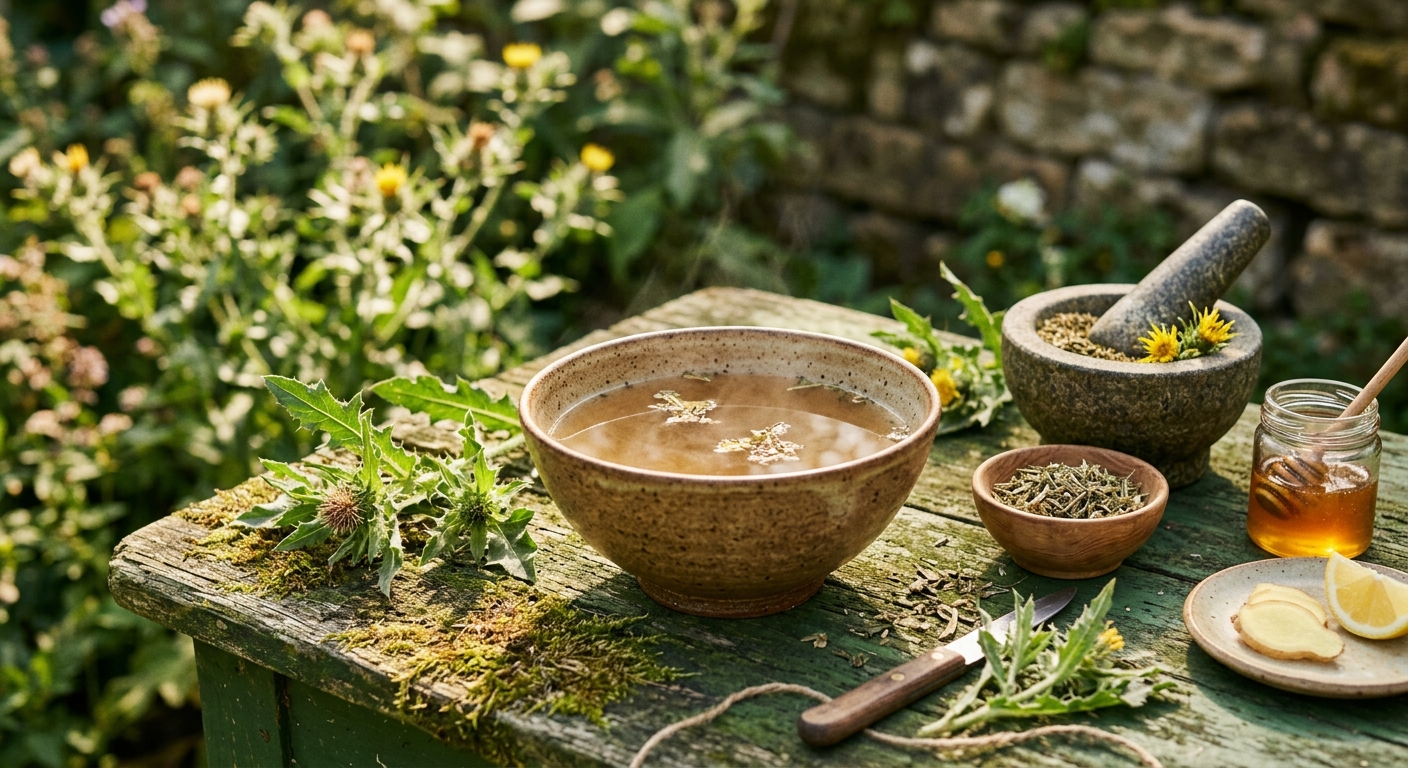
Blessed thistle (Cnicus benedictus) has occupied a revered place in the apothecary’s cabinet for well over five hundred years. Native to the Mediterranean basin and parts of western Asia, this spiny annual was cultivated in monastery gardens throughout medieval Europe, where monks prepared it as a tonic for weak digestion, sluggish appetite, and a host of ailments they attributed to a cold, damp constitution. Its very name, “benedictus,” speaks to the near-miraculous reputation it earned during the plague years of the fourteenth and fifteenth centuries, when herbalists promoted it as a cure-all. While modern science has tempered those grander claims, it has confirmed what traditional practitioners long observed: that blessed thistle is a genuinely effective digestive bitter.
The herb belongs to a category of plants known as amaras, or bitters, whose signature sharp taste triggers a cascade of physiological responses in the gastrointestinal tract. When the bitter receptors on the tongue detect compounds like cnicin, they send signals through the vagus nerve that stimulate the production of saliva, gastric acid, bile, and digestive enzymes. This is the mechanism behind the traditional pre-meal bitters culture found in Italian amaro liqueurs, German gentian tonics, and Scandinavian schnapps, and blessed thistle has been a key ingredient in many of those traditions. Drinking a small cup before or after a meal effectively primes the digestive system for efficient, comfortable processing of food.
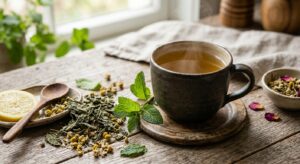
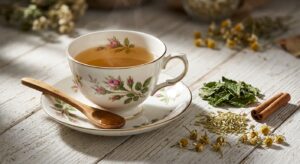
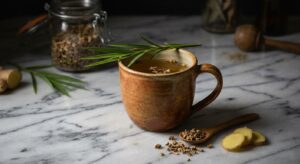
As a tea, blessed thistle offers a sensory experience that is bracingly honest. It does not pretend to be sweet or delicate. Its flavor is distinctly bitter with faint herbaceous, hay-like undertones, and that bitterness is precisely the point. Herbalists advise letting the tea touch all parts of the tongue before swallowing, allowing the full bitter stimulus to activate digestive secretions. Paired with a touch of honey or blended with gentler herbs like fennel or lemon balm, it becomes more approachable while retaining its therapeutic edge. For anyone seeking to understand the deep tradition of plant-based digestive medicine, blessed thistle tea is an essential and illuminating cup.
2
cups
Ingredients
- 2 tspdried blessed thistle aerial parts (leaves and flowering tops)
- 480 mlwater (90°C / 194°F)
- —raw honey or a thin slice of fresh ginger to taste (optional)
- —fresh lemon wedge (optional)
How to Brew
Click on an item below to shop for the recommended items for this recipe on Amazon.
As an Amazon Associate, we earn from qualifying purchases.
- Heat filtered water to approximately 90 to 95°C (194 to 203°F). If you do not have a temperature-controlled kettle, bring water to a full boil and allow it to rest for 60 to 90 seconds before using.
- Measure 1 teaspoon of dried blessed thistle aerial parts per 240 ml (8 oz) of water and place them into a tea infuser or directly into a warmed ceramic mug. Warming the mug first with a splash of hot water helps maintain a steady steep temperature.
- Pour the hot water over the herb, submerging the plant material fully. Cover the mug with a small saucer or lid to trap volatile aromatic compounds that would otherwise escape with the steam.
- Steep for 5 minutes for a milder, more approachable bitterness suitable for new drinkers, or up to 10 minutes for a more pronounced digestive tonic effect. Taste at the 5-minute mark and continue steeping based on your preference.
- Remove the infuser or strain the herb out completely. Allow the tea to cool for 1 to 2 minutes before drinking. Sip slowly before or after meals, allowing the bitter taste to linger briefly on the tongue to maximize digestive stimulation. Add honey or a squeeze of lemon if desired.
- Measure 1.5 teaspoons of dried blessed thistle per 240 ml of cold, filtered water. Because cold water is a less efficient solvent, a slightly higher herb-to-water ratio compensates for the gentler extraction.
- Combine the herb and cold water in a clean glass jar. Stir briefly with a long spoon to ensure all plant material is fully saturated. Do not use a metal container, as prolonged contact with metal can impart off-flavors to bitter herb infusions.
- Place a loose lid or breathable cloth cover over the jar and leave it at room temperature for the first 1 to 2 hours. Then move the jar to the refrigerator and allow it to steep for a total of 8 to 12 hours, ideally overnight.
- Strain the infusion through a fine mesh strainer or a piece of cheesecloth into a clean pitcher or glass, pressing the spent herb gently to extract the last of the liquid.
- Serve over ice in a tall glass. Add a slice of fresh lemon and a small drizzle of honey if desired. The cold brew keeps well in the refrigerator for up to 48 hours. Drink a small glass (120 to 180 ml) before or after meals as a digestive aid.
- Combine 1 tablespoon of dried blessed thistle aerial parts with 480 ml of cold filtered water in a small stainless steel or enamel saucepan. Starting in cold water allows for a gradual extraction that builds complexity.
- Place the saucepan over medium-low heat and slowly bring the liquid to a very gentle simmer. Do not allow it to reach a rolling boil. Maintain a low, steady simmer with occasional small bubbles breaking the surface.
- Simmer uncovered for 15 to 20 minutes. The liquid will reduce by approximately one quarter to one third, concentrating the bitter compounds including cnicin and sesquiterpene lactones. Stir occasionally and watch the heat carefully to prevent boiling.
- Remove from heat, cover the saucepan with a lid, and allow the decoction to rest and cool for 10 minutes. This resting period allows remaining aromatic compounds to reabsorb into the liquid.
- Strain through a fine mesh strainer into a small glass bottle or ceramic cup, pressing the plant material firmly. The resulting concentrate should be deep amber in color with a pronounced, clean bitterness.
- Take 30 to 60 ml of the warm concentrate diluted in 120 ml of warm water approximately 15 to 20 minutes before meals as an appetitive and digestive tonic. Store any remaining concentrate in the refrigerator and use within 24 hours.
Health Benefits
Cnicin and related sesquiterpene lactones in blessed thistle activate bitter taste receptors on the tongue and throughout the gastrointestinal tract, reflexively increasing the production of saliva, hydrochloric acid in the stomach, and bile from the gallbladder. This process, well-documented in phytotherapy literature, supports efficient breakdown and absorption of nutrients, particularly fats and proteins.
By improving the flow of bile and stimulating gastric motility, blessed thistle tea helps reduce the sluggish digestion that leads to gas accumulation and post-meal bloating. Traditional European herbalists specifically prescribed it for what they called atonic dyspepsia, a condition characterized by a heavy, uncomfortable feeling after meals caused by insufficient digestive activity.
The bitter compounds in blessed thistle have a well-recognized appetitive effect, traditionally used to restore appetite in convalescent patients and those with a loss of interest in food due to illness or stress. A small cup taken 15 to 20 minutes before a meal can help stimulate hunger signals and prepare the digestive system to receive food effectively.
Flavonoids including luteolin and phenolic acids such as rosmarinic acid contribute a meaningful antioxidant load to the tea. These compounds help neutralize reactive oxygen species in the gastrointestinal environment and modulate pro-inflammatory cytokines, offering a degree of protective support for gut tissue integrity over time.
In vitro studies have shown that extracts of Cnicus benedictus demonstrate inhibitory activity against a range of microorganisms, including Staphylococcus aureus and Bacillus subtilis. While these findings are preliminary and do not translate directly to clinical recommendations, they support the traditional use of blessed thistle as a cleansing and protective digestive herb.
🧪 Key Bioactive Compounds
The Science Behind Blessed Thistle
The therapeutic reputation of blessed thistle rests primarily on the activity of cnicin, a guaianolide-type sesquiterpene lactone that is among the most intensely bitter compounds found in any medicinal plant. When cnicin contacts the bitter taste receptors (TAS2Rs) distributed across the tongue and throughout the gastrointestinal epithelium, it initiates a neurally mediated reflex that increases secretory activity across the entire digestive tract. Gastric acid production rises, the pancreas releases more digestive enzymes, and the gallbladder is stimulated to contract and release bile. This coordinated response is the physiological basis for the centuries-old practice of taking bitters before meals, and blessed thistle has been one of the most consistently used plants for this purpose in European herbal tradition.
Beyond its bitter action, blessed thistle contains a meaningful complement of secondary compounds with their own distinct activities. Luteolin, a flavonoid present in the herb’s leaves and flowering tops, has been the subject of considerable pharmacological research. It acts as an inhibitor of NF-kB signaling, one of the central regulatory pathways governing inflammatory responses in the body, and has demonstrated the ability to reduce levels of pro-inflammatory prostaglandins in intestinal tissue. Rosmarinic acid, another notable constituent, has shown hepatoprotective properties in animal models, suggesting that regular consumption of the tea may offer a degree of support to liver function, which is intimately connected to digestive health through the production and regulation of bile. Polyacetylenic compounds contribute an additional antimicrobial dimension to the herb’s activity profile, which aligns with its traditional use as a cleansing digestive herb.
Research into blessed thistle remains less extensive than studies on more heavily investigated bitter herbs such as gentian or dandelion root, but the existing body of evidence is consistent with its traditional applications. A 2019 review published in the Journal of Ethnopharmacology catalogued the documented biological activities of Cnicus benedictus extracts, confirming antioxidant, anti-inflammatory, antimicrobial, and digestive-stimulant properties across multiple in vitro and in vivo studies. The sesquiterpene lactone fraction has also drawn interest for its cytotoxic properties in certain cancer cell lines, though this research is entirely preliminary and should not be interpreted as a clinical claim. What the science confirms most clearly is what medieval herbalists already knew: that blessed thistle is a genuinely active plant with real and measurable effects on the digestive system, worthy of its longstanding place in the herbal pharmacopoeia.
Brewing Tips
- Always steep blessed thistle covered with a saucer or lid. The herb contains volatile aromatic compounds that carry some of its beneficial properties, and an uncovered steep allows these to evaporate with the steam, reducing the tea’s full therapeutic potential.
- For the most effective digestive benefit, drink a small cup (about 150 to 180 ml) approximately 15 to 20 minutes before a meal rather than during or after. This timing allows the bitter compounds to fully activate digestive secretions before food arrives, which is the traditional method used by European herbalists.
- Store dried blessed thistle in an airtight glass jar away from light, heat, and moisture. The sesquiterpene lactones responsible for its bitterness and much of its activity are relatively fragile compounds, and poorly stored herb can lose significant potency within a few months. Use herb purchased from a reputable source within 12 months of the harvest date for best results.