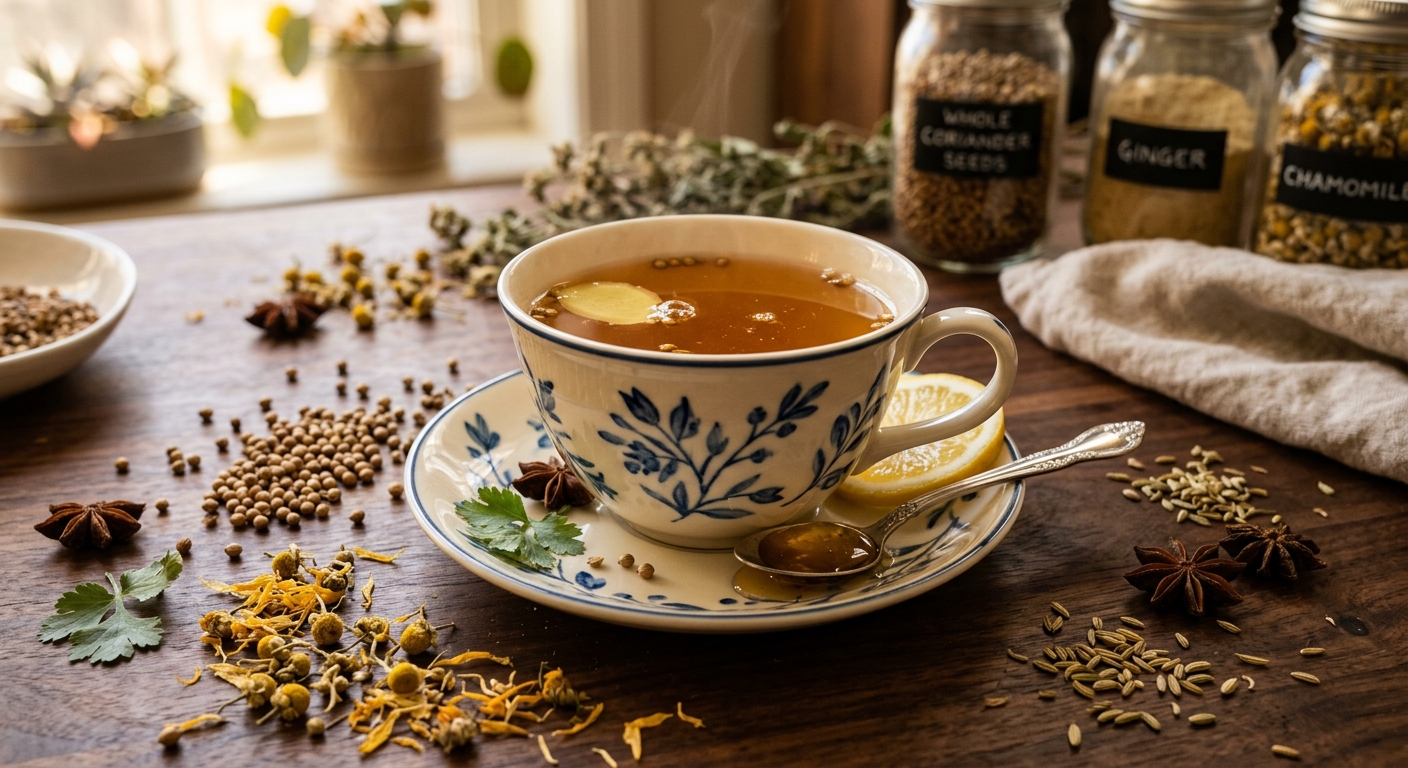
Long before coriander became a staple seasoning in kitchens from Marrakech to Mumbai, its seeds were being steeped into medicinal teas by Egyptian physicians, Ayurvedic healers, and ancient Greek herbalists. Coriandrum sativum is one of the oldest cultivated herbs on record, with seeds discovered in Egyptian tombs dating back over 3,000 years. In Ayurveda, it is classified as a tridoshic herb, meaning it gently balances all three constitutional types, and it appears in classical texts as a remedy for weak digestion, excess heat, and urinary complaints. Traditional Chinese medicine similarly valued it for moving stagnant qi in the digestive system and relieving fullness after meals.
What sets coriander seed apart from the leafy cilantro most people recognize is the dramatic transformation it undergoes as the plant matures. The fresh leaves carry a polarizing, bright green sharpness, but the dried seeds develop an entirely different character: warm, slightly citrusy, faintly floral, and gently sweet, with a grounding earthiness reminiscent of cardamom and orange peel. This aromatic complexity comes from a rich volatile oil profile that is also the source of its therapeutic power. When you lightly crush the seeds before brewing, those oils are released and infuse into the water, creating a tea that smells like a spice market and tastes like a warm hug for your stomach.
Coriander seed tea has seen a quiet renaissance among herbalists and integrative health practitioners, and it deserves a permanent spot in any digestive wellness routine. Whether sipped after a heavy meal to ease bloating, taken in the morning to stimulate sluggish digestion, or enjoyed as a caffeine-free afternoon ritual, this underrated brew delivers both sensory pleasure and genuine therapeutic value rooted in both tradition and emerging science.
2
cups
Ingredients
- 2 tspwhole coriander seeds, lightly crushed
- 480 mlwater (95°C / 203°F)
- —slice of fresh ginger (optional, for extra digestive support)
- —raw honey or jaggery to taste (optional)
- —squeeze of fresh lemon juice (optional)
How to Brew
Click on an item below to shop for the recommended items for this recipe on Amazon.
As an Amazon Associate, we earn from qualifying purchases.
- Measure 1 teaspoon of whole coriander seeds per cup. Place them in a mortar and pestle and crush lightly, just enough to crack the seeds open. You are not grinding them to a powder, just breaking the surface to expose the fragrant interior.
- Bring filtered water to 95°C (203°F). If you do not have a temperature-controlled kettle, bring water to a full boil and allow it to rest for 30 seconds before pouring.
- Place the crushed seeds into a fine mesh tea infuser or directly into a small saucepan. Pour the hot water over the seeds and cover the vessel immediately to trap the volatile aromatic oils.
- Steep for 10 to 15 minutes. A shorter steep of 10 minutes gives a lighter, more floral cup. Going the full 15 minutes draws out more of the earthy depth and increases the concentration of active compounds.
- Strain through a fine mesh strainer into your mug, pressing gently on the seeds to extract the last of the infusion. Add a squeeze of lemon and honey if desired. Sip slowly after meals or whenever digestive discomfort arises.
- Measure 2 teaspoons of whole coriander seeds per 480 ml of water. Lightly crush them with a mortar and pestle to crack the outer shell, then transfer to a clean glass jar.
- Pour room temperature filtered water over the seeds. Do not use hot water. The slow, cold extraction draws out a different ratio of compounds, producing a milder, sweeter flavour with less of the sharp spice notes that emerge in hot brewing.
- Stir briefly, then seal the jar with a lid. Leave it on the counter for 1 hour to begin infusing at room temperature, then transfer to the refrigerator.
- Allow the seeds to infuse in the refrigerator for 10 to 14 hours, ideally overnight. The long, cold steep gently coaxes the water-soluble flavonoids and minerals from the seeds without agitating the more pungent volatile compounds.
- Strain the infusion through a fine mesh strainer into a glass or pitcher. The cold brew will keep refrigerated for up to 48 hours. Serve over ice with a slice of cucumber or a sprig of fresh mint for a refreshing digestive cooler.
- Measure 1 tablespoon of whole coriander seeds per 480 ml of water. Crush them lightly in a mortar and pestle to crack the outer hull. For a classic Ayurvedic digestive decoction, you may also add 1 teaspoon each of cumin seeds and fennel seeds alongside the coriander.
- Add the crushed seeds and cold filtered water to a small stainless steel or ceramic saucepan. Starting with cold water and bringing it up to heat together with the seeds encourages a more thorough extraction of the compounds locked inside.
- Bring the water to a full boil over medium-high heat, then immediately reduce the heat to maintain a gentle, steady simmer at roughly 90 to 95°C (194 to 203°F). Do not allow it to boil vigorously, as prolonged high-heat boiling can degrade some of the delicate volatile oils.
- Simmer uncovered for 15 to 20 minutes. You will notice the liquid reducing slightly and deepening in colour to a warm amber. The aroma should fill your kitchen with a warm, spiced citrus fragrance. Check at the 15-minute mark: the decoction should have reduced by roughly 20 to 25 percent.
- Remove from heat and allow to rest for 2 minutes. Strain through a fine mesh strainer into a mug, pressing the spent seeds firmly to extract all the liquid. The resulting brew will be noticeably more concentrated and robust than a standard hot brew. Sip in small portions, and dilute with a splash of warm water if the flavour is too intense. This decoction is best taken 20 minutes before or after meals for maximum digestive benefit.
Health Benefits
Coriander seed is a well-established carminative, meaning it reduces the formation and accumulation of gas in the digestive tract. The volatile compounds linalool and alpha-pinene relax smooth muscle in the intestinal walls, allowing trapped gas to pass and relieving the uncomfortable pressure and distension associated with bloating.
Both traditional Ayurvedic practice and preliminary research suggest that coriander seed stimulates the secretion of digestive enzymes and gastric juices, improving the breakdown of complex carbohydrates, proteins, and fats. This makes it particularly useful when taken before or after heavy or rich meals.
Several animal studies and small human trials have found that coriander seed extracts stimulate insulin secretion and improve glucose uptake in cells, suggesting a potential role in supporting stable blood sugar levels. While research in humans is still developing, this aligns with the traditional use of the tea in managing blood sugar in Ayurvedic medicine.
The flavonoid quercetin and the fatty acid petroselinic acid in coriander seeds both demonstrate measurable anti-inflammatory activity in gut tissue. Regular consumption may help calm the low-grade intestinal inflammation associated with conditions like irritable bowel syndrome and leaky gut.
Laboratory studies have confirmed that coriander seed essential oil exhibits significant antimicrobial activity against common digestive pathogens including Salmonella, E. coli, and Candida species. While brewed tea contains lower concentrations than extracted oil, regular intake contributes a meaningful protective effect on the gut microbiome balance.
🧪 Key Bioactive Compounds
The Science Behind Coriander Seed
The therapeutic reputation of coriander seed is well supported by its volatile oil composition, which is dominated by linalool, a monoterpenoid that typically makes up 60 to 80 percent of the essential oil fraction. Linalool has been studied extensively for its effects on the nervous system and gastrointestinal smooth muscle. Research published in pharmacological journals has demonstrated that linalool inhibits acetylcholine-induced contractions in intestinal tissue, producing the antispasmodic effect that reduces cramping and the uncomfortable urgency associated with irritable bowel conditions. This same mechanism explains the carminative action: by relaxing the smooth muscle of the intestinal wall, linalool allows peristalsis to proceed more smoothly, reducing gas accumulation and the painful distension that accompanies it.
Beyond the volatile fraction, coriander seeds contain a meaningful array of polyphenols, with quercetin being among the most pharmacologically active. Quercetin is one of the most rigorously studied plant flavonoids, with a body of research demonstrating its ability to inhibit key inflammatory enzymes including cyclooxygenase and lipoxygenase, the same pathways targeted by over-the-counter anti-inflammatory drugs. In the context of gut health, quercetin has also been shown to stabilise mast cells in the intestinal lining, reducing histamine release and the hypersensitivity reactions that drive much of the discomfort in conditions like food intolerance and inflammatory bowel disease. The coumarin derivative coriandrin adds a hepatoprotective dimension, supporting the liver’s ability to produce adequate bile, which is essential for the emulsification and absorption of dietary fats.
The blood sugar-modulating effects of coriander seed represent one of the more intriguing areas of current research. Studies using coriander seed extract have documented an increase in insulin secretion from pancreatic beta cells and enhanced glucose uptake via GLUT4 transporter activity in muscle tissue, both of which contribute to lower postprandial blood glucose spikes. Researchers have proposed that certain flavonoids and the seed’s alpha-glucosidase inhibiting activity may be responsible, slowing the enzymatic breakdown of complex carbohydrates in the small intestine and moderating the pace at which glucose enters the bloodstream. While most of this research has been conducted in animal models, the mechanistic plausibility and alignment with traditional use make coriander seed tea a compelling complementary support for those managing metabolic health, alongside rather than in place of conventional care.
Brewing Tips
- Always lightly crush the seeds before brewing using a mortar and pestle or the flat of a knife. Whole uncrushed seeds will produce a noticeably weaker, less aromatic cup because the volatile oils remain locked inside the tough outer hull.
- Source whole, organically grown coriander seeds from a reputable spice or herb supplier and store them in an airtight glass jar away from light and heat. Pre-ground coriander is not suitable for tea, as most of the volatile oil has already dissipated long before it reaches your cup.
- For a classic Ayurvedic CCF tea (coriander, cumin, and fennel), combine equal parts of all three seeds and brew using the decoction method. This combination is considered one of the most comprehensive digestive tonics in Ayurvedic medicine, addressing gas, sluggish digestion, and intestinal inflammation simultaneously.