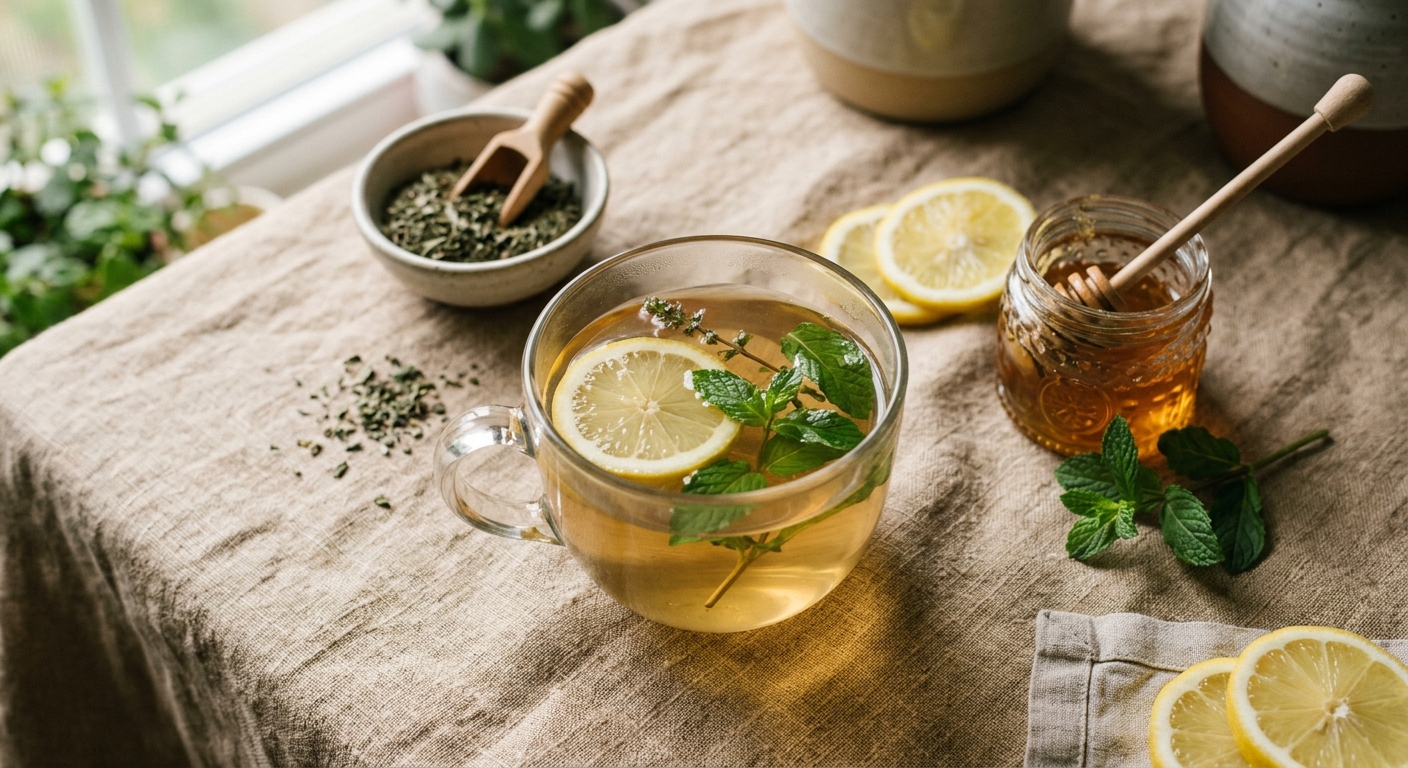
Spearmint (Mentha spicata) has been cherished for centuries across the Mediterranean, Middle East, and North Africa, where it was brewed as a daily digestive tea and offered as a symbol of hospitality. Long before modern endocrinology gave us the vocabulary to describe it, herbalists and traditional healers observed that spearmint tea seemed to ease certain conditions in women, from unwanted facial hair to irregular cycles. Today, that folk wisdom is finding support in clinical research, and spearmint tea is enjoying a quiet renaissance among women seeking gentle, plant-based hormonal support.
What sets spearmint apart from its stronger cousin peppermint is its gentler, sweeter character. It lacks the high menthol concentration of peppermint, which means it is easier on the stomach, less cooling to the nervous system, and far more pleasant as a daily ritual tea. Its active compounds, particularly rosmarinic acid and flavonoids, are believed to interact with androgen receptors, helping to modulate the hormonal environment in women who experience elevated testosterone levels. This makes it particularly interesting for those managing polycystic ovary syndrome, or PCOS, one of the most common hormonal disorders affecting women of reproductive age.
Beyond its hormonal applications, spearmint brings a vibrant, garden-fresh energy to the teacup. The bright green infusion smells like a summer herb garden and tastes clean and uplifting without the sharp intensity of peppermint. Whether you are sipping it hot on a slow morning or drinking it cold as a midday refresh, spearmint tea is one of those rare herbs that manages to be both medicinally meaningful and genuinely delicious. This guide covers everything you need to brew it well, understand what it does, and make it a consistent part of your wellness routine.
2
cups
Ingredients
- 2 tspdried spearmint leaves (or 4 tsp fresh)
- 480 mlwater (90°C / 194°F)
- —raw honey or agave to taste (optional)
- —fresh lemon slice to serve (optional)
How to Brew
Click on an item below to shop for the recommended items for this recipe on Amazon.
As an Amazon Associate, we earn from qualifying purchases.
- Heat filtered water to 90 to 95°C (194 to 203°F). If you do not have a temperature-controlled kettle, bring water to a full boil and let it rest for 60 to 90 seconds before pouring.
- Add 1 teaspoon of dried spearmint leaves per cup (or 2 teaspoons of fresh spearmint) directly into a tea infuser or teapot. For a therapeutic dose targeting hormonal support, use a slightly heaped teaspoon.
- Pour the hot water over the spearmint leaves and cover immediately with a lid or small plate. Covering the infusion traps the volatile aromatic oils that would otherwise escape with the steam.
- Steep for 5 to 7 minutes. A shorter steep of 5 minutes produces a lighter, more refreshing cup. A full 7-minute steep yields a stronger, more robust infusion with greater concentration of active compounds.
- Remove the infuser or strain the leaves through a fine mesh strainer into your mug. Sweeten lightly with raw honey if desired, and add a thin slice of lemon for brightness. Drink while warm.
- Add 3 teaspoons of dried spearmint leaves (or 5 to 6 teaspoons of fresh spearmint) per 480 ml of cold, filtered water into a clean glass jar. Cold brewing requires a higher herb-to-water ratio than hot brewing to achieve full flavor and therapeutic potency.
- Stir gently to ensure all leaves are submerged, then loosely cover the jar with a lid or a piece of muslin cloth secured with a rubber band to allow minimal airflow.
- Leave the jar at room temperature for 30 minutes to allow initial extraction to begin, then transfer to the refrigerator.
- Refrigerate for 8 to 12 hours. An overnight cold brew is ideal and fits naturally into a daily routine. Do not exceed 14 hours, as the flavor can become slightly grassy.
- Strain through a fine mesh strainer or cheesecloth into a clean glass or pitcher. Serve over ice with a fresh sprig of spearmint and a squeeze of lime. The cold brew will keep refrigerated for up to 48 hours.
- Wash a large glass jar thoroughly with hot soapy water and rinse well. Cleanliness is especially important for sun tea since the gentle heat does not sterilize the water.
- Add 4 teaspoons of dried spearmint leaves (or a generous handful of fresh spearmint sprigs) per 480 ml of cold, filtered water. Fresh spearmint is particularly wonderful for sun tea as it releases its aromatic oils slowly under the warmth of the sun.
- Seal the jar with a tight-fitting lid and place it in a spot that receives direct, strong sunlight, such as a sunny windowsill or outdoor patio. The tea brews best in summer sunlight or bright spring conditions.
- Allow the tea to infuse in the sun for 2 to 4 hours. Check at the 2-hour mark. The liquid should be a clear, light green and smell vibrantly fresh and minty. Do not leave in sunlight beyond 4 hours.
- Bring the jar indoors, strain the leaves out through a fine mesh strainer, and refrigerate immediately. Serve chilled over ice, garnished with a fresh sprig of spearmint and a few thin cucumber slices for a cooling, elegant presentation.
Health Benefits
Two small but well-designed randomized controlled trials, including a 2010 study published in Phytotherapy Research, found that women with PCOS who drank two cups of spearmint tea daily for 30 days experienced significant reductions in free and total testosterone levels compared to a placebo group. The anti-androgenic activity appears to be driven primarily by rosmarinic acid and luteolin inhibiting androgen biosynthesis and metabolism.
By reducing circulating androgen levels, regular spearmint tea consumption has been associated with improvements in common PCOS symptoms including hirsutism (unwanted facial and body hair), acne, and menstrual irregularity. Clinical evidence is still emerging, but the existing trials show promising results that support traditional use.
Spearmint has well-established antispasmodic properties, primarily attributed to carvone and other terpenoids, which help relax smooth muscle in the gastrointestinal tract. This makes it effective for relieving bloating, gas, nausea, and cramping, symptoms that frequently accompany hormonal fluctuations during the menstrual cycle.
Spearmint is rich in polyphenols including rosmarinic acid, luteolin, and apigenin, all of which neutralize free radicals and inhibit pro-inflammatory cytokines. Chronic low-grade inflammation is increasingly recognized as a driver of hormonal dysregulation, making spearmint’s anti-inflammatory capacity relevant beyond simple symptom relief.
Emerging research, including studies using spearmint extract supplements, suggests that the polyphenols in spearmint may support working memory and attention, possibly through neuroprotective and acetylcholinesterase-inhibiting activity. While most studies used concentrated extracts rather than tea, the cognitive benefits of regular spearmint consumption are an exciting area of ongoing research.
🧪 Key Bioactive Compounds
The Science Behind Spearmint
The most clinically significant bioactive compound in spearmint for hormonal health is rosmarinic acid, a hydroxycinnamic acid derivative found in high concentrations throughout the Lamiaceae (mint) family. Rosmarinic acid has demonstrated the ability to inhibit 5-alpha reductase, the enzyme responsible for converting testosterone into the more potent dihydrotestosterone (DHT). Elevated DHT is directly associated with androgenic symptoms in women, including hirsutism, scalp hair thinning, acne, and anovulatory cycles. By reducing this conversion, spearmint effectively lowers the androgenic burden on the body without fully suppressing testosterone, which women still require in small physiological amounts.
Two randomized controlled trials are often cited as the clinical foundation for spearmint’s reputation as a hormonal herb. A 2007 pilot study and a more robust 2010 trial by Grant published in Phytotherapy Research demonstrated that women with PCOS who consumed two cups of spearmint tea daily experienced statistically significant reductions in free testosterone and luteinizing hormone (LH) levels after 30 days. LH is the pituitary hormone that stimulates androgen production in the ovaries, so reducing LH surges addresses the hormonal imbalance closer to its source rather than only at the symptomatic level. The flavonoids apigenin and luteolin are thought to contribute to this LH-modulating effect through interactions with gonadotropin-releasing hormone pathways.
Beyond androgen modulation, spearmint’s polyphenol content delivers meaningful antioxidant and anti-inflammatory activity. Chronic low-grade inflammation and oxidative stress are now understood to be key drivers of hormonal dysregulation, insulin resistance, and impaired follicular development in conditions like PCOS. Luteolin and rosmarinic acid inhibit pro-inflammatory cytokines including interleukin-6 (IL-6) and tumor necrosis factor-alpha (TNF-a), while ursolic acid has shown insulin-sensitizing properties in preclinical models. Together, these mechanisms suggest that spearmint tea acts on hormonal health through several complementary pathways, not simply as a single-target androgen blocker, which aligns well with the holistic, systems-based view of plant medicine.
Brewing Tips
- For hormonal support, consistency matters more than quantity. Two cups of spearmint tea daily for at least 30 days is the protocol used in clinical trials, so build it into a routine such as one cup after breakfast and one after dinner rather than drinking large amounts sporadically.
- Fresh spearmint and high-quality dried spearmint are not interchangeable in terms of convenience, but both are effective. If using fresh spearmint from a garden or market, double the amount called for in the recipe and bruise the leaves lightly between your fingers before adding to water to help release the volatile oils.
- Store dried spearmint in an airtight glass jar away from direct sunlight and heat. Properly stored dried spearmint retains its flavor and potency for up to 12 months. If your dried spearmint smells dusty or faint rather than bright and minty, it is past its prime and should be replaced for best results.