Few herbal pairings carry as much cross-cultural prestige as yerba mate and ginseng. Yerba mate (Ilex paraguariensis) has been cherished by the indigenous Guaraní people of South America for centuries, brewed in a hollowed gourd and sipped through a metal straw called a bombilla. It was considered a sacred gift from the gods, used to sustain warriors, hunters, and long journeys through the forest. Today it remains a daily ritual for millions across Argentina, Brazil, Uruguay, and Paraguay. Ginseng, particularly Panax ginseng from East Asia, has an equally storied past, appearing in traditional Chinese medicine for over 2,000 years as the supreme adaptogenic root, revered for restoring vitality, sharpening the mind, and extending longevity.
What makes this blend so compelling is not simply that both herbs provide energy, but that they do so through entirely different and complementary mechanisms. Yerba mate delivers a matrix of caffeine, theobromine, and theophylline alongside a rich profile of antioxidants and chlorogenic acids, producing a smooth, sustained stimulation that many drinkers describe as more focused and less anxious than coffee. Ginseng contributes its famous ginsenosides, adaptogenic compounds that help the body manage stress while supporting cognitive function, memory, and immune resilience. Together they create a synergistic cup that lifts alertness while grounding the nervous system.
The sensory experience is equally rewarding. Yerba mate brings a bold, grassy, slightly smoky depth with pleasant bitterness, while ginseng adds an earthy warmth and a faint sweetness that rounds out the edges. The resulting brew is complex, invigorating, and deeply satisfying at any time of day when mental clarity and sustained energy are the goal.
2
cups
Ingredients
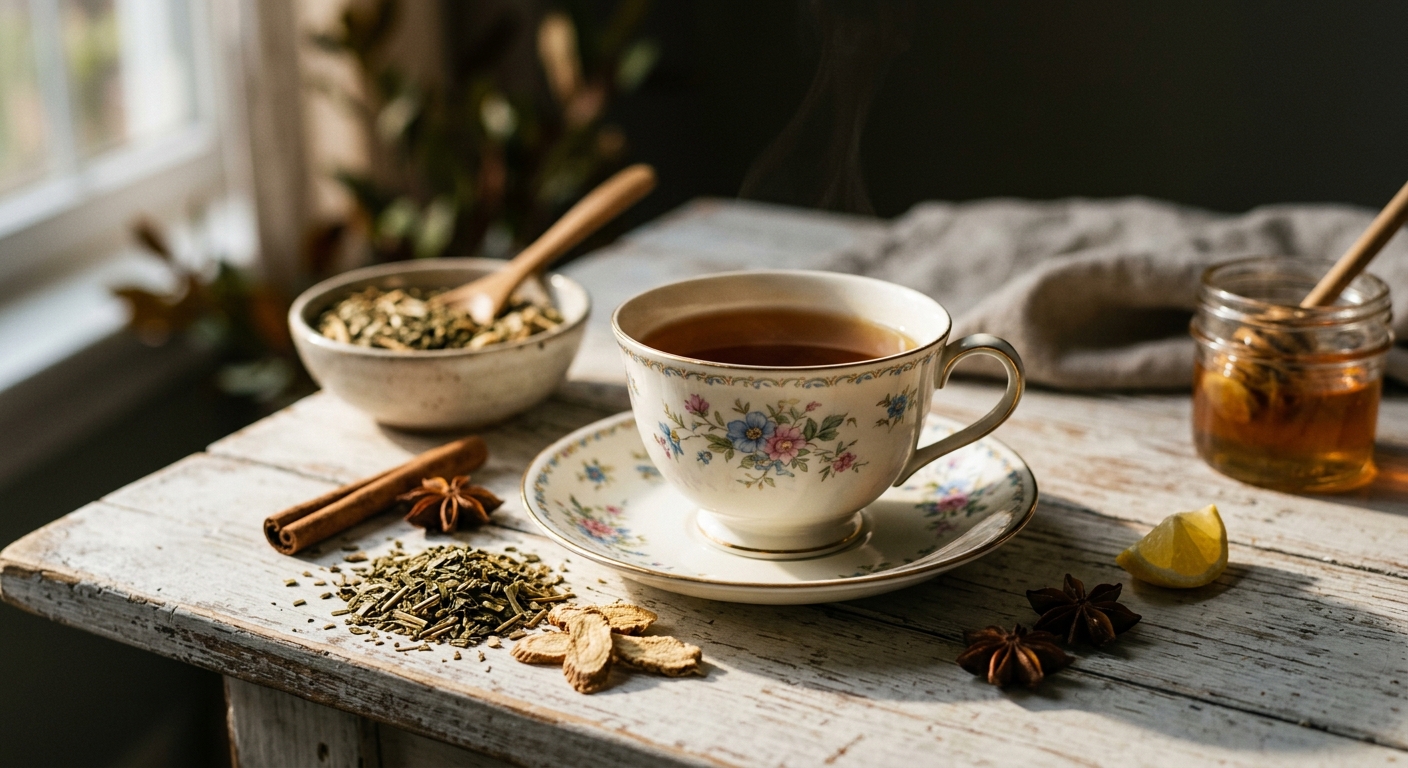
- 2 tsploose-leaf yerba mate
- 1 tspdried ginseng root slices (or ginseng powder)
- 480 mlwater (80°C / 176°F)
- —raw honey or agave to taste (optional)
- —lemon wedge (optional)
How to Brew
Click on an item below to shop for the recommended items for this recipe on Amazon.
As an Amazon Associate, we earn from qualifying purchases.
- Heat your water to 78 to 82°C (172 to 180°F) using an electric kettle with temperature control. If you lack a thermometer, bring water to a boil and let it cool for 3 to 4 minutes.
- If using dried ginseng root slices, place them in your infuser or teapot first and allow them a 1-minute head start in the hot water before adding the yerba mate. This helps extract the denser ginsenosides more fully.
- Add 2 teaspoons of loose-leaf yerba mate to the infuser alongside the ginseng. Place the infuser into your mug or teapot and pour the hot water over the herbs.
- Steep for 4 to 6 minutes. Check at 4 minutes for a lighter, more delicate cup or let it go to 6 minutes for a bolder, more robust brew.
- Remove the infuser and discard the herbs. Sweeten with raw honey or agave if desired, or add a squeeze of lemon to brighten the flavor and enhance antioxidant absorption.
- Yerba mate leaves can be re-steeped 2 to 3 times. Each subsequent infusion becomes slightly lighter but remains flavorful and energizing.
- Combine 3 teaspoons of loose-leaf yerba mate and 1.5 teaspoons of dried ginseng root slices in a glass jar. The higher ratio compensates for the slower cold extraction.
- Pour 480 ml of cold, filtered water over the herbs. Stir gently to ensure all plant material is saturated, then loosely cover the jar with a lid or cloth.
- Allow the jar to sit at room temperature for 1 hour to begin extraction, then transfer to the refrigerator for 10 to 14 hours (overnight works perfectly).
- The next morning, strain the brew through a fine mesh strainer or cheesecloth into a clean pitcher or bottle, pressing the herbs gently to extract remaining liquid.
- Serve over ice in tall glasses. Add honey syrup, a slice of orange, or a few fresh mint leaves for a refreshing variation. The cold brew keeps refrigerated for up to 48 hours.
- Place 1.5 teaspoons of dried ginseng root slices in a small saucepan with 540 ml of cold water. Bring the water slowly to a gentle boil over medium heat.
- Reduce the heat and simmer the ginseng uncovered for 15 to 20 minutes. The water will reduce and take on a pale amber hue with a distinctly earthy, warming aroma. Add a splash of extra water if needed to maintain volume.
- Remove the pan from heat and allow the ginseng decoction to cool to 78 to 82°C (172 to 180°F), approximately 3 to 4 minutes. Strain out and discard the ginseng slices.
- Place 2 teaspoons of loose-leaf yerba mate in a tea infuser. Pour the warm ginseng decoction directly over the infuser into your mug or teapot.
- Steep the yerba mate in the ginseng liquid for 4 to 5 minutes. The ginseng base acts as a flavored brewing liquid rather than plain water, intensifying the complexity of the final cup.
- Remove the infuser and sip as-is, or sweeten lightly with honey. This method produces the richest, most concentrated blend and is best enjoyed as a morning ritual or before demanding mental work.
Health Benefits
Yerba mate’s unique combination of caffeine, theobromine, and theophylline creates a more gradual and prolonged stimulant effect compared to coffee. The presence of B vitamins and magnesium further supports cellular energy metabolism, reducing the sharp spike-and-crash pattern many coffee drinkers experience.
Ginsenosides in ginseng have been shown in multiple clinical trials to improve working memory, reaction time, and mental arithmetic, particularly in healthy adults under cognitive stress. Combined with yerba mate’s caffeine-driven adenosine blockade, the blend supports both alertness and higher-order mental processing.
Panax ginseng is one of the most studied adaptogens in the world, with evidence supporting its ability to lower cortisol levels and reduce the physiological burden of chronic stress. This balancing effect complements the stimulating nature of yerba mate, helping to prevent overstimulation and nervous tension.
Yerba mate contains significantly higher antioxidant levels than green tea, attributed to its dense polyphenol content including chlorogenic acids, rutin, and quercetin. These compounds neutralize free radicals, reduce systemic inflammation, and support long-term cardiovascular health.
Ginseng has demonstrated immunomodulatory effects in clinical research, stimulating the production of natural killer cells and enhancing the body’s adaptive immune response. Yerba mate also contributes saponins and polyphenols that have been linked to anti-inflammatory and mild antimicrobial activity.
🧪 Key Bioactive Compounds
The Science Behind Yerba Mate
The energizing power of yerba mate comes from its rare co-occurrence of three methylxanthine alkaloids: caffeine, theobromine, and theophylline. Caffeine is the primary driver, blocking adenosine receptors in the brain to prevent the accumulation of the fatigue signal. But it is the supporting presence of theobromine, also found in cacao, that distinguishes mate from coffee. Theobromine is a weaker stimulant with a longer half-life, which smooths out the stimulation curve, offering hours of calm alertness rather than a sharp peak. Theophylline, meanwhile, lends a mild bronchodilatory effect that can subtly improve oxygenation, contributing to the sense of physical and mental readiness many mate drinkers report.
Ginseng’s bioactive compounds are its ginsenosides, a family of triterpenoid saponins that interact with the hypothalamic-pituitary-adrenal (HPA) axis, the central stress regulation system of the body. Ginsenoside Rg1 has demonstrated stimulating, nootropic effects, increasing the release of acetylcholine and dopamine in key brain regions associated with memory and motivation. Ginsenoside Rb1, in contrast, exerts neuroprotective effects by reducing oxidative stress in neuronal tissue and supporting long-term potentiation, a cellular mechanism underlying memory formation. This dual action gives ginseng its reputation as both an energizer and a calming cognitive tonic simultaneously.
When combined, the two herbs create a layered neurochemical environment. The adenosine blockade from yerba mate’s caffeine heightens immediate alertness and reduces mental fog, while ginseng’s adaptogenic modulation of cortisol prevents the HPA axis from being overdriven by stimulant activity. Preliminary research also suggests that polyphenols in yerba mate may influence gut microbiota favorably and slow intestinal glucose absorption via chlorogenic acid, contributing to more stable blood sugar and sustained energy. Together, they represent one of the most pharmacologically coherent and historically validated energy and focus pairings in the herbal world.
Brewing Tips
- Always brew yerba mate below 85°C (185°F) to avoid extracting excessive bitterness and tannins. This temperature range is lower than most teas and is critical to a smooth, enjoyable cup.
- If using ginseng powder rather than root slices, reduce the amount to half a teaspoon as the powder extracts much more quickly and intensely, and can overwhelm the flavor balance.
- Avoid drinking this blend within 6 hours of bedtime. The combined stimulant load of caffeine from yerba mate and the activating ginsenosides in ginseng can significantly delay sleep onset even in moderate caffeine consumers.