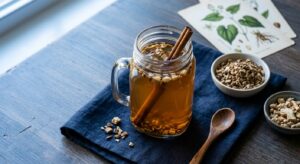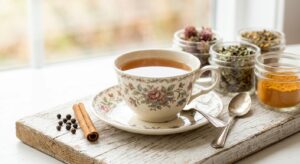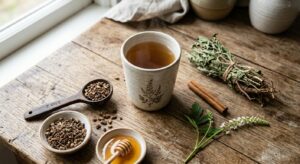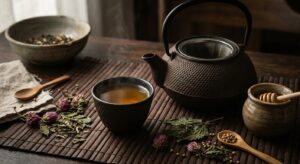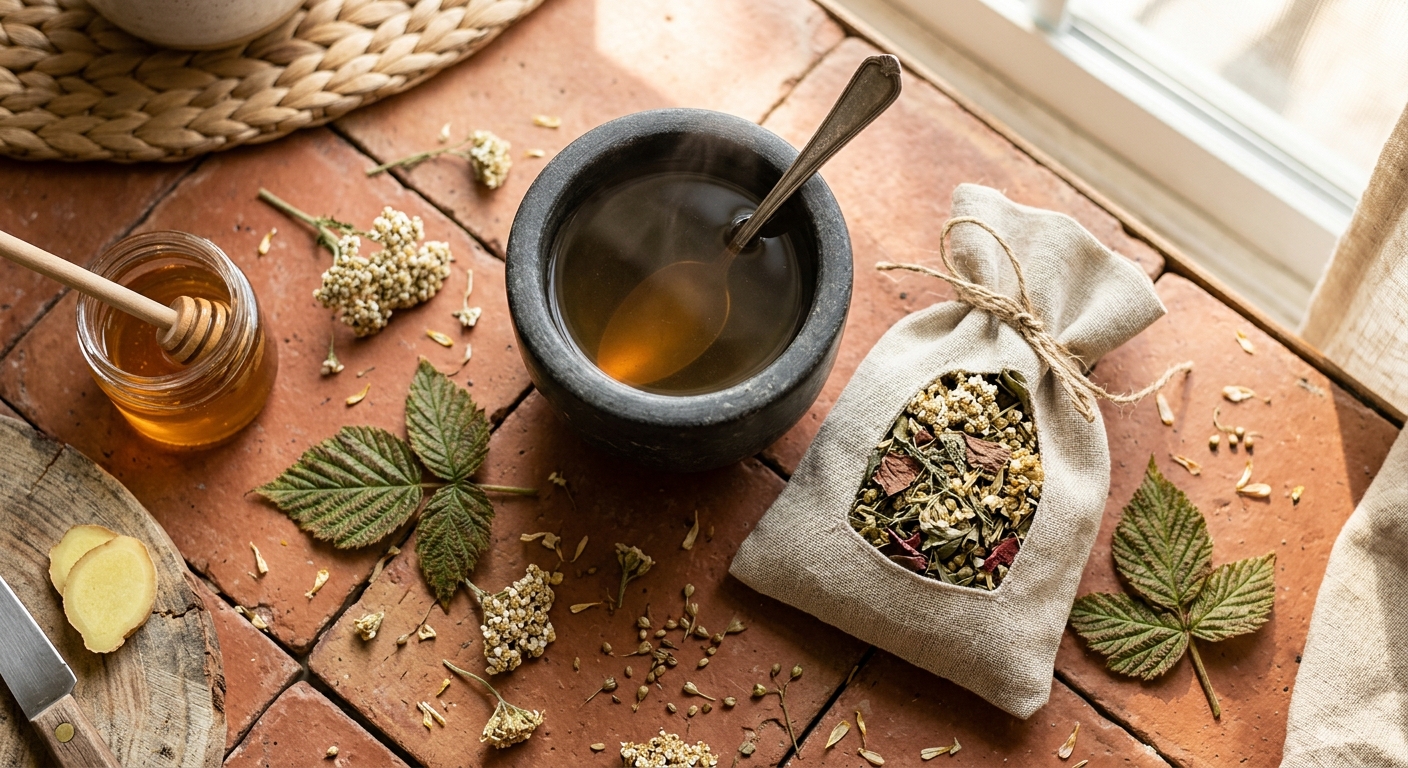
For as long as women have gathered herbs, they have turned to the plant kingdom for support during menstruation. Yarrow (Achillea millefolium), red raspberry leaf (Rubus idaeus), and shepherd’s purse (Capsella bursa-pastoris) form a classic trio found in traditional European and North American folk medicine, each valued for its distinct contribution to menstrual health. Yarrow was carried by Greek soldiers to staunch battlefield wounds, and that same hemostatic reputation translated directly into its use by herbalists for managing heavy menstrual bleeding. Shepherd’s purse, a humble roadside weed, was documented in 17th-century European herbals as a reliable remedy for uterine bleeding, while red raspberry leaf has long been celebrated as the quintessential women’s tonic herb across Indigenous North American and European traditions alike.
What makes this blend particularly compelling is how the three herbs complement one another. Yarrow contributes bitter compounds and flavonoids that help tone blood vessels and reduce excessive flow. Shepherd’s purse adds its own hemostatic alkaloids, which herbalists have historically used specifically for uterine bleeding. Red raspberry leaf rounds out the formula with its high tannin content and fragarine, a plant alkaloid believed to gently tone uterine muscle tissue, potentially reducing cramping and normalizing contractions. Together, they create a synergistic cup that addresses not just heavy flow but the fatigue, cramping, and general pelvic discomfort that often accompany it.
This tea is best started two to three days before your period is expected and continued through the heaviest days of your cycle. Drinking two to three cups daily during this window is the traditional protocol endorsed by Western herbalists such as Rosemary Gladstar and Susun Weed. The flavor is earthy and mildly astringent with a pleasant grassy warmth, particularly inviting when sweetened lightly with raw honey or a slice of warming ginger. Whether you are seeking an alternative to over-the-counter options or simply want to complement your existing care routine with plant medicine, this blend deserves a place in your herbal toolkit.
2
cups
Ingredients
- 1.5 tspdried yarrow flowers and leaves
- 1.5 tspdried red raspberry leaf
- 1 tspdried shepherd’s purse herb
- 480 mlwater (95°C / 203°F)
- —raw honey to taste (optional)
- —thin slice of fresh ginger (optional)
How to Brew
Click on an item below to shop for the recommended items for this recipe on Amazon.
As an Amazon Associate, we earn from qualifying purchases.
- Bring filtered water to 93 to 96°C (200 to 205°F). Do not use a full rolling boil, as excessive heat can degrade some of the more delicate flavonoids in yarrow.
- Combine 1.5 teaspoons dried yarrow, 1.5 teaspoons dried red raspberry leaf, and 1 teaspoon dried shepherd’s purse in a tea infuser, reusable muslin bag, or directly into a teapot.
- Pour 480 ml of hot water over the herbs and immediately cover the mug or teapot with a lid or small saucer to trap the aromatic volatile oils.
- Steep for 10 to 15 minutes. The longer end of this range extracts more astringent tannins for heavier flow days; the shorter end gives a milder, more pleasant daily-use cup.
- Remove the infuser and strain thoroughly. Add a thin slice of fresh ginger and a small drizzle of raw honey if desired, then sip slowly while warm.
- Measure out 3 teaspoons dried yarrow, 3 teaspoons dried red raspberry leaf, and 2 teaspoons dried shepherd’s purse. Because cold water extracts compounds more slowly, this method uses approximately double the herb quantity per 480 ml compared to hot brewing.
- Place the herbs in a clean glass jar. Pour 480 ml of cold, filtered water over the herbs and stir briefly to ensure all plant material is submerged.
- Seal the jar with a lid and leave it at room temperature for 1 hour to begin the extraction, then transfer to the refrigerator.
- Allow to infuse in the refrigerator for a total of 8 to 12 hours. An overnight steep is ideal for morning use.
- Strain the liquid through a fine mesh strainer or cheesecloth into a clean glass, pressing the herbs gently to extract all the liquid.
- Serve over ice or lightly chilled. Stir in a small amount of honey or a squeeze of lemon juice if desired. The cold brew will keep refrigerated for up to 24 hours.
- Place 2 teaspoons dried yarrow, 2 teaspoons dried red raspberry leaf, and 1.5 teaspoons dried shepherd’s purse directly into a small stainless steel or ceramic saucepan. Add 600 ml of cold filtered water.
- Bring the water and herbs to a very gentle simmer over medium-low heat. Do not allow the liquid to reach a full rolling boil, as this can destroy heat-sensitive flavonoids and drive off aromatic volatile oils.
- Once simmering, reduce heat to low and maintain a steady, gentle simmer uncovered for 20 to 25 minutes. The liquid will reduce by roughly 20 percent, concentrating the herbal constituents.
- Remove from heat and allow the decoction to sit, covered with a lid, for an additional 5 minutes to let residual steeping occur and aromatic compounds settle back into the liquid.
- Strain through a fine mesh strainer or cheesecloth into a mug, pressing the spent herbs firmly to recover all liquid. You should have approximately 1 to 1.5 cups of strong, concentrated tea.
- Sip the decoction slowly in 2 divided doses over the course of a heavy flow day. Sweeten with raw honey or add a small cinnamon stick during the simmer for warmth and palatability.
Health Benefits
Yarrow and shepherd’s purse are both classified as hemostatic herbs in traditional Western herbalism, meaning they have historically been used to slow or reduce abnormal bleeding. The rutin in yarrow strengthens capillary integrity, while shepherd’s purse contains bursinic acid and other compounds that may help contract uterine vasculature to moderate excessive flow.
The apigenin and achillin in yarrow act as antispasmodics on smooth muscle tissue, including the uterus. Red raspberry leaf’s fragarine is similarly thought to produce a toning effect on uterine muscle, reducing the intensity and frequency of cramping contractions driven by prostaglandin activity.
Red raspberry leaf has been used for generations as a uterine tonic, not merely during pregnancy but throughout a woman’s reproductive life. The combination of tannins and fragarine is believed to help maintain balanced uterine muscle tone, potentially improving the rhythm and comfort of the menstrual cycle over time with regular use.
Elevated prostaglandin levels drive both heavy flow and painful cramping. The flavonoids in yarrow, particularly apigenin and luteolin, inhibit cyclooxygenase pathways associated with prostaglandin synthesis, offering a mechanism comparable in direction (though gentler in magnitude) to non-steroidal anti-inflammatory drugs.
Red raspberry leaf is notably rich in bioavailable calcium, magnesium, and iron, nutrients that are depleted during heavy menstrual bleeding. Regular consumption of this blend may help partially offset the mineral loss that contributes to fatigue and muscle tension during heavy periods.
🧪 Key Bioactive Compounds
The Science Behind Yarrow
The hemostatic and antispasmodic reputation of this blend is rooted in identifiable phytochemistry rather than folklore alone. Yarrow’s sesquiterpene lactones, particularly achillin and its derivatives, have demonstrated smooth muscle relaxant properties in laboratory studies, offering a plausible mechanism for the herb’s traditional use in easing uterine cramping. Simultaneously, yarrow’s bioflavonoid rutin works at the vascular level: by reducing capillary fragility and permeability, it may help limit the volume of blood lost during menstruation at its source. These two actions, muscle relaxation and vascular toning, represent a genuinely complementary approach to the two primary complaints of heavy periods.
Shepherd’s purse (Capsella bursa-pastoris) has received relatively limited modern clinical study compared to many popular herbs, but what research exists is consistent with its historical use. Early pharmacological studies identified peptides and organic acids in the plant, including bursinic acid, that produced uterine-contracting and hemostatic effects in animal models. A constituent called bursine has also demonstrated oxytocin-like activity, providing a molecular explanation for the herb’s long-standing use in European midwifery for postpartum hemorrhage, a traditional application that strongly parallels its use in heavy menstrual flow. These findings validate the concerns around its use in pregnancy as well.
Red raspberry leaf’s active compound fragarine has been studied most specifically in the context of pregnancy, but the underlying mechanism, the ability to tone uterine smooth muscle by influencing calcium ion movement in muscle cells, is relevant throughout reproductive life. Combined with the herb’s exceptional mineral density (it is one of the richest plant sources of bioavailable magnesium, which itself acts as a natural muscle relaxant and prostaglandin modulator), raspberry leaf provides both direct and nutritional pathways to menstrual comfort. The tannin content of all three herbs also contributes an astringent action on the vascular and mucosal tissues of the uterine lining, creating a multi-compound, multi-pathway blend that genuinely justifies its centuries of traditional use.
Brewing Tips
- Begin drinking this tea two to three days before your expected period start date and continue through the first two to three days of heaviest flow for the most noticeable effects over consecutive cycles.
- Source shepherd’s purse from a reputable herbal supplier and check that it was harvested before the plant set seed, as the hemostatic compounds are most concentrated in the aerial parts during the flowering stage.
- If the astringency of yarrow is too pronounced for your palate, reduce the yarrow slightly and increase the red raspberry leaf. The raspberry leaf is the most palatable of the three and can form the base of the blend without compromising the overall therapeutic intent.