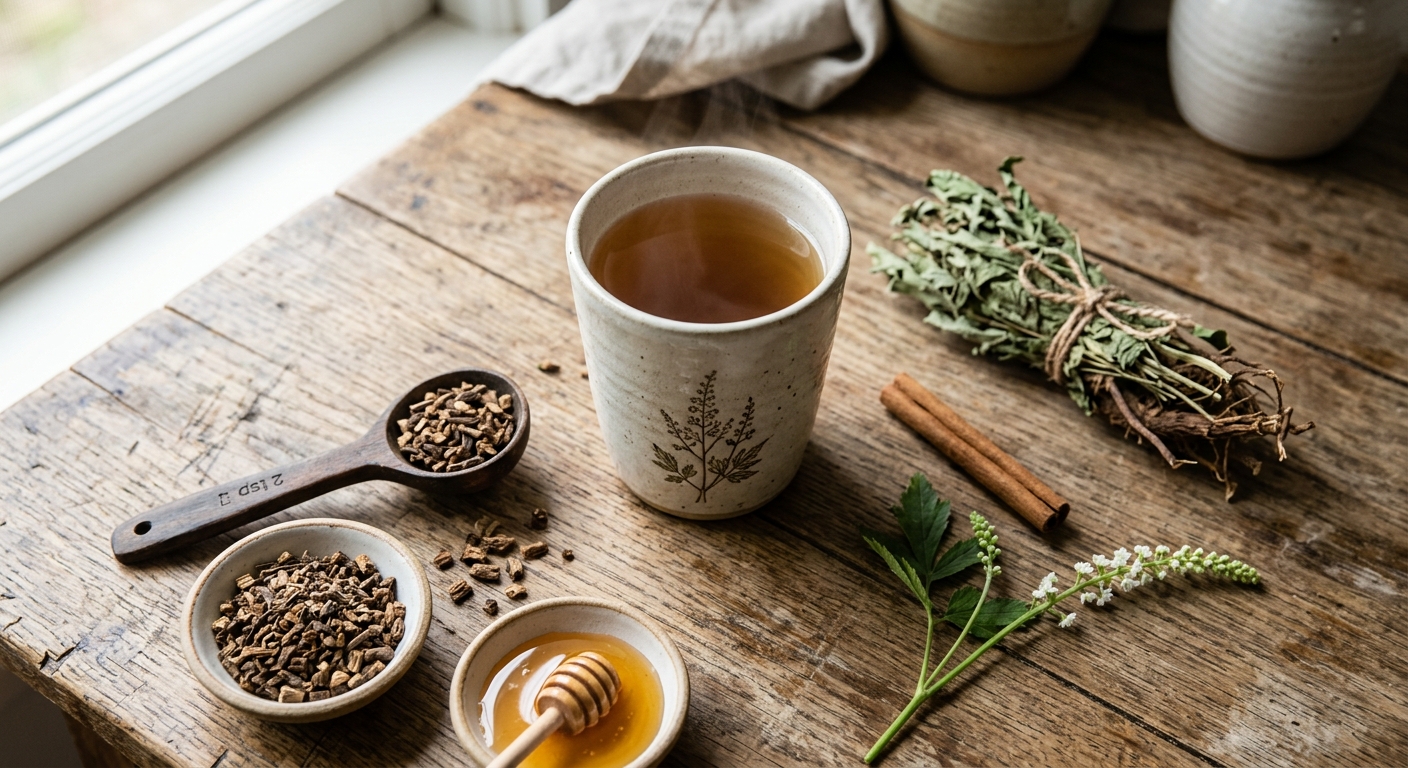
Long before European settlers arrived in North America, Indigenous nations including the Algonquin, Cherokee, and Iroquois were brewing the knotted, dark roots of black cohosh into medicinal teas and decoctions. They used it to ease menstrual cramps, support women during childbirth, and address a wide range of conditions they recognized as connected to the female reproductive system. The plant’s common name is thought to derive from an Algonquian word meaning ‘rough’ or ‘bumpy,’ a nod to the gnarled texture of its rhizome, while its genus name Actaea speaks to its place in the buttercup family, Ranunculaceae.
By the 19th century, black cohosh had crossed cultural lines and become a staple of American eclectic medicine, appearing in Lydia Pinkham’s famous vegetable compound and prescribed widely by physicians of the era for ‘female complaints.’ German physicians took a deep interest in the plant during the 20th century, and today standardized black cohosh extract remains one of the most clinically studied herbal medicines in Europe for menopausal symptom relief. The German Commission E, an authoritative body on herbal medicine, approved black cohosh preparations for precisely this use.
What makes black cohosh tea a genuinely compelling choice is the depth of both its traditional roots and its modern scientific investigation. Brewed as a decoction from the dried rhizome, it yields a dark, earthy, mildly bitter cup with a woodsy warmth that feels grounding and medicinal. It is not a delicate floral tea but rather a purposeful brew, one that has supported women through cycles, transitions, and the profound shift of menopause for centuries. Whether you are exploring it for hot flashes, mood shifts, or menstrual discomfort, understanding how to brew it properly is essential to drawing out its active compounds effectively.
2
cups
Ingredients
- 2 tspdried black cohosh root or rhizome, coarsely ground
- 500 mlwater (for hot decoction)
- —raw honey or licorice root to taste (optional, to balance bitterness)
- —cinnamon stick (optional, for warmth and flavor)
How to Brew
Click on an item below to shop for the recommended items for this recipe on Amazon.
As an Amazon Associate, we earn from qualifying purchases.
- Measure 2 teaspoons of coarsely ground or broken dried black cohosh root per 500 ml of cold, filtered water and add both directly to a small saucepan. Starting in cold water allows the root fibers to gradually open as the temperature rises, improving extraction.
- Place the saucepan over medium-high heat and bring the water to a full rolling boil, uncovered. Once boiling, reduce the heat to low so the liquid maintains a gentle but active simmer.
- Simmer uncovered for 20 to 25 minutes. You will notice the liquid deepen to a rich amber or dark brown color as compounds release from the root. Stir occasionally and add a splash of water if significant evaporation occurs.
- Remove from heat and allow the decoction to rest for 5 minutes off the burner. This brief resting period lets any remaining compounds settle and the flavor mellow slightly.
- Strain through a fine mesh strainer or cheesecloth into a heatproof mug or teapot, pressing the spent root material gently to extract remaining liquid. Add honey, a cinnamon stick, or a small piece of licorice root to balance the earthy bitterness, and drink while warm.
- Measure 3 teaspoons of finely ground dried black cohosh root per 500 ml of cold, filtered water. The finer grind compensates for the lack of heat, increasing surface area for passive extraction.
- Combine the ground root and cold water in a clean glass jar. Stir thoroughly to ensure all the root material is submerged and fully saturated. Cover loosely with a cloth or lid left slightly ajar.
- Allow the jar to sit at room temperature for approximately 2 hours to initiate extraction, then seal the lid fully and transfer to the refrigerator.
- Refrigerate for an additional 10 to 14 hours, for a total infusion time of 12 to 16 hours. Avoid steeping beyond 18 hours as prolonged cold extraction can introduce off-flavors from the root material.
- When ready, strain through a fine mesh strainer lined with cheesecloth, pressing the spent root firmly to recover all liquid. The resulting brew will be a medium amber color and noticeably less bitter than the hot decoction. Serve chilled over ice or gently warmed in a small saucepan without boiling. Add a small amount of honey or fresh ginger juice to brighten the flavor if desired.
- Combine 4 teaspoons of coarsely ground dried black cohosh root with 750 ml of cold filtered water in a medium saucepan. The higher water volume accounts for intentional evaporation during the extended simmer.
- Bring to a full boil over medium-high heat, then reduce immediately to a steady low simmer. Cover the pan with a lid that is slightly ajar to allow steam to escape while retaining most of the liquid.
- Simmer for 35 to 45 minutes, checking every 10 minutes. The liquid should reduce by roughly one third to one half, concentrating the active compounds into approximately 300 to 375 ml of finished liquid. Add small amounts of water only if the level drops too low before the time is complete.
- Remove from heat and strain thoroughly through a fine mesh strainer lined with cheesecloth into a clean heatproof glass jar. Press the spent root firmly. Allow the concentrate to cool completely before sealing.
- Store the sealed concentrate in the refrigerator for up to 4 days. To serve, dilute one part concentrate with two to three parts hot water or a mild herbal tea such as chamomile or ginger tea. Taste before adding sweetener, as dilution reduces bitterness considerably. Do not consume undiluted concentrate directly.
Health Benefits
Multiple randomized controlled trials and systematic reviews, including studies published in peer-reviewed menopause journals, have found that black cohosh preparations significantly reduce the frequency and severity of hot flashes compared to placebo. The mechanism is thought to involve serotonin receptor modulation rather than direct estrogenic activity, which is why it is considered distinct from hormone replacement therapy.
Several clinical studies report reductions in anxiety, irritability, and depressive symptoms in perimenopausal and menopausal women using black cohosh. This is consistent with the herb’s interaction with serotonin and dopamine pathways, which play a central role in mood regulation during hormonal transitions.
Black cohosh has a long history of use by Indigenous healers and 19th century eclectic physicians for dysmenorrhea. Its antispasmodic activity on smooth muscle tissue, combined with anti-inflammatory compounds, may help reduce uterine cramping and pelvic discomfort associated with menstruation.
Preliminary research suggests that certain triterpene glycosides in black cohosh, particularly 23-epi-26-deoxyactein, may stimulate osteoblast activity and help slow bone mineral density loss that accelerates after menopause. While evidence remains early-stage, it aligns with traditional observations about the herb’s long-term benefits for postmenopausal women.
Traditional uses of black cohosh extended to muscle pain, rheumatic complaints, and nerve-related discomfort, uses that are supported by the herb’s content of isoferulic acid and other phenolic compounds with documented anti-inflammatory and mild analgesic properties in preclinical studies.
🧪 Key Bioactive Compounds
The Science Behind Black Cohosh
For decades, researchers assumed black cohosh worked by mimicking estrogen, leading to both enthusiasm and concern about its use in women with hormone-sensitive cancers. More recent and rigorous investigations have largely revised this view. The current scientific consensus leans toward a non-estrogenic mechanism, with the herb’s primary bioactive triterpene glycosides, most notably actein and 23-epi-26-deoxyactein, appearing to interact with serotonin receptors, particularly the 5-HT1A and 5-HT7 subtypes, rather than binding directly to estrogen receptors in reproductive tissue. This serotonergic activity may explain the herb’s effects on thermoregulation and mood, two systems heavily influenced by serotonin signaling during the menopausal transition.
The anti-inflammatory phenolic acids found in black cohosh root, including isoferulic acid and fukinolic acid, contribute additional layers of activity. These compounds inhibit pro-inflammatory cytokine production through pathways similar to those targeted by non-steroidal anti-inflammatory drugs, which supports the traditional use of the herb for cramping, muscle aches, and rheumatic complaints. The antispasmodic activity observed in smooth muscle tissue preparations provides a plausible biochemical basis for black cohosh’s historical reputation as a remedy for uterine cramping and pelvic pain, though controlled clinical trials specifically on dysmenorrhea remain limited and represent an important gap in current research.
Questions about hepatotoxicity, while serious, have not been conclusively resolved. Spontaneous case reports have associated black cohosh use with liver injury, prompting warnings from regulatory agencies in several countries. However, systematic pharmacovigilance reviews and laboratory studies have not identified a clear toxic compound or consistent dose-response pattern. Some researchers have proposed that adulteration with related Actaea species, which do contain compounds with different toxicity profiles, may account for a proportion of reported cases. What is clear is that quality sourcing from reputable suppliers who test for botanical identity, and adherence to recommended usage durations of no more than six months continuously, remain the most prudent strategies for minimizing any potential risk while benefiting from this historically significant medicinal plant.
Brewing Tips
- Always source black cohosh root from a reputable supplier that provides third-party testing for botanical identity, as adulteration with related Actaea species is a documented problem in the commercial supply chain and may affect both safety and efficacy.
- Grind your dried root just before brewing using a dedicated spice or coffee grinder, as pre-ground material loses volatile aromatic compounds and oxidizes more quickly, reducing both flavor complexity and potency over time.
- Consistency matters with black cohosh: clinical studies showing meaningful benefit typically involved daily use for a minimum of four to eight weeks before significant symptom relief was reported, so do not judge its effectiveness based on a single cup or a few days of use.