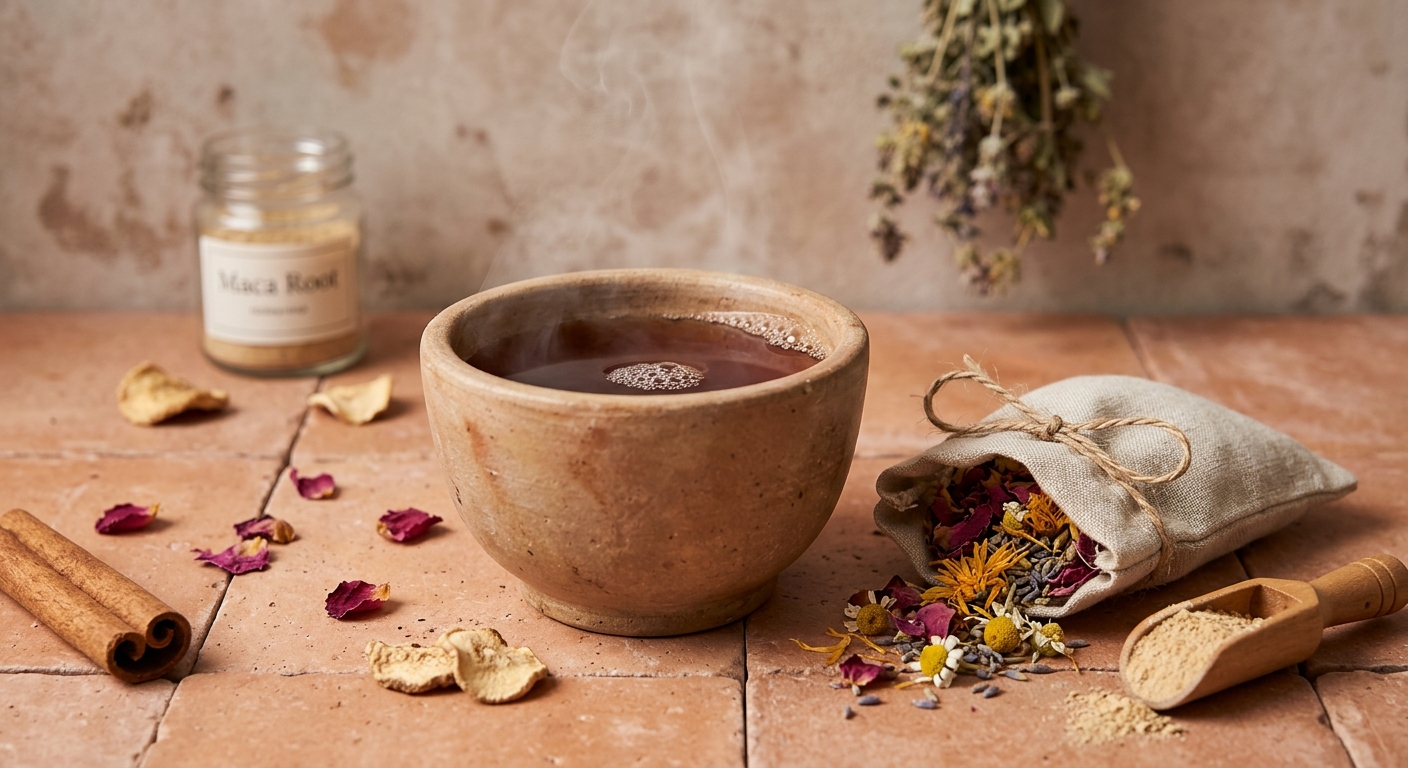
High in the Peruvian Andes, at altitudes above 4,000 meters where almost nothing else survives, a small, turnip-like root has been cultivated for more than 3,000 years. Maca (Lepidium meyenii) was prized by Incan warriors for stamina before battle and traded as currency among Andean communities. Inca women used it to support fertility, smooth the transition through menopause, and restore energy after childbirth. Spanish colonists were so struck by its reputation that they sent it back to Europe as a curiosity of the New World. Today, maca has found its way into modern kitchens, supplement shelves, and teacups around the world, carrying that same ancient promise of resilience and vitality.
What makes maca particularly meaningful for women is its status as an adaptogen, a plant that helps the body respond more intelligently to physical and hormonal stress. Unlike phytoestrogenic herbs such as red clover or soy, maca does not supply the body with external hormones. Instead, it works through the hypothalamic-pituitary-adrenal axis, helping the endocrine system regulate itself more effectively. This makes it a versatile companion across the full arc of a woman’s life, whether the goal is easing PMS irritability, sustaining energy through the luteal phase, softening perimenopausal mood swings, or simply feeling more grounded on a difficult week.
Prepared as a tea, maca root offers a deeply nourishing, malty-earthy flavor with a gentle warmth that makes it feel more like a tonic than a typical herbal brew. It pairs beautifully with cinnamon for circulation, ashwagandha for adrenal support, or a touch of raw honey to soften its robust earthiness. Whether you are discovering maca for the first time or returning to a root you already know, this guide walks you through everything: the science, the history, and the most rewarding ways to brew it.
2
cups
Ingredients
- 2 tspmaca root powder (gelatinized preferred) or 1 tbsp maca root chips
- 1 tspground cinnamon or one cinnamon stick
- 480 mlwater (95°C / 203°F)
- —raw honey or maple syrup to taste (optional)
- —splash of oat milk or coconut milk (optional)
How to Brew
Click on an item below to shop for the recommended items for this recipe on Amazon.
As an Amazon Associate, we earn from qualifying purchases.
- Heat filtered water to 90 to 95°C (194 to 203°F). Avoid a full rolling boil, as excessive heat can degrade some of maca’s delicate glucosinolates and volatile aromatics.
- If using maca root chips, place them in a small saucepan with the cinnamon stick and 480 ml of water. Bring to a gentle simmer and maintain for 10 to 15 minutes, allowing the root material to fully release its compounds. If using maca powder, whisk it into your mug with a tablespoon of hot water first to form a smooth paste before adding the remaining water.
- Strain the liquid through a fine mesh strainer or cheesecloth into two warmed mugs. Maca sediment is harmless but gritty, so a thorough strain makes for a much more pleasant cup.
- Add the ground cinnamon (if not using a stick) and stir well. Taste the tea before sweetening, as the natural butterscotch notes of maca are often satisfying on their own.
- Stir in raw honey or maple syrup if desired, and finish with a splash of oat milk or coconut milk to create a latte-style tonic that is as comforting as it is nourishing.
- Combine 2 teaspoons of gelatinized maca powder or 2 tablespoons of maca root chips with 500 ml of cool filtered water in a glass jar. Add a cinnamon stick at this stage if desired for a slow, cold infusion of spice.
- Stir or shake the jar vigorously to disperse the powder, then seal the jar with a lid. Allow the jar to sit at room temperature for 30 minutes so the maca begins to hydrate before refrigerating.
- Place the sealed jar in the refrigerator and allow it to steep overnight, or for a minimum of 10 hours. The cold temperature slows extraction, drawing out the sweeter, milder aromatic compounds while leaving behind some of the harsher earthy bitterness.
- The next morning, shake the jar again and strain the liquid through a fine mesh strainer lined with cheesecloth into a pitcher or directly into glasses filled with ice.
- Taste and adjust by adding a drizzle of honey, a squeeze of fresh orange juice for brightness, or a splash of coconut milk. Serve cold over ice for a refreshing, hormone-supportive morning tonic.
- Measure 2 tablespoons of dried maca root chips or slices and place them in a small saucepan along with one cinnamon stick, and optionally a small slice of fresh ginger for additional warming properties.
- Pour 600 ml of cold filtered water over the root material. Starting with cold water allows for a gradual extraction that pulls a broader spectrum of compounds from the dense root tissue.
- Bring the saucepan to a gentle simmer over medium-low heat. Do not allow it to reach a vigorous boil. Maintain the simmer for 20 to 30 minutes, topping up with a small splash of water if the volume reduces significantly.
- Remove from heat and allow the decoction to rest, covered, for a further 5 minutes. This resting phase allows volatile aromatic compounds to settle back into the liquid rather than escape as steam.
- Strain the decoction through a fine mesh strainer into two mugs, pressing the spent root material gently with the back of a spoon to extract the last of the liquid. Sweeten with raw honey and add a splash of full-fat coconut milk for a rich, tonic-style drink.
Health Benefits
Unlike soy or red clover, maca does not introduce plant estrogens into the body. Instead, clinical studies, including a 2006 trial published in Menopause, suggest it acts on the hypothalamic-pituitary axis to encourage the body’s own endocrine regulation, making it appropriate for both estrogen-dominant and estrogen-deficient conditions.
Multiple clinical trials have found that maca supplementation significantly reduces hot flashes, night sweats, mood instability, and sleep disruption in perimenopausal women. A 2008 randomized controlled trial in the journal Menopause documented measurable reductions in psychological symptoms and sexual dysfunction after 12 weeks of use.
Maca is one of the few natural compounds with consistent clinical support for improving female sexual dysfunction. A 2008 double-blind trial found that maca improved sexual desire scores in postmenopausal women on antidepressants, a population where libido concerns are particularly common and difficult to address.
Maca’s macamides and unique alkaloid profile appear to support mitochondrial energy production and adrenal resilience rather than acting as a stimulant. This makes the energy lift from maca smooth and sustained rather than jittery, which is particularly valuable during the luteal phase of the menstrual cycle when fatigue is most common.
Maca is exceptionally rich in calcium (higher per gram than milk in many analyses), iron, and magnesium. Some animal studies and early human data suggest that regular maca consumption may help maintain bone mineral density in postmenopausal women, a period of heightened osteoporosis risk.
🧪 Key Bioactive Compounds
The Science Behind Maca Root
Maca’s hormonal benefits are frequently misunderstood because the root contains no phytoestrogens whatsoever. Its mechanism is fundamentally different from herbs like black cohosh or red clover: rather than mimicking or supplying estrogen-like compounds, maca works upstream in the endocrine cascade. Its unique alkaloids, particularly macaridine and related compounds, appear to act on receptors in the hypothalamus and pituitary gland, the master regulators that govern how much estrogen, progesterone, testosterone, and cortisol the body produces. This upstream action helps explain why maca seems to benefit women at opposite ends of the hormonal spectrum, both those with estrogen dominance and those experiencing the estrogen withdrawal of menopause.
The macamides and macaenes are the compounds that most distinguish maca from every other adaptogenic root on earth. These fatty acid derivatives are found nowhere else in the plant kingdom and are believed to modulate the endocannabinoid system, the same receptor network involved in mood, appetite, pain perception, and reproductive function. Early research suggests they may also enhance mitochondrial biogenesis, the process by which cells build new energy-producing structures, which would explain the sustained, non-stimulant energy lift that maca users consistently report. The concentration of macamides in a given maca product depends heavily on the color of the root (black maca has the highest levels), the drying method, and whether the product has been gelatinized or left raw.
The glucosinolates in maca, particularly glucotropaeolin, are worth understanding both for their benefits and their limitations. In the body they break down into isothiocyanates, compounds with well-documented roles in supporting phase II liver detoxification enzymes, which are essential for clearing spent estrogen metabolites from the body. Healthy estrogen clearance is directly relevant to conditions like PMS, fibrocystic breasts, and endometriosis. However, these same compounds can suppress iodine uptake in the thyroid when consumed raw and in quantity, which is why gelatinized maca is recommended for daily use: heat processing deactivates the myrosinase enzyme responsible for goitrogen formation while leaving the beneficial alkaloids, macamides, and polyphenols intact.
Brewing Tips
- Always choose gelatinized maca powder over raw maca powder for daily tea use. Gelatinization removes difficult-to-digest starches and goitrogenic compounds while concentrating the bioactive macamides, making the powder both more effective and gentler on the stomach.
- Maca’s effects are cumulative rather than immediate. Most clinical trials that showed significant hormonal and mood benefits ran for 8 to 12 weeks. Commit to a daily cup for at least one full menstrual cycle before evaluating results.
- The color of maca matters: red maca has the strongest evidence for bone support and estrogen balance, yellow maca is the mildest and most widely available, and black maca has the highest macamide content for energy and libido. Blended tri-color maca powders offer a broad-spectrum approach and are a practical starting point for new users.