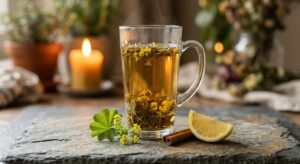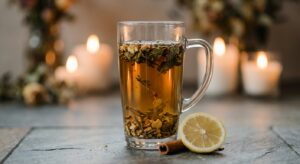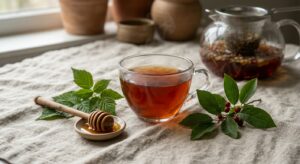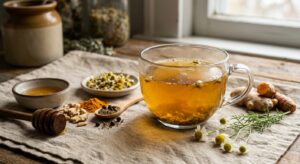
The thyroid gland, a small butterfly-shaped organ nestled at the base of the throat, quietly governs nearly every system in the body. It regulates metabolism, body temperature, mood, energy, and reproductive hormones, making it one of the most influential glands in a woman’s physiology. Yet thyroid dysfunction, whether hypothyroidism, Hashimoto’s thyroiditis, or subclinical sluggishness, disproportionately affects women, with studies suggesting women are five to eight times more likely than men to experience thyroid disorders. For generations, herbalists have turned to specific plants to nourish, calm, and support thyroid function, long before laboratory testing ever confirmed why they worked.
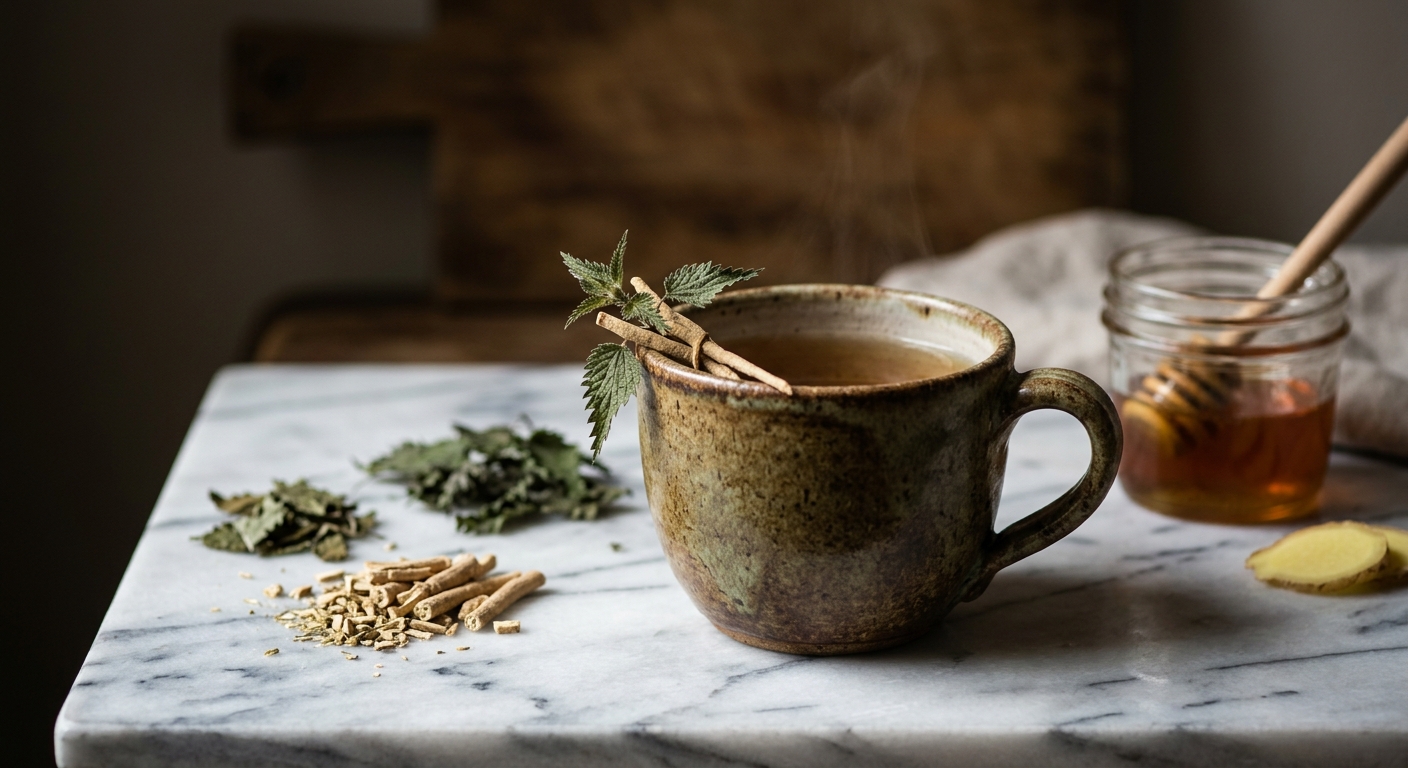
This Thyroid Support Tea blends three powerhouse herbs: ashwagandha root, a revered adaptogen in Ayurvedic medicine used for over 3,000 years to reduce stress hormones that disrupt thyroid signaling; nettle leaf, a nutritive herb dense in iodine, selenium, iron, and magnesium, minerals that are essential cofactors in thyroid hormone synthesis; and lemon balm, a gentle nervine from the Mediterranean tradition used since the Middle Ages to calm thyroid overactivity and ease the anxiety that often accompanies hormonal imbalance. Together they form a synergistic cup that works with your body’s own intelligence, not against it.
What makes this blend particularly suited to women is its attention to the thyroid-stress-hormone triangle. Elevated cortisol, driven by chronic stress, directly suppresses TSH production and impairs the conversion of T4 to active T3. Ashwagandha addresses this pathway directly, while lemon balm quiets the nervous system and nettle replenishes the nutrients most commonly depleted by thyroid dysfunction. Whether you are navigating a diagnosed condition alongside your medical care, or simply noticing the creeping fatigue and cold hands that suggest your thyroid needs a little love, this tea is a grounding ritual worth making your own.
2
cups
Ingredients
- 1 tspdried ashwagandha root (cut and sifted)
- 1 tspdried nettle leaf
- 1 tspdried lemon balm leaf
- 480 mlwater (95°C / 203°F)
- —raw honey or coconut nectar to taste (optional)
- —a thin slice of fresh ginger (optional, for added warmth)
How to Brew
Click on an item below to shop for the recommended items for this recipe on Amazon.
As an Amazon Associate, we earn from qualifying purchases.
- Bring 480 ml of filtered water to 95°C (203°F). If using a standard kettle, allow boiling water to rest for 30 seconds before pouring.
- Add the ashwagandha root, nettle leaf, and lemon balm into a mesh tea infuser, muslin bag, or teapot strainer. If using a ginger slice, add it at this stage.
- Pour the hot water over the herbs and cover the vessel immediately with a lid or saucer to trap the volatile aromatic oils, especially from the lemon balm.
- Steep for 10 to 15 minutes. A full 15-minute steep will draw out more of the ashwagandha’s adaptogenic compounds and nettle’s mineral content, while the lemon balm stays pleasantly bright rather than bitter.
- Remove the infuser, press the herbs gently with the back of a spoon to extract the remaining liquid, and pour into two warmed mugs.
- Sweeten with raw honey or coconut nectar if desired. Sip slowly in the morning or early afternoon as part of a daily thyroid-support ritual.
- Measure the ashwagandha root, nettle leaf, and lemon balm into a clean glass jar. For cold brew, increase the quantity slightly to 1.5 teaspoons of ashwagandha and 1.5 teaspoons each of nettle and lemon balm per 480 ml, as cold water extracts compounds more slowly than heat.
- Pour 480 ml of cool, filtered water over the herbs, ensuring all plant material is fully submerged. Stir gently with a long spoon to settle the herbs.
- Seal the jar with its lid and place it on the counter for 1 hour to begin the infusion at room temperature, then transfer to the refrigerator.
- Allow the herbs to infuse in the refrigerator for 8 to 12 hours, ideally overnight. The slow, cold extraction pulls minerals, polyphenols, and adaptogenic compounds without the bitterness that heat can sometimes intensify.
- Strain through a fine mesh sieve or cheesecloth into two glasses filled with ice. Press the herbs to capture the last of the liquid.
- Taste before sweetening. The cold brew version is naturally milder and slightly sweeter. Add a squeeze of lemon juice or a few fresh mint leaves for a refreshing daytime drink.
- Place the ashwagandha root (cut and sifted) into a small saucepan with 600 ml of cold, filtered water. Starting in cold water allows the root to begin releasing compounds gradually as the temperature rises.
- Bring the water to a full boil over medium-high heat, then immediately reduce the heat to a gentle simmer. You want small, steady bubbles, not a rolling boil.
- Simmer uncovered for 20 to 25 minutes. The liquid will reduce by roughly 20 percent, concentrating the adaptogenic compounds. The color will deepen to a rich amber-brown.
- In the last 3 minutes of simmering, add the nettle leaf and lemon balm directly to the pot and remove from heat. These more delicate herbs should never be boiled. The residual heat will infuse them perfectly without destroying their volatile compounds.
- Cover the pot and allow the blend to rest for 5 minutes before straining through a fine mesh sieve into two mugs.
- Add raw honey to taste and optionally a small pinch of cinnamon or cardamom, both traditional Ayurvedic additions that complement ashwagandha and support metabolic warmth. This decoction is richer and more potent than a standard hot brew, so one cup is often sufficient.
Health Benefits
Ashwagandha has been shown in randomized controlled trials to significantly increase serum T3 and T4 levels in patients with subclinical hypothyroidism, with one 2017 study in the Journal of Alternative and Complementary Medicine finding measurable improvement after eight weeks of supplementation. Nettle’s selenium and iodine content further supports the raw material thyroid cells need for hormone synthesis.
Chronic stress elevates cortisol, which directly suppresses TSH secretion and impairs the conversion of T4 to active T3 in peripheral tissues. Ashwagandha’s withanolides have been clinically demonstrated to reduce serum cortisol by up to 28 percent, helping remove one of the most common functional barriers to healthy thyroid activity.
Both lemon balm and ashwagandha exert anxiolytic effects through complementary pathways: lemon balm inhibits GABA transaminase, preserving calming neurotransmitter activity, while ashwagandha modulates the HPA axis. Women with Hashimoto’s or hyperthyroid episodes often experience pronounced anxiety that these herbs address directly.
Hashimoto’s thyroiditis is an autoimmune condition characterized by thyroid inflammation and gradual tissue destruction. Quercetin in nettle and rosmarinic acid in lemon balm both demonstrate anti-inflammatory and immune-modulating activity that may help reduce the inflammatory burden on thyroid tissue, though this blend works as a complement to, not a replacement for, medical management.
Hypothyroidism and its treatments can deplete iron, magnesium, and B vitamins, creating a cycle of fatigue and poor conversion. Nettle leaf is one of the most nutritionally dense herbs available, providing bioavailable iron, calcium, magnesium, and vitamin K, making it an excellent nutritive tonic within this blend.
🧪 Key Bioactive Compounds
The Science Behind Ashwagandha
At the heart of this blend’s thyroid-supportive action is ashwagandha’s family of withanolides, particularly withaferin A and withanolide D. These steroidal lactones interact with the hypothalamic-pituitary-adrenal (HPA) axis, reducing the output of cortisol from the adrenal glands. This matters profoundly for thyroid health because excess cortisol downregulates the pituitary’s release of thyroid-stimulating hormone (TSH) and inhibits the deiodinase enzymes responsible for converting inactive T4 into metabolically active T3. A 2017 study published in the Journal of Alternative and Complementary Medicine found that participants taking ashwagandha extract experienced significant increases in serum T3 and T4 alongside reductions in TSH, offering early but meaningful clinical evidence for what Ayurvedic practitioners observed centuries ago.
Lemon balm contributes a different but complementary mechanism through rosmarinic acid, a polyphenol that has been shown in laboratory research to inhibit the binding of TSH to its receptor. This makes lemon balm particularly interesting for women navigating mild thyroid overactivity or the fluctuating thyroid activity seen in early Hashimoto’s, where the thyroid can oscillate between hypo and hyperthyroid states. Rosmarinic acid also inhibits thyroid peroxidase, one of the enzymes involved in thyroid hormone production, which is why dosage awareness matters: this herb is balancing rather than stimulating, and works best as part of a moderate daily ritual rather than in therapeutic excess.
Nettle leaf’s contribution is largely nutritive but critically important. Thyroid hormone synthesis is entirely dependent on adequate selenium, iodine, iron, and zinc. Selenium in particular is the cofactor for iodothyronine deiodinase, the enzyme that cleaves one iodine atom from T4 to produce T3. Many women with thyroid dysfunction are subclinically deficient in selenium, partly because modern agricultural soils are increasingly depleted of this mineral. Nettle’s quercetin adds an anti-inflammatory and immune-modulating dimension relevant to the estimated 14 million American women living with Hashimoto’s thyroiditis, a condition fundamentally driven by immune dysregulation and chronic low-grade thyroid inflammation. Together, these three herbs address thyroid wellness from three distinct and synergistic angles: hormonal signaling, nervous system regulation, and foundational nutritional support.
Brewing Tips
- Consistency matters more than intensity: drink one to two cups daily for at least four to six weeks before assessing the effect, as adaptogenic herbs like ashwagandha build their action gradually in the body.
- Source your ashwagandha from a reputable supplier that provides KSM-66 or Sensoril-standardized root extract, or opt for high-quality cut-and-sifted whole root. The quality and withanolide content of ashwagandha varies enormously between suppliers.
- Avoid adding dairy milk to this blend, as casein proteins can bind to some of the polyphenolic compounds in nettle and lemon balm and reduce their bioavailability. A splash of oat milk or almond milk is a friendlier option if you prefer a creamier cup.