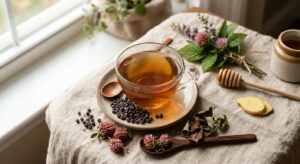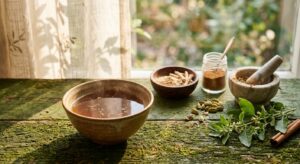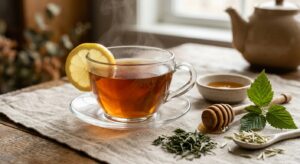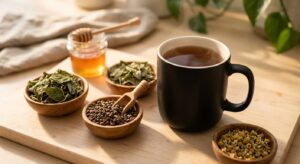
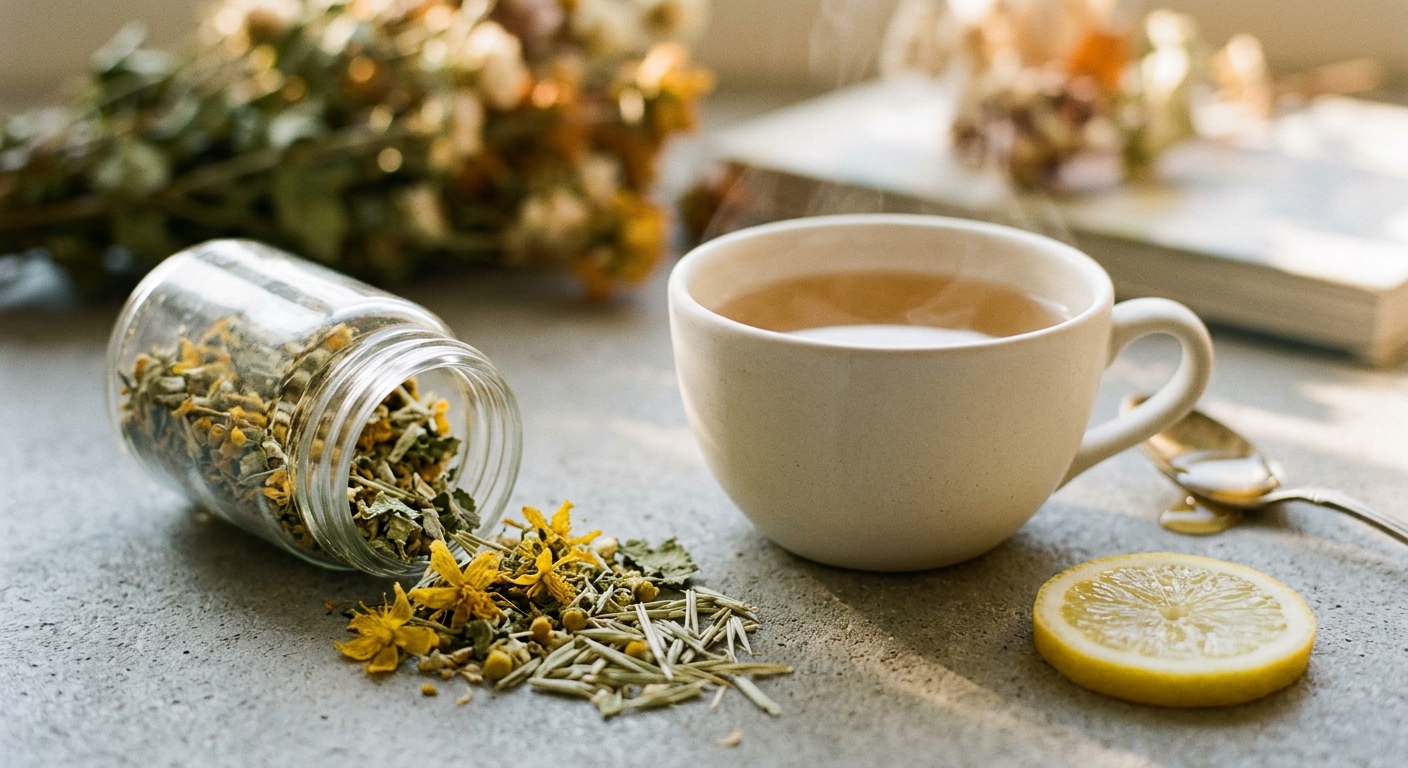
The weeks and months following childbirth can bring a complex tide of emotions. While the arrival of a new baby is joyful, many mothers experience a profound emotional dip, ranging from mild baby blues to deeper postpartum depression, affecting an estimated one in five new mothers worldwide. For centuries, herbalists and midwives across Europe and Asia have turned to nervine herbs, plants that nourish and calm the nervous system, to support women through this tender transition. This tea blends three time-honored allies: St. John’s Wort for mood support, lemon balm for anxious thoughts, and oat straw for deep nervous system restoration.
St. John’s Wort (Hypericum perforatum) has been used since ancient Greece to calm the nerves and lift what healers once called the “melancholy of the soul.” In medieval European folk medicine, it was hung in doorways on Midsummer’s Day to ward off darkness, both literal and emotional. Lemon balm (Melissa officinalis), a fragrant member of the mint family, has been cherished since at least the 11th century in monastery herb gardens for its ability to “make the heart merry” and quiet an overactive mind. Oat straw (Avena sativa), the green tops and straw of the common oat plant, has long been prescribed by herbalists as a trophorestorative, meaning it rebuilds depleted nerve tissue over time, making it especially relevant for mothers whose nervous systems have been stretched thin by pregnancy and labor.
What makes this blend particularly suited to postpartum life is its gentle, cumulative nature. Unlike pharmaceutical interventions that act quickly and forcefully, these herbs work slowly and supportively, making them appropriate for daily use as part of a broader wellness plan. The flavor is warm, slightly sweet, and gently grassy, with a citrus brightness from the lemon balm that makes each cup feel like a small act of self-care. Please note that this tea is intended as a complementary support measure, not a replacement for professional medical care. Any mother experiencing significant depressive symptoms should consult her healthcare provider promptly.
2
cups
Ingredients
- 2 tspdried St. John’s Wort flowers and buds
- 2 tspdried lemon balm leaves
- 1 tspdried oat straw
- 480 mlwater (90°C / 194°F)
- —raw honey or maple syrup to taste (optional)
- —a slice of fresh lemon (optional)
How to Brew
Click on an item below to shop for the recommended items for this recipe on Amazon.
As an Amazon Associate, we earn from qualifying purchases.
- Heat filtered water to 90°C (194°F). Avoid a full rolling boil, as excessive heat can degrade the delicate flavonoids in lemon balm.
- Measure 2 teaspoons of dried St. John’s Wort, 2 teaspoons of dried lemon balm, and 1 teaspoon of dried oat straw per 480 ml of water. Combine them in a tea infuser or place directly into a teapot.
- Pour the hot water over the herbs, cover the vessel immediately with a lid or saucer to trap the volatile aromatic oils, particularly from the lemon balm.
- Steep for 10 to 15 minutes. Do not shorten this steep time; St. John’s Wort and oat straw require a longer extraction period to release their key constituents.
- Strain thoroughly into a warmed mug. Add raw honey or a squeeze of lemon if desired. Sip slowly and mindfully, ideally in a quiet moment away from screens.
- Combine 3 teaspoons of dried St. John’s Wort, 3 teaspoons of dried lemon balm, and 1.5 teaspoons of dried oat straw in a clean glass jar. The slightly higher herb ratio compensates for reduced extraction efficiency at cold temperatures.
- Pour 480 ml of cold, filtered water over the herbs. Stir gently with a spoon to ensure all plant material is fully submerged.
- Cover the jar with a lid or cloth secured with a rubber band. Leave at room temperature for 1 hour to begin extraction, then transfer to the refrigerator.
- Steep in the refrigerator for 8 to 12 hours or overnight. The slow, cold extraction draws out a mellower, less astringent flavor profile that some mothers find easier to drink in the early postpartum period when nausea may be present.
- Strain through a fine mesh strainer or cheesecloth into a clean bottle or pitcher. Gently warm a single serving before drinking if preferred, or drink chilled over ice. Consume within 48 hours and keep refrigerated.
- On a warm, sunny day, combine 2 teaspoons of dried St. John’s Wort, 2 teaspoons of dried lemon balm, and 1 teaspoon of dried oat straw in a clear glass jar with a lid.
- Add 480 ml of cold, filtered water to the jar. Stir briefly to moisten all the herbs, then seal the jar loosely so steam can escape if temperatures rise.
- Place the jar in a sunny outdoor spot or on a sun-facing windowsill. Allow it to steep for 3 to 5 hours, turning the jar gently once at the halfway point to redistribute the herbs.
- Once the liquid has taken on a soft golden-amber color and smells warmly herbal and lemony, bring the jar indoors. Strain through a fine mesh strainer into a pitcher.
- Serve over ice with a slice of fresh lemon, or gently warm on the stovetop to a comfortable drinking temperature. Drink the same day for peak freshness and potency.
Health Benefits
Multiple meta-analyses, including a Cochrane review of 29 clinical trials, have found St. John’s Wort to be more effective than placebo and similarly effective to standard antidepressants for mild to moderate depression, with fewer side effects. Its primary constituents, hyperforin and hypericin, work together to modulate the reuptake of serotonin, dopamine, and norepinephrine, key neurotransmitters in mood regulation.
Lemon balm has demonstrated significant anxiolytic effects in multiple human clinical trials, including a 2004 double-blind crossover study published in Psychosomatic Medicine showing reduced stress and improved mood in healthy volunteers. Rosmarinic acid inhibits the enzyme that breaks down GABA, effectively amplifying the brain’s primary calming signal.
Oat straw is classified by Western herbalists as a trophorestorative nervine, meaning it rebuilds the nutritive and functional capacity of the nervous system over time rather than simply sedating it. Its unique avenanthramides and B-vitamin-rich profile make it especially useful for mothers experiencing nervous exhaustion, emotional fragility, and the cognitive fog common in the postpartum period.
The combined nervine action of all three herbs in this blend works synergistically to improve sleep onset and quality. St. John’s Wort has been shown to increase slow-wave sleep in clinical studies, while lemon balm has demonstrated sleep-improving effects particularly when combined with other calming herbs. Restful sleep is among the most critical factors in postpartum mood recovery.
Emerging research suggests that postpartum depression has a neuroinflammatory component. Rosmarinic acid from lemon balm and avenanthramides from oat straw both exhibit measurable anti-inflammatory activity in neural tissue, potentially addressing one of the underlying physiological drivers of postnatal mood disruption.
🧪 Key Bioactive Compounds
The Science Behind St. John’S Wort
The mood-supporting reputation of St. John’s Wort is among the most rigorously studied in all of herbal medicine. Its primary active constituent, hyperforin, works through a mechanism distinct from conventional antidepressants: rather than blocking the reuptake transporter for a single neurotransmitter as SSRIs do, hyperforin activates a sodium-conductive ion channel (TRPC6) that broadly inhibits the reuptake of serotonin, dopamine, norepinephrine, GABA, and L-glutamate simultaneously. This multi-neurotransmitter action may explain why clinical trials have found St. John’s Wort comparable in efficacy to SSRIs for mild to moderate depression, while its side effect profile in most patients remains considerably milder. Hypericin, the red-pigmented compound visible when St. John’s Wort flower buds are pressed between the fingers, was historically believed to be the primary active compound; current research suggests it plays a supporting role, potentially influencing dopamine receptor sensitivity and the hypothalamic-pituitary axis.
Lemon balm’s anxiolytic action is centered primarily on rosmarinic acid, a polyphenol that inhibits GABA transaminase, the enzyme responsible for breaking down gamma-aminobutyric acid (GABA) in the brain. By slowing this breakdown, rosmarinic acid effectively extends and amplifies the natural calming signal that GABA provides, producing measurable reductions in anxiety and agitation without the sedation associated with pharmaceutical GABA modulators like benzodiazepines. A randomized, double-blind, placebo-controlled study published in Nutrients in 2014 found that a standardized lemon balm extract significantly reduced symptoms of anxiety and insomnia in adults with mild to moderate anxiety disorders, providing mechanistic support for its traditional use in calming an overactive postpartum mind.
Oat straw operates on a longer timescale than its two blend partners, functioning as what herbalists call a trophorestorative: a substance that does not acutely sedate or stimulate, but instead gradually rebuilds the functional capacity of depleted nerve tissue. Avenanthramides, phenolic compounds unique to the genus Avena, have demonstrated both neuroprotective and anti-inflammatory effects in cell studies, while oat straw’s naturally high content of B vitamins (especially B1, B2, and B6), magnesium, and silica provides the raw nutritional material that nervous tissue requires for repair and resilience. A 2011 study in the Journal of Alternative and Complementary Medicine found that a standardized green oat extract improved cognitive performance and executive function in older adults, consistent with the traditional claim that oat straw strengthens mental clarity and emotional steadiness when taken consistently over time.
Brewing Tips
- Consistency matters most with this blend. Drink one to two cups daily for at least four weeks before evaluating its effects; St. John’s Wort and oat straw are cumulative herbs that build their therapeutic action gradually over sustained use.
- Store your dried herbs separately in airtight, dark glass jars away from heat and light. St. John’s Wort in particular is sensitive to light degradation, which can reduce its hypericin and hyperforin content significantly within weeks of light exposure.
- Prepare your tea blend in larger batches (mixing the herbs in the correct ratio and storing them together in a jar) so that making a cup is as frictionless as possible during the postpartum period, when simplicity and ease are paramount.