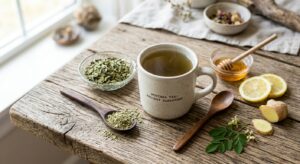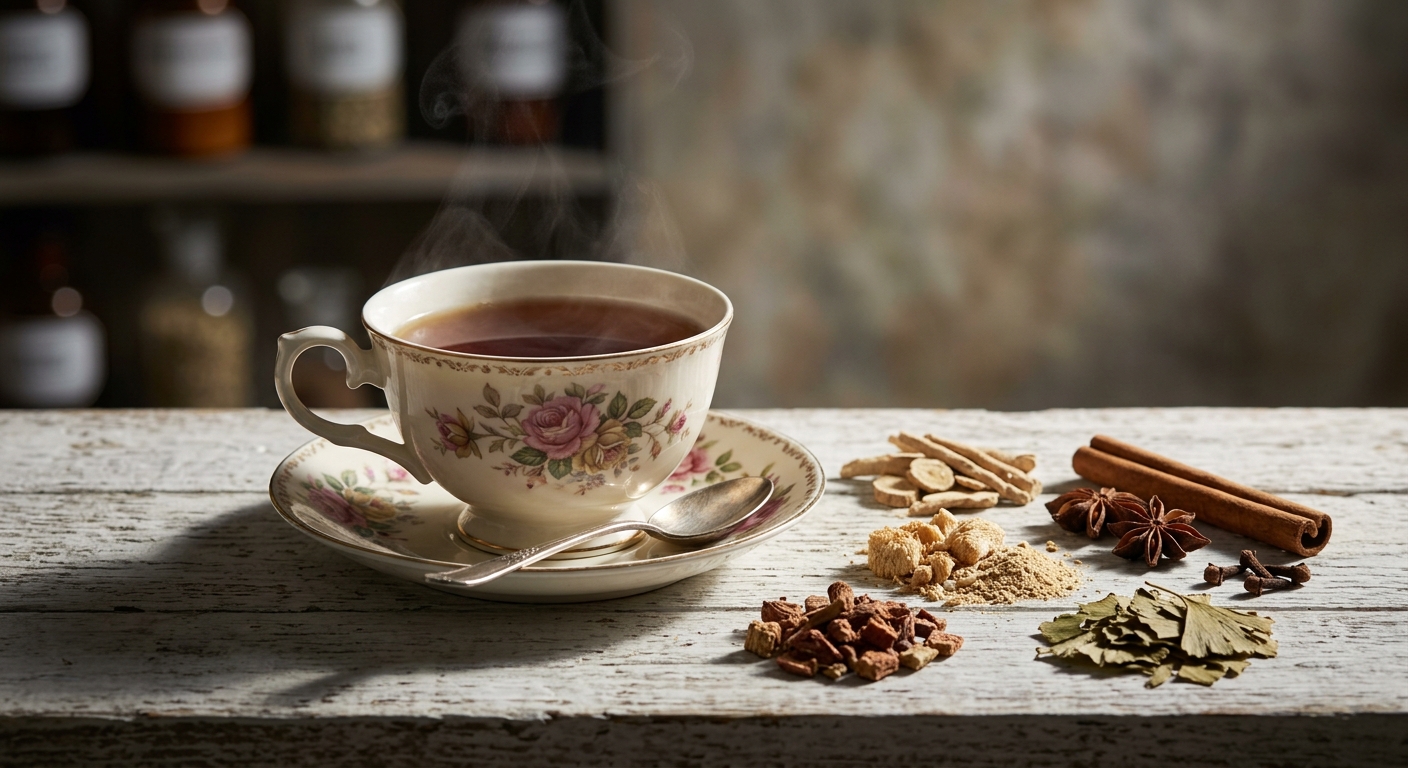
Long before the modern boardroom existed, ancient physicians were already solving the executive’s core problem: how to think clearly when the world is pressing down on you. Ashwagandha, known in Ayurvedic tradition as Withania somnifera, has been prescribed for over 3,000 years to restore vitality to those depleted by overwork and mental strain. Rhodiola rosea was carried by Viking warriors and Soviet cosmonauts alike, prized for its ability to sustain performance under extreme physical and psychological stress. Together with the memory-sharpening legacy of ginkgo biloba and the nerve-regenerating promise of lion’s mane mushroom, this blend represents thousands of years of accumulated wisdom about the human mind under pressure.
What makes this tea exceptional is its philosophy of calm without sedation. Each herb in this blend works through a distinct biological pathway, targeting cortisol regulation, neuroplasticity, cerebral circulation, and neurotrophic factor production simultaneously. The result is a tea that does not artificially stimulate or numb, but instead restores the nervous system to its natural state of alert composure. Think of it as the herbal equivalent of a steady hand and a clear head. It is the kind of focus that allows you to solve a complex problem, not just feel temporarily wired.
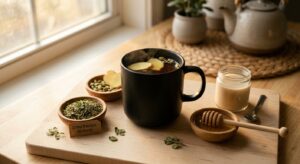
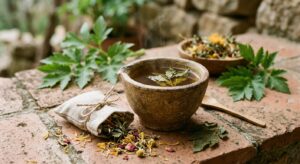
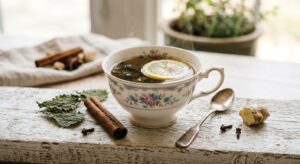
The sensory experience of this tea is as thoughtful as its ingredient list. Ashwagandha brings a deep, slightly bitter earthiness that grounds the cup, while rhodiola adds a faint roselike floral note and mild astringency. Ginkgo contributes a clean, green herbal clarity, and lion’s mane rounds the blend with a soft, mushroom-like umami warmth. A touch of raw honey and a few slices of fresh ginger can transform this functional brew into something genuinely pleasurable. Sip it at your desk on a demanding morning, or steep a cold brew batch the night before a high-stakes day.
2
cups
Ingredients
- 1 tspashwagandha root powder or sliced dried root
- 1 tspdried lion’s mane mushroom (powdered or crumbled)
- 0.75 tspdried rhodiola rosea root
- 0.5 tspdried ginkgo biloba leaf
- 480 mlwater (95°C / 203°F)
- —raw honey or maple syrup to taste (optional)
- —2 to 3 slices fresh ginger (optional, for warmth and palatability)
- —splash of oat milk or coconut milk (optional, to mellow bitterness)
How to Brew
Click on an item below to shop for the recommended items for this recipe on Amazon.
As an Amazon Associate, we earn from qualifying purchases.
- Combine the ashwagandha root and rhodiola root with 480 ml of cold filtered water in a small saucepan. Bring slowly to a near-boil over medium heat, targeting 95°C (203°F). Do not allow a rolling boil as this can degrade heat-sensitive compounds.
- Once the target temperature is reached, reduce heat to low and allow the roots to gently simmer for 8 to 10 minutes. The liquid will deepen to a warm amber and take on a rooty, earthy aroma. Add the fresh ginger slices at this stage if using.
- Remove the saucepan from heat and immediately add the dried ginkgo biloba leaf and lion’s mane mushroom powder or crumbles. Stir briefly to combine. Cover with a lid and allow the blend to steep off-heat for an additional 5 minutes. This preserves the flavonoids in ginkgo and the beta-glucans in lion’s mane.
- Pour the tea through a fine mesh strainer or cheesecloth into your mug, pressing the spent herbs gently with the back of a spoon to extract all the liquid. Discard the solids.
- Stir in raw honey or maple syrup to taste. Add a small splash of oat milk or coconut milk if desired to round out the bitterness. Serve immediately and sip slowly over 15 to 20 minutes.
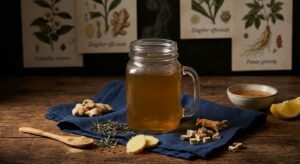
- Measure all dry ingredients into a clean glass jar: ashwagandha root (use sliced dried root rather than powder for cold brew, as powder creates a cloudy, gritty result), rhodiola root, ginkgo biloba leaf, and lion’s mane crumbles. Add ginger slices if using.
- Pour 600 ml of cold filtered water over the herbs. This higher water ratio compensates for the gentler cold extraction and produces a well-balanced, concentrated brew. Stir briefly with a long spoon to ensure all herbs are fully submerged.
- Seal the jar with a lid or cover tightly with plastic wrap. Allow the jar to sit at room temperature for 1 hour to begin the extraction process, then transfer to the refrigerator.
- Let the blend steep in the refrigerator for 10 to 14 hours, ideally overnight. The liquid will develop a deep reddish-amber color with a smoother, more floral character than the hot brew version.
- Strain the chilled tea through a fine mesh strainer lined with cheesecloth into a clean jar or pitcher, pressing the herbs firmly to extract all liquid. Discard the spent herbs.
- Serve over ice in a tall glass. Stir in a small drizzle of raw honey dissolved in a teaspoon of warm water (this helps it incorporate), or add a few drops of liquid stevia. The cold brew keeps refrigerated for up to 48 hours. Shake or stir before each serving.
- Scale all dry ingredients to 4x the standard recipe: 4 tsp ashwagandha root, 4 tsp lion’s mane, 3 tsp rhodiola root, and 2 tsp ginkgo biloba leaf. Place the ashwagandha and rhodiola in a medium saucepan with 500 ml of cold filtered water. This intentionally smaller water volume creates a concentrated base.
- Bring to 95°C (203°F) over medium heat and simmer the roots for 15 minutes, maintaining a gentle, low simmer. Keep the lid slightly ajar to allow some steam to escape and to concentrate the liquid. The liquid should reduce slightly during this time.
- Remove from heat and add the ginkgo biloba and lion’s mane. Add the fresh ginger if using. Cover completely with a lid and steep off-heat for 10 minutes to extract the heat-sensitive compounds from these two ingredients at a safer temperature.
- Strain through a fine mesh strainer lined with cheesecloth into a clean glass jar or pitcher, pressing the herbs well. You should have approximately 350 to 400 ml of dark, concentrated liquid.
- Allow the concentrate to cool to room temperature, then seal the jar and refrigerate. Label with the date. The concentrate keeps well for up to 4 days.
- To serve hot: pour 80 to 100 ml of concentrate into a mug and top with 150 to 180 ml of freshly boiled water. Add honey and oat milk to taste. To serve cold: dilute with cold water over ice in the same ratio. Stir well before each use as natural sediment may settle.
Health Benefits
Ashwagandha’s withanolides have been shown in multiple randomized controlled trials to significantly lower serum cortisol levels in chronically stressed adults. A 2019 study published in Medicine found that 240 mg of ashwagandha extract daily reduced cortisol by up to 30% versus placebo over 60 days.
Ginkgo biloba improves cerebral blood flow through vasodilation and platelet-activating factor inhibition, delivering more oxygen and glucose to the prefrontal cortex. Clinical trials in healthy adults have demonstrated improvements in working memory, processing speed, and sustained attention following consistent use.
Lion’s mane mushroom stimulates the production of Nerve Growth Factor (NGF) and Brain-Derived Neurotrophic Factor (BDNF), proteins essential for the formation of new neural connections. This makes lion’s mane unique among cognitive herbs as it supports the structural health of the brain rather than simply modulating neurotransmitter levels acutely.
Rhodiola rosea, particularly its salidroside fraction, has demonstrated significant anti-fatigue effects in human trials involving night-shift workers, medical students, and military cadets. It appears to inhibit the breakdown of monoamine neurotransmitters, sustaining mental stamina during extended periods of intellectual effort.
Unlike caffeine, which drives alertness via adenosine receptor blockade and can trigger anxiety and cortisol release, adaptogens in this blend normalize stress hormones and neurotransmitter balance rather than overriding them. The combined effect is a state of grounded, sustainable focus that does not produce the energy dip or dependency associated with stimulants.
🧪 Key Bioactive Compounds
The Science Behind Ashwagandha
The science behind this blend centers on a concept called adaptogenesis: the ability of certain plant compounds to help biological systems maintain homeostasis under stress rather than tipping into dysfunction. Ashwagandha’s withanolides achieve this primarily by downregulating activity in the hypothalamic-pituitary-adrenal (HPA) axis, the hormonal cascade that governs your cortisol stress response. By modulating the sensitivity of glucocorticoid receptors and inhibiting the nuclear transcription factor NF-kB, withanolides reduce the inflammatory and hormonal burden that chronic stress places on the brain and body. Multiple peer-reviewed clinical trials have confirmed meaningful reductions in both perceived stress scores and objective cortisol measurements in adults taking standardized ashwagandha extracts.
Rhodiola rosea operates through a different but complementary mechanism. Its primary active compounds, salidroside and the rosavins, inhibit the enzyme monoamine oxidase (MAO), which breaks down neurotransmitters like serotonin, dopamine, and norepinephrine. By preserving the availability of these signaling molecules, rhodiola supports mood regulation and mental stamina during cognitively demanding tasks. Research involving sleep-deprived physicians and military cadets has shown statistically significant improvements in cognitive test performance after rhodiola supplementation compared to placebo, specifically in areas of short-term memory, calculation, and speed of audiovisual perception. Unlike pharmaceutical MAO inhibitors, rhodiola’s effect is mild and reversible, making it appropriate for most healthy adults at typical dietary doses.
Ginkgo biloba contributes two distinct mechanisms to this blend. First, its terpene trilactones (ginkgolides and bilobalide) act as antagonists to platelet-activating factor (PAF), a lipid mediator involved in inflammatory signaling and vascular constriction. This results in improved microcirculation in the brain’s capillary networks, enhancing oxygen and glucose delivery to neurons. Second, ginkgo’s flavonoid fraction (quercetin, kaempferol, and isorhamnetin glycosides) acts as a potent antioxidant, neutralizing the reactive oxygen species that accumulate in metabolically active neurons during periods of high cognitive load. Lion’s mane rounds out the blend’s neuroscientific profile by stimulating the biosynthesis of Nerve Growth Factor (NGF) through its unique hericenones and erinacines. NGF is essential for the survival, maintenance, and growth of cholinergic neurons in the basal forebrain, a region central to attention and memory formation. Together, these four herbs target neuroinflammation, vascular health, neurotransmitter balance, and neuroplasticity from distinct angles, creating a blend whose cognitive effects are genuinely synergistic rather than simply additive.
Brewing Tips
- Use sliced or chunk-cut dried ashwagandha root rather than powder for the hot brew and cold brew methods whenever possible. The powder is harder to strain completely and can make the tea gritty and overly bitter. Reserve the powder for the concentrate method where you are straining through layered cheesecloth.
- Source your rhodiola rosea from a reputable supplier that guarantees a minimum 3% rosavin and 1% salidroside content on the certificate of analysis. Low-quality rhodiola root that has been adulterated or substituted with related species will not deliver the cognitive benefits described here.
- Drink this tea consistently for 4 to 6 weeks before evaluating its effects on focus and stress. Adaptogens are not acute stimulants and their most meaningful effects on cortisol regulation and neuroplasticity accumulate over time with regular use rather than appearing dramatically after a single cup.