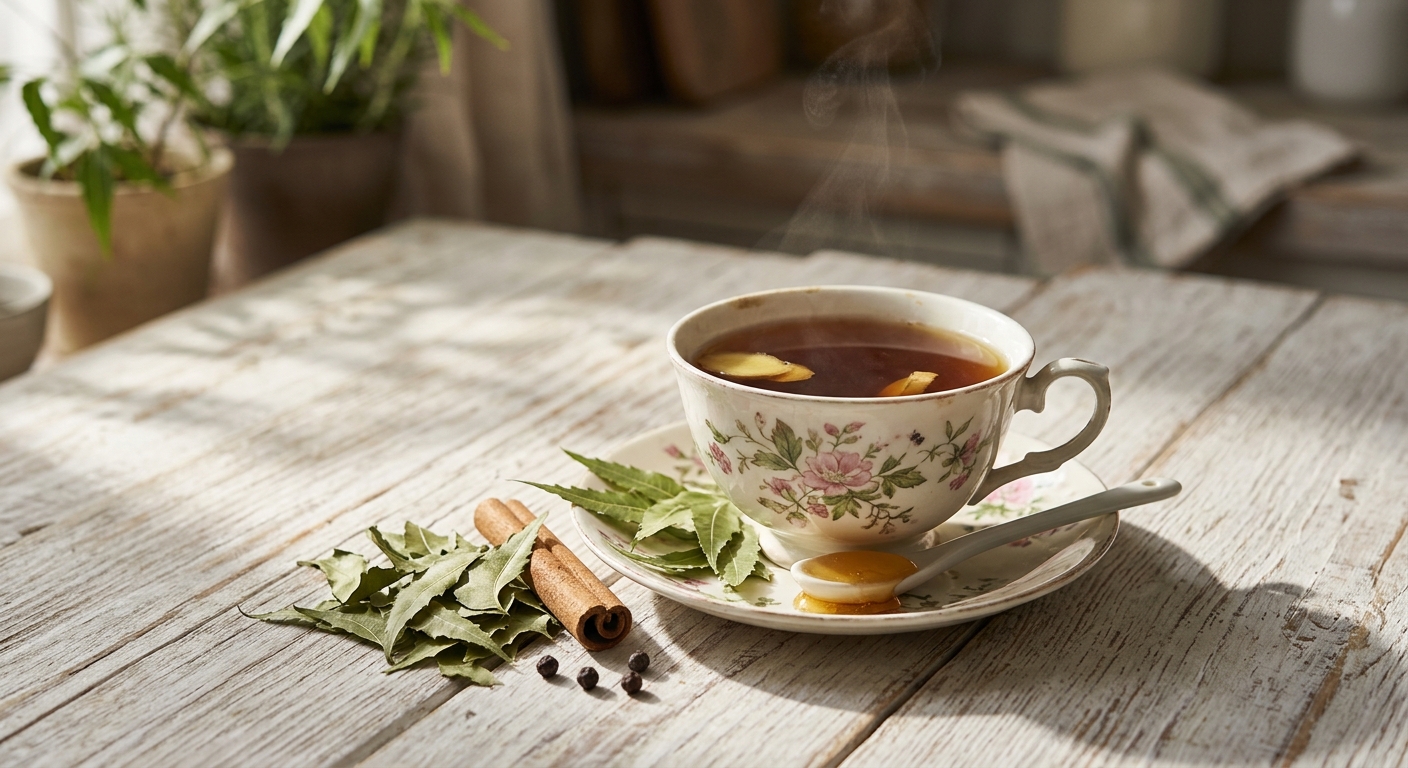
Few plants carry as much reverence in traditional medicine as the neem tree. Known as Azadirachta indica, neem has been called the ‘Village Pharmacy’ and the ‘Tree of the 21st Century’ in India, where virtually every part of the tree, from its roots to its bark, seeds, and leaves, has been used medicinally for over 4,000 years. In Ayurveda, neem is classified as a tikta herb, meaning bitter, and bitterness is considered a powerful purifying quality that stimulates liver function, kindles digestion, and clears excess heat and toxins from the body. Neem leaves were historically boiled into teas and tonics to treat fevers, skin conditions, and infections long before modern antibiotics existed.
The tea brewed from dried or fresh neem leaves is not a gentle, comforting sip. It is intensely bitter, almost aggressively so, and that very bitterness signals the presence of the remarkable compounds that make it medicinally significant. Across South Asia and parts of Africa, neem leaf tea has been a frontline remedy during seasonal illness, used to ward off colds, reduce fever, and strengthen the body’s defenses ahead of monsoon season when waterborne and airborne pathogens proliferate. In traditional Nigerian and Ghanaian plant medicine, neem tea is similarly valued for its antimalarial and antipyretic properties.
Modern research has begun to validate what traditional healers observed empirically over millennia. Neem leaves contain a complex array of bioactive compounds including nimbolide, gedunin, azadirachtin, quercetin, and nimbin, each contributing to the herb’s anti-inflammatory, antiviral, antibacterial, and immunomodulatory effects. For those seeking to support immunity, aid detoxification, or simply explore one of the world’s oldest herbal traditions, neem tea offers a formidable, if challenging, cup worth understanding.
2
cups
Ingredients
- 2 tspdried neem leaves (or 6 to 8 fresh neem leaves per cup)
- 480 mlwater (90°C / 194°F)
- —raw honey to taste (strongly recommended to balance bitterness)
- —fresh ginger slices (optional, to ease digestive intensity)
- —pinch of black pepper (optional, to enhance bioavailability)
How to Brew
Click on an item below to shop for the recommended items for this recipe on Amazon.
As an Amazon Associate, we earn from qualifying purchases.
- Heat filtered water to 90 to 95°C (194 to 203°F). If you do not have a temperature-controlled kettle, bring water to a full boil and allow it to rest for 60 to 90 seconds before using.
- Measure 1 teaspoon of dried neem leaves per 240 ml of water (or 3 to 4 fresh neem leaves per cup) and place them into a tea infuser or strainer set over your mug.
- Pour the hot water over the neem leaves, cover the mug with a small plate or lid to trap the volatile aromatic compounds and prevent heat loss, and steep for 5 to 7 minutes.
- Remove the infuser and discard the spent leaves. Do not squeeze the infuser, as this forces additional bitter compounds into the liquor.
- Add raw honey, a slice of fresh ginger, or a small squeeze of lemon juice to temper the bitterness. Sip slowly and mindfully, ideally 20 to 30 minutes before a meal on an empty stomach for maximum absorption.
- Place 2 teaspoons of dried neem leaves per 480 ml of cold, filtered water into a clean glass jar. Do not use hot or warm water, as the cold extraction process is what differentiates this method.
- Stir gently to ensure all the dried leaves are submerged and in contact with the water, then seal the jar with a lid.
- Allow the jar to sit at room temperature for 1 hour to begin the initial extraction, then transfer it to the refrigerator and steep for a further 10 to 14 hours, or overnight.
- In the morning, strain the liquid through a fine mesh strainer or cheesecloth into a clean bottle or pitcher, pressing lightly but not aggressively.
- Serve over ice with a drizzle of honey and a slice of lemon or fresh mint leaves to brighten the flavor profile. The cold brew concentrate can be stored in the refrigerator for up to 48 hours.
- Combine 1 tablespoon of dried neem leaves with 500 ml of cold filtered water in a small stainless steel or ceramic saucepan. Add 2 to 3 thin slices of fresh ginger and a small pinch of black pepper to the pot, following the traditional Ayurvedic practice of combining herbs to enhance potency and digestibility.
- Bring the mixture to a full boil over medium-high heat, then immediately reduce the heat to a gentle simmer. Allow the liquid to reduce by roughly one third, simmering uncovered for 15 to 20 minutes. The resulting liquid should be deeply colored and noticeably concentrated.
- Remove the pot from heat and allow the decoction to cool for 5 minutes, then strain through a fine mesh strainer or a piece of muslin cloth into a heat-proof glass or ceramic vessel.
- Measure out a 60 to 90 ml serving dose into a small cup. Add a small amount of raw honey to temper the intensity. The remaining decoction can be stored in a glass jar in the refrigerator for up to 24 hours and taken in divided doses across the day.
- Consume the decoction on an empty stomach in the morning, ideally for no more than 7 to 10 consecutive days at a time, following traditional usage guidelines for concentrated neem preparations.
Health Benefits
Neem leaf compounds, particularly nimbolide and quercetin, have been shown in multiple in vitro and animal studies to upregulate immune cell activity, including macrophage activation and natural killer cell function. Traditional Ayurvedic texts describe neem as a rasayana herb that builds ojas, the vital immune essence, when used in appropriate doses over a sustained period.
Nimbin and gedunin have demonstrated antipyretic properties in preclinical studies, helping to lower elevated body temperature during infection. The broad-spectrum antimicrobial activity of neem leaf extracts against bacteria including Staphylococcus aureus and Streptococcus mutans supports its longstanding use as a fever remedy and infection fighter.
Neem leaves have been used in Ayurvedic practice as a hepatoprotective agent for centuries, and studies in animal models have shown that neem leaf extracts can reduce markers of liver damage caused by toxic exposures. The bitter compounds stimulate bile production and hepatic enzyme activity, enhancing the liver’s natural phase-one and phase-two detoxification pathways.
The flavonoids quercetin and kaempferol in neem leaves are potent free-radical scavengers that protect immune cells from oxidative stress during periods of acute illness. By inhibiting pro-inflammatory enzymes including COX-2 and reducing circulating inflammatory cytokines, neem tea may help shorten the duration and intensity of cold and flu symptoms.
Several studies have found that neem leaf extracts can reduce fasting blood glucose levels and improve insulin sensitivity in animal models of diabetes. While human clinical evidence is still emerging, the traditional use of neem tea as a metabolic tonic aligns with this mechanistic research, suggesting a supportive role for those managing blood sugar alongside conventional care.
🧪 Key Bioactive Compounds
The Science Behind Neem
The bioactivity of neem leaves is driven primarily by a family of highly oxygenated terpenoids called limonoids, of which over 140 have been identified in Azadirachta indica. The most studied of these, nimbolide and gedunin, have demonstrated the ability to inhibit the NF-kB inflammatory signaling pathway, one of the master regulators of the body’s immune and inflammatory response. By modulating rather than simply suppressing this pathway, neem’s limonoids allow the immune system to mount appropriate responses to genuine threats while potentially reducing the collateral tissue damage caused by excessive or chronic inflammation. This dual immunomodulatory effect, stimulating where stimulation is needed and calming where inflammation is excessive, is a hallmark of true adaptogenic and tonic herbs.
The flavonoid fraction of neem leaves, dominated by quercetin and kaempferol, contributes significant antiviral and antioxidant activity. Research published in peer-reviewed journals has demonstrated quercetin’s ability to inhibit the replication of influenza virus, rhinovirus, and respiratory syncytial virus by competing with viral proteases required for replication. Kaempferol has similarly been shown to stimulate interferon production, one of the body’s primary antiviral defense signals. These flavonoids are water-soluble and extract readily into neem tea during brewing, meaning a standard infusion delivers a meaningful dose of these compounds without requiring concentrated extracts or supplements.
Neem’s traditional role as a hepatoprotective and blood-purifying herb finds support in studies demonstrating that neem leaf constituents increase the activity of glutathione-S-transferase and other phase-two detoxification enzymes in liver tissue. These enzymes are responsible for conjugating and neutralizing toxic metabolites, heavy metals, and environmental pollutants before they can be excreted. The bitter compounds that make neem tea challenging to drink are, in Ayurvedic pharmacology, precisely the compounds that drive this hepatic stimulation. Bitterness signals to the liver and gallbladder to increase bile secretion, improve fat digestion, and accelerate clearance of metabolic waste, explaining why neem has been used as a seasonal spring detox tonic across cultures for thousands of years.
Brewing Tips
- Always start with a smaller amount of neem leaves, around half a teaspoon per cup, if you are new to this herb, and gradually increase over several days as your palate and digestive system adjust to the intense bitterness.
- Store dried neem leaves in an airtight glass container away from direct light and moisture. Properly stored dried neem leaves retain their potency for 12 to 18 months, but freshness matters; leaves older than two years will have degraded limonoid content.
- Combine neem with tulsi (holy basil) in a 1:2 ratio of neem to tulsi for a more balanced immunity tea. Tulsi’s adaptogenic and aromatic qualities soften neem’s harshness while adding complementary antiviral and stress-modulating benefits, making the blend considerably easier to drink daily during cold and flu season.