Long before modern respiratory medicine, healers across Europe, Asia, and the Americas turned to the plant world for relief from coughs, congestion, and labored breathing. Mullein, with its towering spires of soft, velvety leaves, was burned and inhaled by ancient Greeks and later dried and smoked or steeped as a tea by Native American tribes to ease chest tightness and bronchial irritation. Thyme, revered in Mediterranean folk medicine, was prescribed by physicians as far back as the ancient Egyptians to loosen phlegm and calm persistent coughs. Licorice root, a cornerstone of Traditional Chinese Medicine for over 3,000 years, was considered a harmonizing herb that soothed the throat and amplified the healing properties of every plant it accompanied.
This lung health tea brings those three traditions together into a single, purposeful cup. Mullein acts as the structural backbone, its saponins gently loosening mucus and its mucilage coating and calming inflamed bronchial passages. Thyme contributes thymol, a potent antimicrobial compound with proven expectorant action. Licorice root adds its characteristic gentle sweetness while delivering glycyrrhizin, a compound with anti-inflammatory and antiviral properties that makes the blend as pleasant to drink as it is effective. Together they form a tea that feels warm, supportive, and deeply nourishing with every sip.
Whether you are navigating the tail end of a cold, dealing with seasonal allergies that settle in the chest, or simply want to maintain healthy lung function through the colder months, this blend offers real, evidence-informed support. It is a tea you will feel working, not just in the soothing warmth that spreads through your chest, but in the gradual easing of that tight, congested feeling that so often accompanies respiratory challenges. Brew it slowly, breathe in the steam, and let the herbs do what generations of healers always knew they could.
2
cups
Ingredients
- 2 tspdried mullein leaves
- 1 tspdried thyme
- 0.5 tspdried licorice root, chopped
- 500 mlwater (95°C / 203°F)
- —raw honey to taste (optional)
- —fresh lemon slice (optional)
How to Brew
Click on an item below to shop for the recommended items for this recipe on Amazon.
As an Amazon Associate, we earn from qualifying purchases.
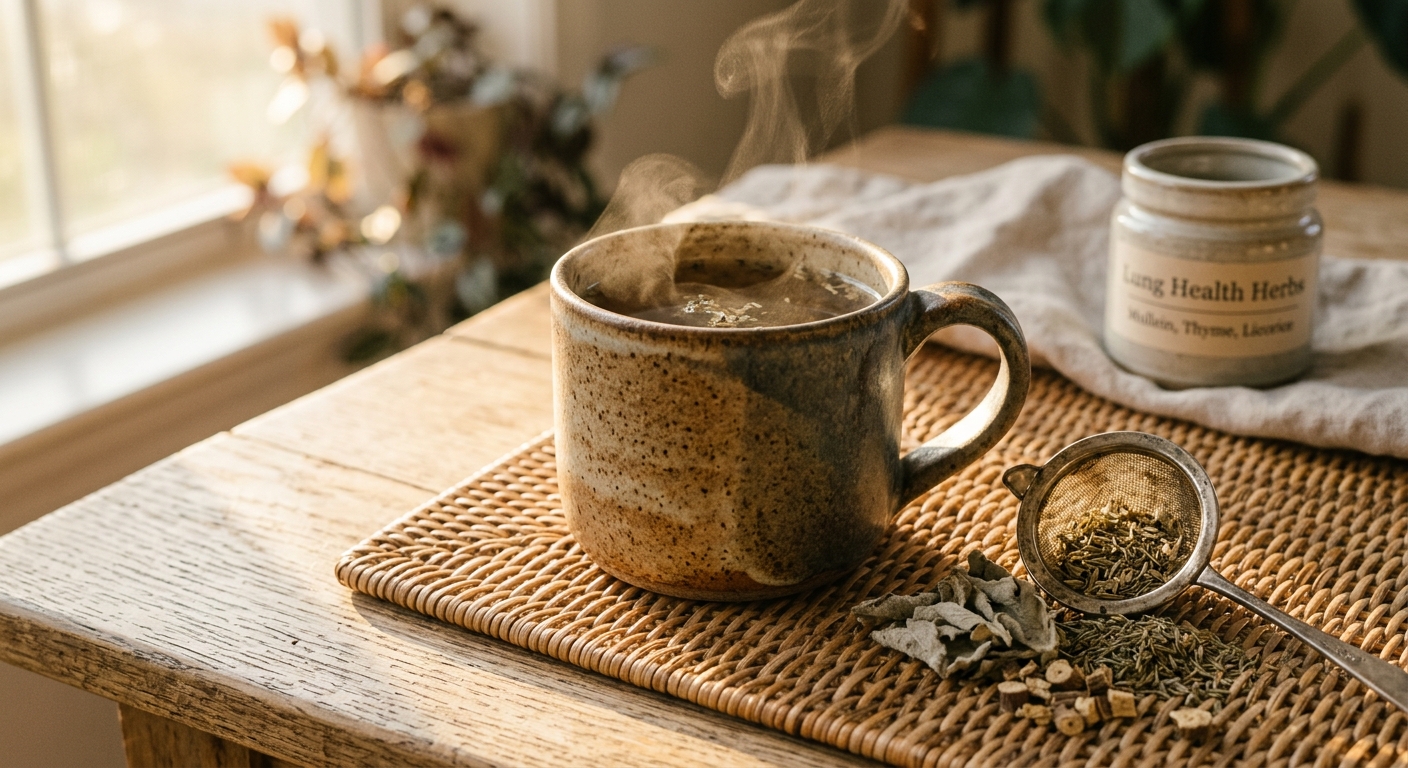
- Bring 500 ml of filtered water to just below a full boil, around 93 to 96°C (200 to 205°F). Avoid a rolling boil, which can diminish the more delicate aromatic compounds in thyme.
- Combine the dried mullein leaves, dried thyme, and chopped licorice root in a fine-mesh tea infuser or a small muslin bag. Mullein leaves are fibrous and benefit from being loosely packed to allow full water circulation.
- Place the infuser in your teapot or directly in a large mug. Pour the hot water over the herbs slowly and steadily to ensure even saturation of all plant material.
- Cover the mug or teapot with a lid or small saucer to trap volatile oils and prevent heat loss. Steep for a full 10 to 15 minutes. The longer steep is what activates mullein’s mucilaginous compounds.
- Remove the infuser and strain the tea through a fine cloth or double-layered cheesecloth to catch any stray mullein fibers, which can irritate the throat if swallowed.
- Add raw honey and a squeeze of fresh lemon if desired. Sip slowly while still warm, inhaling the steam gently between sips to allow aromatic thymol to reach the airways directly.
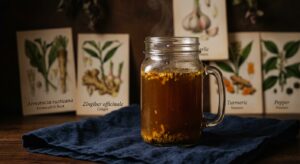
- Measure out the dried mullein leaves, thyme, and licorice root into a clean glass jar. For cold brew, increase the mullein slightly to 3 teaspoons to compensate for the reduced extraction efficiency of cold water.
- Pour 500 ml of cool, filtered water over the herbs. Do not use ice-cold water from the start, as this can slow extraction too aggressively. Room temperature water is ideal for the initial soak.
- Stir gently with a long spoon to ensure all the plant material is submerged. Place a breathable cover, such as a clean cloth secured with a rubber band, over the jar opening. This prevents contamination while allowing slight air exchange.
- Leave the jar at room temperature for 1 hour to begin the extraction process, then seal it with a proper lid and transfer it to the refrigerator.
- Cold steep for 12 to 14 hours, or overnight. The slow extraction in cold water produces a particularly high concentration of mullein mucilage, which gives the finished tea a silky, slightly viscous mouthfeel.
- Strain the finished brew twice through a fine cloth or a nut milk bag to thoroughly remove all mullein fibers. Serve over ice or lightly warmed in a saucepan. Sweeten with honey dissolved while the tea is slightly warm for best results.
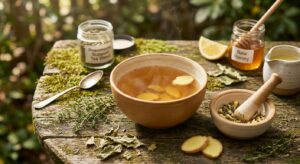
- Increase the licorice root to 1 full teaspoon for this method. Combine it with the mullein and thyme in a small stainless steel or ceramic saucepan. Avoid aluminum cookware, which can react with plant acids.
- Add 600 ml of cold, filtered water to the saucepan. Starting with cold water and gradually bringing the herbs up to temperature allows for a more complete extraction of both the licorice root’s hard cell walls and the mullein’s softer mucilaginous tissues.
- Place the saucepan over medium heat and bring the water slowly to a gentle simmer. Do not allow the liquid to reach a full rolling boil, which can degrade heat-sensitive volatile oils in the thyme.
- Once a gentle simmer is reached, reduce heat to low and continue simmering uncovered for 20 to 25 minutes. The liquid will reduce slightly and deepen in color to a rich amber. Stir occasionally.
- Remove from heat and allow the decoction to cool for 5 minutes before straining thoroughly through a fine-mesh cloth. The finished liquid should have a noticeably thicker mouthfeel and a pronounced sweet, earthy depth from the licorice root.
- Pour into mugs and sip slowly. This stronger preparation is best taken in smaller amounts, roughly 120 to 180 ml per serving, up to three times per day during periods of acute respiratory congestion or illness.
Health Benefits
Mullein’s saponins reduce mucus viscosity and act as a natural expectorant, helping the lungs clear accumulated phlegm. This mechanism is supported by its long use in European and Native American ethnobotany and by in vitro studies on its saponin content.
The combination of mullein mucilage and rosmarinic acid from thyme coats and calms inflamed bronchial tissue. Clinical research on thyme extracts has shown meaningful reductions in acute bronchitis symptoms, including cough frequency and severity.
Thymol has been extensively studied for its broad-spectrum antimicrobial activity against bacteria and viruses commonly responsible for respiratory infections. It disrupts microbial cell membranes and has demonstrated efficacy against pathogens including Streptococcus pyogenes and influenza strains.
Glycyrrhizin from licorice root has shown antiviral activity in multiple studies, including research on influenza and SARS-related coronaviruses. It appears to inhibit viral replication and stimulate interferon production, bolstering the body’s innate immune defenses.
The combined antitussive action of liquiritin and the soothing mucosal coating provided by mullein mucilage works through complementary pathways to reduce both the reflex and the irritation that drive dry, persistent coughing.
🧪 Key Bioactive Compounds
The Science Behind Mullein
The respiratory benefits of this tea blend are rooted in three distinct but complementary biochemical mechanisms. Mullein’s mucilaginous polysaccharides form a protective film over the epithelial cells lining the throat and bronchial passages. This film physically reduces the friction and irritation that triggers coughing, while simultaneously creating an environment less hospitable to pathogen adhesion. Alongside the mucilage, mullein’s verbascosaponins act as surfactants in bronchial secretions, lowering surface tension and allowing thickened mucus to be mobilized and expelled more easily, a classic expectorant mechanism.
Thyme contributes thymol and rosmarinic acid, two of the most well-documented bioactive compounds in respiratory herbal medicine. Thymol has been shown in clinical trials, most notably in a large German randomized controlled trial involving over 360 patients with acute bronchitis, to significantly reduce cough frequency and duration when compared to placebo. Its mechanism involves both direct antimicrobial action on pathogens colonizing the airways and bronchospasmolytic activity, meaning it helps relax the smooth muscle surrounding the bronchial tubes, easing the tight, constricted feeling associated with respiratory infections. Rosmarinic acid adds antioxidant protection to bronchial tissue cells under inflammatory stress, helping to prevent the oxidative damage that can perpetuate chronic respiratory inflammation.
Licorice root operates largely through glycyrrhizin and its metabolite 18-beta-glycyrrhetinic acid, which inhibit the enzyme 11-beta-hydroxysteroid dehydrogenase. This inhibition prolongs the local anti-inflammatory action of cortisol in mucosal tissue, producing an effect analogous to a mild corticosteroid without the systemic side effects when used in moderate quantities and for appropriate durations. Glycyrrhizin has also demonstrated antiviral properties in laboratory studies against a range of respiratory viruses, including influenza A, respiratory syncytial virus, and several coronavirus strains, suggesting it may help limit viral replication during the acute phase of a respiratory infection. Together, these three herbs create a scientifically coherent and traditionally validated respiratory support formula.
Brewing Tips
- Always strain mullein tea through a fine cloth or doubled cheesecloth rather than a standard metal strainer. The microscopic hairs on mullein leaves pass through mesh and can cause throat irritation, undoing the soothing work of the mucilage.
- For acute illness, brew the decoction method and sip 120 to 150 ml every three to four hours throughout the day rather than drinking a full cup at once. Smaller, more frequent servings maintain a steadier presence of active compounds in the respiratory tract.
- Store any leftover cold brew in a sealed glass jar in the refrigerator for up to 48 hours. The mucilaginous quality of mullein actually intensifies slightly upon refrigeration, making day-two cold brew even silkier and more throat-coating than freshly brewed.