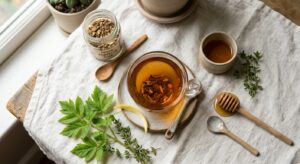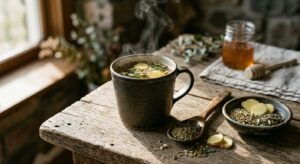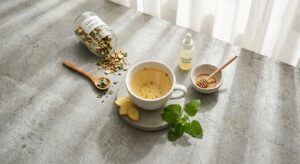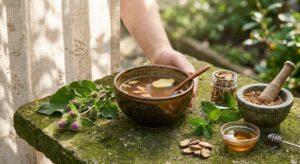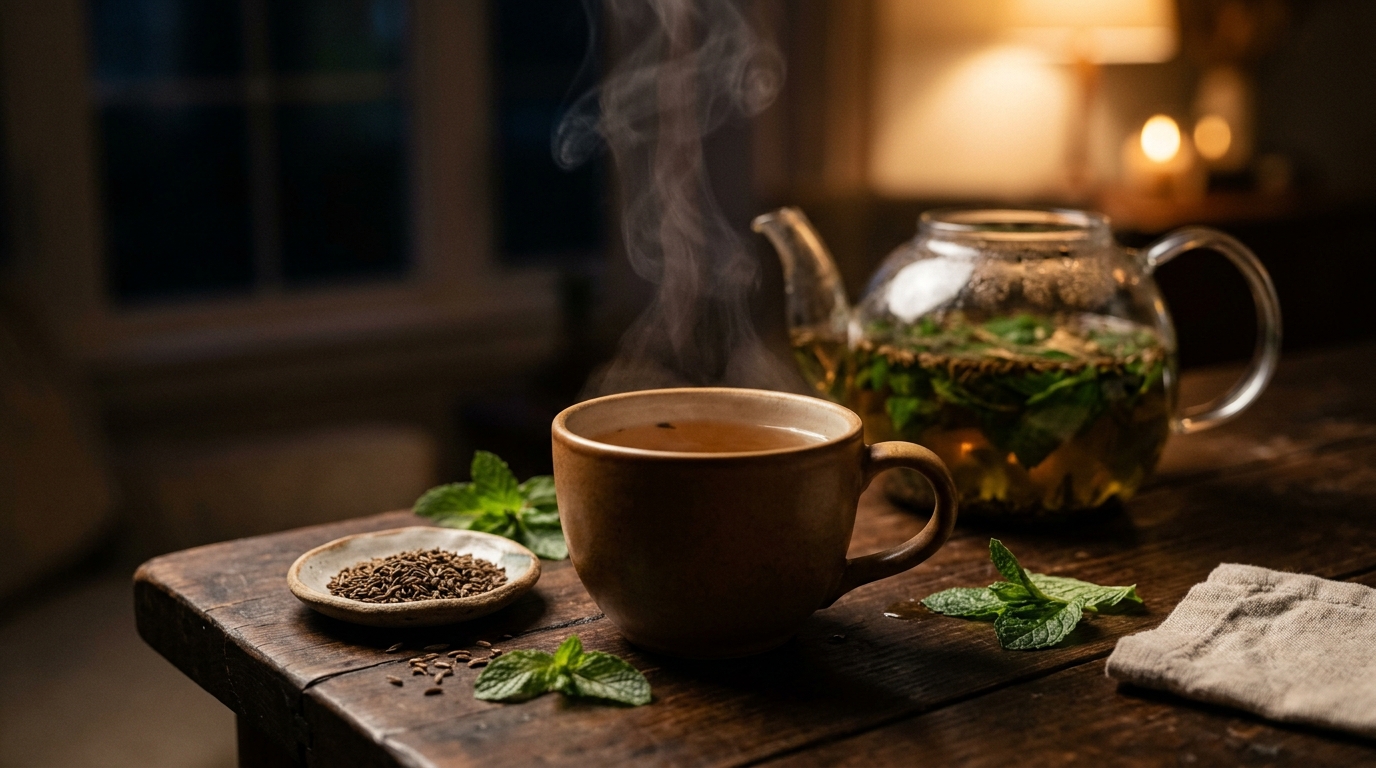
Peppermint gets most of the attention in the digestive tea world, and for good reason. A natural hybrid of watermint and spearmint, it has been cultivated since ancient Egypt, where dried leaves were found in tombs dating back over three thousand years. Greek and Roman hosts crowned their guests with mint wreaths at feasts and served mint after heavy meals, a habit that survives today in the humble after-dinner mint.
Caraway is the quieter partner, and a far older one. The small, crescent-shaped seeds of Carum carvi have been found in Mesolithic and Neolithic sites, making caraway one of the oldest cultivated spices in Europe. German, Austrian, and Scandinavian cooks bake it into rye bread and cook it with cabbage and pork specifically because it was believed to make rich, gas-forming foods easier to digest. In Central European folk medicine, a cup of crushed caraway seed tea was the standard remedy for colicky babies and bloated adults alike.
Combined, the two herbs offer a pleasing contrast: peppermint brings a bright, cooling lift while caraway adds a warm, savory, faintly anise-like depth. The result is a tea that tastes more sophisticated than either herb alone, and one that works with your body after dinner rather than simply perfuming the evening. It is an underrated pairing that deserves a regular spot in your cupboard.
2
cups
Ingredients
- 2 tspdried peppermint leaves
- 1 tspwhole caraway seeds, lightly crushed
- 480 mlwater (95°C / 203°F)
- —raw honey to taste (optional)
- —thin slice of fresh ginger (optional)
How to Brew
Click on an item below to shop for the recommended items for this recipe on Amazon.
As an Amazon Associate, we earn from qualifying purchases.
- Place the caraway seeds in a mortar or on a cutting board and crush them lightly with the back of a spoon. You want the seeds cracked open, not powdered, which releases the essential oils without making the tea cloudy or bitter.
- Add the crushed caraway and the dried peppermint leaves to a teapot or a large mug fitted with an infuser basket.
- Heat fresh water to just below boiling, around 95°C (203°F). Fully boiling water can drive off some of the delicate menthol and leave the peppermint tasting flat.
- Pour the hot water over the herbs, then immediately cover the vessel with a lid or small saucer to trap the aromatic steam.
- Steep for 7 to 10 minutes. Seven minutes gives a lighter, minty cup, while ten brings forward the warm caraway character.
- Strain into cups, add a little honey if you like, and sip slowly about 20 to 30 minutes after your meal.
- Crush the caraway seeds a little more thoroughly than you would for a hot brew, since cold water extracts the seed oils slowly. A few firm presses with a spoon in a mortar is ideal.
- Combine 4 teaspoons of peppermint and 2 teaspoons of crushed caraway in a clean 1-liter glass jar.
- Pour in 1 liter of cool, filtered water and stir gently to wet all the herbs.
- Seal the jar and refrigerate for 8 to 10 hours, or overnight. Give the jar a gentle swirl once if you remember.
- Strain through a fine mesh sieve or a nut milk bag into a clean bottle or pitcher, pressing lightly to release the last of the liquid.
- Serve over ice or straight from the fridge. The cold brew keeps well for up to 3 days when refrigerated.
- Lightly crush 1 teaspoon of caraway seeds and add them to a small saucepan with 480 ml of cold water.
- Bring the water slowly to a gentle simmer over medium-low heat. Do not let it reach a rolling boil, which would drive off the seeds’ volatile oils.
- Partially cover the pan and simmer gently for 5 minutes, until the kitchen smells warm and spicy.
- Remove the pan from the heat and immediately stir in 2 teaspoons of dried peppermint leaves. Cover tightly with a lid.
- Let the mixture steep off the heat for 5 minutes, allowing the peppermint to infuse without being cooked.
- Strain through a fine sieve into a mug, pressing the seeds gently. Serve warm, with a sliver of fresh ginger or a little honey if desired.
Health Benefits
Carvone in caraway and menthol in peppermint both act as carminatives, helping to relax the gut and release trapped gas. Clinical trials combining peppermint and caraway oil have shown meaningful improvement in functional dyspepsia symptoms.
Menthol relaxes the smooth muscle of the gut wall by blocking calcium channels, which is why enteric-coated peppermint oil is widely studied for irritable bowel syndrome. A tea delivers a gentler version of this effect.
Caraway has a long traditional use for easing fullness and indigestion, and modern studies suggest its oils may speed gastric emptying and reduce the sensation of heaviness.
The ritual of a warm, aromatic, caffeine-free cup is calming in itself, and peppermint’s aroma has been associated with reduced tension. Easing digestive discomfort also supports more comfortable sleep.
🧪 Key Bioactive Compounds
The Science Behind Peppermint
The digestive benefits of this blend come largely from its essential oils. Peppermint leaf is rich in menthol and menthone, which act directly on the smooth muscle of the gastrointestinal tract. Laboratory and clinical work shows that menthol inhibits calcium influx into muscle cells, causing the gut wall to relax. This antispasmodic action is the reason peppermint oil has become one of the best-studied herbal treatments for irritable bowel syndrome, with several meta-analyses supporting its effect on abdominal pain and bloating.
Caraway’s activity centers on carvone, which typically makes up 50 to 85 percent of the seed’s essential oil, along with limonene. Together these compounds are classic carminatives, a term for substances that reduce gas formation and help it pass. Caraway oil has also been shown to relax intestinal muscle in a way similar to menthol, which helps explain why the two herbs complement each other so well. In Germany, fixed combinations of peppermint oil and caraway oil are approved and widely used for functional dyspepsia, and controlled trials have found them effective at reducing upper abdominal pain, pressure, and fullness.
It is worth being realistic about dose. Most clinical evidence uses concentrated, standardized oils rather than tea, so a cup of infused leaves and seeds will be considerably milder. Covering the vessel while steeping helps retain the volatile oils, and crushing the caraway seeds exposes more of them. For everyday after-dinner comfort, the tea is a pleasant, well-tolerated, and traditionally grounded choice, though it should not replace medical care for persistent digestive symptoms.
Brewing Tips
- Always crush the caraway seeds just before brewing. Whole seeds hold their oils tightly and give a much weaker cup.
- Cover your cup while steeping to trap the volatile oils, which are responsible for most of the digestive benefit.
- Drink the tea 20 to 30 minutes after eating rather than during the meal, so it can support digestion as it begins.
- Buy whole dried peppermint leaf rather than fine tea-bag dust for a brighter, more aromatic flavor, and store both herbs in airtight jars away from light.