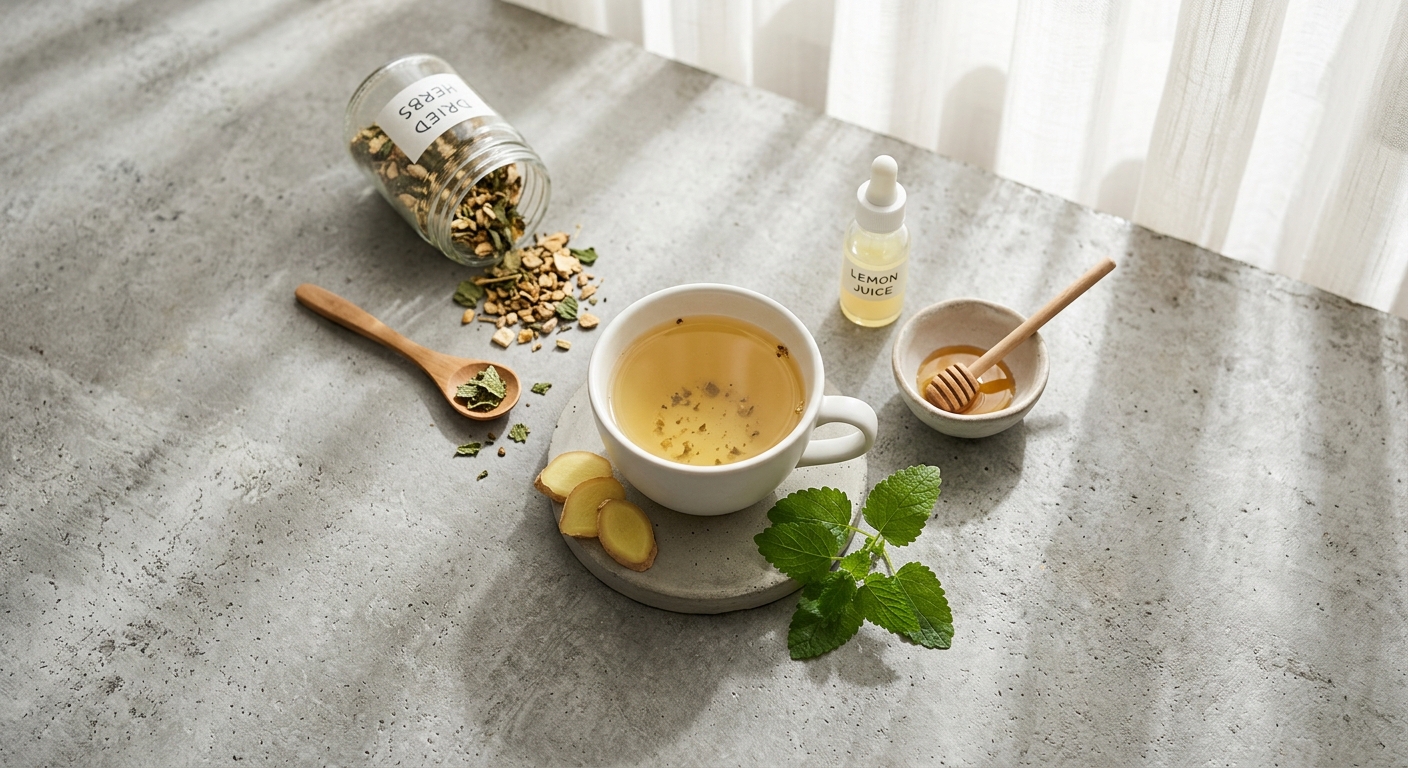
Few discomforts of early pregnancy are as relentless as morning sickness, which, despite its name, can strike at any hour of the day. Herbal traditions across cultures have long reached for the same remedy: warming, pungent ginger root paired with cooling aromatic herbs to settle the stomach. Ancient Ayurvedic texts reference ginger as a digestive tonic, and Greek and Roman physicians recommended lemon balm for nervous stomach complaints. Spearmint, gentler than peppermint, rounds out this blend with a mild cooling sensation that soothes without overstimulating a sensitive gut.
What makes this tea particularly suited to pregnancy nausea is the combination of mechanisms at work. Ginger acts directly on the gastrointestinal tract to speed gastric emptying and reduce the retrograde peristalsis that triggers nausea. Lemon balm calms the nervous system component of nausea, which is especially useful when queasiness is linked to anxiety or stress. Spearmint adds a pleasant minty freshness that also has mild antispasmodic properties, easing stomach cramping and bloating that often accompany first-trimester nausea.
This is a tea you can return to throughout the day in small, frequent sips rather than large cups. Keeping a cold-brewed bottle in the refrigerator means relief is always within reach, even when the thought of standing over a hot kettle feels overwhelming. The flavor is bright, lightly spiced, and gently sweet, and it pairs beautifully with a small dry cracker or plain rice cake for those moments when eating feels like the last thing you want to do.
2
cups
Ingredients
- 1 tspfresh ginger root, thinly sliced (or 0.5 tsp dried)
- 1 tspdried lemon balm leaves
- 0.5 tspdried spearmint leaves
- 480 mlwater (95°C / 203°F)
- —raw honey or maple syrup to taste (optional)
- —a few drops of fresh lemon juice (optional)
How to Brew
Click on an item below to shop for the recommended items for this recipe on Amazon.
As an Amazon Associate, we earn from qualifying purchases.
- Slice 3 to 4 thin rounds of fresh ginger root (about 1 tsp worth) or measure 0.5 tsp of dried ginger. Place in a teapot or heatproof mug.
- Add 1 tsp dried lemon balm and 0.5 tsp dried spearmint directly to the pot or into a tea infuser.
- Heat water to 93 to 95°C (199 to 203°F). Avoid a full rolling boil, which can drive off the delicate volatile oils in lemon balm and spearmint.
- Pour 480 ml of hot water over the herbs. Cover the mug or pot with a small plate or lid to trap the aromatic steam and prevent loss of volatile compounds.
- Steep for 7 to 10 minutes. Taste at 7 minutes: the tea should be warmly spiced and gently minty. Extend to 10 minutes if you want a stronger ginger note.
- Strain into a cup, add honey and a squeeze of fresh lemon if desired, and sip slowly in small, steady amounts for best nausea relief.
- In a clean glass jar, combine 1.5 tsp fresh ginger slices (or 0.75 tsp dried), 2 tsp dried lemon balm, and 1 tsp dried spearmint. The slightly higher herb ratio compensates for the slower cold extraction.
- Pour 480 ml of cold filtered water over the herbs. Do not use warm or hot water, as this changes the extraction profile and undermines the gentle cold-brew character.
- Stir gently to ensure all herbs are submerged. Place a small plate or lid on the jar to prevent any refrigerator odors from transferring.
- Let the jar sit at room temperature for 1 hour to begin the extraction, then transfer to the refrigerator and steep for a further 7 to 11 hours, for a total of 8 to 12 hours.
- Strain through a fine mesh strainer or cheesecloth into a clean bottle or pitcher. The finished tea will be pale gold with a fresh, lightly spiced aroma.
- Serve over a small amount of ice if desired, or sip chilled straight from the fridge. Store in the refrigerator for up to 48 hours and sip in small amounts throughout the day.
- In a small saucepan, combine a thumb-sized piece of fresh ginger (about 2 tbsp of thin slices), 2 tsp dried lemon balm, and 1 tsp dried spearmint with 480 ml of cold water.
- Bring the water to a gentle simmer over medium heat, then reduce to low. Allow the mixture to simmer uncovered for 20 to 25 minutes until the liquid reduces by roughly half, to about 240 ml of concentrate.
- Watch the heat carefully: a hard boil will degrade the aromatic compounds in lemon balm and spearmint. A slow, gentle simmer allows the more heat-stable gingerols in ginger to fully extract while preserving some of the herbal aromatics.
- Remove from heat and allow to cool for 5 minutes, then strain through a fine mesh strainer into a small glass jar or bottle. Press the solids gently to extract all liquid.
- Sweeten the concentrate while still warm with honey if desired, as it dissolves more easily at this stage. Store the concentrate covered in the refrigerator for up to 5 days.
- To serve, dilute 2 to 3 tbsp of concentrate in 200 to 240 ml of warm water, sparkling water, or room-temperature coconut water. Adjust the ratio to your preferred strength and flavor.
Health Benefits
Multiple randomized controlled trials have found ginger supplementation significantly reduces the frequency and severity of nausea and vomiting in the first trimester. A 2014 review in Nutrition Journal concluded that ginger is both effective and safe for pregnancy-related nausea at recommended doses.
Gingerols and shogaols accelerate the movement of food through the stomach, reducing the distension and retrograde contractions that trigger the urge to vomit. This mechanism makes ginger particularly effective when nausea is worsened by slow digestion.
Lemon balm’s rosmarinic acid and flavonoids have been shown in human trials to reduce anxiety scores and calm nervous system overactivation, addressing the stress-gut axis that makes nausea worse when cortisol is elevated.
Spearmint’s L-carvone acts as an antispasmodic on the smooth muscle lining the digestive tract, easing the cramping and gaseous bloating that frequently accompany first-trimester morning sickness.
Unlike some anti-nausea medications, this herbal combination does not cause drowsiness or impair daily function. The herbs work peripherally on the gut and mildly on the nervous system, making the tea safe to sip throughout the day.
🧪 Key Bioactive Compounds
The Science Behind Ginger
The antiemetic action of ginger is one of the most well-studied effects of any culinary herb. The primary bioactive compounds, gingerols in fresh ginger and shogaols in dried ginger, work through two distinct pathways. First, they act peripherally on the gastrointestinal tract by accelerating gastric emptying and reducing retrograde peristalsis, the backward contractions that push stomach contents upward. Second, they act centrally by antagonizing the 5-HT3 serotonin receptors and substance P receptors in the brainstem’s vomiting center, the same receptors targeted by some pharmaceutical antiemetics. This dual action explains why ginger has performed well in randomized trials against pregnancy nausea, chemotherapy-related nausea, and postoperative nausea alike.
Lemon balm contributes to this blend through a different pathway: the gut-brain axis. Rosmarinic acid, its most abundant polyphenol, inhibits the enzyme GABA transaminase, which breaks down gamma-aminobutyric acid in the brain. The resulting increase in GABA activity produces measurable anxiolytic and mild sedative effects, directly addressing the nervous system’s role in digestive distress. A 2014 placebo-controlled study published in Nutrients found that lemon balm extract significantly reduced self-reported anxiety and improved mood in healthy adults, supporting its traditional use as a calming digestive herb.
Spearmint brings the antispasmodic L-carvone to the blend, which relaxes smooth muscle throughout the gastrointestinal tract. Unlike peppermint, spearmint contains negligible amounts of menthol, making it far gentler for a pregnancy-sensitive stomach, as high menthol concentrations can sometimes exacerbate acid reflux. The combination of all three herbs creates a synergistic effect: ginger controls the mechanical and reflex components of nausea, lemon balm addresses the emotional and nervous system triggers, and spearmint eases the muscular cramping and discomfort that compound the misery of morning sickness.
Brewing Tips
- Keep a small thermos of cold-brewed tea on your nightstand so you can sip a few small mouthfuls before getting out of bed in the morning, when nausea is typically at its worst.
- If the smell of brewing hot tea triggers nausea, let the hot brew cool completely in a covered mug before drinking it, or switch entirely to the cold-brew method, which produces a milder, less aromatic tea.
- Fresh ginger is noticeably more effective than dried for active nausea relief because gingerols are more abundant and bioavailable. Keep a small knob of fresh ginger in the freezer so it’s always available, and grate or slice it straight from frozen.