Few herbs carry as long and storied a digestive legacy as fennel. Cultivated along the sun-drenched coasts of the Mediterranean for over 4,000 years, Foeniculum vulgare was a staple in ancient Egyptian, Greek, and Roman medicine cabinets. Roman soldiers chewed the seeds before battle to quell hunger and sharpen focus, while Hippocrates prescribed fennel water to nursing mothers to encourage milk flow. In medieval Europe, fennel seeds were hung above doorways on Midsummer’s Eve to ward off evil spirits, and tucked into keyholes to keep ghosts at bay. Its reputation as a powerful plant ally spans cultures and centuries.
What makes fennel seed tea so special is the remarkable complexity hiding inside those tiny, ridged seeds. When you crush or lightly bruise them before brewing, you unlock a warm, sweet, anise-like aroma that fills the kitchen and signals the release of volatile oils working their therapeutic magic. The resulting cup is mellow and slightly sweet with a clean herbal finish, nothing harsh or medicinal about it, which is part of why generations of herbalists recommended it as a first-line remedy for digestive discomfort in both adults and children alike.
Today, fennel seed tea occupies a respected place in both traditional herbalism and modern phytotherapy. It appears in the German Commission E monographs as an approved remedy for dyspeptic complaints, and its antispasmodic and carminative properties have been validated in clinical research. Whether you sip it after a heavy meal, first thing in the morning to wake up sluggish digestion, or at the end of a long day to ease a tense belly, this is one of those rare herbal teas that delivers on its ancient promises.
2
cups
Ingredients
- 2 tspfennel seeds (lightly crushed)
- 480 mlwater (90°C / 194°F)
- —raw honey or a slice of fresh lemon to taste (optional)
How to Brew
Click on an item below to shop for the recommended items for this recipe on Amazon.
As an Amazon Associate, we earn from qualifying purchases.
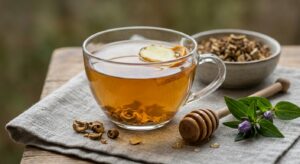
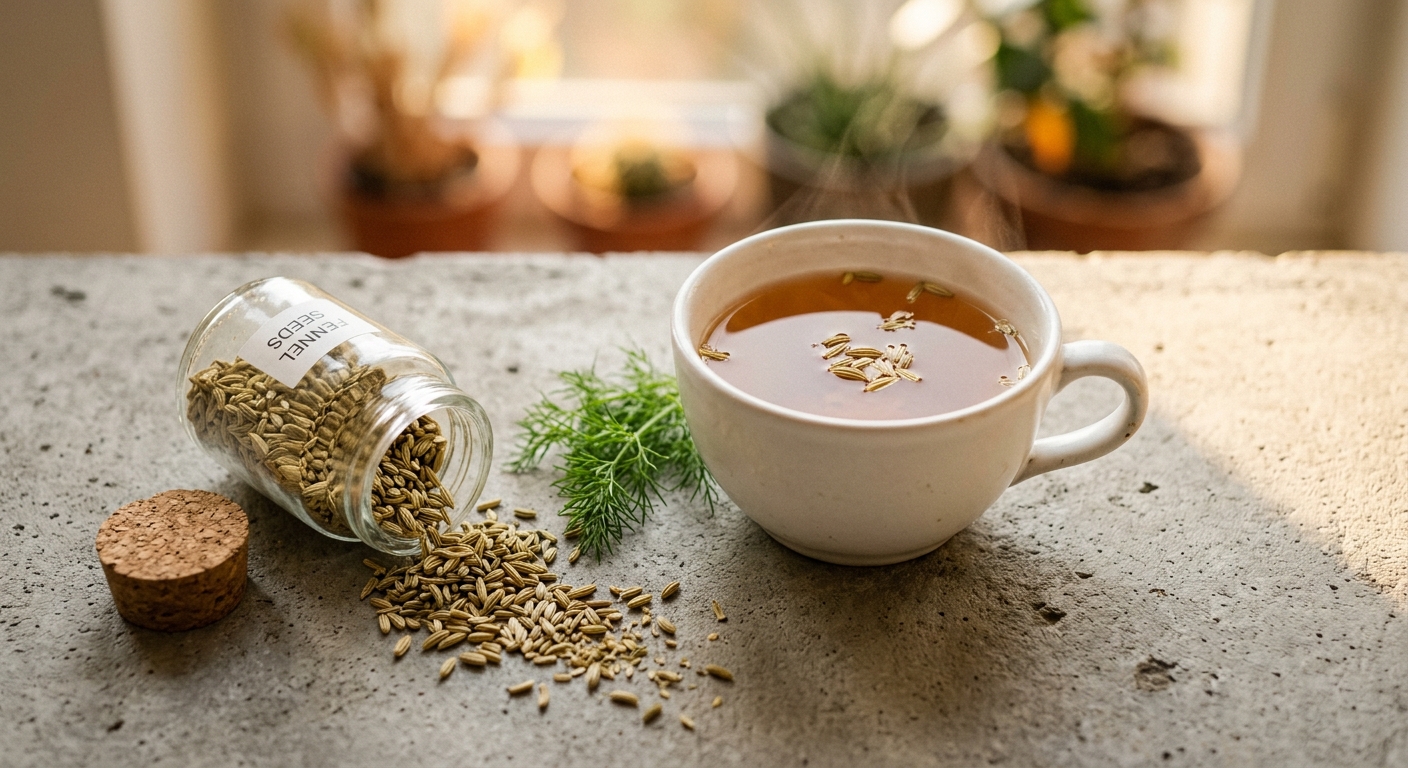
- Measure 1 teaspoon of fennel seeds per cup. Place them in a mortar and pestle and give them 4 to 5 firm presses to lightly crack the seeds. You should smell a burst of sweet anise aroma immediately. Do not grind them to a powder – you want cracked seeds, not flour.
- Bring filtered water to 90 to 95°C (194 to 203°F). If you don’t have a temperature-controlled kettle, bring water to a full boil and then let it sit off the heat for 2 minutes before pouring.
- Place the crushed seeds into a tea infuser, mesh strainer, or teapot with a built-in filter. Set it over your mug or teapot and pour the hot water directly over the seeds.
- Cover the mug with a small saucer or lid to trap the volatile aromatic compounds that would otherwise escape as steam. Steep for 7 to 10 minutes. A longer steep yields a more potent, slightly more intense cup.
- Remove the infuser and discard the spent seeds. Taste the tea and add raw honey or a squeeze of lemon if desired. Drink warm, ideally 15 to 20 minutes after a meal for maximum digestive benefit.
- Lightly crush 2 teaspoons of fennel seeds using a mortar and pestle or the flat side of a knife. Place the cracked seeds into a clean glass jar or pitcher.
- Pour 480 ml of cool, filtered room-temperature water over the seeds. Do not use ice-cold water straight from the refrigerator, as it will slow extraction too much during the initial room-temperature phase.
- Stir gently to ensure all seeds are submerged, then seal the jar with a lid or cover it with plastic wrap. Let it sit at room temperature for 1 hour to begin the extraction process.
- Transfer the jar to the refrigerator and allow it to steep for a further 9 to 11 hours, or overnight. The long cold steep extracts the sweet volatile compounds gradually, resulting in a mellow, slightly sweet brew.
- When ready, strain the cold brew through a fine mesh strainer or cheesecloth into a glass. Serve over ice or chilled. Add a sprig of fresh mint or a thin slice of cucumber for a refreshing summer digestive tonic.
- Measure 1 tablespoon (approximately 3 teaspoons) of whole fennel seeds per 480 ml of water. Place the seeds into a small saucepan and add the cold, filtered water. Using whole seeds rather than crushed seeds for decoction prevents over-extraction of bitter compounds during the longer simmering process.
- Bring the water to a full boil over medium heat, then immediately reduce the heat to a gentle simmer. The water should bubble lightly, not vigorously. Cover the saucepan with a lid to retain the aromatic volatile oils.
- Simmer gently for 15 to 20 minutes. The liquid will deepen slightly in color to a warm amber-gold and the aroma will become richer and more rounded, with warm, almost savory anise notes emerging alongside the sweetness.
- Remove the saucepan from the heat and allow the decoction to rest, covered, for 5 additional minutes. This off-heat resting period allows the volatile oils to redistribute back into the liquid rather than continuing to evaporate.
- Strain the decoction through a fine mesh strainer into a mug, pressing the seeds gently with the back of a spoon to extract the last of the liquid. Sweeten lightly with honey if desired. Sip slowly in small amounts, as this is a concentrated preparation. Half a cup is often sufficient for therapeutic use.
Health Benefits
Fennel’s carminative action, driven primarily by trans-anethole, relaxes the smooth muscle lining of the intestines and allows trapped gas to pass more easily. A 2016 clinical study found fennel-based preparations significantly reduced bloating and flatulence in participants with functional gastrointestinal disorders.
Both anethole and fenchone act as antispasmodics on the smooth muscle tissue of the gut wall, reducing the painful contractions associated with irritable bowel syndrome and general digestive upset. This is why fennel water has been used traditionally to treat infant colic.
Fennel seed tea promotes the secretion of digestive enzymes and bile from the liver and gallbladder, which improves the breakdown of fats and complex carbohydrates. Drinking a cup before or after meals has long been used in Ayurvedic medicine to kindle agni, the digestive fire.
The antimicrobial properties of fenchone and trans-anethole have been shown in vitro to inhibit the growth of pathogenic gut bacteria including Escherichia coli and Candida albicans, while research suggests fennel compounds may help preserve a healthy balance of beneficial intestinal flora.
The mild estrogenic activity of trans-anethole and the antispasmodic properties of fennel together contribute to its traditional use as a remedy for menstrual cramps. A 2012 randomized controlled trial published in the International Journal of Gynecology and Obstetrics found fennel extract was as effective as mefenamic acid in reducing pain intensity in primary dysmenorrhea.
🧪 Key Bioactive Compounds
The Science Behind Fennel Seed
The therapeutic power of fennel seed tea is rooted in its rich volatile oil content, which makes up roughly 2 to 6 percent of the dry seed weight. Trans-anethole is the dominant compound, accounting for 60 to 80 percent of the essential oil fraction. It acts directly on the smooth muscle tissue lining the gastrointestinal tract, producing a genuine antispasmodic effect by interfering with calcium ion channels in muscle cells. This is the molecular mechanism behind the traditional observation that fennel calms intestinal cramps and spasms. Anethole also activates serotonin receptors in the gut wall, which plays a role in regulating peristalsis, the rhythmic wave-like contractions that move food through the digestive system. When peristalsis is irregular or overactive, bloating, gas, and cramping follow. Fennel’s ability to normalize this rhythm is a key reason it has remained a clinical recommendation in European phytomedicine for centuries.
Fenchone, the secondary major volatile compound in fennel oil, contributes additional layers of therapeutic action. Its antimicrobial properties have been demonstrated against a range of opportunistic gut pathogens in laboratory settings, and it appears to work synergistically with trans-anethole to amplify the overall antispasmodic effect. Interestingly, fenchone is also responsible for the slightly bitter, warming undertone that distinguishes fennel from pure anise, and it is more concentrated in bitter fennel varieties than in the sweet fennel cultivars typically used for tea. The polyphenol quercetin rounds out the anti-inflammatory picture by inhibiting the release of pro-inflammatory cytokines in the intestinal mucosa, offering a degree of protection to the gut lining itself.
The estrogenic properties of trans-anethole deserve careful scientific context. While anethole does bind weakly to estrogen receptors, the concentrations achieved from drinking one to two cups of fennel seed tea per day are significantly lower than those used in studies that observed hormonal effects. At typical culinary and tea-strength doses, this activity is mild and unlikely to cause concern for most healthy individuals. However, this same mild estrogenic activity is thought to underlie fennel’s traditional use in supporting lactation and easing menstrual discomfort, a use validated by the 2012 randomized controlled trial comparing fennel extract favorably to pharmaceutical analgesics for primary dysmenorrhea. This intersection of traditional wisdom and clinical evidence is what makes fennel one of the most scientifically credible herbs in the digestive and women’s wellness categories.
Brewing Tips
- Always crush or lightly bruise fennel seeds before brewing, regardless of method. Whole, uncrushed seeds release only a fraction of their volatile oils and produce a noticeably weaker and less therapeutic cup.
- Cover your mug or teapot while steeping. Fennel’s most active compounds are highly volatile and will escape as aromatic steam if left uncovered, reducing both the flavor intensity and the medicinal potency of your brew.
- For digestive support, timing matters. Drink fennel seed tea 15 minutes after a meal to ease post-meal bloating, or 30 minutes before eating to prime the digestive system. Drinking it on an empty stomach first thing in the morning also supports gentle gut motility.